Zhang Qianzhen, Yang Zhi, Shan Juanjuan, Liu Limei, Liu Chungang, Shen Junjie, Chen Xuejiao, Xu Yanmin, Chen Jun, Ma Qinghua, Yang Li, Qian Cheng
Key Laboratory of Biorheological Science and Technology, Ministry of Education, Bioengineering College, Chongqing University, Chongqing, 400044, China.
College of Bioengineering, Chongqing University, Chongqing, 400044, China.
Oncotarget. 2017 Nov 27;8(66):110187-110200. doi: 10.18632/oncotarget.22705. eCollection 2017 Dec 15.
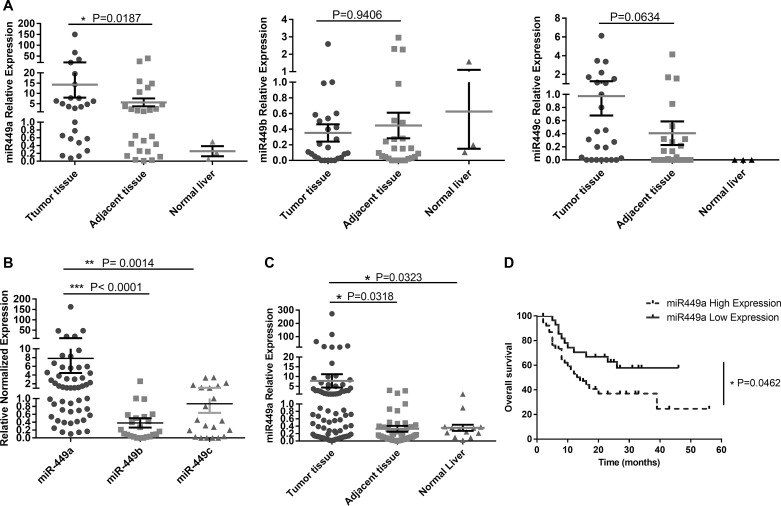
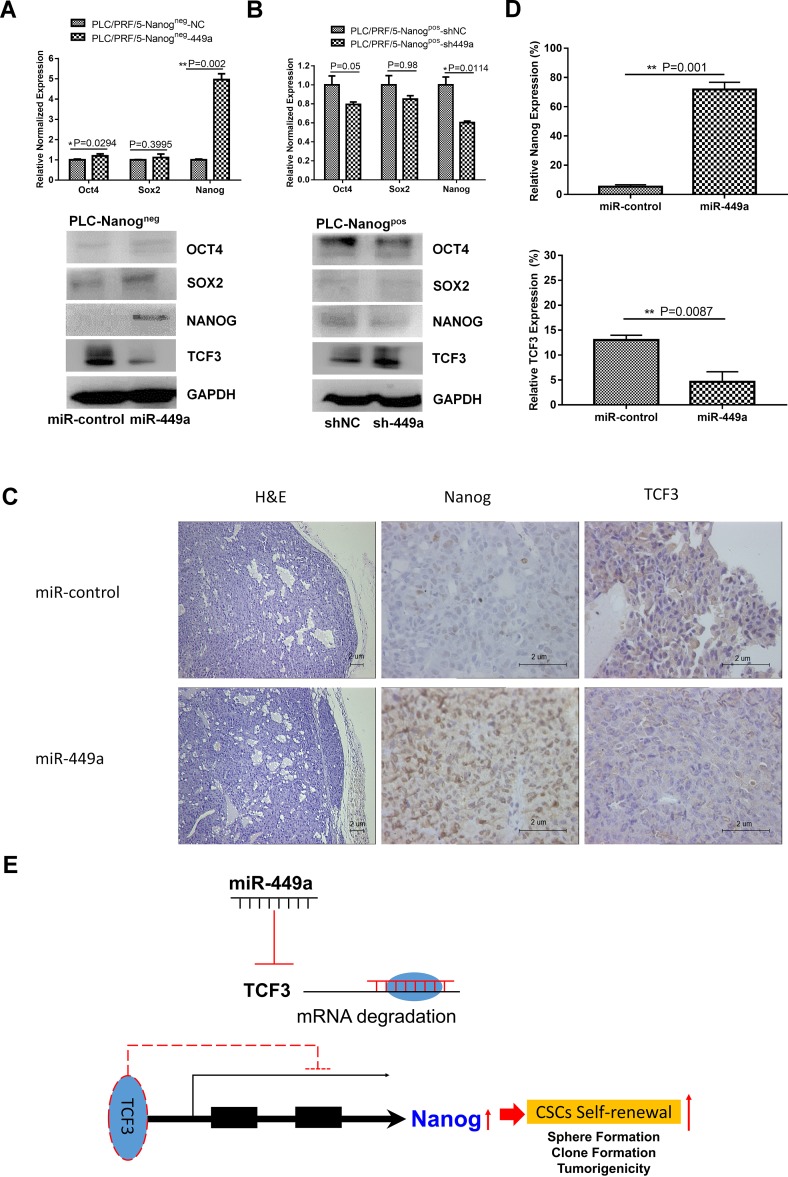
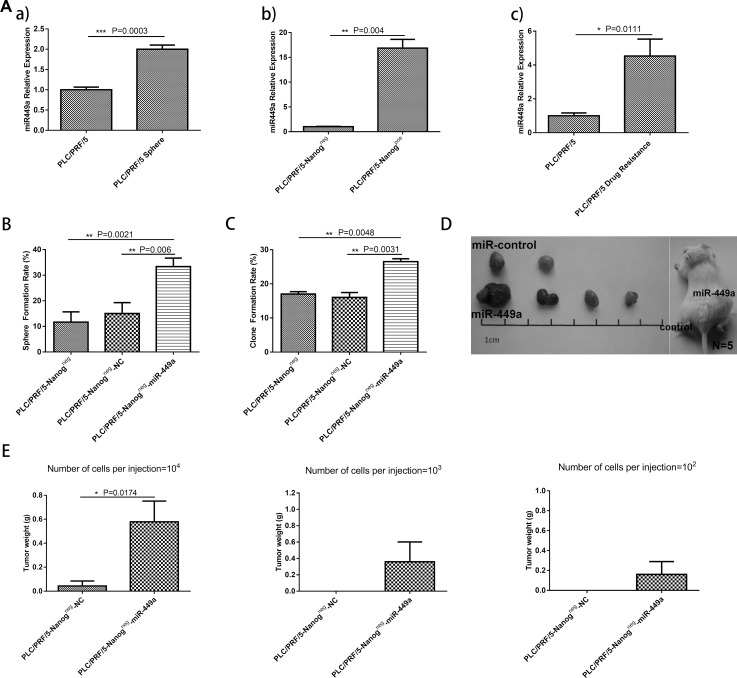
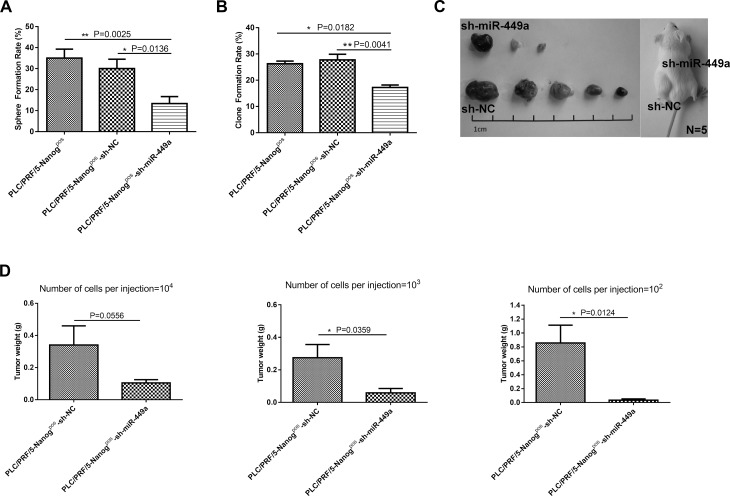
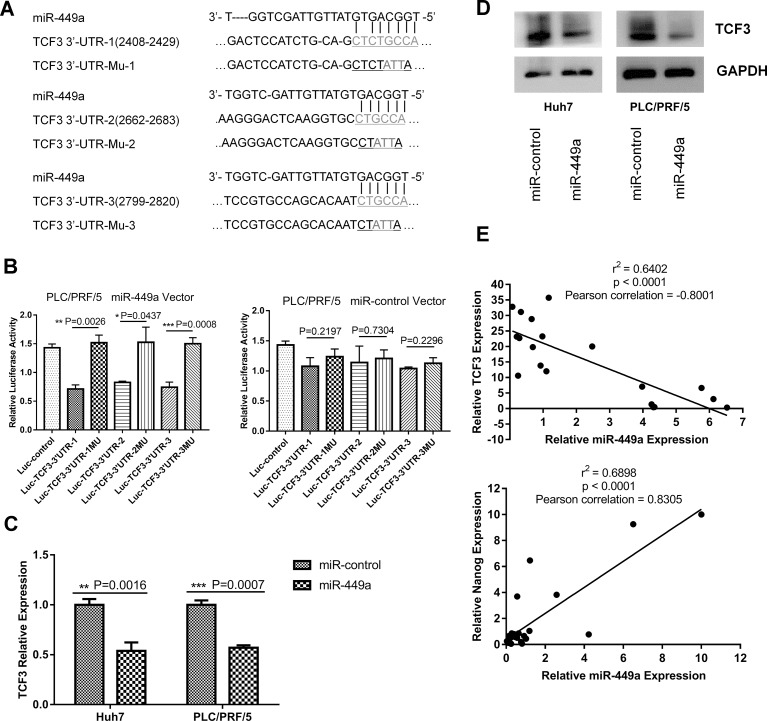
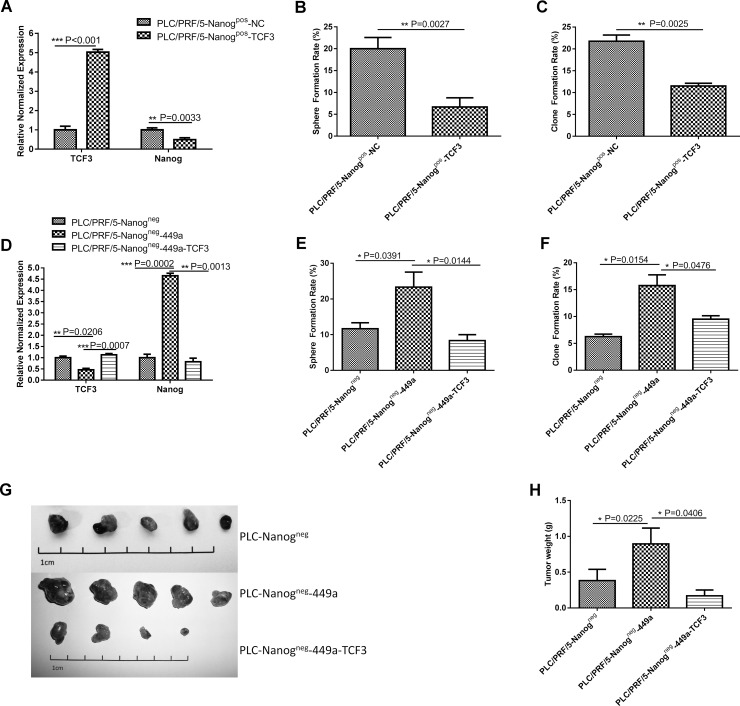
Cancer stem cells (CSCs) are thought to be responsible for tumor invasion, metastasis, and recurrence. We previously showed that the pluripotency factor Nanog not only serves as a novel biomarker of CSCs but also potentially plays a crucial role in maintaining the self-renewal ability of liver CSCs. However, how CSCs maintain gene expression has not been elucidated. Here, we demonstrated that microRNA-449a (miR-449a) is overexpressed in poorly differentiated hepatocellular carcinoma tissues, drug-resistant liver cancer cells, cultured liver tumorspheres, and Nanog-positive liver cancer cells. The upregulation of miR-449a in non-CSCs increased stemness, whereas the downregulation of miR-449a in Nanog-positive CSCs reduced stemness. Furthermore, transcription factor 3 (TCF3), a target of miR-449a, could downregulate expression, and restoring TCF3 expression in miR-449a-expressing Nanog-negative cells abrogated cellular stemness. These data establish that the miR449a-TCF3-Nanog axis maintains stemness in liver CSCs.
癌症干细胞(CSCs)被认为与肿瘤侵袭、转移和复发有关。我们之前表明,多能性因子Nanog不仅作为CSCs的一种新型生物标志物,而且可能在维持肝脏CSCs的自我更新能力中发挥关键作用。然而,CSCs如何维持基因表达尚未阐明。在此,我们证明了微小RNA-449a(miR-449a)在低分化肝细胞癌组织、耐药性肝癌细胞、培养的肝肿瘤球以及Nanog阳性肝癌细胞中过表达。非CSCs中miR-449a的上调增加了干性,而Nanog阳性CSCs中miR-449a的下调降低了干性。此外,miR-449a的靶标转录因子3(TCF3)可下调表达,并且在表达miR-449a的Nanog阴性细胞中恢复TCF3表达可消除细胞干性。这些数据表明,miR449a-TCF3-Nanog轴维持肝脏CSCs的干性。