Michalski Stefan G, Bruelheide Helge, Durka Walter
Department of Community Ecology Helmholtz Centre for Environmental Research - UFZ Halle (Saale) Germany.
German Centre for Integrative Biodiversity Research (iDiv) Halle-Jena-Leipzig Leipzig Germany.
Ecol Evol. 2017 Nov 15;7(24):11079-11091. doi: 10.1002/ece3.3564. eCollection 2017 Dec.
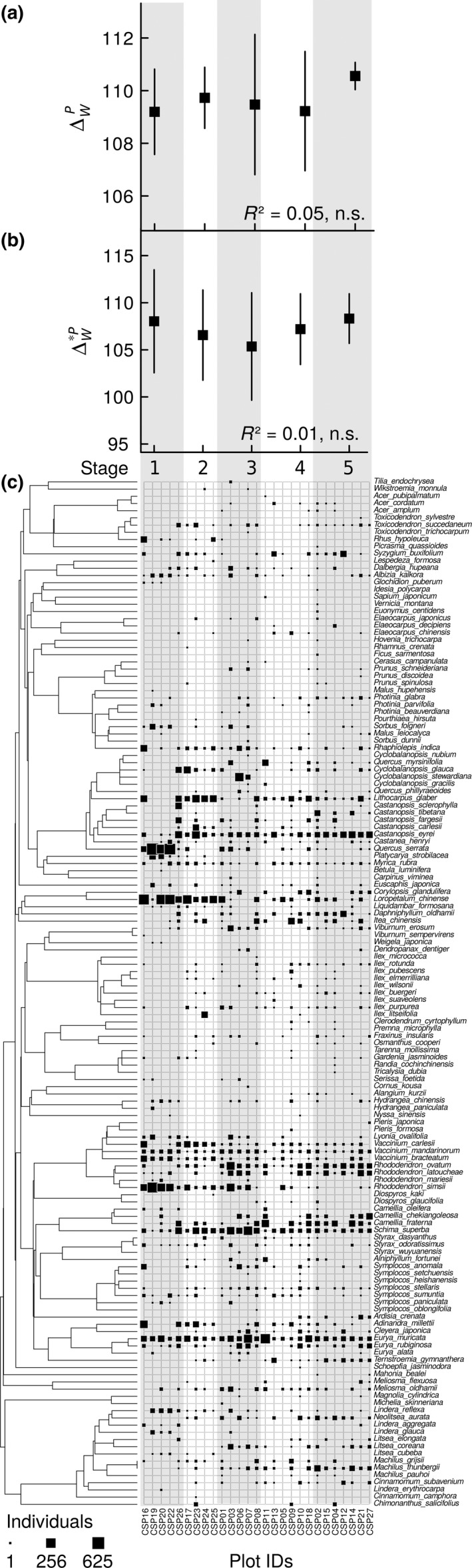
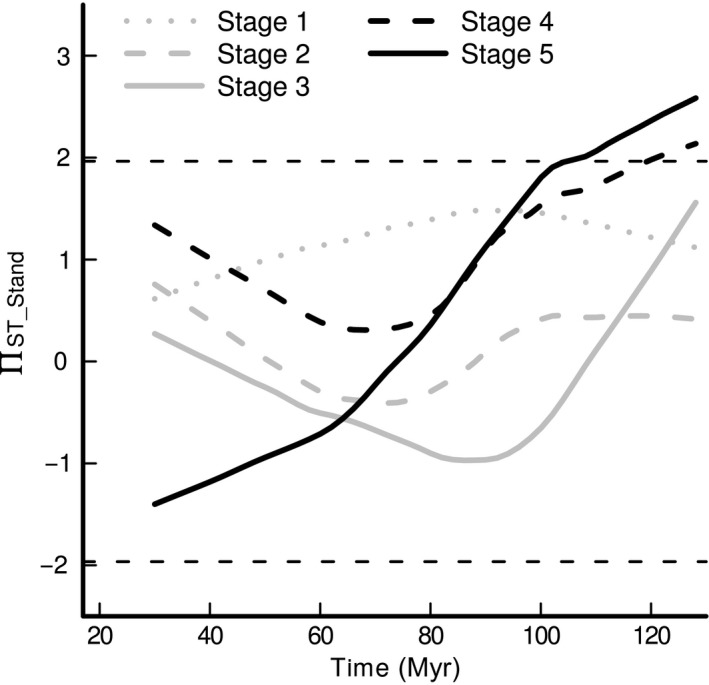
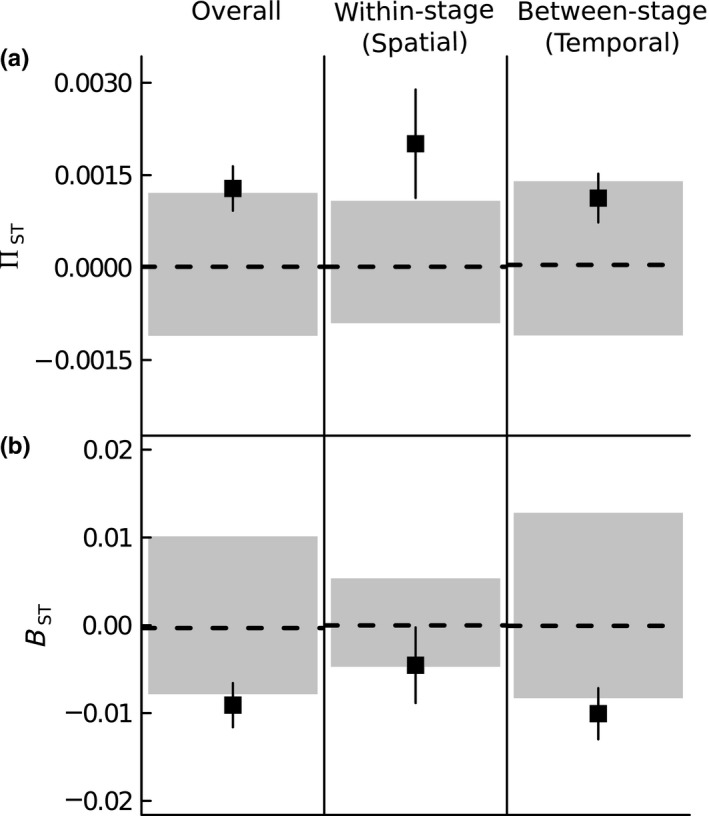
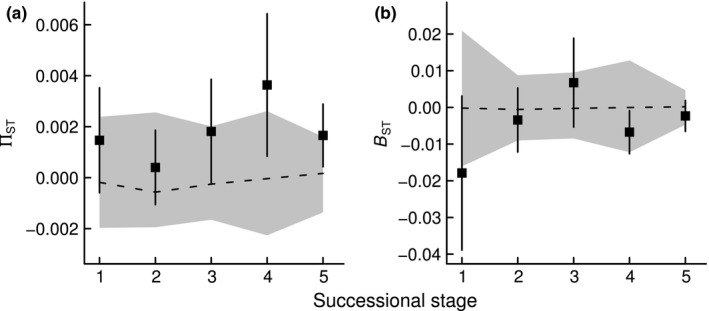
Although spatial and temporal patterns of phylogenetic community structure during succession are inherently interlinked and assembly processes vary with environmental and phylogenetic scales, successional studies of community assembly have yet to integrate spatial and temporal components of community structure, while accounting for scaling issues. To gain insight into the processes that generate biodiversity after disturbance, we combine analyses of spatial and temporal phylogenetic turnover across phylogenetic scales, accounting for covariation with environmental differences. We compared phylogenetic turnover, at the species- and individual-level, within and between five successional stages, representing woody plant communities in a subtropical forest chronosequence. We decomposed turnover at different phylogenetic depths and assessed its covariation with between-plot abiotic differences. Phylogenetic turnover between stages was low relative to species turnover and was not explained by abiotic differences. However, within the late-successional stages, there was high presence-/absence-based turnover (clustering) that occurred deep in the phylogeny and covaried with environmental differentiation. Our results support a deterministic model of community assembly where (i) phylogenetic composition is constrained through successional time, but (ii) toward late succession, species sorting into preferred habitats according to niche traits that are conserved deep in phylogeny, becomes increasingly important.
尽管演替过程中系统发育群落结构的时空模式本质上是相互关联的,且组装过程会随环境和系统发育尺度而变化,但群落组装的演替研究尚未在考虑尺度问题的同时,将群落结构的空间和时间成分整合起来。为了深入了解干扰后产生生物多样性的过程,我们结合了跨系统发育尺度的空间和时间系统发育周转率分析,同时考虑了与环境差异的协变关系。我们比较了代表亚热带森林时间序列中木本植物群落的五个演替阶段内和阶段间物种水平和个体水平的系统发育周转率。我们分解了不同系统发育深度的周转率,并评估了其与样地间非生物差异的协变关系。相对于物种周转率,阶段间的系统发育周转率较低,且不能由非生物差异来解释。然而,在演替后期阶段,基于存在/缺失的周转率(聚类)较高,这种情况发生在系统发育树的深处,并与环境分化协变。我们的结果支持了一种群落组装的确定性模型,即(i)系统发育组成在演替过程中受到限制,但(ii)在演替后期,根据在系统发育中保守的生态位特征,物种分选到偏好的栖息地变得越来越重要。