Wang Lijuan, Qian Xiangyang, Wang Mingya, Tang Xinran, Ao Hushan
Department of Anesthesiology, Beijing Fuwai Hospital, National Center for Cardiovascular Diseases, Chinese Academy of Medical Sciences and Peking Union Medical College, No. 167, Beilishi Road, West District of Beijing, Beijing, 100037, China.
Department of Cardiac Surgery, Beijing Fuwai Hospital, National Center for Cardiovascular Diseases, Chinese Academy of Medical Sciences and Peking Union Medical College, Beijing, China.
J Cardiothorac Surg. 2018 Jan 4;13(1):1. doi: 10.1186/s13019-017-0682-5.
Metabolic Syndrome and diabetes mellitus are risk factors for cardiovascular disease. However, the effects of Metabolic Syndrome with or without diabetes on perioperative and long-term morbidity and mortality after Coronary Artery Bypass Graft remain unclear.
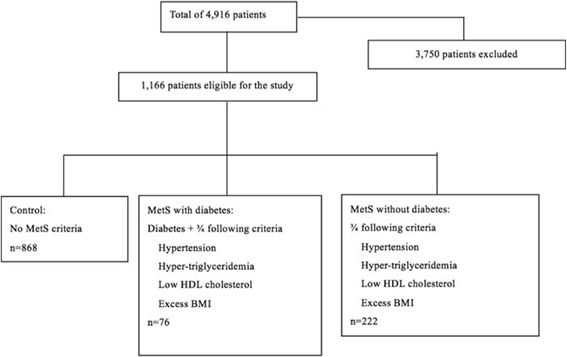
An retrospective study was performed on 1166 patients who received isolated primary Coronary Artery Bypass Graft in Fuwai hospital. They were divided into three groups: control, Metabolic Syndrome of three factors together with diabetes and Metabolic Syndrome of three factors without diabetes (n = 868, 76 and 222 respectively). Analysis of variance, Chi-rank test, Fisher's exact test, Log-rank test, Cox and Logistic regression models were used for data processing. Outcomes were postoperative and 5-year survival and morbidities.
There were no significant differences between groups in in-hospital postoperative complications, epinephrine use, stroke, atrial fibrillation, renal failure, coma, myocardial infarction and repeated revascularization. Patients in the Metabolic Syndrome with diabetes, Metabolic Syndrome without diabetes and control groups, respectively, showed significant difference in perioperative Major Adverse Cerebral Cardiovascular Events (30.3% vs. 21.2%, 16.7%, P = 0.0071) and mortality (11.8% vs. 2.7%, 3.11%, P = 0.0003). The Metabolic Syndrome with diabetes group had higher rates of perioperative mortality than Metabolic Syndrome without diabetes (P = 0.0017, P of Fisher Test = 0.0039). Compared with non-diabetic patients with Metabolic Syndrome, those with Metabolic Syndrome and diabetes had increased long-term mortality (Adjusted HR: 4.3; 95% CI: 1.4-13.3; P = 0.0113) and Major Adverse Cerebral Cardiovascular Events (Adjusted OR: 1.7; 95% CI: 1.0-2.8; P = 0.048). Control and non-diabetic Metabolic Syndrome groups did not differ in long-term mortality but controls had lower rates of Major Adverse Cerebral Cardiovascular Events (Adjusted OR: 0.79; 95% CI: 0.64-0.98; P = 0.0329).
There were significance differences between the three groups in perioperative Major Adverse Cerebral Cardiovascular Events and mortality after Coronary Artery Bypass Graft. Compared with non-diabetic Metabolic Syndrome patients, patients with Metabolic Syndrome and diabetes had higher long-term Major Adverse Cerebral Cardiovascular Events and mortality. While patients free of MetS and diabetes were associated with lower incidence of long-term Major Adverse Cerebral Cardiovascular Events after Coronary Artery Bypass Graft.
代谢综合征和糖尿病是心血管疾病的危险因素。然而,合并或不合并糖尿病的代谢综合征对冠状动脉旁路移植术后围手术期及长期发病率和死亡率的影响尚不清楚。
对在阜外医院接受单纯初次冠状动脉旁路移植术的1166例患者进行回顾性研究。他们被分为三组:对照组、合并糖尿病的三因素代谢综合征组和不合并糖尿病的三因素代谢综合征组(分别为n = 868、76和222例)。采用方差分析、卡方秩和检验、Fisher精确检验、对数秩检验、Cox和Logistic回归模型进行数据处理。观察指标为术后及术后5年生存率和发病率。
三组患者在术后住院并发症、肾上腺素使用、中风、心房颤动、肾衰竭、昏迷、心肌梗死和再次血管重建方面无显著差异。合并糖尿病的代谢综合征组、不合并糖尿病的代谢综合征组和对照组患者在围手术期主要不良心脑血管事件(30.3%对21.2%、16.7%,P = 0.0071)和死亡率(11.8%对2.7%、3.11%,P = 0.0003)方面存在显著差异。合并糖尿病的代谢综合征组围手术期死亡率高于不合并糖尿病的代谢综合征组(P = 0.0017,Fisher检验P = 0.0039)。与不合并糖尿病的代谢综合征患者相比,合并糖尿病的代谢综合征患者长期死亡率增加(校正风险比:4.3;95%可信区间:1.4 - 13.3;P = 0.0113),主要不良心脑血管事件增加(校正比值比:1.7;95%可信区间:1.0 - 2.8;P = 0.048)。对照组和不合并糖尿病的代谢综合征组在长期死亡率方面无差异,但对照组主要不良心脑血管事件发生率较低(校正比值比:0.79;95%可信区间:0.64 - 0.98;P = 0.0329)。
冠状动脉旁路移植术后三组患者在围手术期主要不良心脑血管事件和死亡率方面存在显著差异。与不合并糖尿病的代谢综合征患者相比,合并糖尿病的代谢综合征患者长期主要不良心脑血管事件和死亡率更高。而无代谢综合征和糖尿病的患者冠状动脉旁路移植术后长期主要不良心脑血管事件发生率较低。