Department of Pediatrics, Pennsylvania State University College of Medicine, Hershey, PA, USA.
Pulmonary Immunology and Physiology Laboratory, Pennsylvania State University College of Medicine, Hershey, PA, USA.
Respir Res. 2018 Jan 5;19(1):3. doi: 10.1186/s12931-017-0708-5.
Influenza A viruses cause life-threatening pneumonia and lung injury in the lower respiratory tract. Application of high GM-CSF levels prior to infection has been shown to reduce morbidity and mortality from pathogenic influenza infection in mice, but the mechanisms of protection and treatment efficacy have not been established.
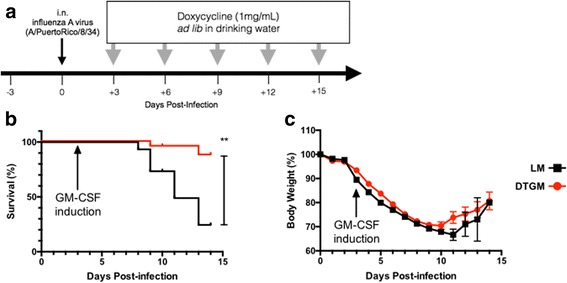
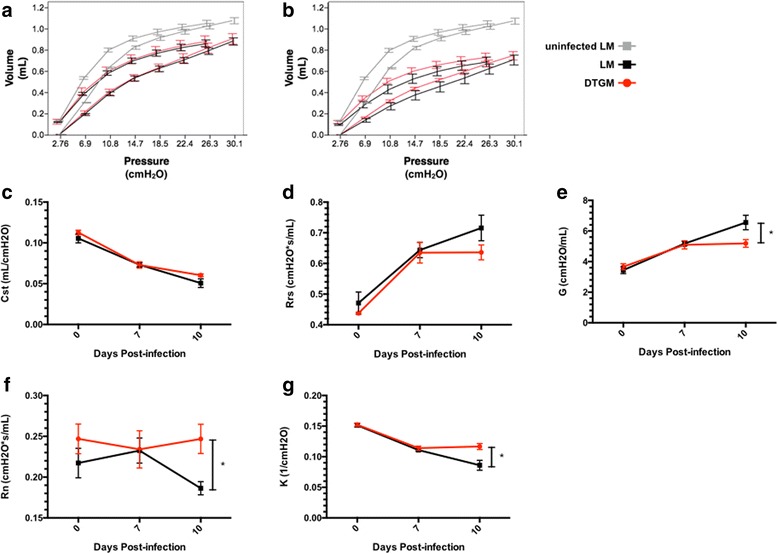
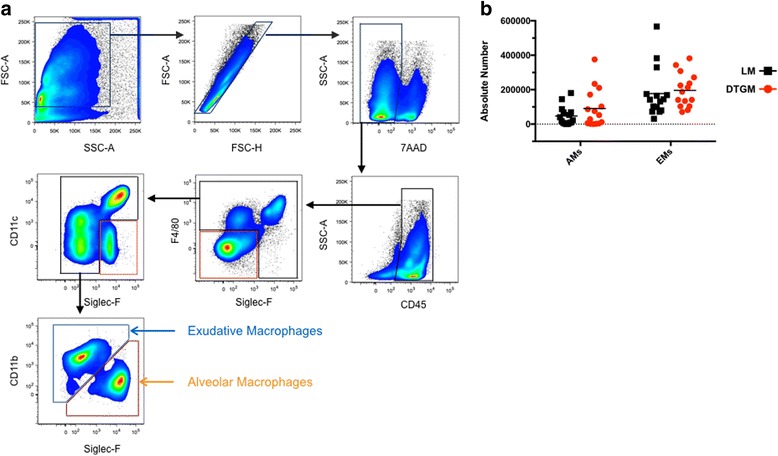
Mice were infected intranasally with influenza A virus (PR8 strain). Supra-physiologic levels of GM-CSF were induced in the airways using the double transgenic GM-CSF (DTGM) or littermate control mice starting on 3 days post-infection (dpi). Assessment of respiratory mechanical parameters was performed using the flexiVent rodent ventilator. RNA sequence analysis was performed on FACS-sorted airway macrophage subsets at 8 dpi.
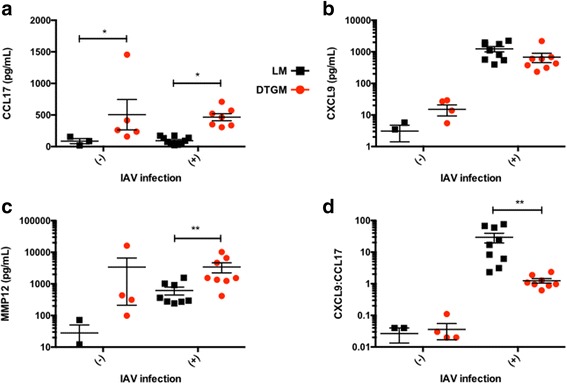
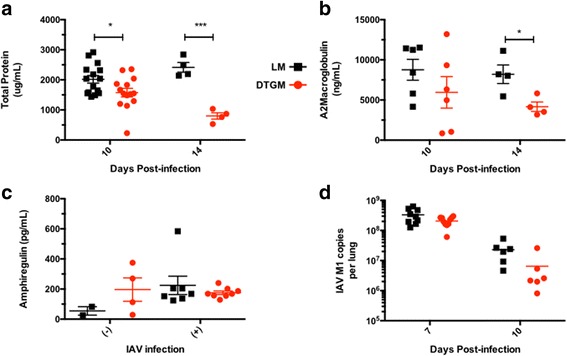
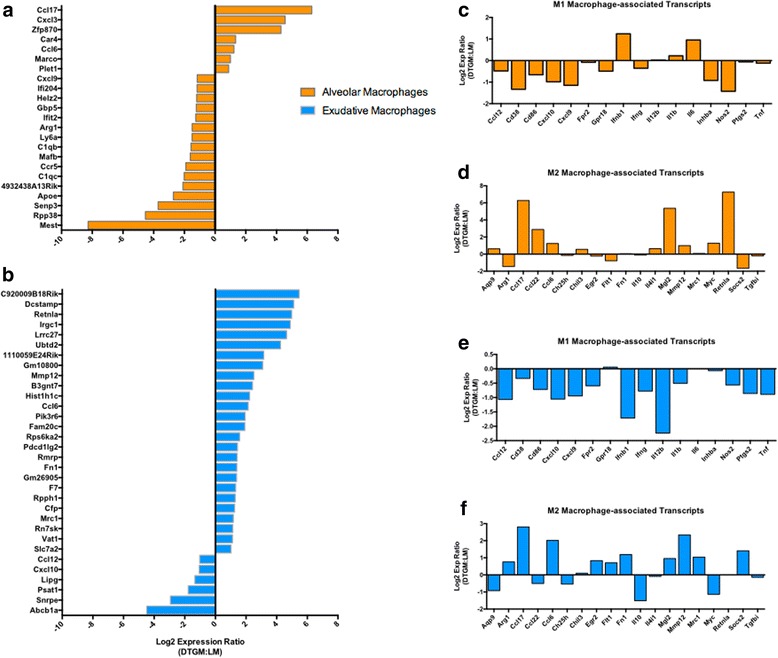
Supra-physiologic levels of GM-CSF conferred a survival benefit, arrested the deterioration of lung mechanics, and reduced the abundance of protein exudates in bronchoalveolar (BAL) fluid to near baseline levels. Transcriptome analysis, and subsequent validation ELISA assays, revealed that excess GM-CSF re-directs macrophages from an "M1-like" to a more "M2-like" activation state as revealed by alterations in the ratios of CXCL9 and CCL17 in BAL fluid, respectively. Ingenuity pathway analysis predicted that GM-CSF surplus during IAV infection elicits expression of anti-inflammatory mediators and moderates M1 macrophage pro-inflammatory signaling by Type II interferon (IFN-γ).
Our data indicate that application of high levels of GM-CSF in the lung after influenza A virus infection alters pathogenic "M1-like" macrophage inflammation. These results indicate a possible therapeutic strategy for respiratory virus-associated pneumonia and acute lung injury.
甲型流感病毒可导致下呼吸道发生危及生命的肺炎和肺损伤。研究表明,在感染前应用高浓度 GM-CSF 可降低小鼠致病性流感感染的发病率和死亡率,但保护机制和治疗效果尚未确定。
用甲型流感病毒(PR8 株)经鼻腔感染小鼠。从感染后第 3 天开始,通过双转基因 GM-CSF(DTGM)或同窝对照小鼠在气道中诱导超生理水平的 GM-CSF。使用 flexiVent 鼠呼吸机进行呼吸力学参数评估。在 8 dpi 时通过 FACS 分选气道巨噬细胞亚群进行 RNA 序列分析。
超生理水平的 GM-CSF 可提高生存率,阻止肺力学恶化,并将支气管肺泡灌洗液(BAL)中蛋白渗出物的丰度降低至接近基线水平。转录组分析,以及随后的验证 ELISA 检测,表明过量 GM-CSF 将巨噬细胞从“M1 样”重定向为更“M2 样”激活状态,这分别反映在 BAL 液中 CXCL9 和 CCL17 的比值变化上。Ingenuity 通路分析预测,IAV 感染期间 GM-CSF 过剩会引发抗炎介质的表达,并通过 II 型干扰素(IFN-γ)调节 M1 巨噬细胞的促炎信号。
我们的数据表明,在甲型流感病毒感染后向肺部应用高浓度 GM-CSF 可改变致病性“M1 样”巨噬细胞炎症。这些结果表明了一种针对呼吸道病毒相关肺炎和急性肺损伤的可能治疗策略。