Li Chun-Ying, Wang Liang-Xue, Dong Si-Si, Hong Ying, Zhou Xin-He, Zheng Wen-Wen, Zheng Chao
Diabetes Center and Department of Endocrinology, The Second Affiliated Hospital of Wenzhou Medical University, Wenzhou, Zhejiang, China (mainland).
Med Sci Monit Basic Res. 2018 Jan 8;24:1-9. doi: 10.12659/msmbr.907775.
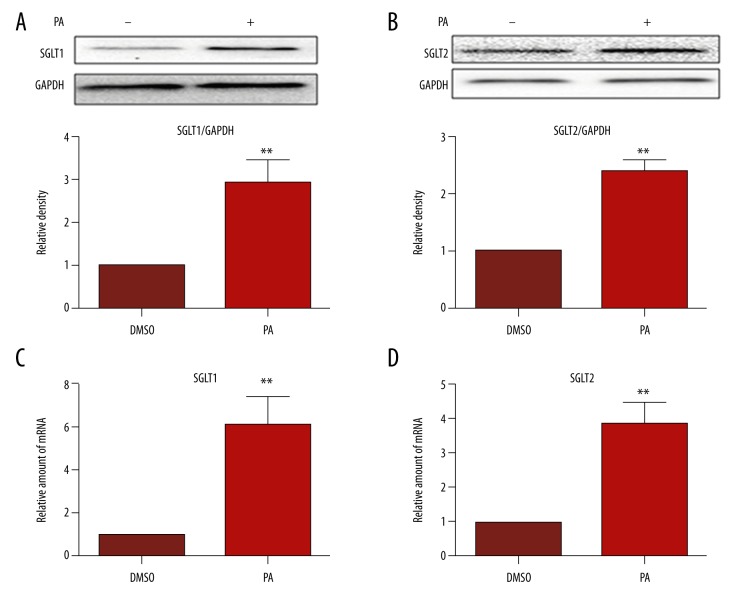
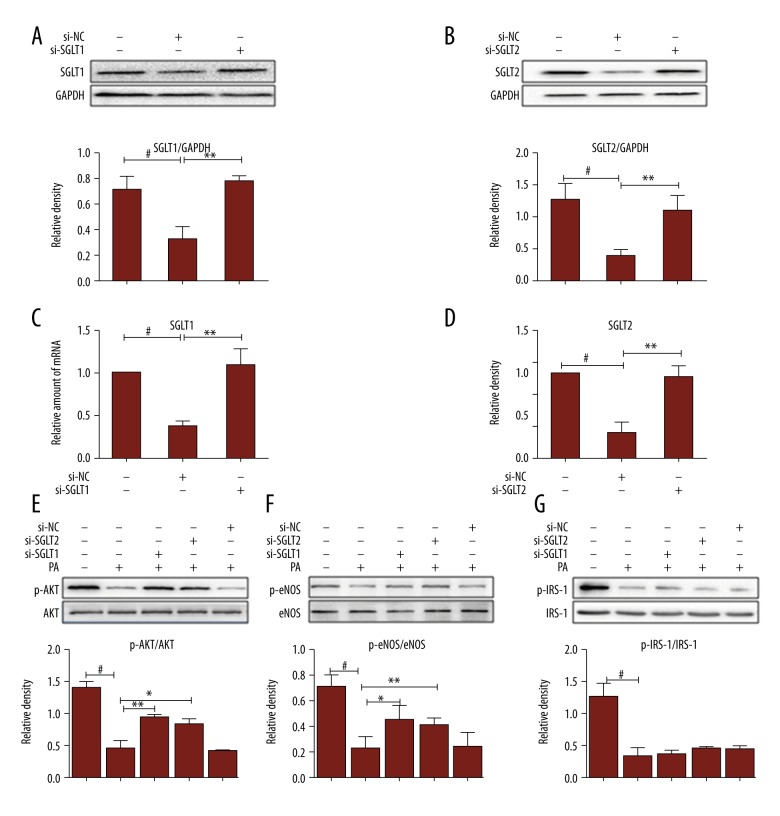
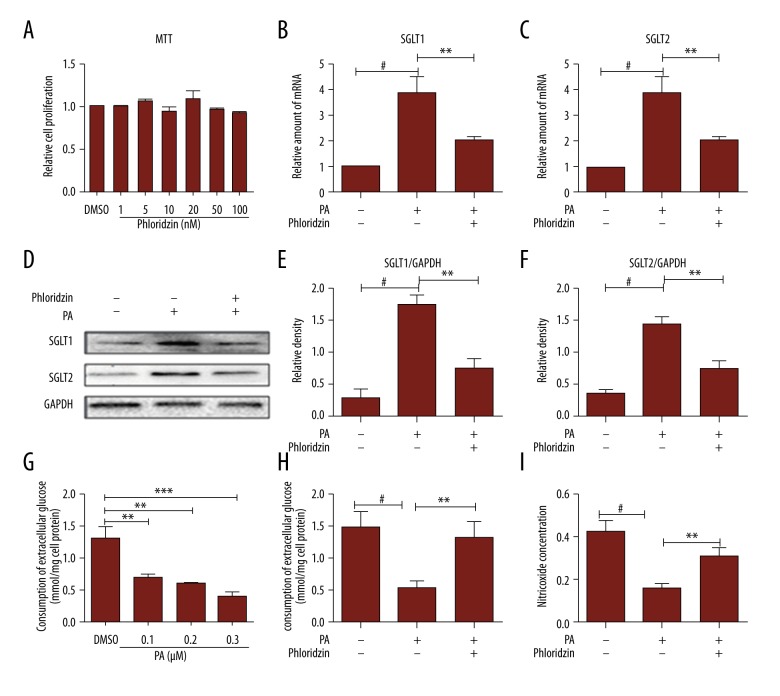
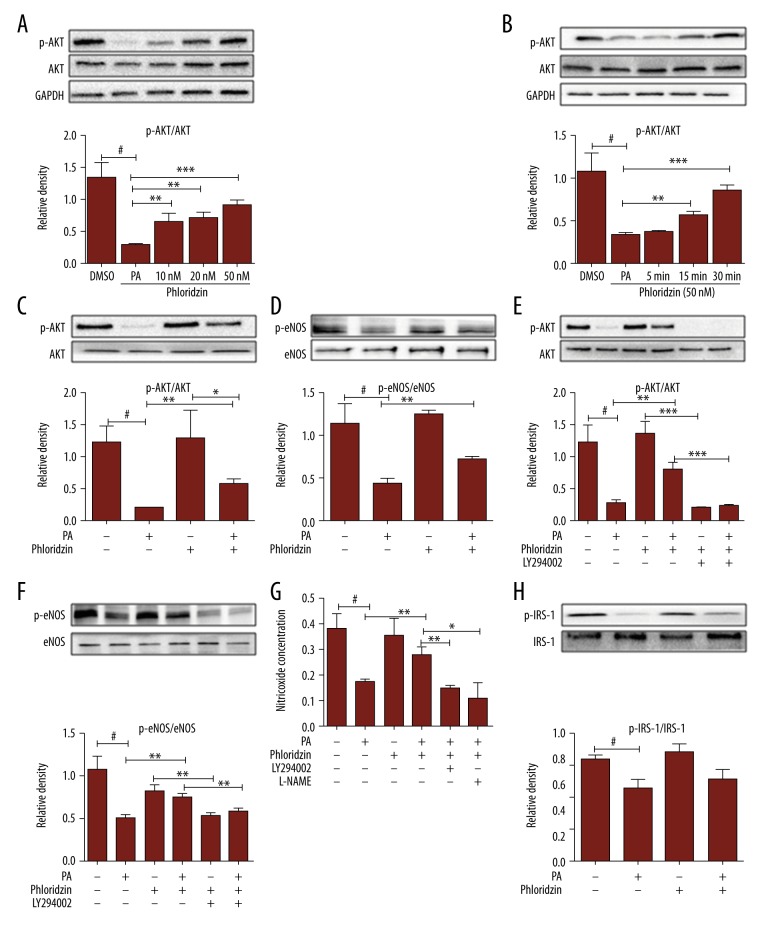
BACKGROUND Sodium glucose transporter-2 inhibitors are the newest antidiabetic drugs that seem to be cardioprotective and can prevent type 2 diabetes in patients with high cardiovascular risks. Previous clinical trials have shown that these inhibitors can alleviate endothelial dysfunction, but the mechanism of action remains unknown. How SGLT inhibitor influences the release of NO in PA-induced HUVECs has never been reported. MATERIAL AND METHODS To explore the potential effects of the endothelial-protective mechanism of phlorizin and its impact on nitric oxide (NO), human umbilical vein endothelial cells (HUVECs) were incubated with palmitic acid (PA) and then treated with phlorizin. Western blotting was performed to assess the phosphorylation of AKT, eNOS, and IRS-1. To further explore potential targets, siRNA transfection was used to demonstrate the role of SGLT1 and SGLT2. RESULTS Phlorizin suppressed the expression of SGLT1 and SGLT2, activated the PI3K/AKT/eNOS signaling pathway, increased the output of NO, and promoted the consumption of glucose in PA-induced HUVECs. Through demonstrating siRNA suppression of the expression of SGLT1 and SGLT2 in PA-induced HUVECs, this study provides a new understanding of the mechanism behind SGLT1 and SGLT2. CONCLUSIONS Our data demonstrate that phlorizin ameliorates the endothelial dysfunction link with the activation of the PI3K/AKT/eNOS signaling pathway and augmentation of the release of NO, partially through suppressing the expression of SGLT1 and SGLT2 in PA-induced HUVECS.
背景 钠-葡萄糖协同转运蛋白2抑制剂是最新的抗糖尿病药物,似乎具有心脏保护作用,可预防心血管风险高的患者发生2型糖尿病。先前的临床试验表明,这些抑制剂可缓解内皮功能障碍,但其作用机制尚不清楚。钠-葡萄糖协同转运蛋白(SGLT)抑制剂如何影响棕榈酸(PA)诱导的人脐静脉内皮细胞(HUVECs)中一氧化氮(NO)的释放尚未见报道。
材料与方法 为了探究根皮苷内皮保护机制的潜在作用及其对一氧化氮(NO)的影响,将人脐静脉内皮细胞(HUVECs)与棕榈酸(PA)孵育,然后用根皮苷处理。采用蛋白质免疫印迹法评估AKT、内皮型一氧化氮合酶(eNOS)和胰岛素受体底物1(IRS-1)的磷酸化情况。为进一步探究潜在靶点,使用小干扰RNA(siRNA)转染来证明SGLT1和SGLT2的作用。
结果 根皮苷抑制了SGLT1和SGLT2的表达,激活了磷脂酰肌醇-3激酶(PI3K)/AKT/eNOS信号通路,增加了NO的生成,并促进了PA诱导的HUVECs中的葡萄糖消耗。通过证明siRNA抑制PA诱导的HUVECs中SGLT1和SGLT2的表达,本研究对SGLT1和SGLT2背后的机制有了新的认识。
结论 我们的数据表明,根皮苷可改善内皮功能障碍,这与PI3K/AKT/eNOS信号通路的激活和NO释放的增加有关,部分是通过抑制PA诱导的HUVECs中SGLT1和SGLT2的表达实现的。