Castiblanco Diana P, Maul Robert W, Russell Knode Lisa M, Gearhart Patricia J
Laboratory of Molecular Biology and Immunology, National Institute on Aging, National Institutes of Health, Baltimore, MD, United States.
Front Immunol. 2017 Dec 19;8:1833. doi: 10.3389/fimmu.2017.01833. eCollection 2017.
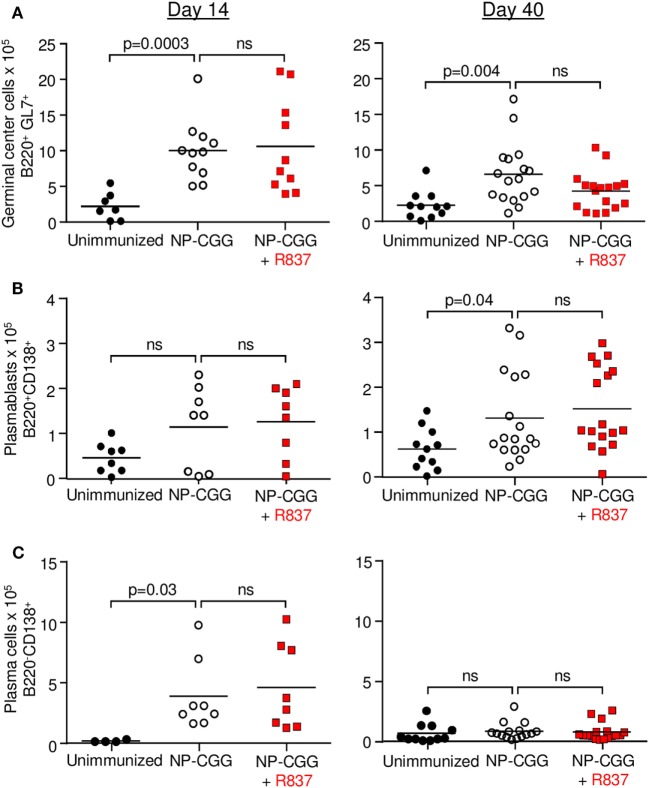
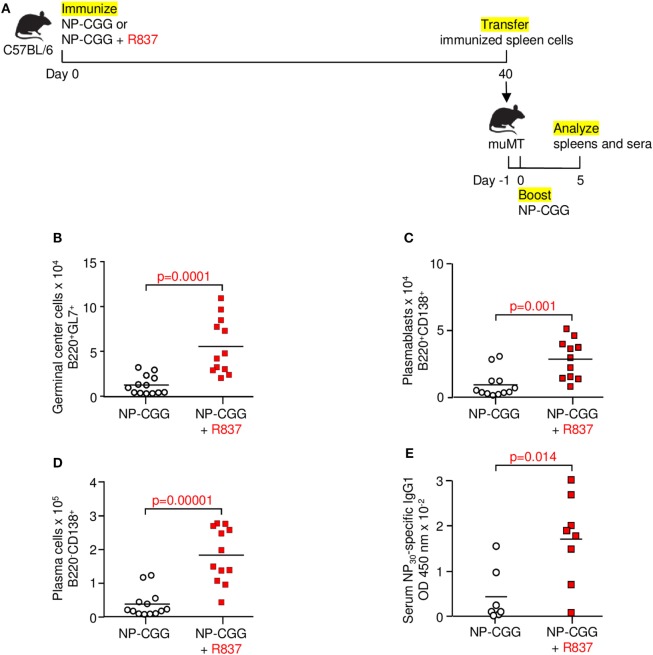
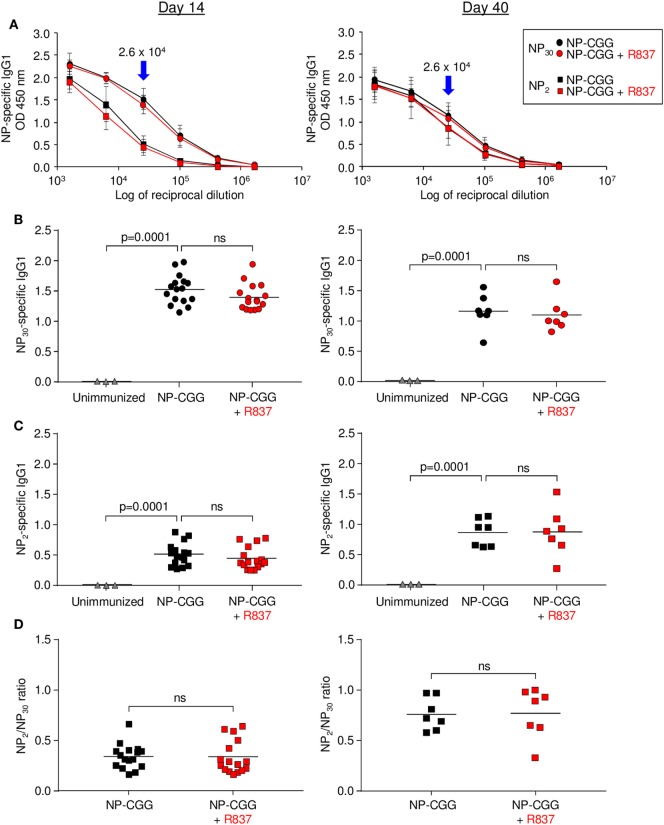
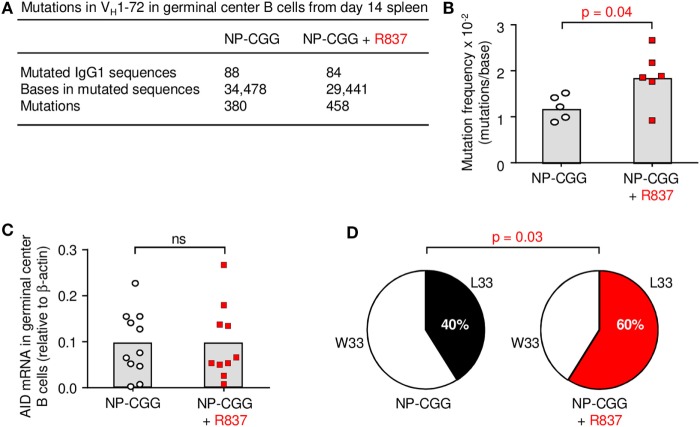
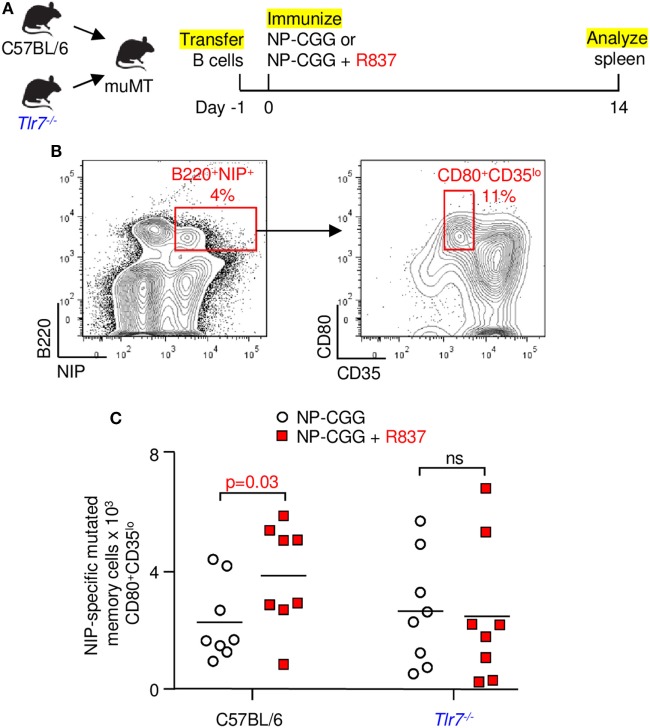
The goal of immunization is to produce both a flood of antibodies to neutralize antigen and memory cells to accelerate the secondary response. To enhance the generation of memory B cells, we examined the effect of co-engaging BCR and toll-like receptor (TLR) 7 receptors by immunizing mice with a hapten-protein antigen, NP-CGG, and a ligand, R837 (imiquimod). During the early and late primary responses, there was no augmentation with R837 on the number of germinal center B cells or serum antibody. However, in the niche of germinal centers, R837 increased somatic hypermutation in the canonical V1-72 gene that encodes NP-specific antibody. Increased mutation was not due to enhanced expression of activation-induced deaminase, but was likely a result of selection for high-affinity B cells with altered codons in the gene. This correlated with the appearance of antigen-specific B cells with a memory phenotype, which was intrinsic to TLR7 on B cells. To determine if these memory cells produced a recall response after a secondary challenge, spleen cells from mice that were immunized with NP-CGG and R837 were adoptively transferred into muMT recipients, and boosted with NP-CGG. Cells from mice that initially received both antigen and R837 generated a robust increase in germinal center B cells, plasmablasts, plasma cells, and serum antibody, compared with their cohorts who received antigen alone. These results support the use of co-immunization with TLR7 ligands to promote vigorous memory B cell responses to protein antigens.
免疫的目标是产生大量抗体以中和抗原,并产生记忆细胞以加速二次免疫反应。为了增强记忆B细胞的生成,我们通过用半抗原-蛋白质抗原NP-CGG和一种配体R837(咪喹莫特)免疫小鼠,研究了共刺激B细胞受体(BCR)和Toll样受体(TLR)7受体的效果。在初次免疫反应的早期和晚期,R837对生发中心B细胞数量或血清抗体均无增强作用。然而,在生发中心的微环境中,R837增加了编码NP特异性抗体的典型V1-72基因中的体细胞超突变。突变增加并非由于激活诱导的脱氨酶表达增强,而可能是基因中密码子改变的高亲和力B细胞被选择的结果。这与具有记忆表型的抗原特异性B细胞的出现相关,这是B细胞上TLR7所固有的。为了确定这些记忆细胞在二次攻击后是否产生回忆反应,将用NP-CGG和R837免疫的小鼠的脾细胞过继转移到μMT受体中,并用NP-CGG进行加强免疫。与仅接受抗原的同组小鼠相比,最初同时接受抗原和R837的小鼠的细胞在生发中心B细胞、浆母细胞、浆细胞和血清抗体方面产生了强劲的增加。这些结果支持使用TLR7配体进行联合免疫,以促进对蛋白质抗原产生强烈的记忆B细胞反应。