Jennemann Richard, Federico Giuseppina, Mathow Daniel, Rabionet Mariona, Rampoldi Francesca, Popovic Zoran V, Volz Martina, Hielscher Thomas, Sandhoff Roger, Gröne Hermann-Josef
Department of Cellular and Molecular Pathology, German Cancer Research Center, Heidelberg, Germany.
Lipid Pathobiochemistry Group, German Cancer Research Center, Heidelberg, Germany.
Oncotarget. 2017 Nov 24;8(65):109201-109216. doi: 10.18632/oncotarget.22648. eCollection 2017 Dec 12.
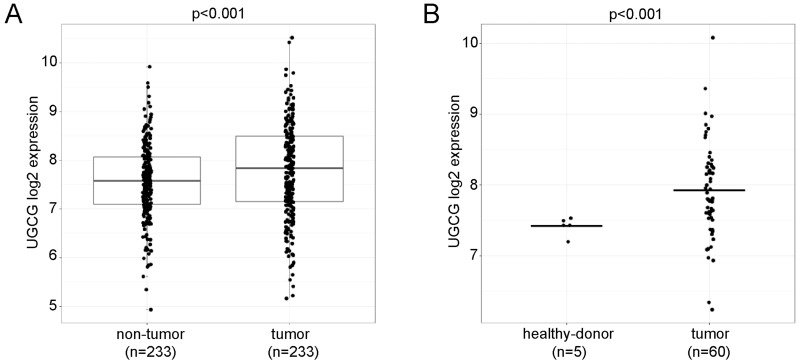
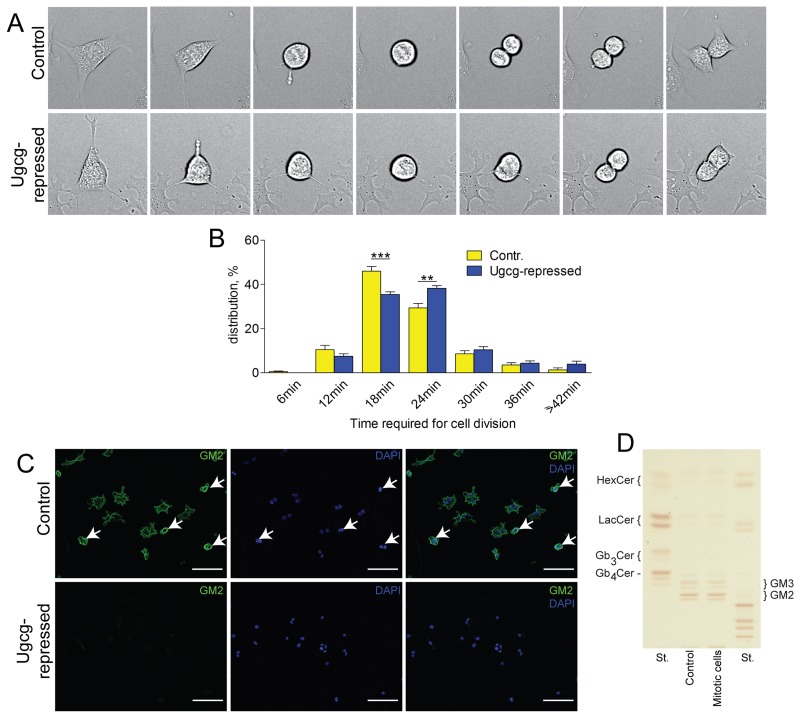
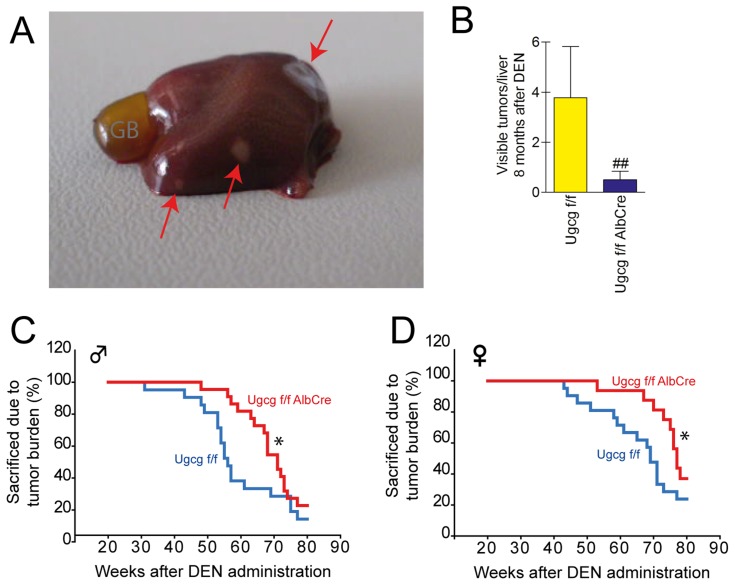
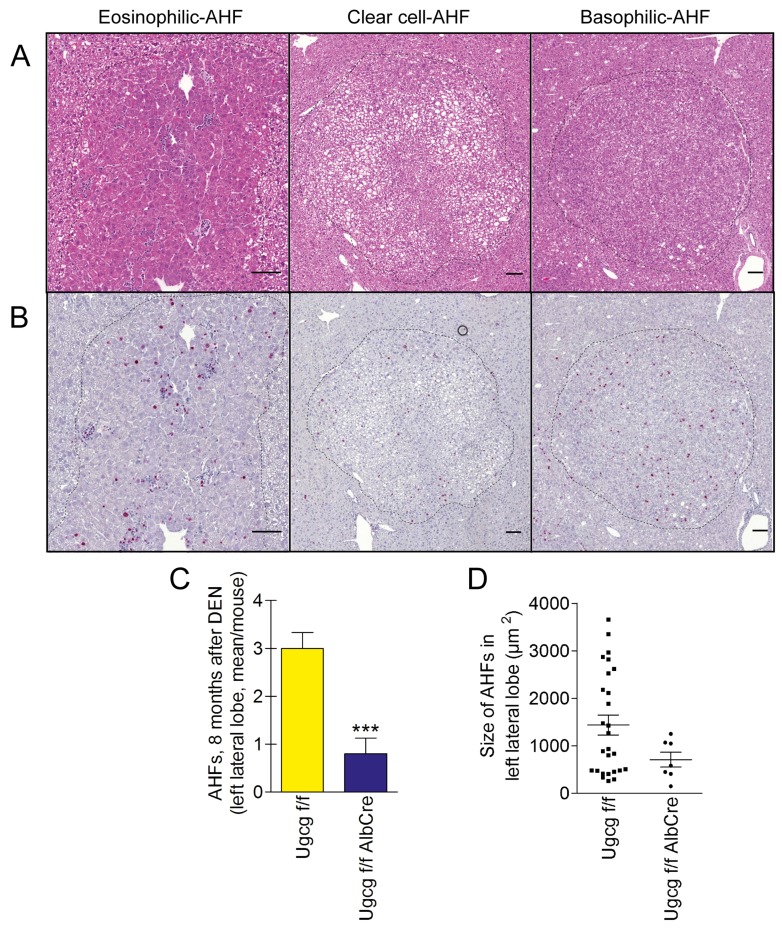
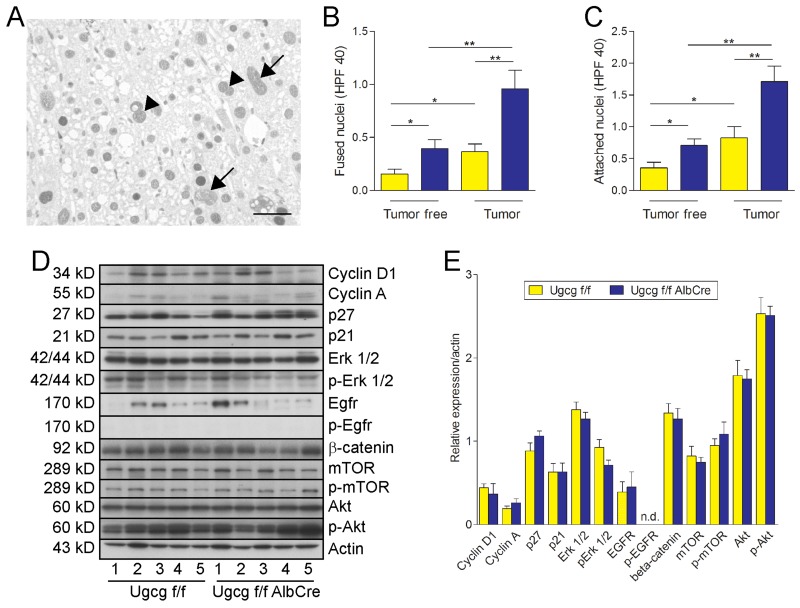
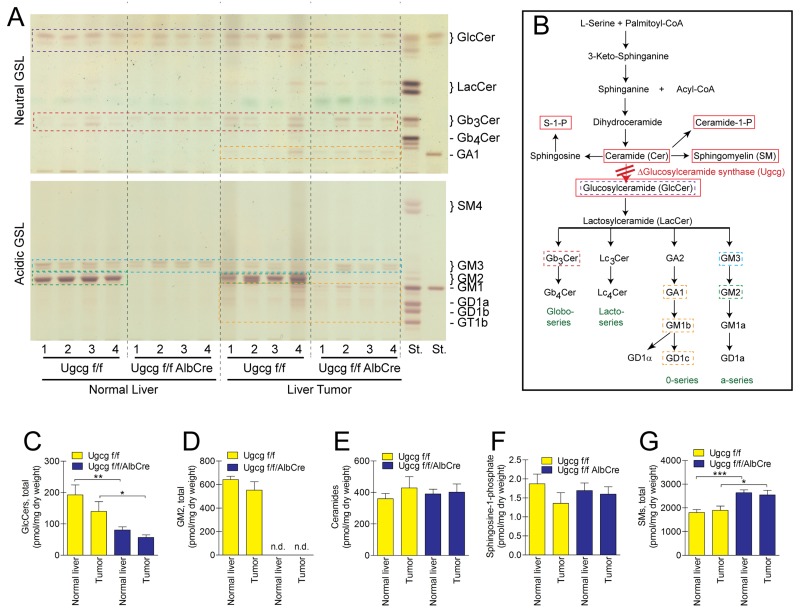
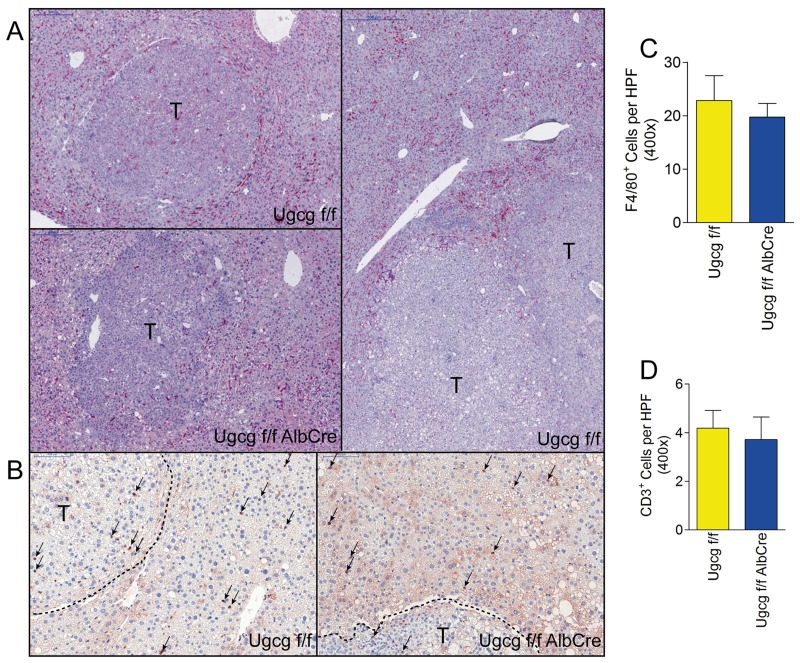
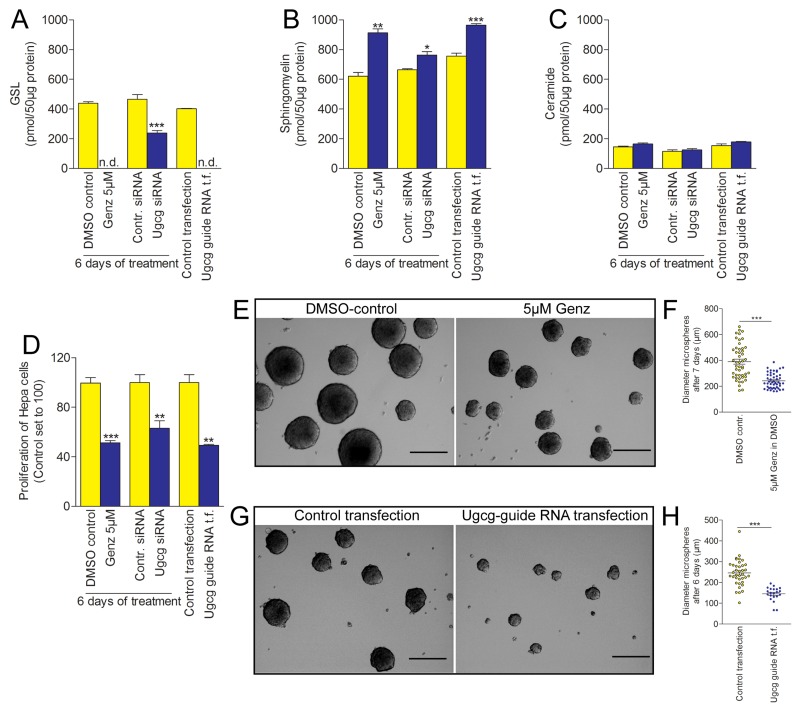
Hepatocellular carcinoma (HCC) is one of the most frequent cancers. studies suggest that growth and response to therapy of human carcinomas may depend on glycosphingolipid (GSL) expression. Glucosylceramide synthase (GCS), encoded by the gene , is the basic enzyme required for the synthesis of GSLs. Gene array analysis implied that is significantly overexpressed in human HCC as compared to non-tumorous liver tissue. Therefore we have investigated whether tumor - genesis and - growth is altered in the absence of GSLs. An endogenous liver cancer model has been initiated by application of diethylnitrosamine in mice lacking specifically in hepatocytes. We have now shown that hepatocellular tumor initiation and growth in mice is significantly inhibited by hepatic GSL deficiency . Neither the expression of cell cycle proteins, such as cyclins and pathways such as the MAP-kinase/Erk pathway nor the mTOR/Akt pathway as well as the number of liver infiltrating macrophages and T cells were essentially changed in tumors lacking GSLs. Significantly elevated bi-nucleation of atypical hepatocytes, a feature for impaired cytokinesis, was detected in tumors of mice lacking liver-specific GSLs. A reduction of proliferation and restricted growth of tumor microspheres due to delayed, GSL-dependent cytokinesis, analogous to the histopathologic phenotype could be demonstrated . GSL synthesis inhibition may thus constitute a potential therapeutic target for hepatocellular carcinoma.
肝细胞癌(HCC)是最常见的癌症之一。研究表明,人类癌症的生长和对治疗的反应可能取决于糖鞘脂(GSL)的表达。由该基因编码的葡糖神经酰胺合酶(GCS)是合成GSL所需的基本酶。基因阵列分析表明,与非肿瘤性肝组织相比,该基因在人类HCC中显著过表达。因此,我们研究了在缺乏GSL的情况下肿瘤的发生和生长是否会改变。通过在肝细胞中特异性缺乏该基因的小鼠中应用二乙基亚硝胺建立了一种内源性肝癌模型。我们现在已经表明,肝脏GSL缺乏会显著抑制小鼠肝细胞肿瘤的起始和生长。在缺乏GSL的肿瘤中,细胞周期蛋白(如细胞周期蛋白)的表达、MAP激酶/Erk途径以及mTOR/Akt途径等信号通路,以及肝脏浸润巨噬细胞和T细胞的数量基本没有变化。在缺乏肝脏特异性GSL的小鼠肿瘤中,检测到非典型肝细胞的双核化显著增加,这是细胞分裂受损的一个特征。由于延迟的、依赖GSL的细胞分裂,肿瘤微球的增殖减少和生长受限,类似于组织病理学表型,可以得到证实。因此,GSL合成抑制可能构成肝细胞癌的一个潜在治疗靶点。