Liu Qing-Hua, Wang You, Yong Hong-Mei, Hou Ping-Fu, Pan Jie, Bai Jin, Zheng Jun-Nian
Jiangsu Key Laboratory of Biological Cancer Therapy, Xuzhou Medical University, Xuzhou 221002, Jiangsu Province, China.
Department of Pathology, Xuzhou Medical University, Xuzhou 221002, Jiangsu Province, China.
Oncotarget. 2017 Nov 25;8(65):109382-109392. doi: 10.18632/oncotarget.22680. eCollection 2017 Dec 12.
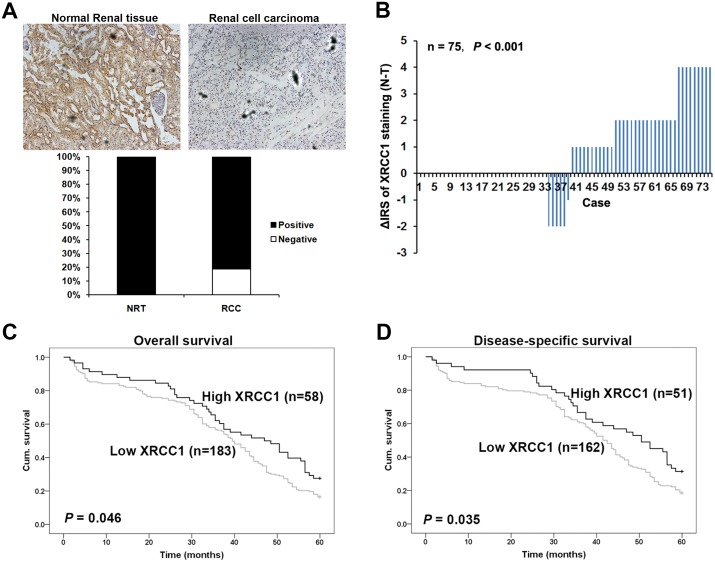
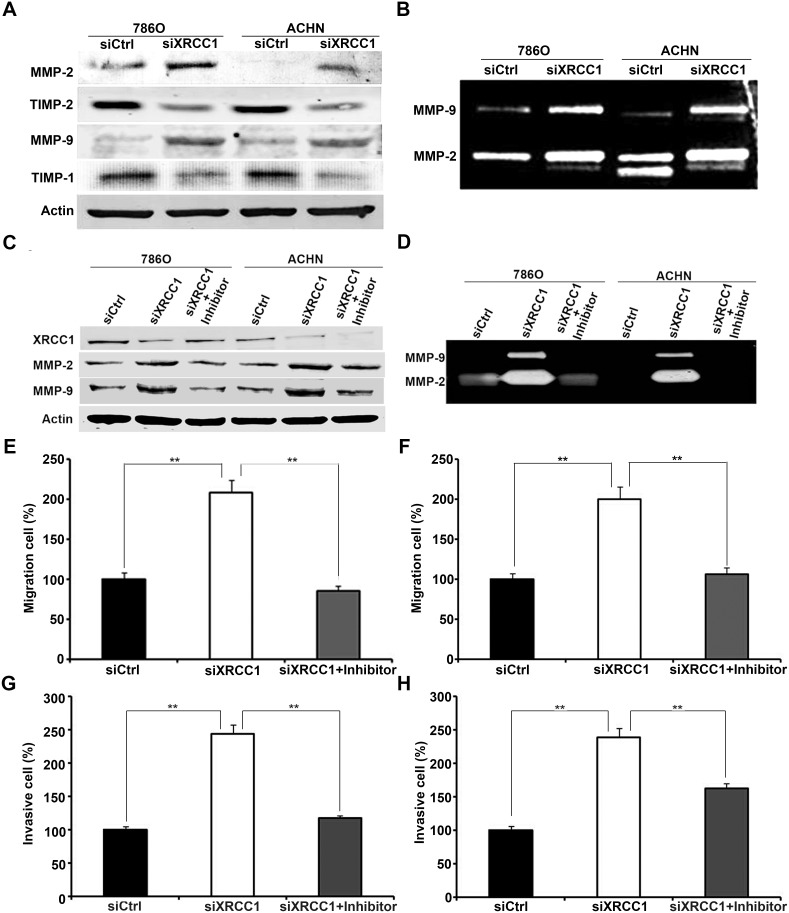
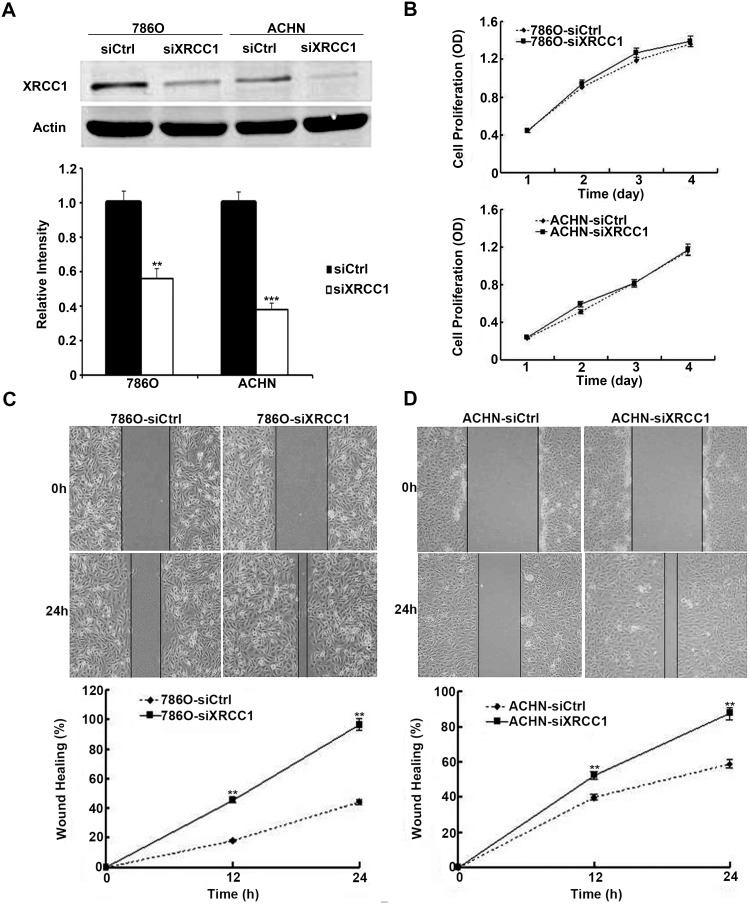
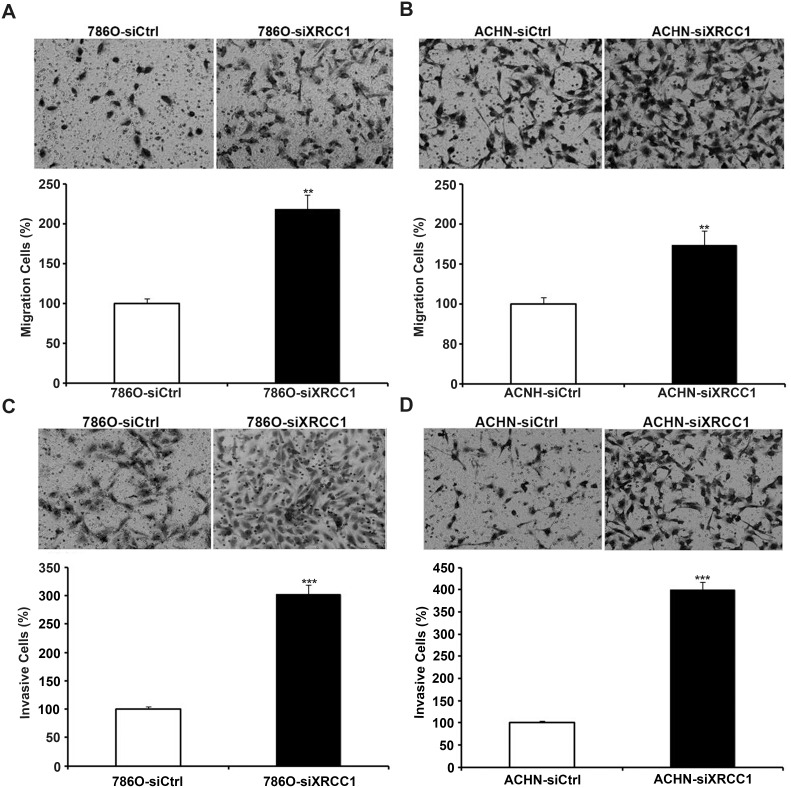
X-ray repair cross-complementing group 1 (XRCC1) is a major DNA repair gene that is responsible for fixing DNA base damage and single-strand breaks by interacting with DNA components at the damage site. This study explored the clinical significance of XRCC1 in human clear cell renal cell carcinoma (ccRCC) and further examined the mechanism of the role of XRCC1 in ccRCC. The clinical relevance of XRCC1 in ccRCC was evaluated using tissue microarrays and immunohistochemical staining of two independent human ccRCC cohorts. Our data demonstrated that XRCC1 expression was dramatically decreased in ccRCC tissues compared with that in normal renal tissues and paired adjacent non-tumor tissues. Low XRCC1 expression was significantly correlated with lymph node metastasis and with worse overall and disease-specific survival in patients, as determined by log-rank tests. However, Cox regression analysis revealed that XRCC1 expression was not an independent prognostic factor in ccRCC patients. Furthermore, XRCC1 suppressed ccRCC migration and invasion by inhibiting MMP-2 and MMP-9 expression through the regulation of TIMP-2 and TIMP-1. These findings indicated that decreased XRCC1 expression was associated with lymph node metastasis but was not an independent prognostic factor in ccRCC patients. XRCC1 may serve as a potential therapeutic target for inhibiting ccRCC metastasis but cannot be used as an independent prognostic factor.
X射线修复交叉互补基因1(XRCC1)是一种主要的DNA修复基因,通过与损伤部位的DNA成分相互作用来修复DNA碱基损伤和单链断裂。本研究探讨了XRCC1在人类透明细胞肾细胞癌(ccRCC)中的临床意义,并进一步研究了XRCC1在ccRCC中发挥作用的机制。使用组织芯片和对两个独立的人类ccRCC队列进行免疫组化染色,评估了XRCC1在ccRCC中的临床相关性。我们的数据表明,与正常肾组织和配对的相邻非肿瘤组织相比,ccRCC组织中XRCC1的表达显著降低。通过对数秩检验确定,低XRCC1表达与淋巴结转移以及患者较差的总生存期和疾病特异性生存期显著相关。然而,Cox回归分析显示,XRCC1表达不是ccRCC患者的独立预后因素。此外,XRCC1通过调节TIMP-2和TIMP-1抑制MMP-2和MMP-9的表达,从而抑制ccRCC的迁移和侵袭。这些发现表明,XRCC1表达降低与淋巴结转移有关,但不是ccRCC患者的独立预后因素。XRCC1可能作为抑制ccRCC转移的潜在治疗靶点,但不能用作独立的预后因素。