Monaco Antonio, Capriello Teresa, Grimaldi Maria C, Schiano Valentina, Ferrandino Ida
University of Naples Federico II, Department of Biology.
Eur J Histochem. 2017 Oct 19;61(4):2833. doi: 10.4081/ejh.2017.2833.
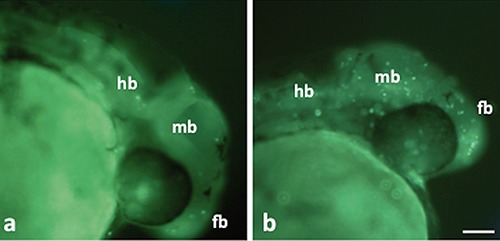
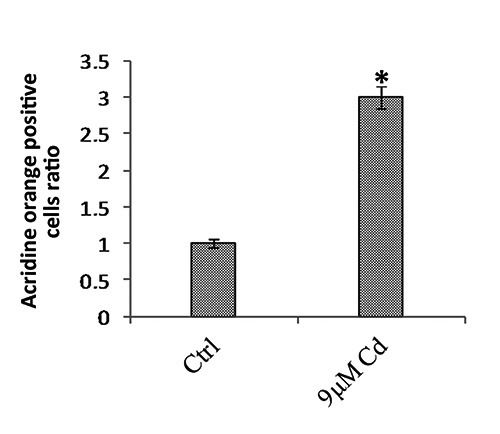
Cadmium is a biologically non-essential metal. It is also toxic to many organs including the brain. The aim of this study was to analyse the neurodegenerative effects of this metal in embryos and adults of zebrafish exposed to sub-lethal concentrations of cadmium. The study was performed by cytochemical stainings. Six hours after fertilisation (hpf) zebrafish embryos were treated for 24 hours with 9 μM of cadmium and subsequently stained with Acridine orange in whole mount to detect apoptosis in the brain. Adult zebrafish were treated for 16 days with the same concentration of cadmium, and cell death in the brain was detected by Fluoro-Jade B staining at 2, 7 and 16 days of treatment. An increase in cell death was observed only at 16 days of treatment in adults, while an increase in apoptotic events was revealed in the brain of embryos after 24 h of treatment. This evidence is indicative that cadmium, even at a sub-lethal concentration, induces cell death in the brain of embryos but also in adults of zebrafish in which the phenomenon appears time-dependent.Â.
镉是一种对生物非必需的金属。它对包括大脑在内的许多器官也有毒性。本研究的目的是分析这种金属在暴露于亚致死浓度镉的斑马鱼胚胎和成年鱼中的神经退行性影响。该研究通过细胞化学染色进行。受精后6小时(hpf),将斑马鱼胚胎用9μM镉处理24小时,随后进行整体吖啶橙染色以检测大脑中的细胞凋亡。成年斑马鱼用相同浓度的镉处理16天,并在处理的第2、7和16天通过荧光玉髓B染色检测大脑中的细胞死亡。仅在成年鱼处理16天时观察到细胞死亡增加,而在处理24小时后胚胎大脑中显示出凋亡事件增加。这一证据表明,即使在亚致死浓度下,镉也会在胚胎大脑中诱导细胞死亡,在成年斑马鱼中也是如此,且这种现象呈现时间依赖性。