Osterndorff-Kahanek Elizabeth A, Tiwari Gayatri R, Lopez Marcelo F, Becker Howard C, Harris R Adron, Mayfield R Dayne
Waggoner Center for Alcohol and Addiction Research, University of Texas at Austin, Austin, Texas, United States of America.
Department of Psychiatry and Behavioral Sciences, Medical University of South Carolina, Charleston, South Carolina, United States of America.
PLoS One. 2018 Jan 9;13(1):e0190841. doi: 10.1371/journal.pone.0190841. eCollection 2018.
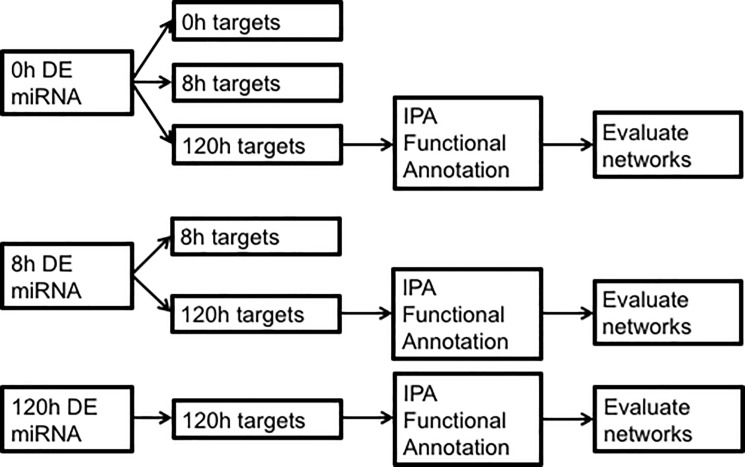
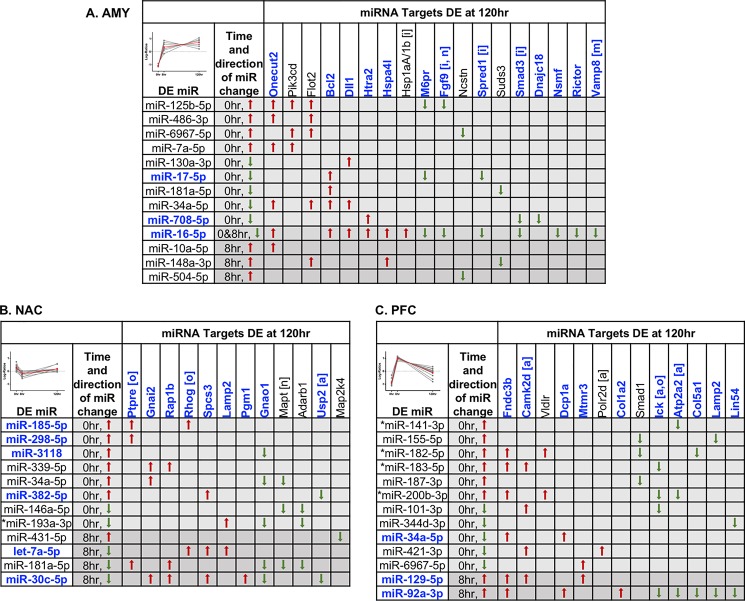
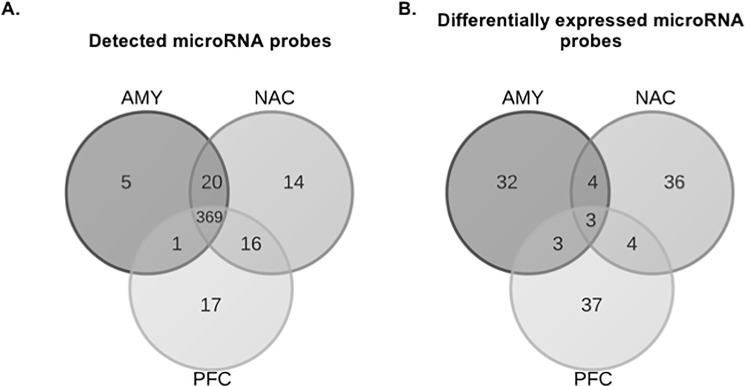
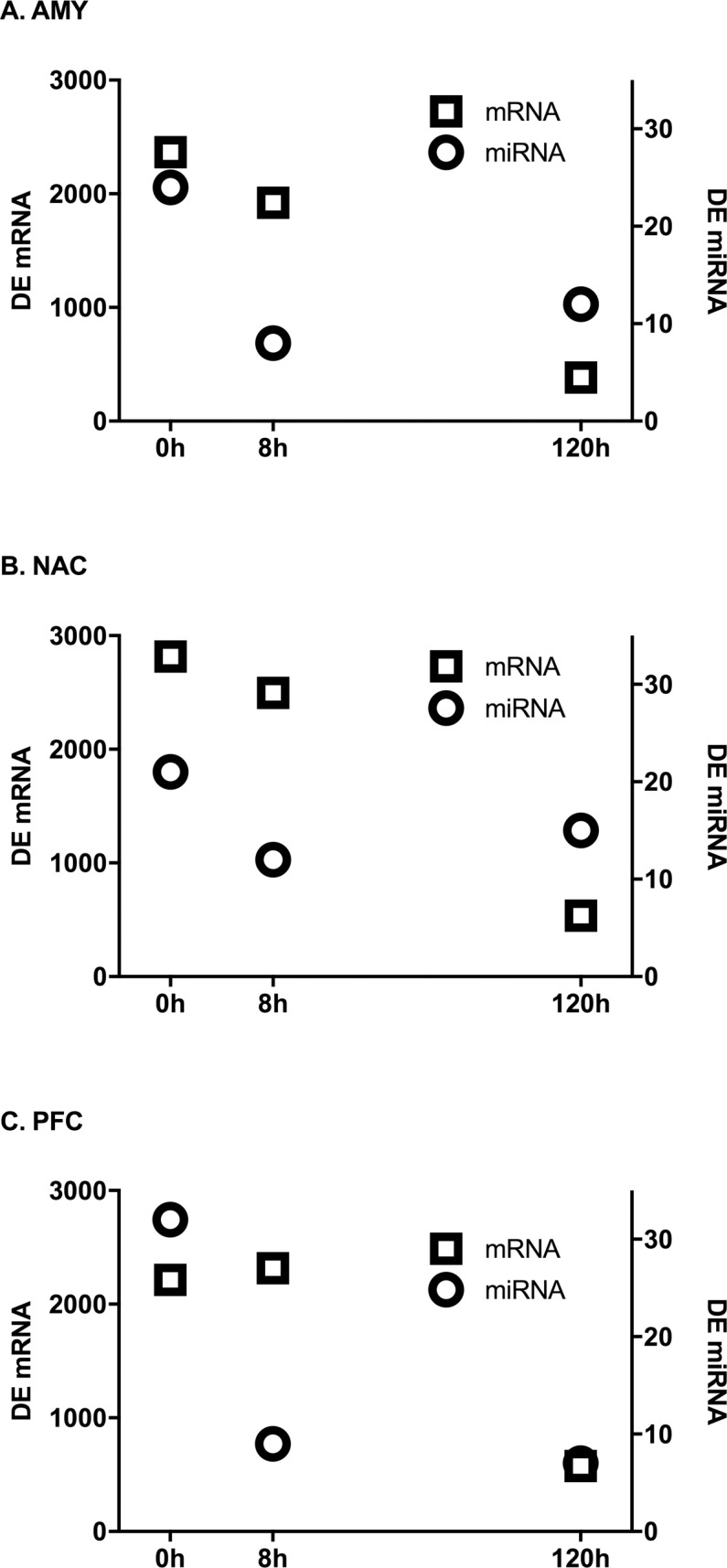
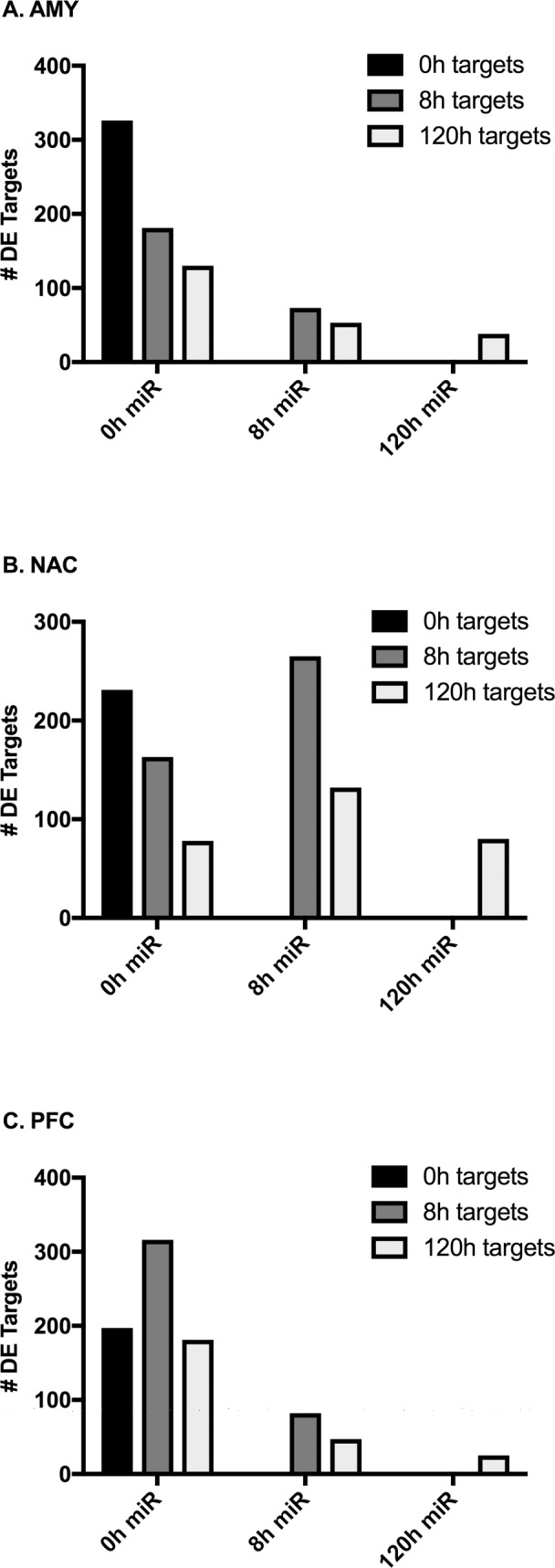
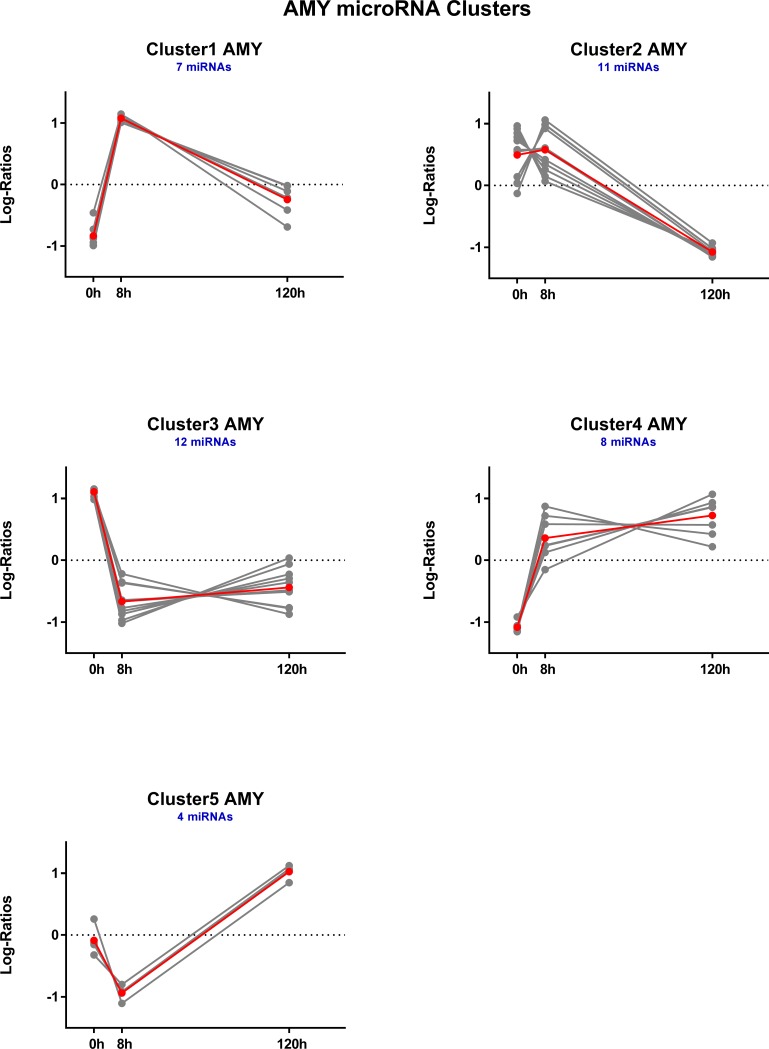
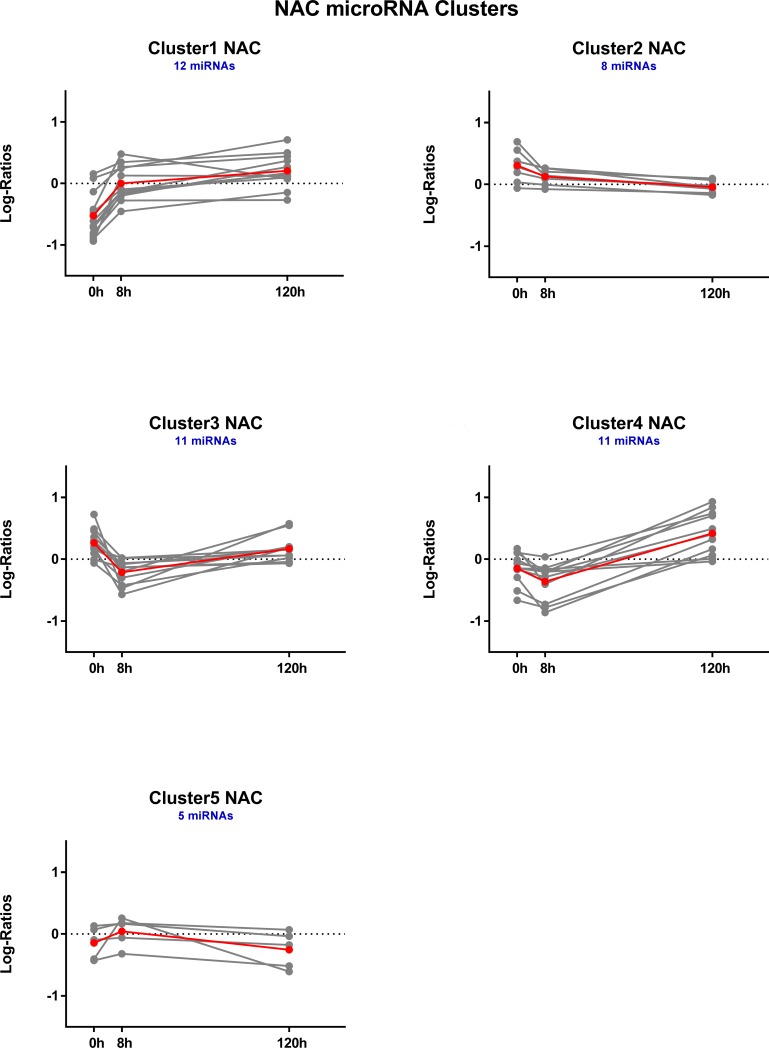
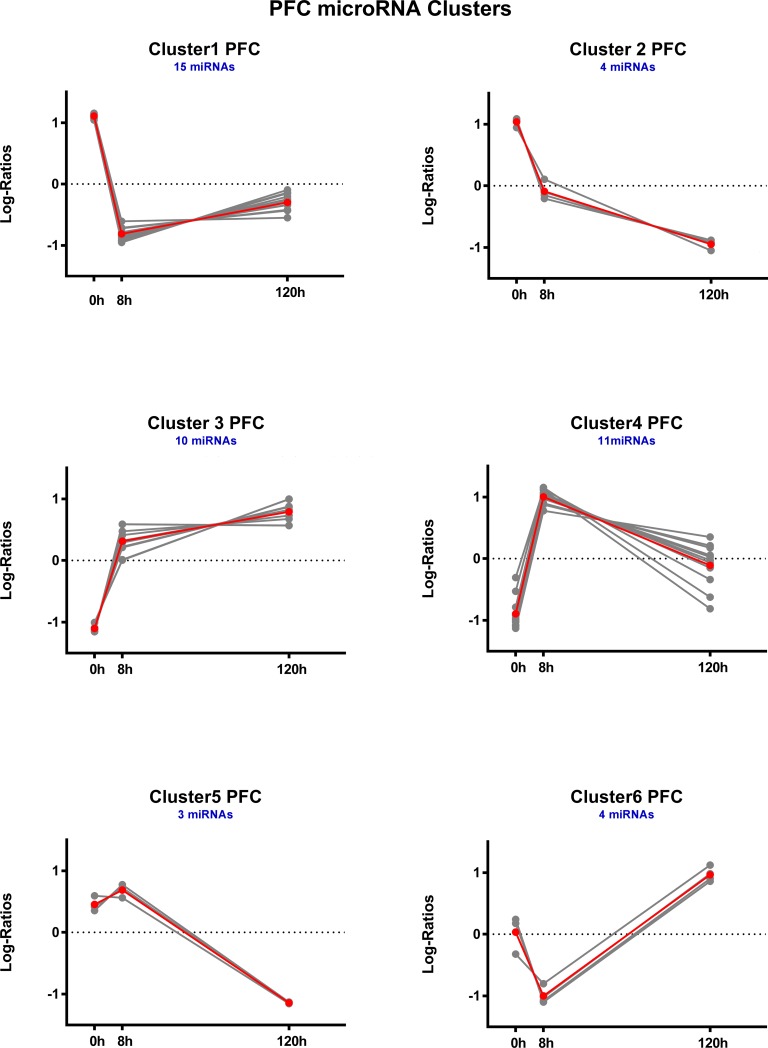
Long-term alcohol use can result in lasting changes in brain function, ultimately leading to alcohol dependence. These functional alterations arise from dysregulation of complex gene networks, and growing evidence implicates microRNAs as key regulators of these networks. We examined time- and brain region-dependent changes in microRNA expression after chronic intermittent ethanol (CIE) exposure in C57BL/6J mice. Animals were sacrificed at 0, 8, and 120h following the last exposure to four weekly cycles of CIE vapor and we measured microRNA expression in prefrontal cortex (PFC), nucleus accumbens (NAC), and amygdala (AMY). The number of detected (395-419) and differentially expressed (DE, 42-47) microRNAs was similar within each brain region. However, the DE microRNAs were distinct among brain regions and across time within each brain region. DE microRNAs were linked with their DE mRNA targets across each brain region. In all brain regions, the greatest number of DE mRNA targets occurred at the 0 or 8h time points and these changes were associated with microRNAs DE at 0 or 8h. Two separate approaches (discrete temporal association and hierarchical clustering) were combined with pathway analysis to further characterize the temporal relationships between DE microRNAs and their 120h DE targets. We focused on targets dysregulated at 120h as this time point represents a state of protracted withdrawal known to promote an increase in subsequent ethanol consumption. Discrete temporal association analysis identified networks with highly connected genes including ERK1/2 (mouse equivalent Mapk3, Mapk1), Bcl2 (in AMY networks) and Srf (in PFC networks). Similarly, the cluster-based analysis identified hub genes that include Bcl2 (in AMY networks) and Srf in PFC networks, demonstrating robust microRNA-mRNA network alterations in response to CIE exposure. In contrast, datasets utilizing targets from 0 and 8h microRNAs identified NF-kB-centered networks (in NAC and PFC), and Smad3-centered networks (in AMY). These results demonstrate that CIE exposure results in dynamic and complex temporal changes in microRNA-mRNA gene network structure.
长期饮酒会导致大脑功能发生持久变化,最终导致酒精依赖。这些功能改变源于复杂基因网络的失调,越来越多的证据表明微小RNA是这些网络的关键调节因子。我们研究了C57BL/6J小鼠慢性间歇性乙醇(CIE)暴露后微小RNA表达随时间和脑区的变化。在最后一次暴露于四周周期的CIE蒸汽后的0、8和120小时处死动物,我们测量了前额叶皮质(PFC)、伏隔核(NAC)和杏仁核(AMY)中的微小RNA表达。每个脑区内检测到的(395 - 419个)和差异表达的(DE,42 - 47个)微小RNA数量相似。然而,差异表达的微小RNA在不同脑区以及每个脑区内随时间而不同。差异表达的微小RNA与其在每个脑区的差异表达mRNA靶标相关联。在所有脑区中,差异表达mRNA靶标的最大数量出现在0或8小时时间点,这些变化与0或8小时差异表达的微小RNA相关。将两种独立的方法(离散时间关联和层次聚类)与通路分析相结合,以进一步表征差异表达的微小RNA与其120小时差异表达靶标之间的时间关系。我们关注在120小时失调的靶标,因为这个时间点代表了一种已知会促进后续乙醇消耗增加的长期戒断状态。离散时间关联分析确定了具有高度连接基因的网络,包括ERK1/2(小鼠等效基因Mapk3、Mapk1)、Bcl2(在杏仁核网络中)和Srf(在前额叶皮质网络中)。同样,基于聚类的分析确定了枢纽基因,包括Bcl2(在杏仁核网络中)和前额叶皮质网络中的Srf,表明对CIE暴露有强大的微小RNA - mRNA网络改变。相比之下,利用0和8小时微小RNA靶标的数据集确定了以NF - kB为中心的网络(在伏隔核和前额叶皮质中)以及以Smad3为中心的网络(在杏仁核中)。这些结果表明,CIE暴露导致微小RNA - mRNA基因网络结构发生动态和复杂的时间变化。