Department of Biology, University of North Carolina, Chapel Hill, North Carolina 27599, USA.
School of Medicine, Vanderbilt University, Nashville, Tennessee 37232, USA.
RNA. 2018 Apr;24(4):513-528. doi: 10.1261/rna.064469.117. Epub 2018 Jan 9.
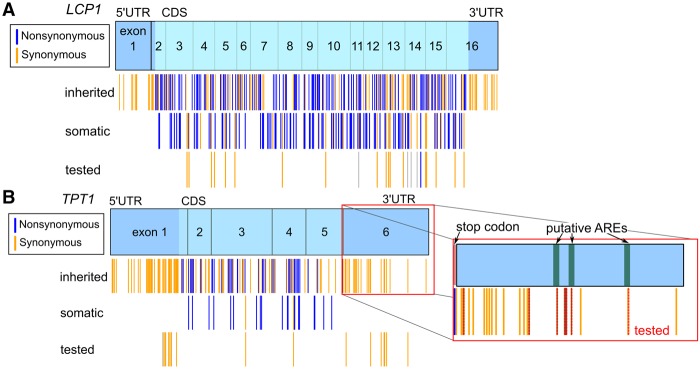
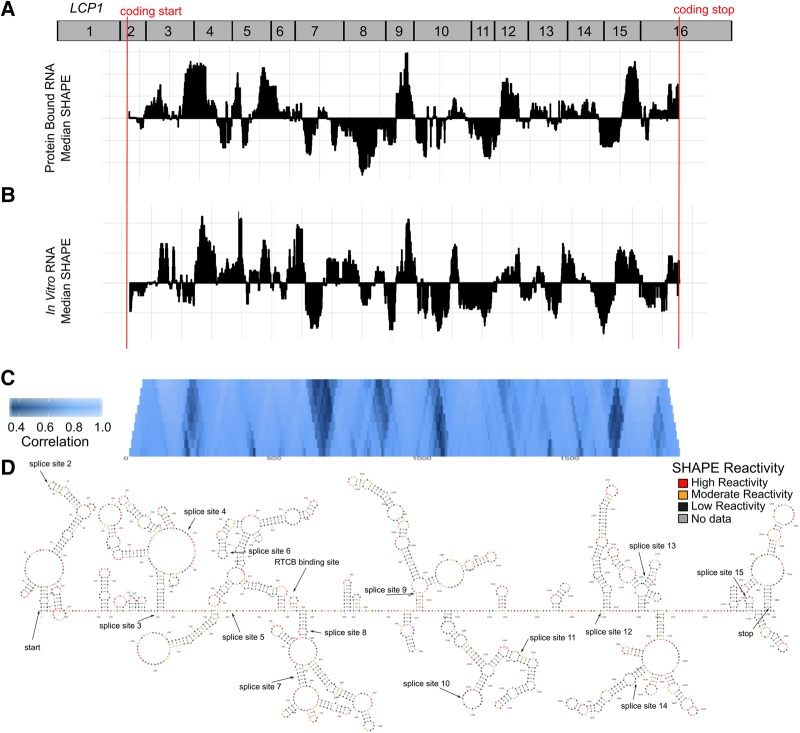
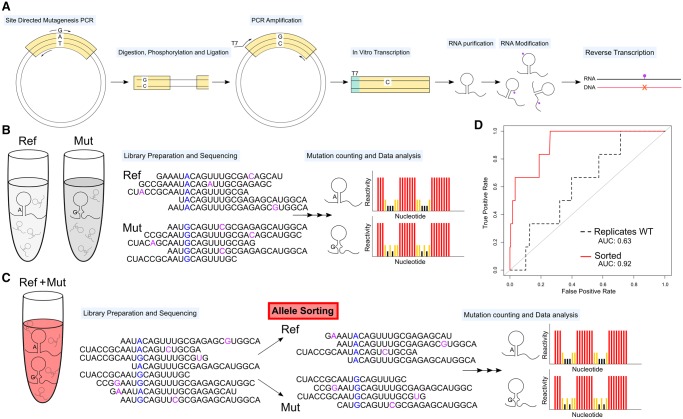
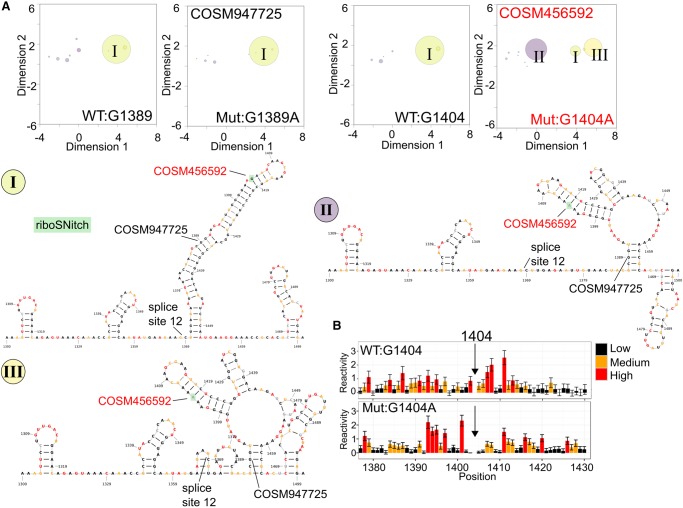
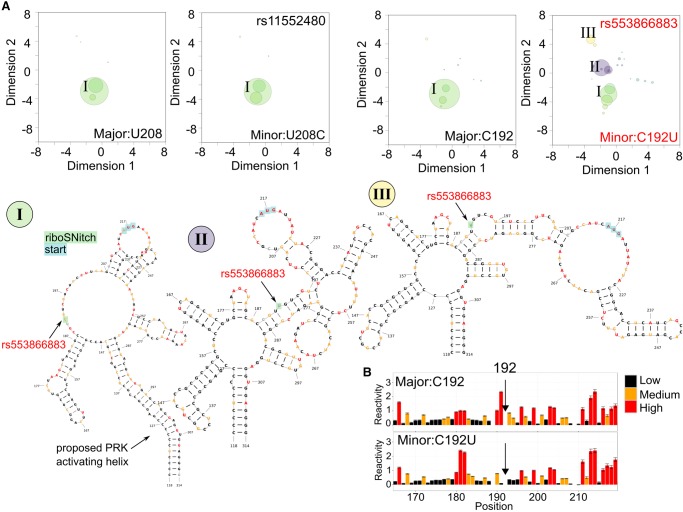
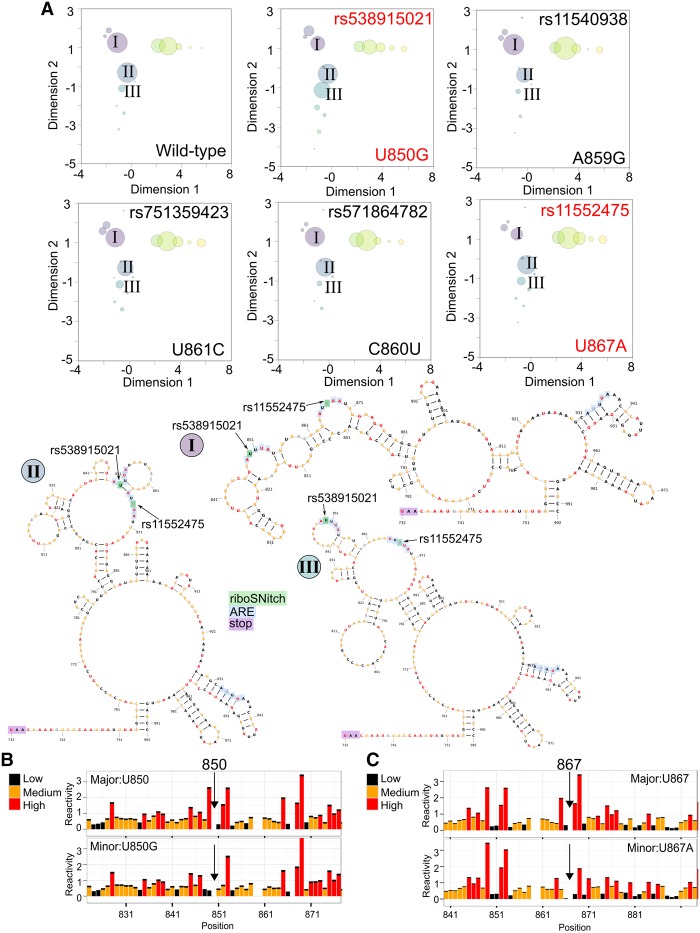
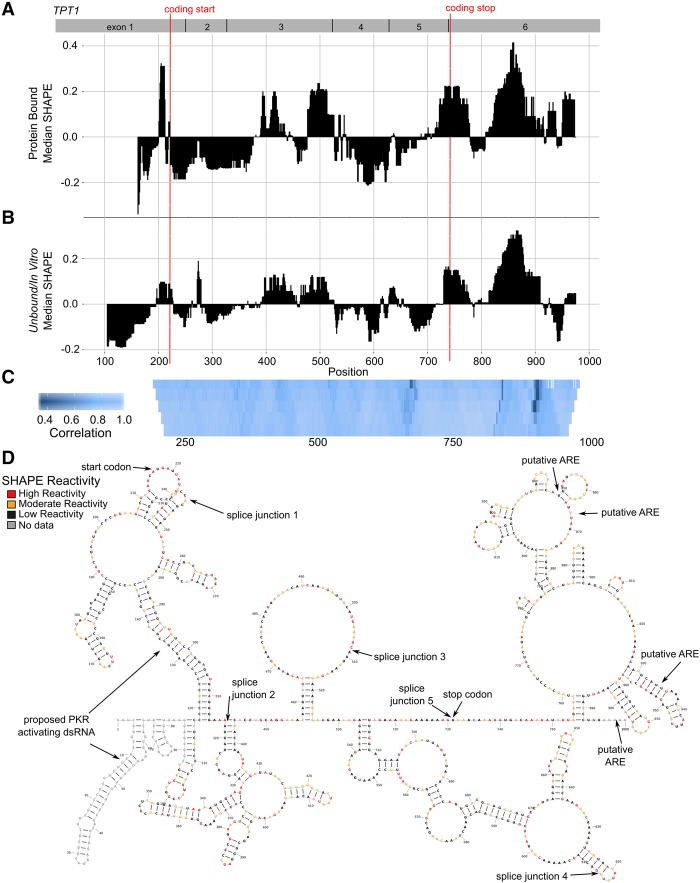
The impact of inherited and somatic mutations on messenger RNA (mRNA) structure remains poorly understood. Recent technological advances that leverage next-generation sequencing to obtain experimental structure data, such as SHAPE-MaP, can reveal structural effects of mutations, especially when these data are incorporated into structure modeling. Here, we analyze the ability of SHAPE-MaP to detect the relatively subtle structural changes caused by single-nucleotide mutations. We find that allele-specific sorting greatly improved our detection ability. Thus, we used SHAPE-MaP with a novel combination of clone-free robotic mutagenesis and allele-specific sorting to perform a rapid, comprehensive survey of noncoding somatic and inherited riboSNitches in two cancer-associated mRNAs, and Using rigorous thermodynamic modeling of the Boltzmann suboptimal ensemble, we identified a subset of mutations that change and RNA structure, with approximately 14% of all variants identified as riboSNitches. To confirm that these in vitro structures were biologically relevant, we tested how dependent and mRNA structures were on their environments. We performed SHAPE-MaP on and mRNAs in the presence or absence of cellular proteins and found that both mRNAs have similar overall folds in all conditions. RiboSNitches identified within these mRNAs in vitro likely exist under biological conditions. Overall, these data reveal a robust mRNA structural landscape where differences in environmental conditions and most sequence variants do not significantly alter RNA structural ensembles. Finally, predicting riboSNitches in mRNAs from sequence alone remains particularly challenging; these data will provide the community with benchmarks for further algorithmic development.
遗传和体细胞突变对信使 RNA(mRNA)结构的影响仍知之甚少。最近的技术进步利用下一代测序获得实验结构数据,例如 SHAPE-MaP,可以揭示突变的结构效应,尤其是当这些数据被纳入结构建模中时。在这里,我们分析了 SHAPE-MaP 检测单核苷酸突变引起的相对细微结构变化的能力。我们发现等位基因特异性分拣极大地提高了我们的检测能力。因此,我们使用 SHAPE-MaP 与无克隆机器人诱变和等位基因特异性分拣的新组合,对两种与癌症相关的 mRNA(和 )中的非编码体细胞和遗传核糖开关进行了快速、全面的调查。我们使用 Boltzmann 次优集合的严格热力学建模,确定了一组改变 和 RNA 结构的突变,大约 14%的所有变体被鉴定为核糖开关。为了确认这些体外结构具有生物学相关性,我们测试了 和 mRNA 结构对其环境的依赖性。我们在存在或不存在细胞蛋白的情况下对 和 mRNA 进行了 SHAPE-MaP,发现这两种 mRNA 在所有条件下都具有相似的整体折叠。在体外鉴定的这些 mRNA 内的核糖开关很可能在生物条件下存在。总的来说,这些数据揭示了一个稳健的 mRNA 结构景观,其中环境条件和大多数序列变体的差异不会显著改变 RNA 结构集合。最后,仅从序列预测 mRNA 中的核糖开关仍然特别具有挑战性;这些数据将为社区提供进一步算法开发的基准。