Lyu Yang, Yang Yang, Li Xin, Peng Min, He Xin, Zhang Peng, Dong Shangwen, Wang Wanhua, Wang Donghao
Department of Intensive Care Unit, Tianjin Medical University Cancer Institute and Hospital, National Clinical Research Center for Cancer, Key Laboratory of Cancer Prevention and Therapy, Tianjin, Tianjin's Clinical Research Center for Cancer.
Department of Anesthesia, Tianjin Medical University Cancer Institute and Hospital, National Clinical Research Center for Cancer, Key Laboratory of Cancer Prevention and Therapy, Tianjin, Tianjin's Clinical Research Center for Cancer.
Ther Clin Risk Manag. 2017 Dec 21;14:31-37. doi: 10.2147/TCRM.S145681. eCollection 2018.
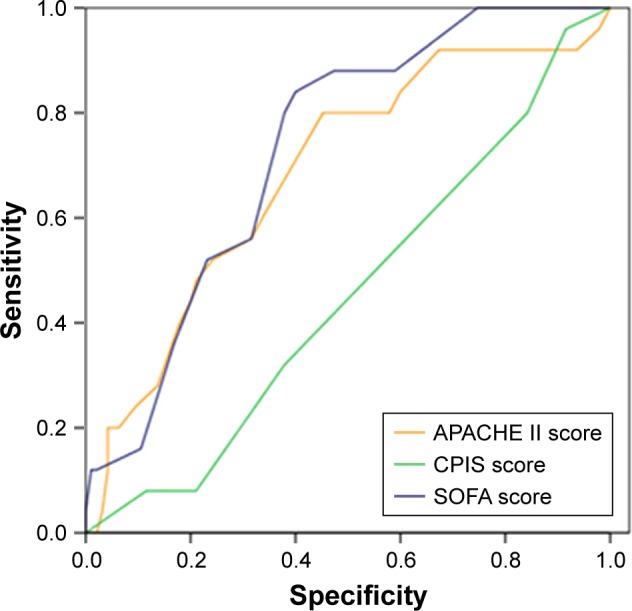
This study aimed to select piperacillin/tazobactam (TZP) infusion mode guided by Sequential Organ Failure Assessment (SOFA) score in cancer patients with hospital-acquired pneumonia (HAP) postoperation.
A total of 120 cancer patients with postoperative HAP were divided into two groups: improved administration group (L group) and conventional treatment group (Con group). The Con group received traditional infusion of TZP and the L group received it as prolonged infusion. Blood drug concentration was detected at different time points. Based on the SOFA cut-off value of 9, the patients were regrouped into M (mild) and S (severe) groups.
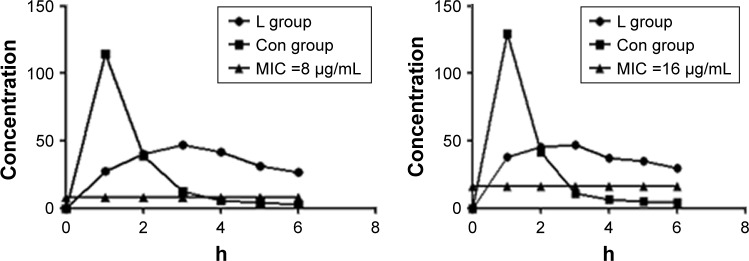
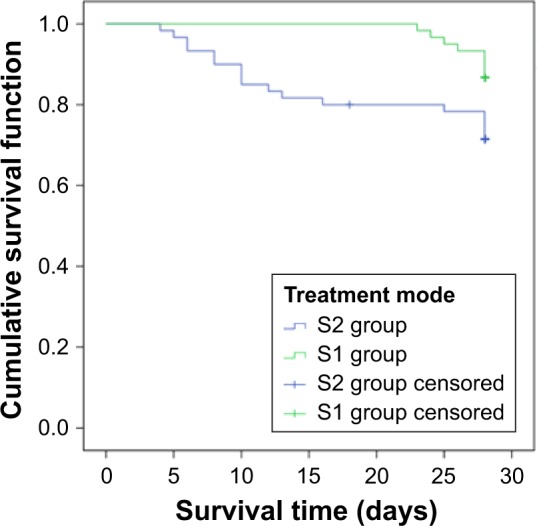
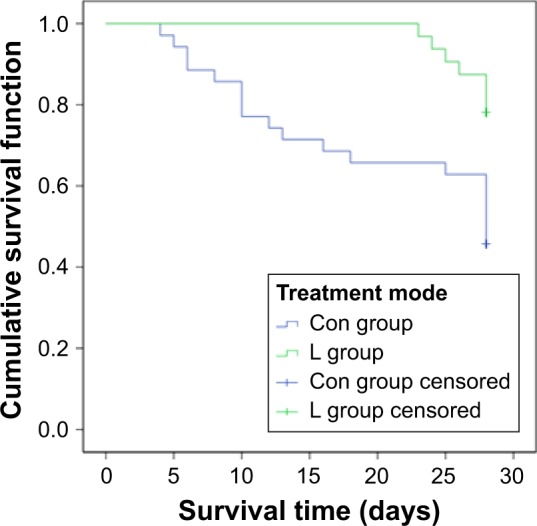
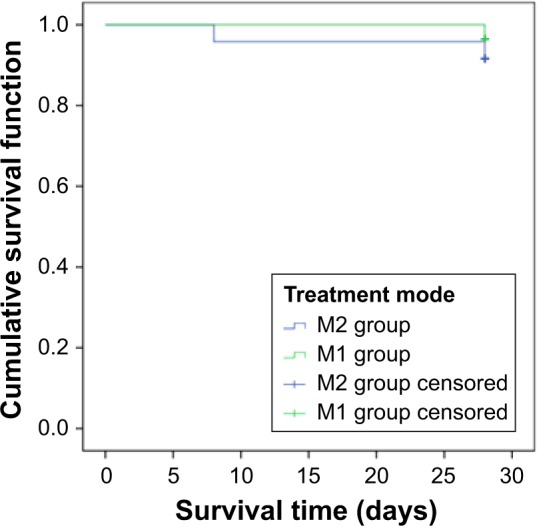
Percent time that the free drug concentrations remain above the minimum inhibitory concentration (%fT>MIC) was longer than 5 h in L group, but <4 h in Con group. Administration method (=0.033, OX value 2.796, value 1.028, 95% CI: 0.855-8.934) and SOFA score (=0.038, OX value 0.080, value -2.522, 95% CI: 0.007-0.874) were independent predictors of patient survival. In the S group, compared to conventional treatment, prolonged infusion mode resulted in shorter days of antibiotic use and shorter ventilator time, and achieved longer survival, better clinical efficacy, and lower 28-day mortality rate.
For cancer patients with SOFA score ≥9, prolonged infusion of TZP could benefit the patients and obtain better clinical efficacy.
本研究旨在选择序贯器官衰竭评估(SOFA)评分指导下的哌拉西林/他唑巴坦(TZP)输注模式用于癌症术后医院获得性肺炎(HAP)患者。
120例癌症术后HAP患者分为两组:改良给药组(L组)和传统治疗组(Con组)。Con组接受传统的TZP输注,L组接受延长输注。在不同时间点检测血药浓度。根据SOFA临界值9,将患者重新分为M(轻度)和S(重度)组。
L组游离药物浓度高于最低抑菌浓度的时间百分比(%fT>MIC)大于5小时,而Con组小于4小时。给药方式(=0.033,OX值2.796, 值1.028,95%CI:0.855 - 8.934)和SOFA评分(=0.038,OX值0.080, 值 - 2.522,95%CI:0.007 - 0.874)是患者生存的独立预测因素。在S组中,与传统治疗相比,延长输注模式可缩短抗生素使用天数和呼吸机使用时间,并实现更长的生存期、更好的临床疗效和更低的28天死亡率。
对于SOFA评分≥9的癌症患者,延长输注TZP可使患者获益并获得更好的临床疗效。