Department of Pharmacy and Biotechnology, Alma Mater Studiorum-University of Bologna, Via Irnerio 48, 40126 Bologna, Italy.
Department for Life Quality Studies, Alma Mater Studiorum-University of Bologna, Corso d'Augusto, 237, 47900 Rimini, Italy.
Oxid Med Cell Longev. 2017;2017:7905486. doi: 10.1155/2017/7905486. Epub 2017 Nov 26.
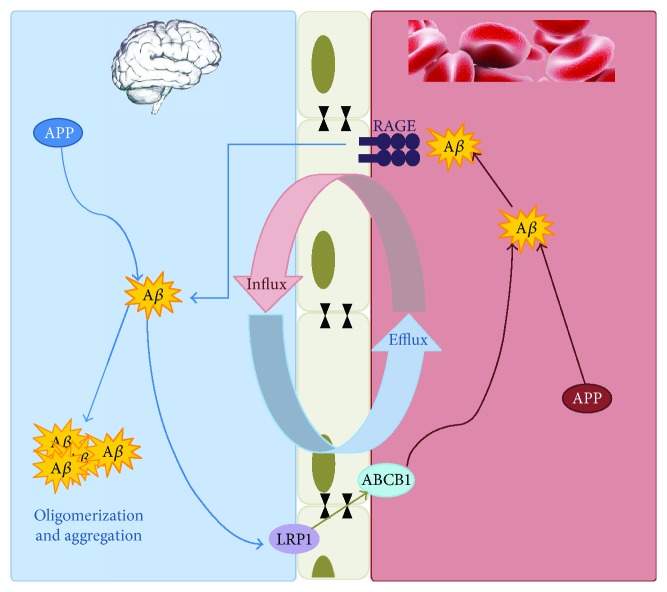
ATP-binding cassette (ABC) transporters, in particular P-glycoprotein (encoded by ABCB1), are important and selective elements of the blood-brain barrier (BBB), and they actively contribute to brain homeostasis. Changes in ABCB1 expression and/or function at the BBB may not only alter the expression and function of other molecules at the BBB but also affect brain environment. Over the last decade, a number of reports have shown that ABCB1 actively mediates the transport of beta amyloid (A) peptide. This finding has opened up an entirely new line of research in the field of Alzheimer's disease (AD). Indeed, despite intense research efforts, AD remains an unsolved pathology and effective therapies are still unavailable. Here, we review the crucial role of ABCB1 in the A transport and how oxidative stress may interfere with this process. A detailed understanding of ABCB1 regulation can provide the basis for improved neuroprotection in AD and also enhanced therapeutic drug delivery to the brain.
三磷酸腺苷结合盒(ABC)转运蛋白,特别是 P 糖蛋白(由 ABCB1 编码),是血脑屏障(BBB)的重要和选择性组成部分,它们积极参与脑内环境稳定。BBB 上 ABCB1 表达和/或功能的改变不仅会改变 BBB 上其他分子的表达和功能,还会影响脑内环境。在过去的十年中,许多报告表明 ABCB1 积极介导β淀粉样肽(A)的转运。这一发现为阿尔茨海默病(AD)领域的研究开辟了一条全新的途径。事实上,尽管进行了大量的研究,但 AD 仍然是一个未解决的病理学问题,仍然缺乏有效的治疗方法。在这里,我们回顾了 ABCB1 在 A 转运中的关键作用,以及氧化应激如何干扰这一过程。对 ABCB1 调节的深入了解可以为 AD 中的神经保护提供基础,并增强治疗性药物向大脑的输送。