WVU Cancer Institute, West Virginia University School of Medicine, Morgantown, WV, USA.
Department of Biochemistry, West Virginia University School of Medicine, Morgantown, WV, USA.
Oncogene. 2018 Mar;37(11):1457-1471. doi: 10.1038/s41388-017-0049-3. Epub 2018 Jan 11.
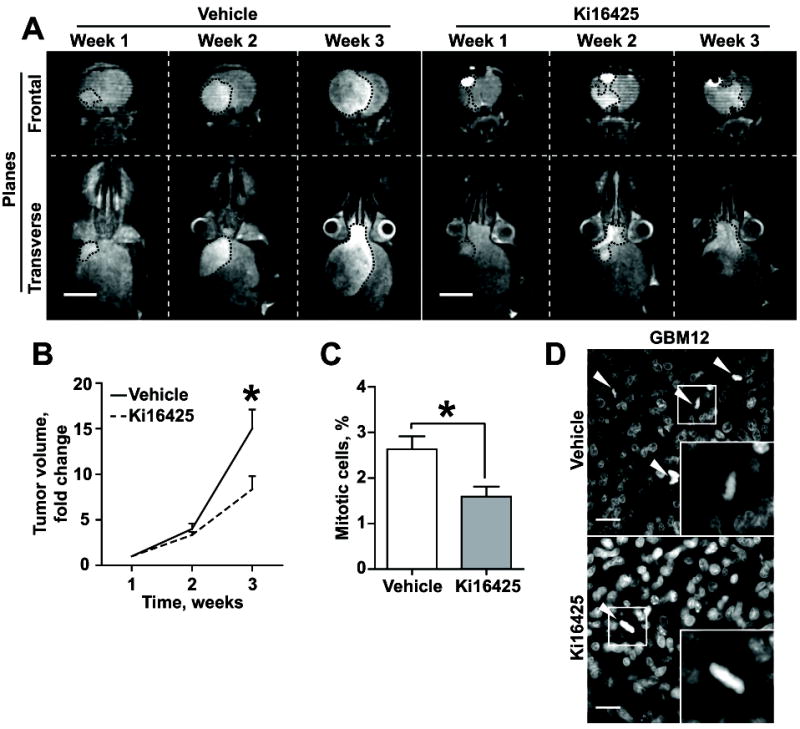
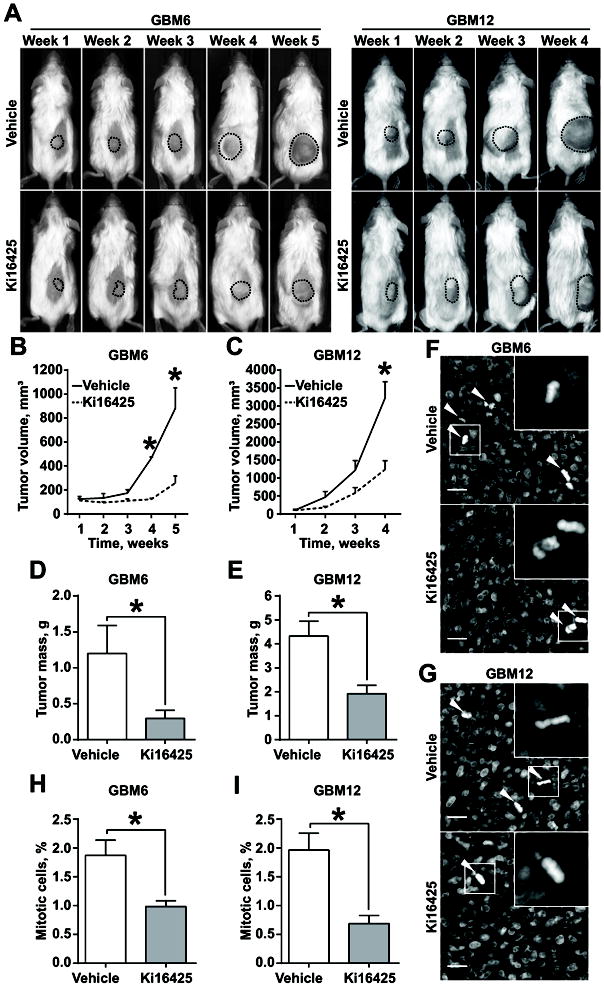
The primary cilium is a ubiquitous organelle presented on most human cells. It is a crucial signaling hub for multiple pathways including growth factor and G-protein coupled receptors. Loss of primary cilia, observed in various cancers, has been shown to affect cell proliferation. Primary cilia formation is drastically decreased in glioblastoma (GBM), however, the role of cilia in normal astrocyte or glioblastoma proliferation has not been explored. Here, we report that loss of primary cilia in human astrocytes stimulates growth rate in a lysophosphatidic acid (LPA)-dependent manner. We show that lysophosphatidic acid receptor 1 (LPAR1) is accumulated in primary cilia. LPAR1 signaling through Gα12/Gαq was previously reported to be responsible for cancer cell proliferation. We found that in ciliated cells, Gα12 and Gαq are excluded from the cilium, creating a barrier against unlimited proliferation, one of the hallmarks of cancer. Upon loss of primary cilia, LPAR1 redistributes to the plasma membrane with a concomitant increase in LPAR1 association with Gα12 and Gαq. Inhibition of LPA signaling with the small molecule compound Ki16425 in deciliated highly proliferative astrocytes or glioblastoma patient-derived cells/xenografts drastically suppresses their growth both in vitro and in vivo. Moreover, Ki16425 brain delivery via PEG-PLGA nanoparticles inhibited tumor progression in an intracranial glioblastoma PDX model. Overall, our findings establish a novel mechanism by which primary cilium restricts proliferation and indicate that loss of primary cilia is sufficient to increase mitogenic signaling, and is important for the maintenance of a highly proliferative phenotype. Clinical application of LPA inhibitors may prove beneficial to restrict glioblastoma growth and ensure local control of disease.
初级纤毛是一种普遍存在于大多数人体细胞上的细胞器。它是包括生长因子和 G 蛋白偶联受体在内的多种途径的关键信号枢纽。在各种癌症中观察到初级纤毛的丧失,已被证明会影响细胞增殖。神经胶质瘤(GBM)中初级纤毛的形成明显减少,然而,纤毛在正常星形胶质细胞或神经胶质瘤增殖中的作用尚未得到探索。在这里,我们报告人星形胶质细胞中初级纤毛的丧失以依赖溶血磷脂酸(LPA)的方式刺激生长速率。我们表明溶血磷脂酸受体 1(LPAR1)在初级纤毛中积累。先前报道溶血磷脂酸受体 1(LPAR1)信号通过 Gα12/Gαq 负责癌细胞增殖。我们发现,在纤毛细胞中,Gα12 和 Gαq 被排除在纤毛之外,形成了阻止无限增殖的屏障,这是癌症的标志之一。初级纤毛丧失后,LPAR1 重新分布到质膜,同时 LPAR1 与 Gα12 和 Gαq 的结合增加。用小分子化合物 Ki16425 抑制去纤毛的高度增殖星形胶质细胞或神经胶质瘤患者来源的细胞/异种移植中的 LPA 信号,在体外和体内都大大抑制了它们的生长。此外,通过 PEG-PLGA 纳米颗粒将 Ki16425 递送至大脑,在颅内神经胶质瘤 PDX 模型中抑制了肿瘤进展。总的来说,我们的研究结果确立了一种新的机制,即初级纤毛限制增殖,并表明初级纤毛的丧失足以增加有丝分裂信号,对于维持高度增殖表型很重要。LPA 抑制剂的临床应用可能有助于限制神经胶质瘤的生长并确保疾病的局部控制。