Institut für Geowissenschaften, J. W. Goethe-Universität, Altenhöferallee 1, 60438, Frankfurt am Main, Germany.
Earth Science Institute, Slovak Academy of Sciences, Dúbravská cesta 9, 84005, Bratislava, Slovakia.
Sci Rep. 2018 Jan 11;8(1):533. doi: 10.1038/s41598-017-17353-7.
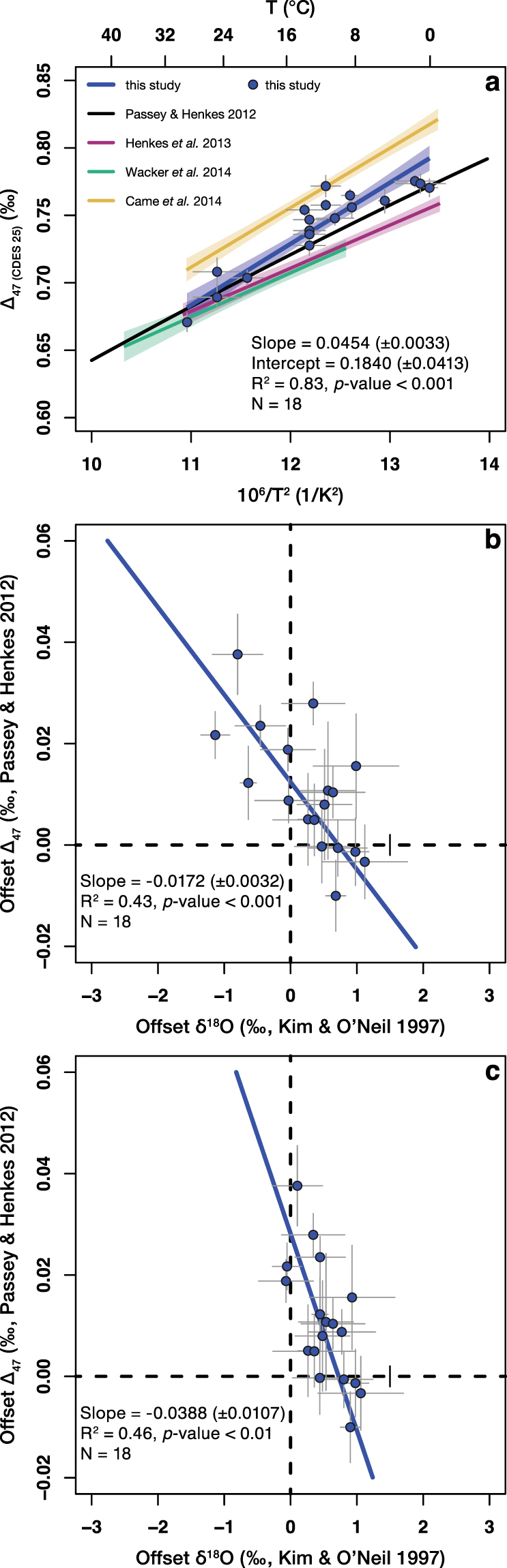
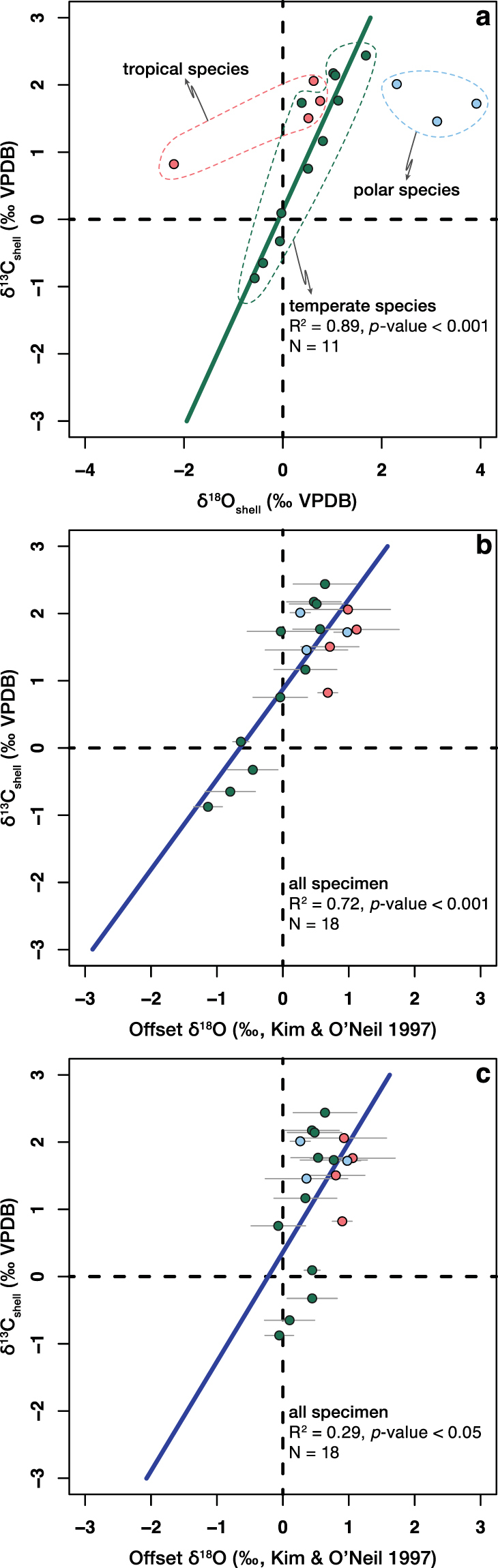
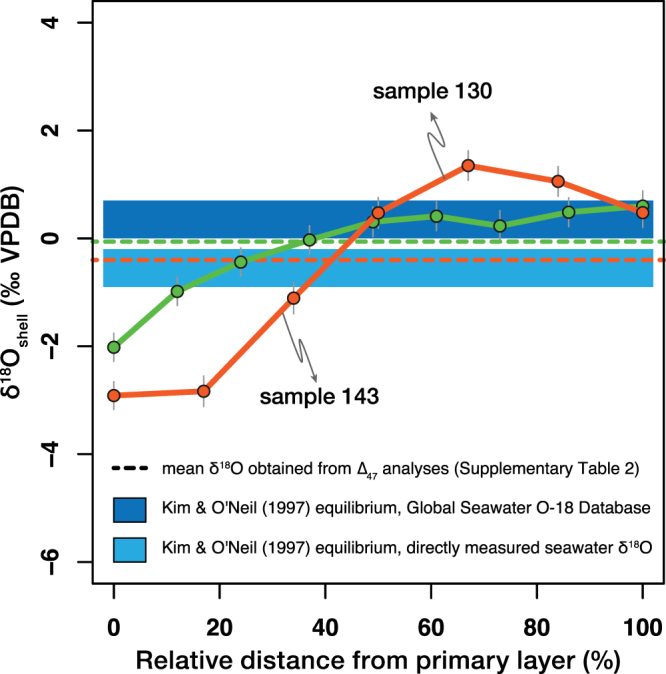
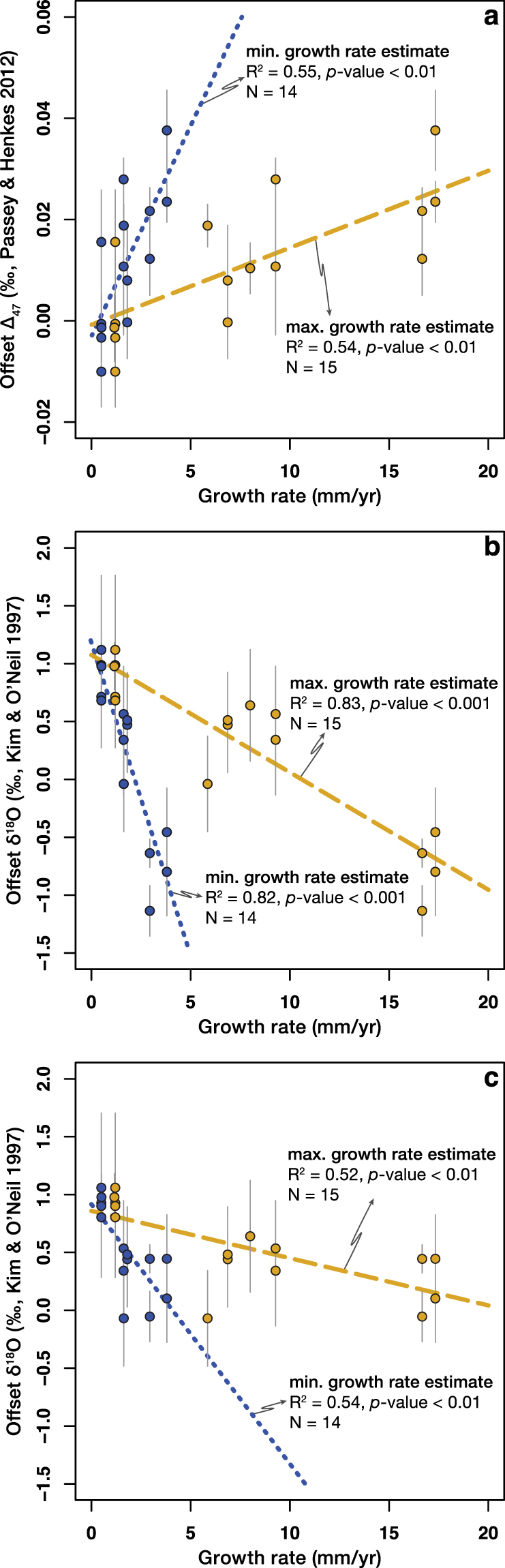
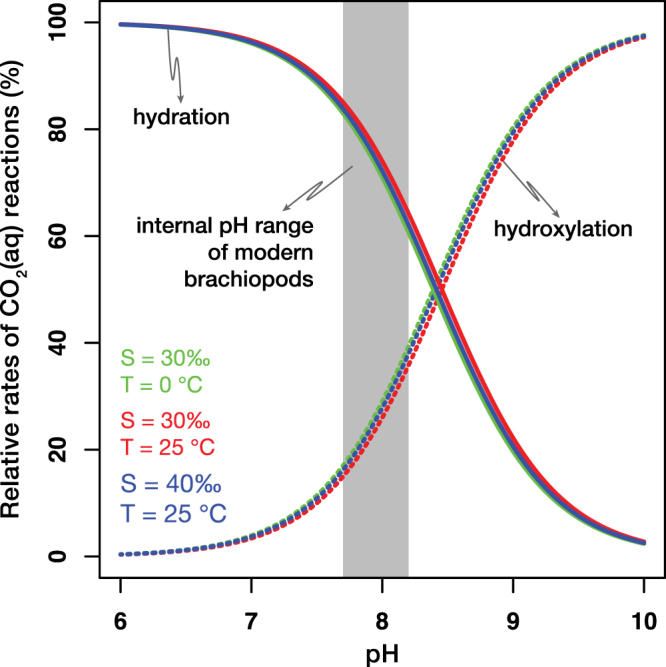
Brachiopod shells are the most widely used geological archive for the reconstruction of the temperature and the oxygen isotope composition of Phanerozoic seawater. However, it is not conclusive whether brachiopods precipitate their shells in thermodynamic equilibrium. In this study, we investigated the potential impact of kinetic controls on the isotope composition of modern brachiopods by measuring the oxygen and clumped isotope compositions of their shells. Our results show that clumped and oxygen isotope compositions depart from thermodynamic equilibrium due to growth rate-induced kinetic effects. These departures are in line with incomplete hydration and hydroxylation of dissolved CO. These findings imply that the determination of taxon-specific growth rates alongside clumped and bulk oxygen isotope analyses is essential to ensure accurate estimates of past ocean temperatures and seawater oxygen isotope compositions from brachiopods.
腕足动物壳是重建显生宙海水温度和氧同位素组成的最广泛使用的地质档案。然而,腕足动物是否在热平衡条件下沉淀其壳仍然没有定论。在这项研究中,我们通过测量现代腕足动物壳的氧和同位素组成,研究了动力学控制对同位素组成的潜在影响。我们的结果表明,由于生长速率引起的动力学效应,同位素组成偏离热平衡。这些偏离与溶解 CO 的不完全水合和羟化作用一致。这些发现意味着,为了确保从腕足动物准确估计过去的海洋温度和海水氧同位素组成,必须结合同位素组成和大块氧同位素分析来确定特定分类群的生长速率。