Zheng Guangshun, Fan Cunying, Di Shaokang, Wang Xuemin, Xiang Chengbin, Pang Yongzhen
Key Laboratory of Plant Resources and Beijing Botanical Garden, Institute of Botany, Chinese Academy of Sciences, Beijing, China.
Institute of Animal Science, Chinese Academy of Agricultural Sciences, Beijing, China.
Front Plant Sci. 2017 Dec 13;8:2125. doi: 10.3389/fpls.2017.02125. eCollection 2017.
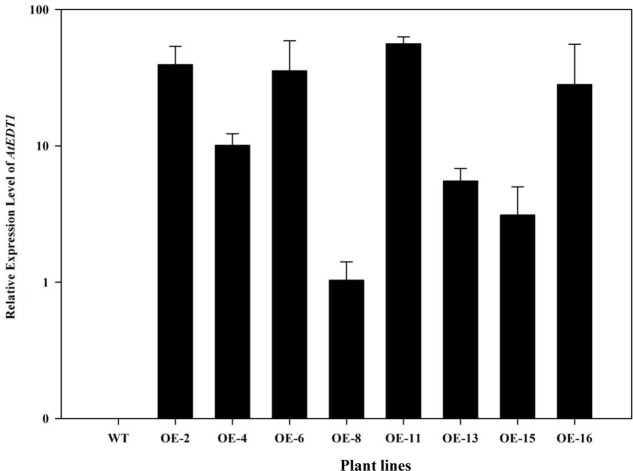
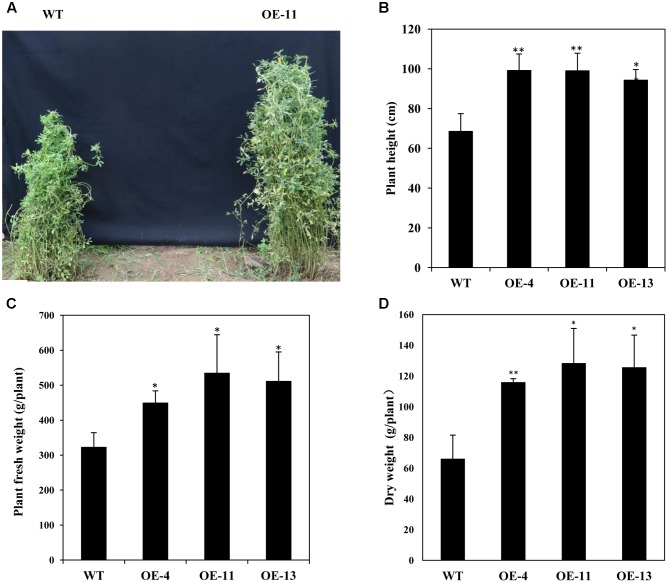
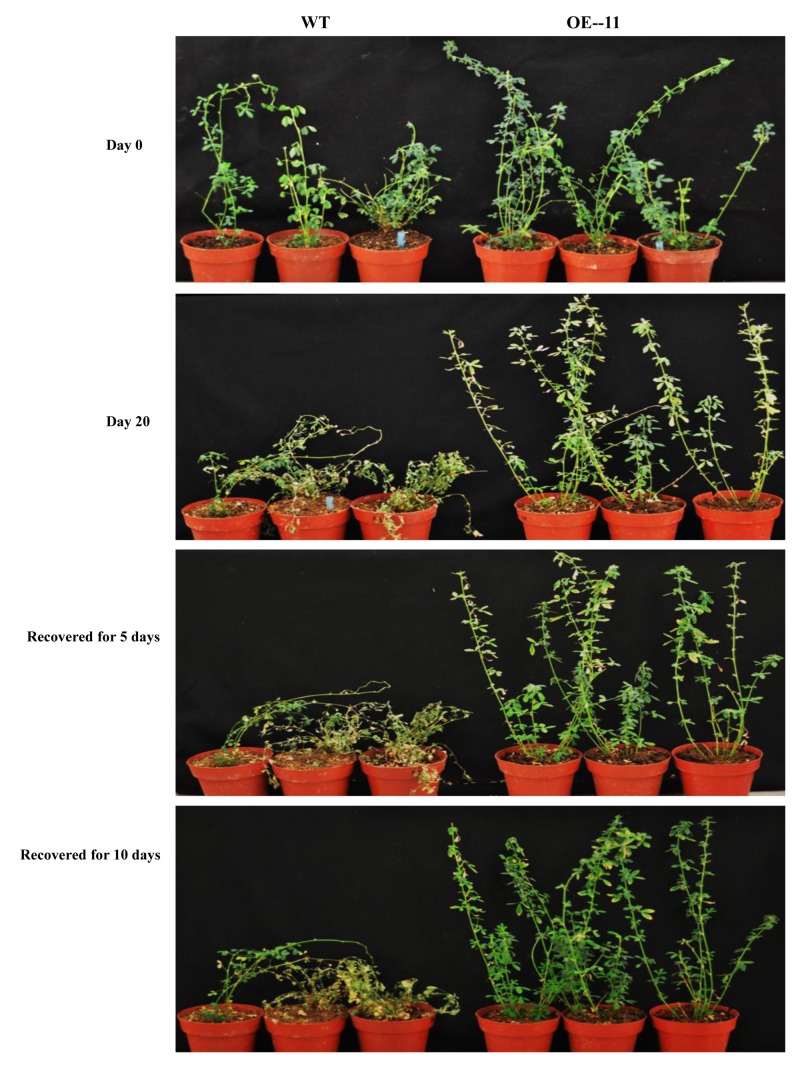
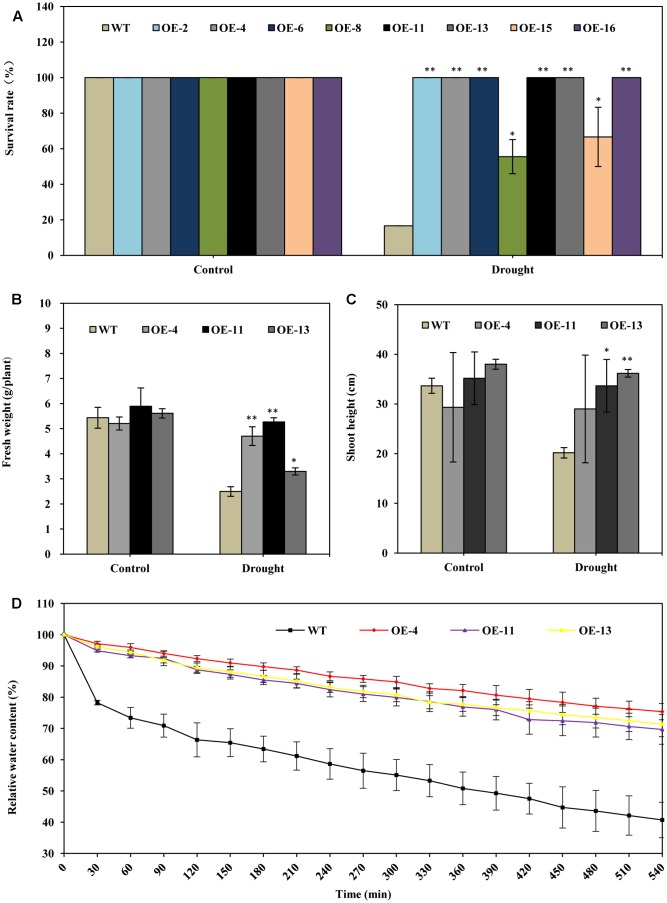
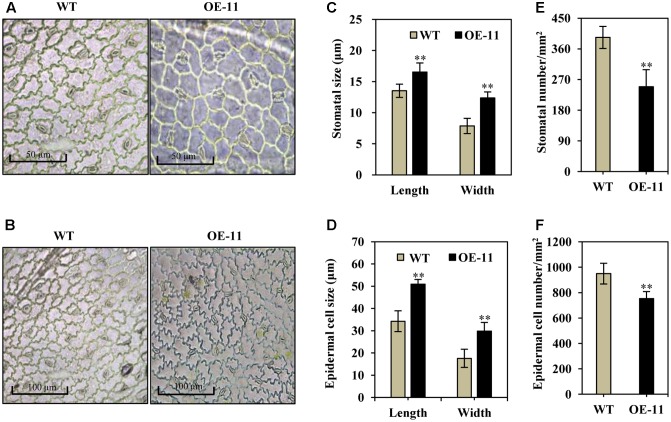
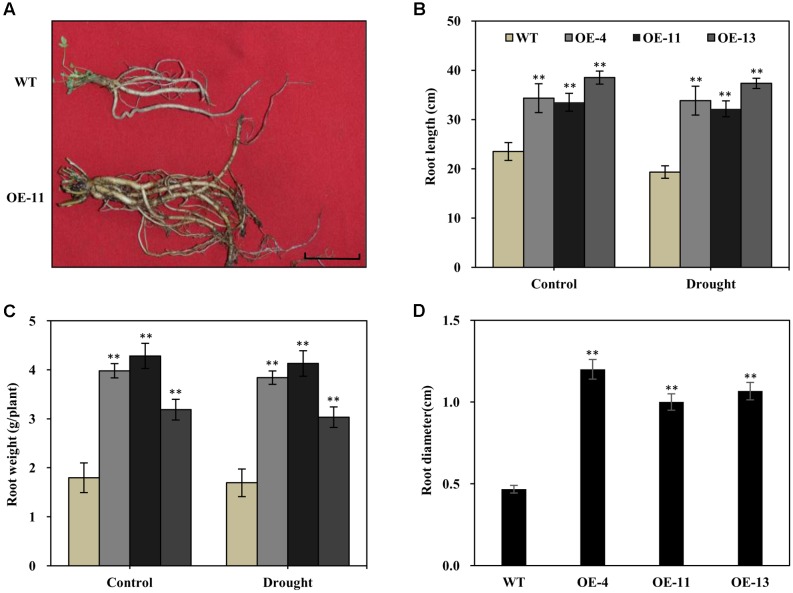
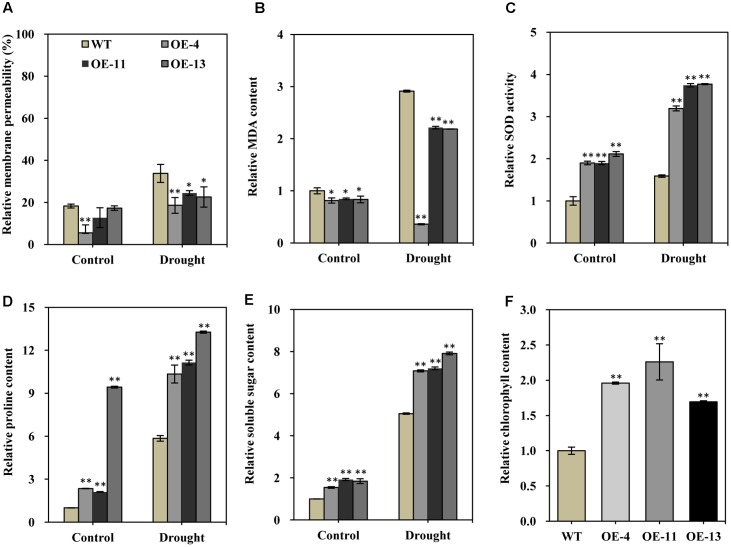
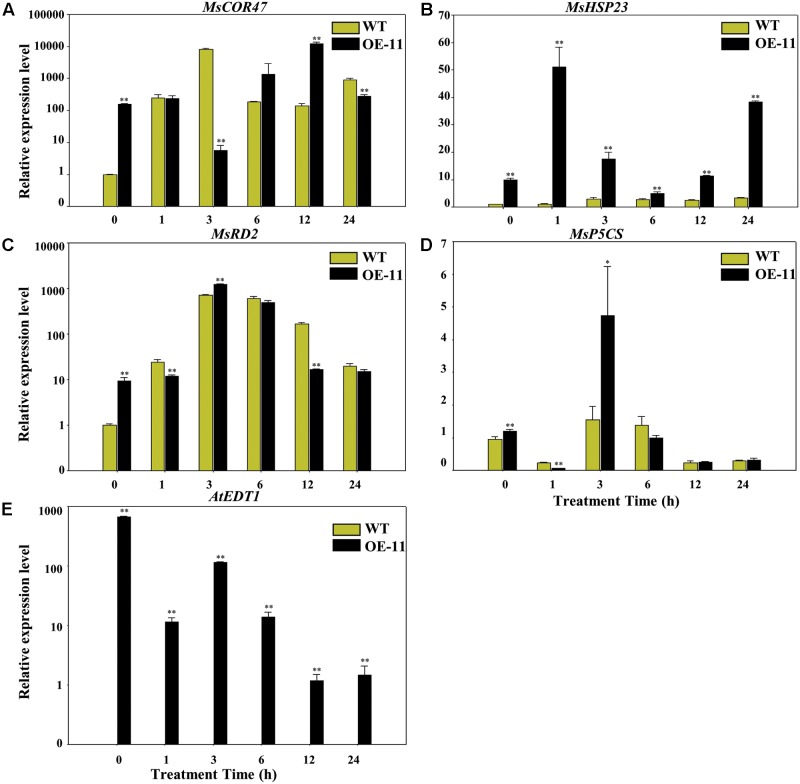
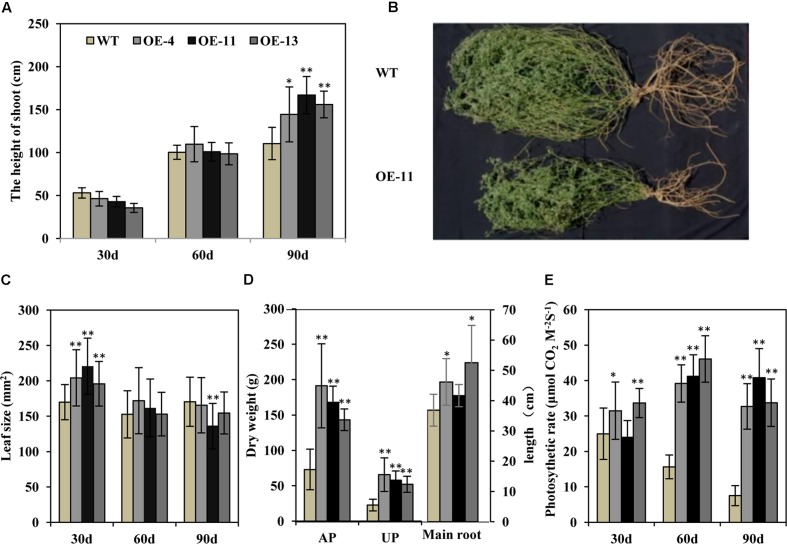
Alfalfa ( L.) is an important legume forage crop with great economic value. However, as the growth of alfalfa is seriously affected by an inadequate supply of water, drought is probably the major abiotic environmental factor that most severely affects alfalfa production worldwide. In an effort to enhance alfalfa drought tolerance, we transformed the () gene into alfalfa -mediated transformation. Compared with wild type plants, drought stress treatment resulted in higher survival rates and biomass, but reduced water loss rates in the transgenic plants. Furthermore, transgenic alfalfa plants had increased stomatal size, but reduced stomatal density, and these stomatal changes contributed greatly to reduced water loss from leaves. Importantly, transgenic alfalfa plants exhibited larger root systems with larger root lengths, root weight, and root diameters than wild type plants. The transgenic alfalfa plants had reduced membrane permeability and malondialdehyde content, but higher soluble sugar and proline content, higher superoxide dismutase activity, higher chlorophyll content, enhanced expression of drought-responsive genes, as compared with wild type plants. Notably, transgenic alfalfa plants grew better in a 2-year field trial and showed enhanced growth performance with increased biomass yield. All of our morphological, physiological, and molecular analyses demonstrated that the ectopic expression of improved growth and enhanced drought tolerance in alfalfa. Our study provides alfalfa germplasm for use in forage improvement programs, and may help to increase alfalfa production in arid lands.
紫花苜蓿(Medicago sativa L.)是一种具有重要经济价值的豆科牧草作物。然而,由于紫花苜蓿的生长受到水分供应不足的严重影响,干旱可能是全球范围内对紫花苜蓿生产影响最为严重的主要非生物环境因素。为了提高紫花苜蓿的耐旱性,我们通过农杆菌介导的转化方法将(某)基因导入紫花苜蓿。与野生型植株相比,干旱胁迫处理后转基因植株的存活率和生物量更高,但水分流失率更低。此外,转基因紫花苜蓿植株的气孔尺寸增大,但气孔密度降低,这些气孔变化极大地有助于减少叶片水分流失。重要的是,转基因紫花苜蓿植株的根系比野生型植株更大,根长、根重和根直径都更大。与野生型植株相比,转基因紫花苜蓿植株的膜透性和丙二醛含量降低,但可溶性糖和脯氨酸含量更高,超氧化物歧化酶活性更高,叶绿素含量更高,干旱响应基因的表达增强。值得注意的是,在为期两年的田间试验中,转基因紫花苜蓿植株生长得更好,生物量产量增加,生长性能增强。我们所有的形态学、生理学和分子分析表明,(某)基因的异位表达改善了紫花苜蓿的生长并增强了其耐旱性。我们的研究为牧草改良计划提供了紫花苜蓿种质资源,并可能有助于提高干旱地区的紫花苜蓿产量。