Carey Rebecca, Soule S Adam, Manga Michael, White James, McPhie Jocelyn, Wysoczanski Richard, Jutzeler Martin, Tani Kenichiro, Yoerger Dana, Fornari Daniel, Caratori-Tontini Fabio, Houghton Bruce, Mitchell Samuel, Ikegami Fumihiko, Conway Chris, Murch Arran, Fauria Kristen, Jones Max, Cahalan Ryan, McKenzie Warren
CODES and School of Physical Sciences, University of Tasmania, Hobart, Tasmania 7001, Australia.
Woods Hole Oceanographic Institution, Woods Hole, MA 02543, USA.
Sci Adv. 2018 Jan 10;4(1):e1701121. doi: 10.1126/sciadv.1701121. eCollection 2018 Jan.
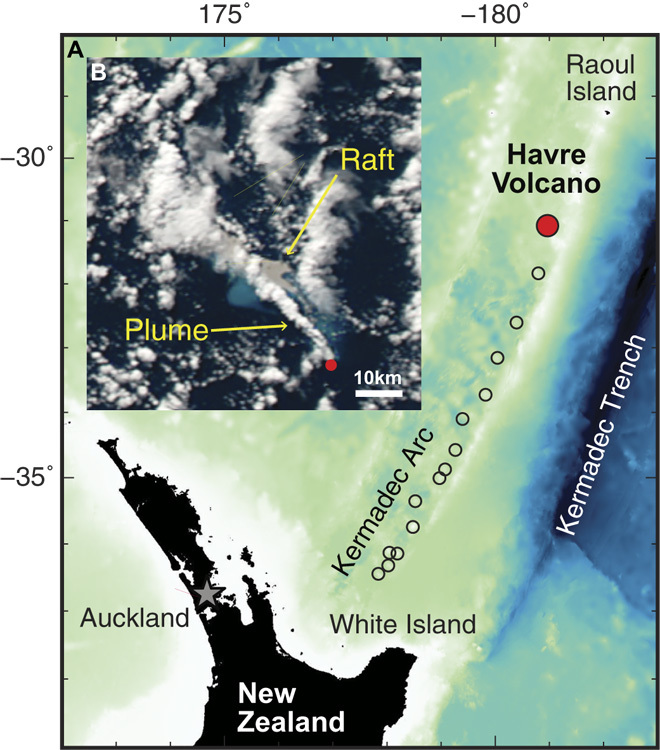
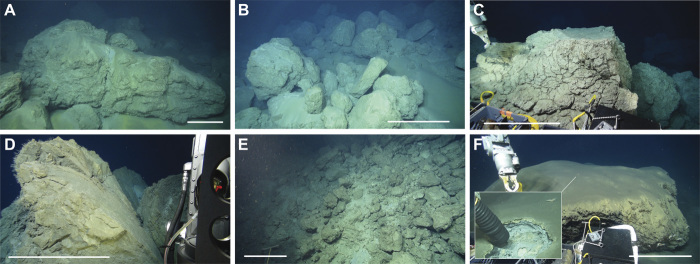
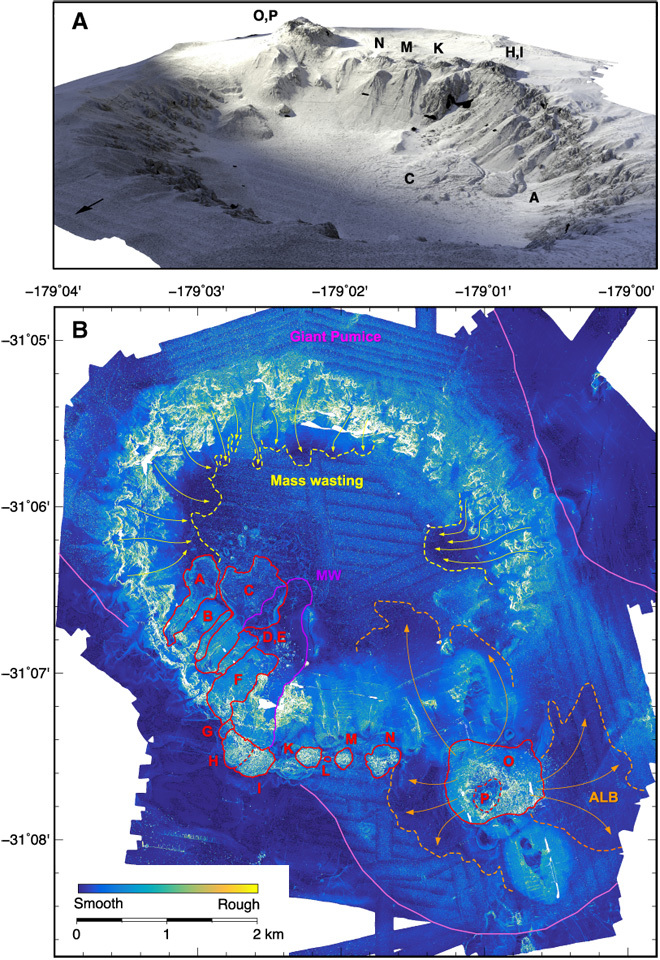
The 2012 submarine eruption of Havre volcano in the Kermadec arc, New Zealand, is the largest deep-ocean eruption in history and one of very few recorded submarine eruptions involving rhyolite magma. It was recognized from a gigantic 400-km pumice raft seen in satellite imagery, but the complexity of this event was concealed beneath the sea surface. Mapping, observations, and sampling by submersibles have provided an exceptionally high fidelity record of the seafloor products, which included lava sourced from 14 vents at water depths of 900 to 1220 m, and fragmental deposits including giant pumice clasts up to 9 m in diameter. Most (>75%) of the total erupted volume was partitioned into the pumice raft and transported far from the volcano. The geological record on submarine volcanic edifices in volcanic arcs does not faithfully archive eruption size or magma production.
2012年,新西兰克马德克弧区的哈弗尔火山发生海底喷发,这是历史上最大规模的深海喷发,也是有记录的极少数涉及流纹岩岩浆的海底喷发之一。此次喷发是通过卫星图像中看到的一个巨大的、长达400公里的浮石筏发现的,但这一事件的复杂性隐藏在海面之下。通过潜水器进行的测绘、观测和采样提供了一份关于海底产物的异常高保真记录,其中包括来自900至1220米水深的14个喷口的熔岩,以及包括直径达9米的巨型浮石碎屑在内的碎屑沉积物。喷发总体积的大部分(超过75%)被分配到浮石筏中,并被运送到远离火山的地方。火山弧中海底火山构造的地质记录并不能忠实地记录喷发规模或岩浆产量。