Department of Biology, University of Sistan and Baluchestan, Zahedan 98155‑987, Iran.
Medical Genetics Department, School of Medicine, Shahid Beheshti University of Medical Sciences, Tehran 198396‑3113, Iran.
Mol Med Rep. 2018 Mar;17(3):4195-4202. doi: 10.3892/mmr.2018.8377. Epub 2018 Jan 5.
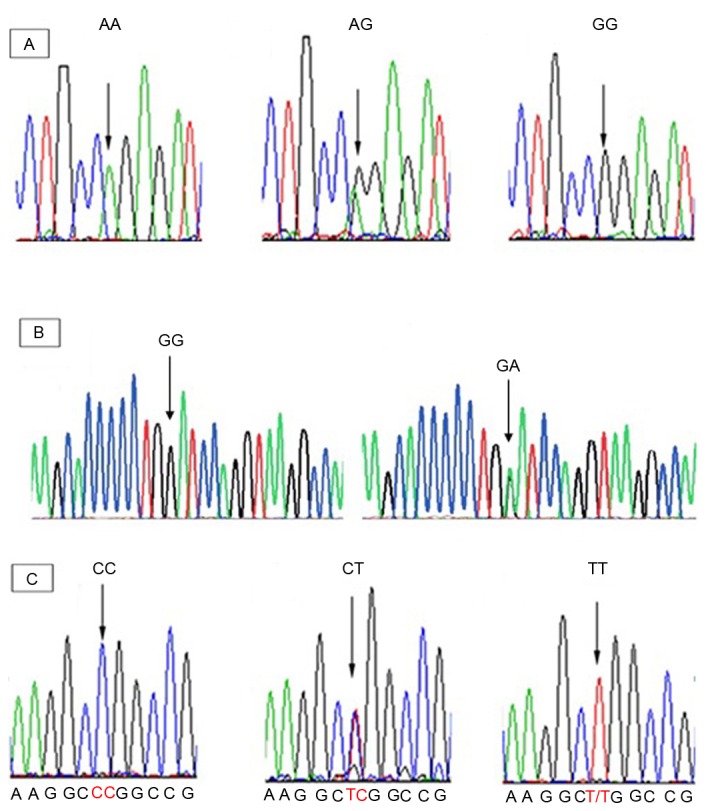
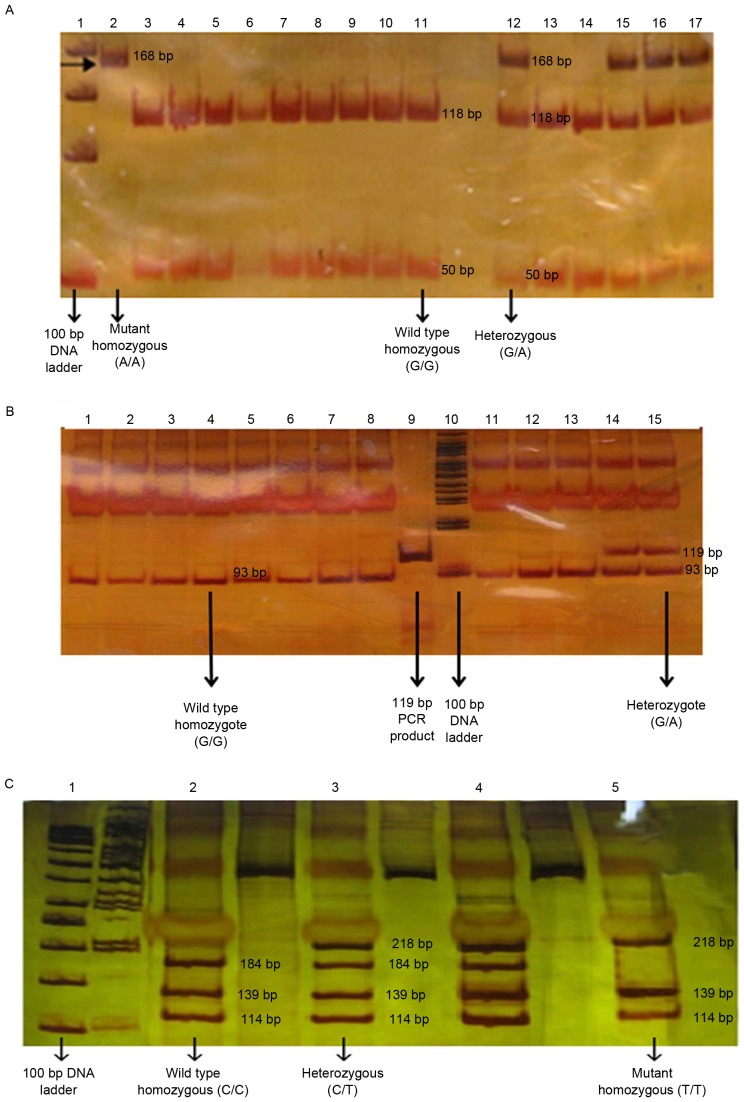
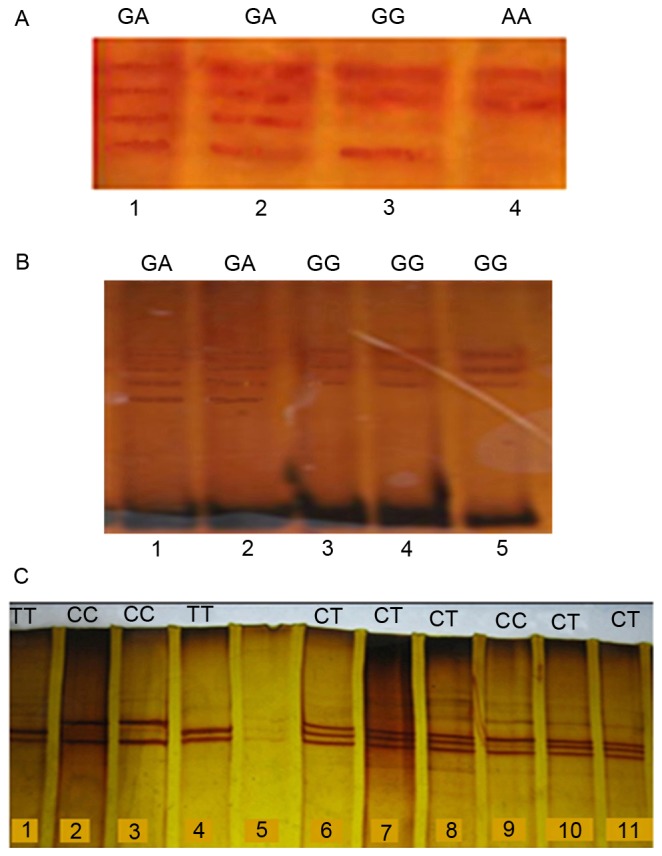
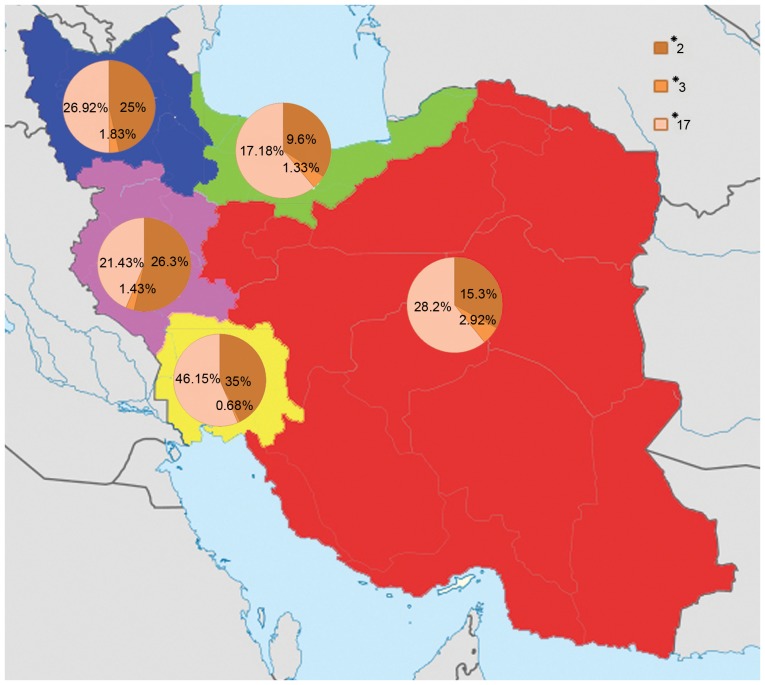
Polymorphisms in the cytochrome P (CYP) 450 family may cause adverse drug responses in individuals. Cytochrome P450 2C19 (CYP2C19) is a member of the CYP family, where the presence of the 681 G>A, 636 G>A and 806 C>T polymorphisms result in the CYP2C192, CYP2C193 and CYP2C1917 alleles, respectively. In the current study, the frequency of the CYP2C192, CYP2C193 and CYP2C1917 alleles in an Iranian population cohort of different ethnicities were examined and then compared with previously published frequencies within other populations. Allelic and genotypic frequencies of the CYP2C19 alleles (2, 3 and 17) were detected using polymerase chain reaction (PCR)‑restriction fragment length polymorphism analysis, PCR‑single‑strand conformation polymorphism analysis and DNA sequencing from blood samples of 1,229 unrelated healthy individuals from different ethnicities within the Iranian population. The CYP2C19 allele frequencies among the Iranian population were 21.4, 1.7, and 27.1% for the CYP2C192, CYP2C193 and CYP2C1917 alleles, respectively. The frequency of the homozygous A/A variant of the CYP2C192 allele was significantly high and low in the Lur (P<0.001) and Caspian (P<0.001) ethnicities, respectively. However, the frequency of the homozygous A/A variant of the CYP2C193 allele was not detected in the Iranian cohort in the current study. The frequency of the heterozygous G/A variant of the CYP2C193 allele had the significantly highest and lowest frequency in the Fars (P<0.001) and Lur (P<0.001) groups, respectively. The allele frequency of the homozygous T/T variant of the CYP2C1917 allele was significantly high in the Caspian (P<0.001) and low in the Kurd (P<0.05) groups. The frequency of the CYP2C19 alleles involved in drug metabolism, may improve the clinical understanding of the ethnic differences in drug responses, resulting in the advancement of the personalized medicine among the different ethnicities within the Iranian population.
细胞色素 P(CYP)450 家族中的多态性可能导致个体的药物不良反应。细胞色素 P450 2C19(CYP2C19)是 CYP 家族的一员,其中 681 G>A、636 G>A 和 806 C>T 多态性分别导致 CYP2C192、CYP2C193 和 CYP2C1917 等位基因。在本研究中,检测了伊朗不同种族人群队列中 CYP2C192、CYP2C193 和 CYP2C1917 等位基因的频率,并与其他人群中的先前发表频率进行了比较。使用聚合酶链反应(PCR)-限制性片段长度多态性分析、PCR-单链构象多态性分析和 DNA 测序从伊朗人群中不同种族的 1229 名无关健康个体的血液样本中检测 CYP2C19 等位基因(2、3 和17)的等位基因和基因型频率。伊朗人群中 CYP2C19 等位基因频率分别为 CYP2C192、CYP2C193 和 CYP2C1917 等位基因的 21.4%、1.7%和 27.1%。Lur(P<0.001)和 Caspian(P<0.001)种族中 CYP2C192 等位基因纯合子 A/A 变体的频率显著较高和较低。然而,在当前的伊朗队列研究中未检测到 CYP2C193 等位基因纯合子 A/A 变体的频率。CYP2C193 等位基因杂合子 G/A 变体的频率在 Fars(P<0.001)和 Lur(P<0.001)组中具有最高和最低的频率。CYP2C1917 等位基因纯合子 T/T 变体的等位基因频率在 Caspian(P<0.001)和 Kurd(P<0.05)群体中显著较高。涉及药物代谢的 CYP2C19 等位基因的频率可能会提高对不同种族药物反应差异的临床认识,从而推进伊朗不同种族的个体化医学。