Central Laboratory, Shenzhen Nanshan People's Hospital/Affiliated Shenzhen Sixth Hospital of Guangdong Medical University, Shenzhen, Guangdong 518033, P.R. China.
Central Laboratory, The Eighth Affiliated Hospital of Sun Yat-sen University, Shenzhen, Guangdong 518033, P.R. China.
Oncol Rep. 2018 Mar;39(3):1090-1098. doi: 10.3892/or.2018.6199. Epub 2018 Jan 8.
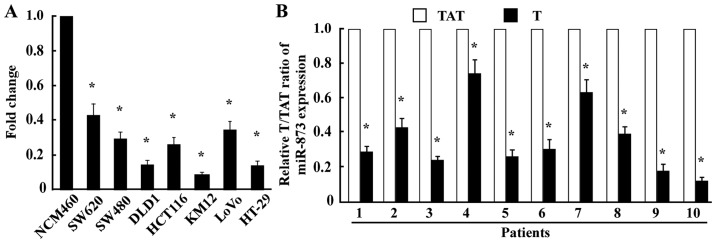
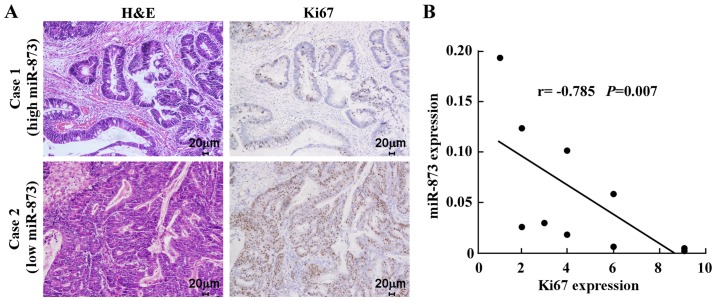
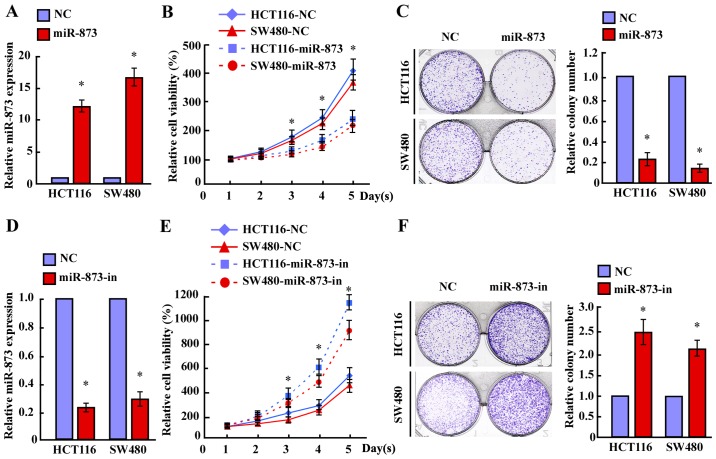
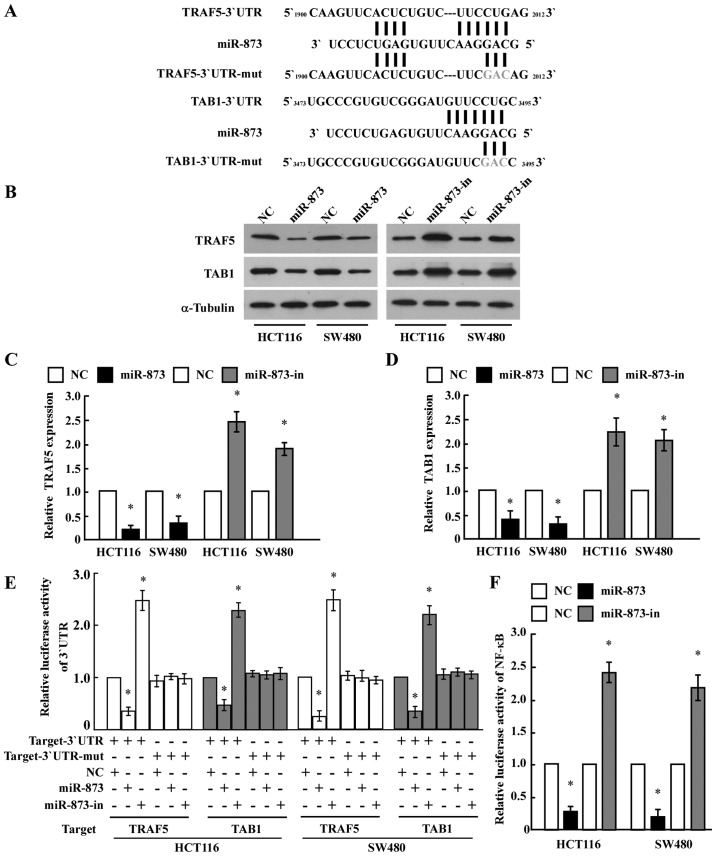
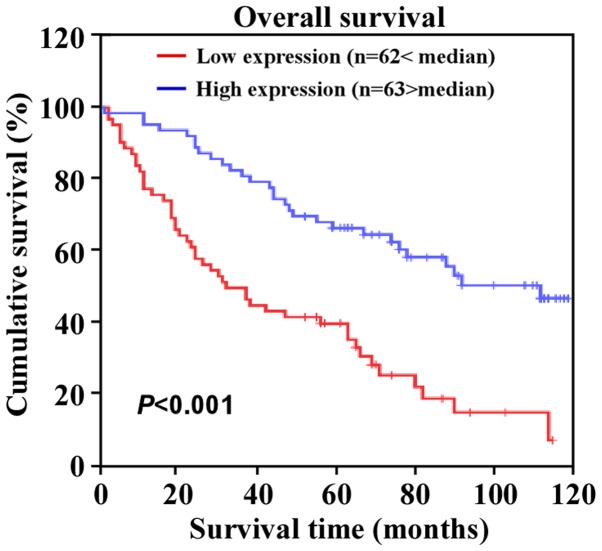
MicroRNA-873 (miR‑873) has been reported to be dysregulated in a variety of malignancies, however, the biological function and underlying molecular mechanism of miR‑873 in colorectal cancer (CRC) remain unclear. In the present study we found that the expression levels of miR‑873 were markedly decreased in CRC cell lines and tissues from patients. Statistical analysis revealed that miR‑873 expression was inversely correlated with the disease stage of CRC. Kaplan‑Meier survival analysis revealed that patients with CRC with lower miR‑873 expression had shorter overall survival rates. Additionally, downregulation of miR‑873 enhanced the proliferation of CRC cells, while upregulation of miR‑873 reduced this proliferation. Furthermore, we found that tumor necrosis factor (TNF) receptor-associated factor 5 (TRAF5) and TGF‑β activated kinase 1 (MAP3K7) binding protein 1 (TAB1) were direct targets of miR‑873 in CRC cells. A luciferase assay revealed that ectopic expression of miR‑873 significantly reduced nuclear factor κB (NF‑κB) luciferase activity, while ectopic expression of miR‑873 inhibitor enhanced luciferase activity, suggesting that downregulation of miR‑873 can activate NF‑κB signaling. Therefore, our findings established a tumor-suppressive role for miR‑873 in the inhibition of CRC progression, which may be employed as a novel prognostic marker and as an effective therapeutic target for CRC.
微小 RNA-873(miR-873)在多种恶性肿瘤中表达失调,然而,miR-873 在结直肠癌(CRC)中的生物学功能和潜在分子机制仍不清楚。在本研究中,我们发现 miR-873 的表达水平在 CRC 细胞系和患者组织中明显降低。统计学分析显示,miR-873 的表达与 CRC 的疾病分期呈负相关。Kaplan-Meier 生存分析显示,miR-873 表达较低的 CRC 患者总生存率较低。此外,下调 miR-873 增强了 CRC 细胞的增殖,而上调 miR-873 则降低了这种增殖。此外,我们发现肿瘤坏死因子(TNF)受体相关因子 5(TRAF5)和转化生长因子-β激活激酶 1(MAP3K7)结合蛋白 1(TAB1)是 miR-873 在 CRC 细胞中的直接靶标。荧光素酶报告基因实验显示,miR-873 的过表达显著降低了核因子 κB(NF-κB)荧光素酶活性,而过表达 miR-873 抑制剂则增强了荧光素酶活性,表明 miR-873 的下调可以激活 NF-κB 信号通路。因此,我们的研究结果确立了 miR-873 在抑制 CRC 进展中的肿瘤抑制作用,其可作为 CRC 的新型预后标志物和有效的治疗靶点。