Institute of Basic Medical Sciences, College of Medicine, National Cheng Kung University, Tainan, Taiwan.
Department of Microbiology and Immunology, College of Medicine, National Cheng Kung University, Tainan, Taiwan.
Hepatology. 2018 Jul;68(1):141-154. doi: 10.1002/hep.29781. Epub 2018 Mar 23.
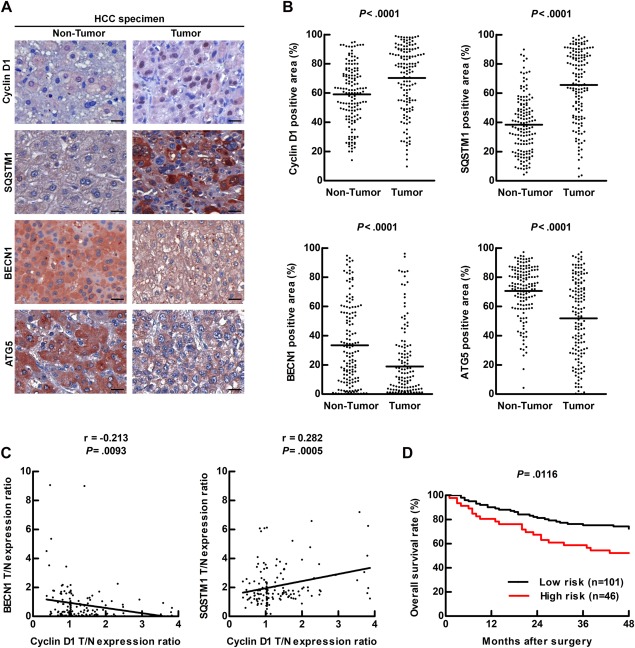
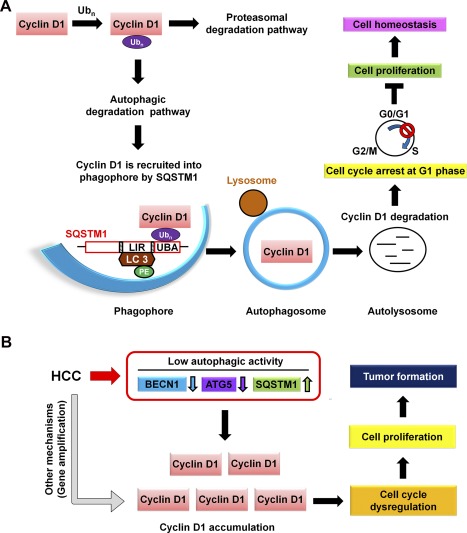
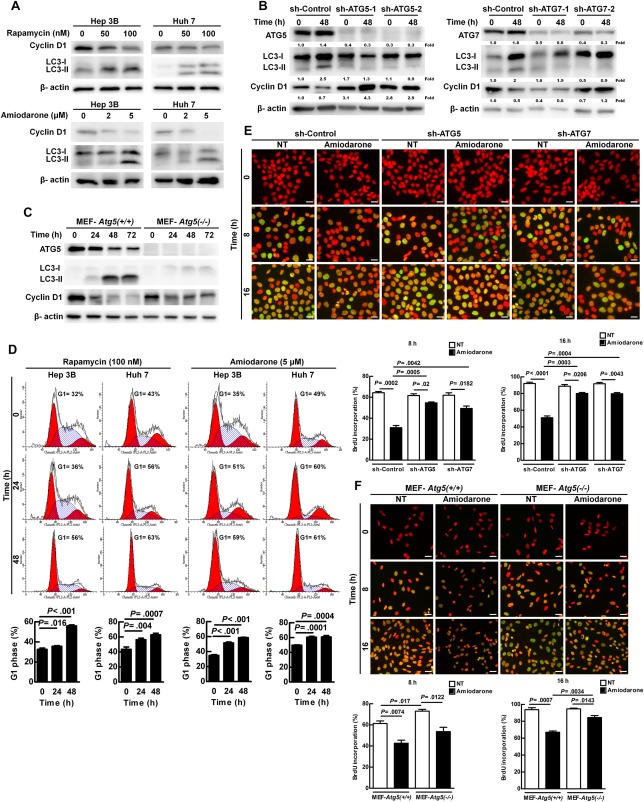
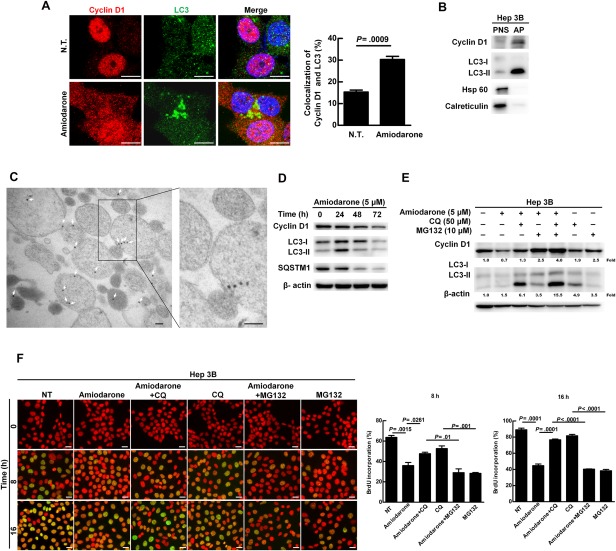
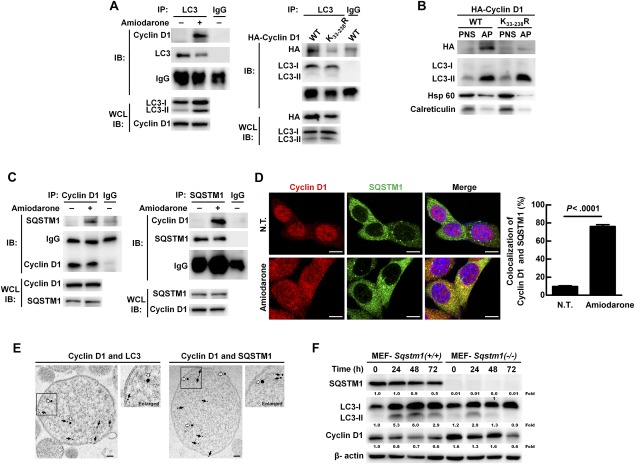
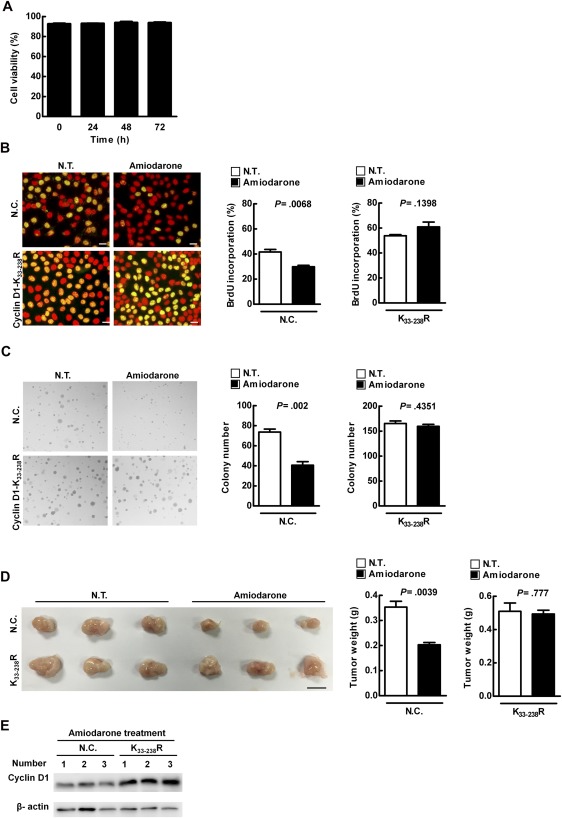
Dysfunction of degradation machineries causes cancers, including hepatocellular carcinoma (HCC). Overexpression of cyclin D1 in HCC has been reported. We previously reported that autophagy preferentially recruits and degrades the oncogenic microRNA (miR)-224 to prevent HCC. Therefore, in the present study, we attempted to clarify whether cyclin D1 is another oncogenic factor selectively regulated by autophagy in HCC tumorigenesis. Initially, we found an inverse correlation between low autophagic activity and high cyclin D1 expression in tumors of 147 HCC patients and three murine models, and these results taken together revealed a correlation with poor overall survival of HCC patients, indicating the importance of these two events in HCC development. We found that increased autophagic activity leads to cyclin D1 ubiquitination and selective recruitment to the autophagosome (AP) mediated by a specific receptor, sequestosome 1 (SQSTM1), followed by fusion with lysosome and degradation. Autophagy-selective degradation of ubiquitinated cyclin D1 through SQSTM1 was confirmed using cyclin D1/ubiquitin binding site (K R) and phosphorylation site (T286A) mutants, lentivirus-mediated silencing autophagy-related 5 (ATG5), autophagy-related 7 (ATG7), and Sqstm1 knockout cells. Functional studies revealed that autophagy-selective degradation of cyclin D1 plays suppressive roles in cell proliferation, colony, and liver tumor formation. Notably, an increase of autophagic activity by pharmacological inducers (amiodarone and rapamycin) significantly suppressed tumor growth in both the orthotopic liver tumor and subcutaneous tumor xenograft models. Our findings provide evidence of the underlying mechanism involved in the regulation of cyclin D1 by selective autophagy to prevent tumor formation.
Taken together, our data demonstrate that autophagic degradation machinery and the cell-cycle regulator, cyclin D1, are linked to HCC tumorigenesis. We believe these findings may be of value in the development of alternative therapeutics for HCC patients. (Hepatology 2018;68:141-154).
降解机制功能障碍可导致癌症,包括肝细胞癌(HCC)。已有报道称 HCC 中环素 D1 过表达。我们之前报道过自噬可优先招募并降解致癌 microRNA(miR)-224,从而预防 HCC。因此,在本研究中,我们试图阐明自噬是否是 HCC 肿瘤发生中另一种被选择性调控的致癌因子。最初,我们在 147 例 HCC 患者和三种鼠模型的肿瘤中发现自噬活性低与 cyclin D1 表达高呈负相关,这些结果表明与 HCC 患者总生存率差相关,提示这两个事件在 HCC 发展中的重要性。我们发现,自噬活性增加会导致 cyclin D1 泛素化,并通过特异性受体 sequestosome 1(SQSTM1)被选择性募集到自噬体(AP),随后与溶酶体融合并降解。通过 cyclin D1/泛素结合位点(K R)和磷酸化位点(T286A)突变体、慢病毒介导的自噬相关基因 5(ATG5)、自噬相关基因 7(ATG7)和 Sqstm1 敲除细胞,证实了自噬通过 SQSTM1 对泛素化 cyclin D1 的选择性降解。功能研究表明,自噬对 cyclin D1 的选择性降解在细胞增殖、集落和肝肿瘤形成中起抑制作用。值得注意的是,通过药理学诱导剂(胺碘酮和雷帕霉素)增加自噬活性可显著抑制原位肝肿瘤和皮下肿瘤异种移植模型中的肿瘤生长。我们的研究结果提供了证据,证明了选择性自噬调节 cyclin D1 以防止肿瘤形成的潜在机制。
综上所述,我们的数据表明,自噬降解机制和细胞周期调节因子 cyclin D1 与 HCC 肿瘤发生有关。我们相信这些发现可能对 HCC 患者的治疗方法的发展具有重要意义。(Hepatology 2018;68:141-154)。