Gynecology-Andrology Research Unit, Institut de Recherche Expérimentale et Clinique, Medical School, Université Catholique de Louvain, 1200 Brussels, Belgium.
Department of Gynecology-Andrology, Cliniques Universitaires Saint-Luc, 1200 Brussels, Belgium.
Int J Mol Sci. 2018 Jan 12;19(1):227. doi: 10.3390/ijms19010227.
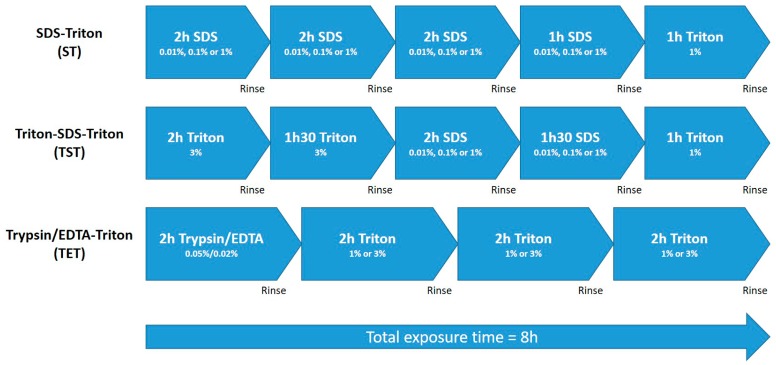
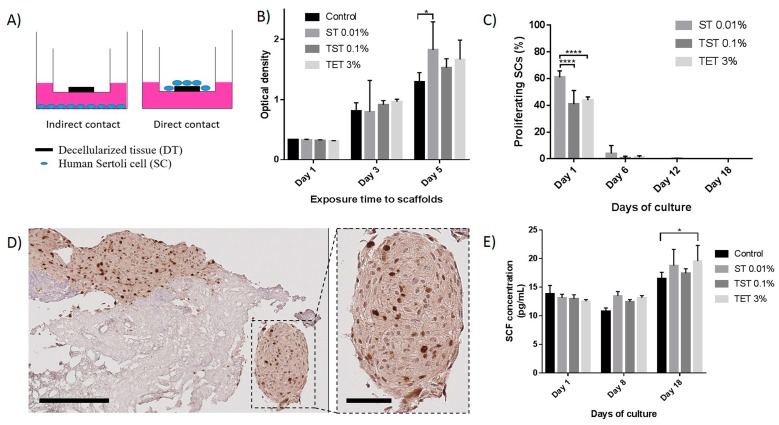
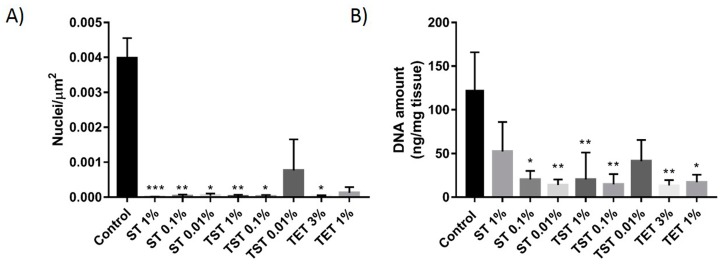
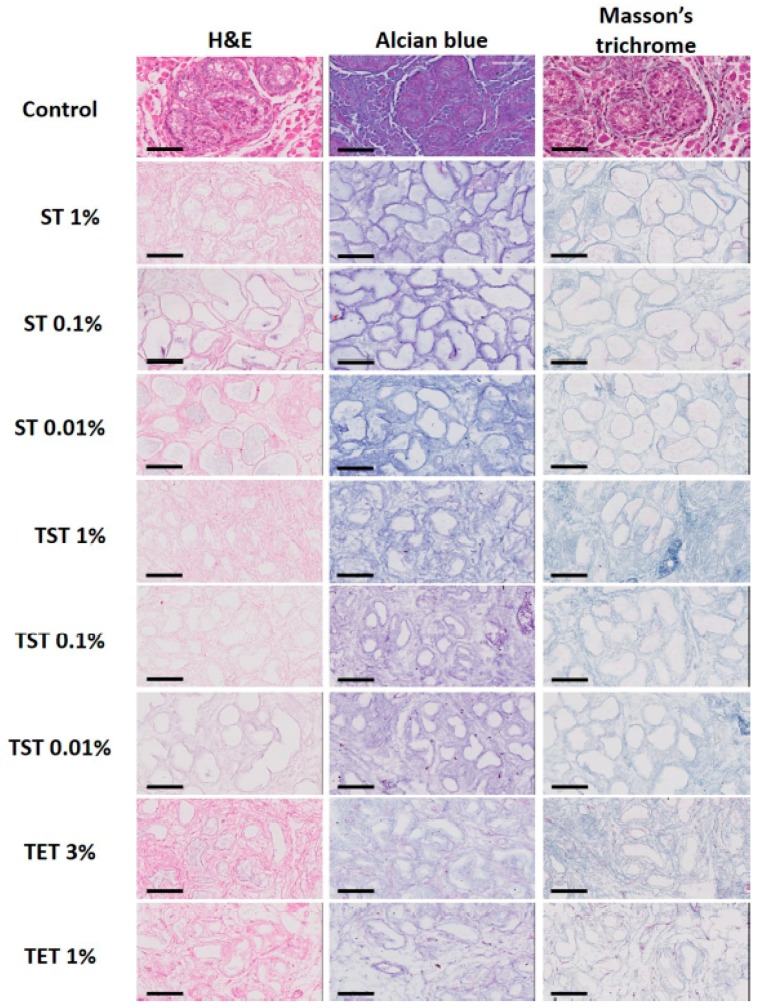
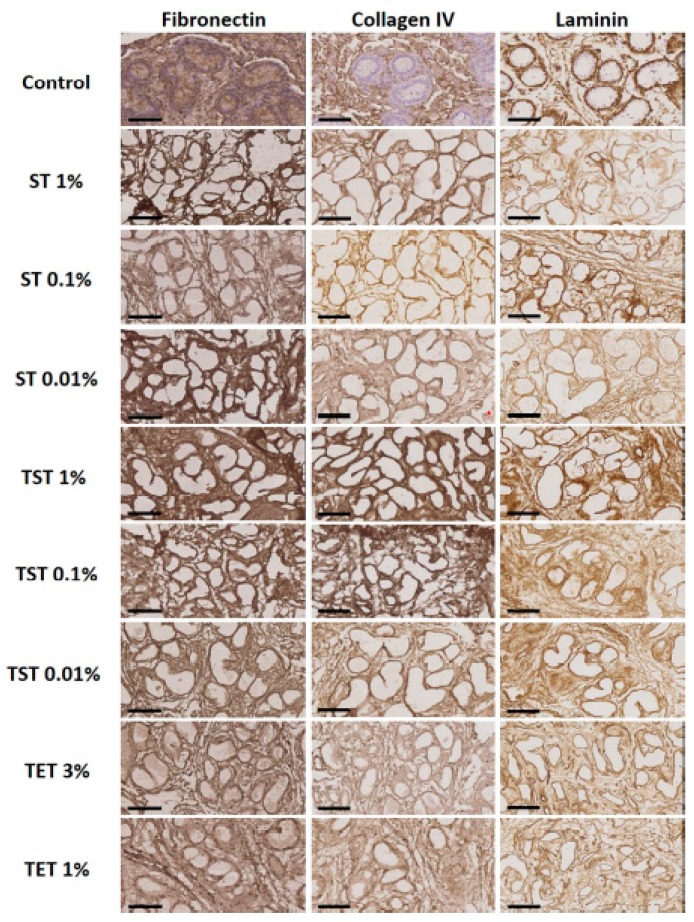
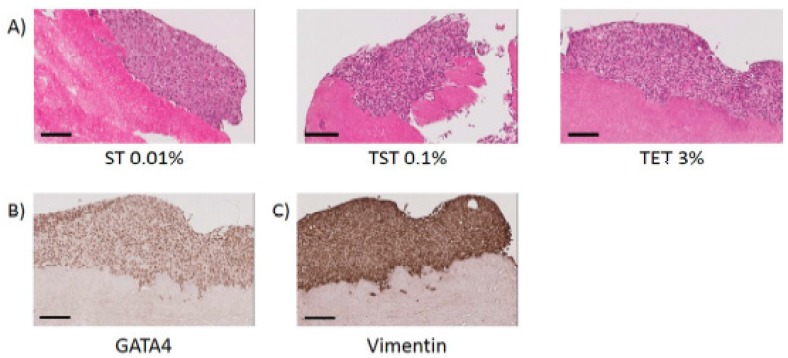
Cryopreservation of immature testicular tissue before chemo/radiotherapy is the only option to preserve fertility of cancer-affected prepubertal boys. To avoid reintroduction of malignant cells, development of a transplantable scaffold by decellularization of pig immature testicular tissue (ITT) able to support decontaminated testicular cells could be an option for fertility restoration in these patients. We, therefore, compared decellularization protocols to produce a cytocompatible scaffold. Fragments of ITT from 15 piglets were decellularized using three protocols: sodium dodecyl sulfate (SDS)-Triton (ST), Triton-SDS-Triton (TST) and trypsin 0.05%/ethylenediaminetetraacetic acid (EDTA) 0.02%-Triton (TET) with varying detergent concentrations. All protocols were able to lower DNA levels. Collagen retention was demonstrated in all groups except ST 1%, and a significant decrease in glycosaminoglycans was observed in the TST 1% and TET 1% groups. When Sertoli cells (SCs) were cultured with decellularized tissue, no signs of cytotoxicity were detected. A higher SC proliferation rate and greater stem cell factor secretion were observed than with SCs cultured without scaffold. ST 0.01% and TET 3% conditions offered the best compromise in terms of DNA elimination and extracellular matrix (ECM) preservation, while ensuring good attachment, proliferation and functionality of human SCs. This study demonstrates the potential of using decellularized pig ITT for human testicular tissue engineering purposes.
在化疗/放疗前对未成熟睾丸组织进行冷冻保存是保留癌症患儿青春期前生育能力的唯一选择。为了避免恶性细胞的再引入,通过脱细胞化猪未成熟睾丸组织 (ITT) 来开发可用于支持去污睾丸细胞的可移植支架可能是这些患者生育力恢复的一种选择。因此,我们比较了脱细胞方案以生产细胞相容性支架。使用三种方案:十二烷基硫酸钠 (SDS)-Triton (ST)、Triton-SDS-Triton (TST) 和 0.05%胰蛋白酶/0.02%乙二胺四乙酸 (EDTA)-Triton (TET),对来自 15 头小猪的 ITT 片段进行脱细胞处理,不同的去污剂浓度。所有方案都能够降低 DNA 水平。除 ST 1%外,所有组均保留了胶原蛋白,而在 TST 1%和 TET 1%组中观察到糖胺聚糖显著减少。当将支持细胞 (SCs) 与脱细胞组织一起培养时,未检测到细胞毒性迹象。与没有支架培养的 SC 相比,观察到更高的 SC 增殖率和更高的干细胞因子分泌。ST 0.01%和 TET 3%条件在 DNA 消除和细胞外基质 (ECM) 保存方面提供了最佳折衷,同时确保了人 SC 的良好附着、增殖和功能。这项研究证明了使用脱细胞化的猪 ITT 用于人类睾丸组织工程的潜力。