Beermann Jan, Boos Karin, Gutow Lars, Boersma Maarten, Peralta Ana Carolina
Department of Functional Ecology, Alfred Wegener Institute, Helmholtz Centre for Polar and Marine Research, PO Box 120161, 27515, Bremerhaven, Germany.
Alfred Wegener Institute, Helmholtz Centre for Polar and Marine Research, Biologische Anstalt Helgoland, Postbox 180, 27483, Helgoland, Germany.
Oecologia. 2018 Mar;186(3):645-654. doi: 10.1007/s00442-017-4056-4. Epub 2018 Jan 15.
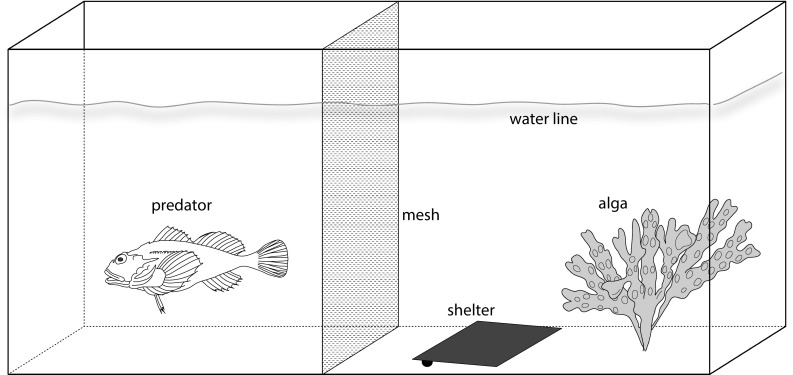
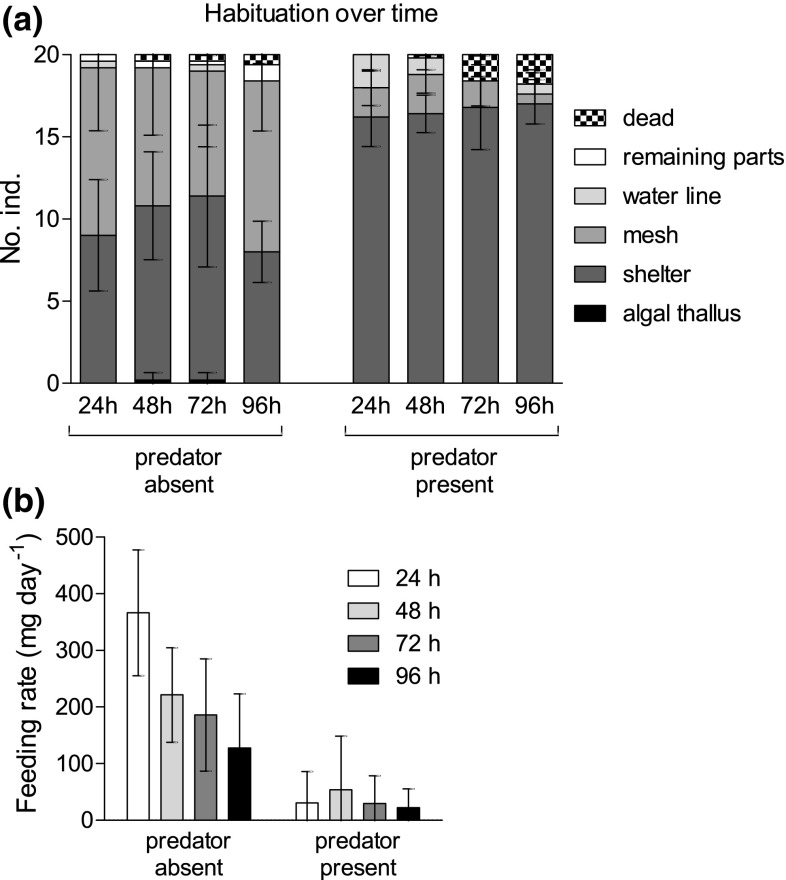
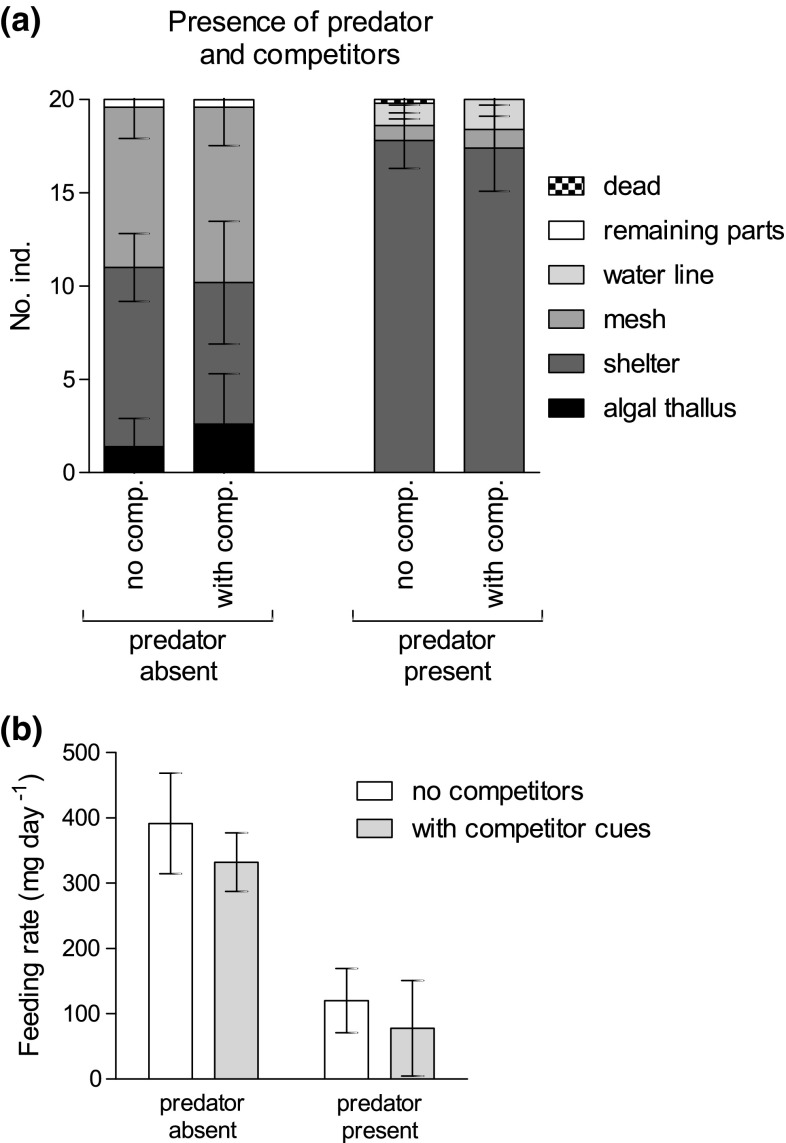
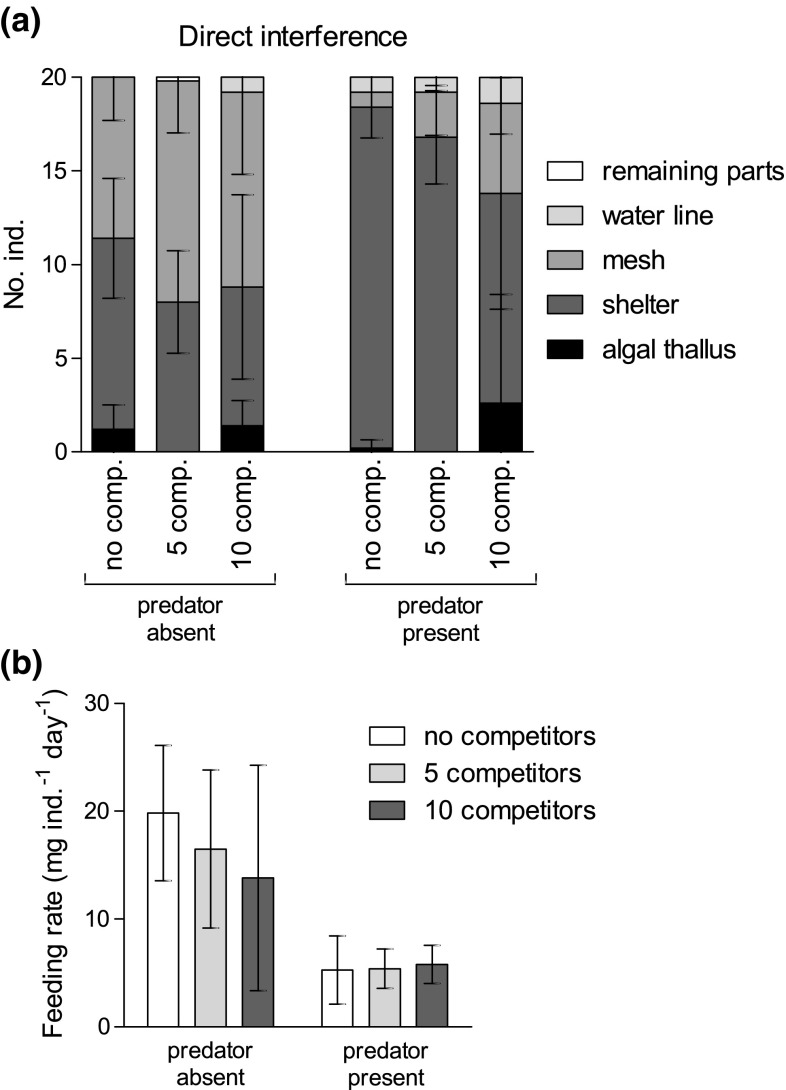
Predation has direct impact on prey populations by reducing prey abundance. In addition, predator presence alone can also have non-consumptive effects on prey species, potentially influencing their interspecific interactions and thus the structure of entire assemblages. The performance of potential prey species may, therefore, depend on both the presence of predators and competitors. We studied habitat use and food consumption of a marine mesograzer, the amphipod Echinogammarus marinus, in the presence/absence of a fish mesopredator and/or an amphipod competitor. The presence of the predator affected both habitat choice and food consumption of the grazer, indicating a trade-off between the use of predator-free space and food acquisition. Without the predator, E. marinus were distributed equally over different microhabitats, whereas in the presence of the predator, most individuals chose a sheltered microhabitat and reduced their food consumption. Furthermore, habitat choice of the amphipods changed in the presence of interspecific competitors, also resulting in reduced feeding rates. The performance of E. marinus is apparently driven by trait-mediated direct and indirect effects caused by the interplay of predator avoidance and competition. This highlights the importance of potential non-consumptive impacts of predators on their prey organisms. The flexible responses of small invertebrate consumers to the combined effects of predation and competition potentially lead to changes in the structure of coastal ecosystems and the multiple species interactions therein.
捕食通过减少猎物数量对猎物种群产生直接影响。此外,仅捕食者的存在也会对猎物物种产生非消费性影响,可能影响它们的种间相互作用,进而影响整个群落的结构。因此,潜在猎物物种的表现可能取决于捕食者和竞争者的存在。我们研究了海洋中型食草动物——双壳纲动物海棘跳虾(Echinogammarus marinus)在有/无鱼类中型捕食者和/或双壳纲竞争者情况下的栖息地利用和食物消耗情况。捕食者的存在影响了食草动物的栖息地选择和食物消耗,这表明在无捕食者空间的利用和食物获取之间存在权衡。没有捕食者时,海棘跳虾在不同微生境中分布均匀,而在有捕食者的情况下,大多数个体选择了有遮蔽的微生境并减少了食物消耗。此外,在存在种间竞争者的情况下,双壳纲动物的栖息地选择发生了变化,这也导致摄食率降低。海棘跳虾的表现显然是由捕食者回避和竞争相互作用所导致的性状介导的直接和间接影响驱动的。这突出了捕食者对其猎物生物潜在的非消费性影响的重要性。小型无脊椎动物消费者对捕食和竞争综合影响的灵活反应可能导致沿海生态系统结构及其内部多种物种相互作用的变化。