1 Nuffield Department of Surgical Sciences, University of Oxford, Oxford, United Kingdom.
2 Oxford Centre for Diabetes, Endocrinology and Metabolism, Oxford, United Kingdom.
Cell Transplant. 2017 Nov;26(11):1733-1741. doi: 10.1177/0963689717727544.
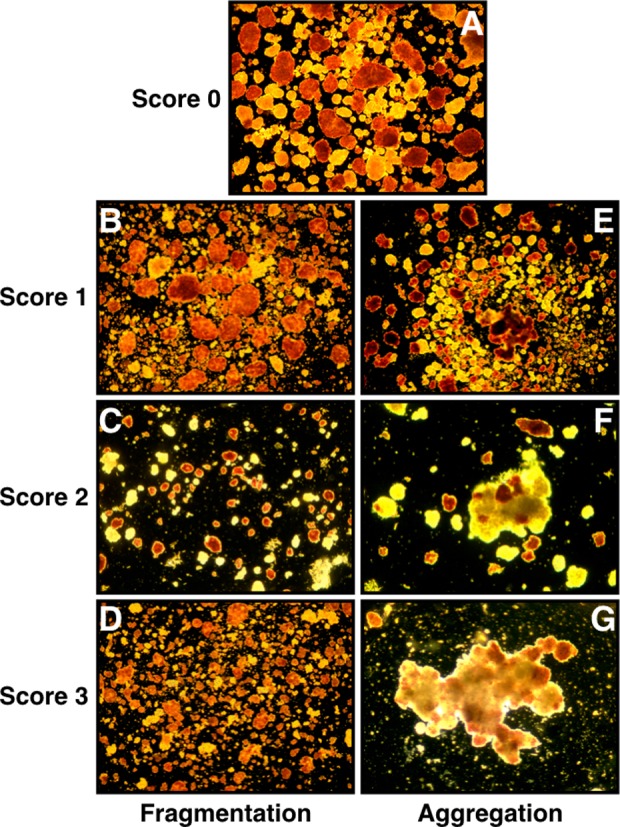
Efficient islet release from the pancreas requires the combination of collagenase, neutral protease (cNP), or thermolysin (TL). Recently, it has been shown that clostripain (CP) may also contribute to efficient islet release from the human pancreas. The aim of this study was to evaluate the impact of these proteases on human islet integrity in a prospective approach. Islets were isolated from the pancreas of 10 brain-dead human organ donors. Purified islets were precultured for 3 to 4 d at 37 °C to ensure that preparations were cleared of predamaged islets, and only integral islets were subjected to 90 min of incubation at 37 °C in Hank's balanced salt solution supplemented with cNP, TL, or CP. The protease concentrations were calculated for a pancreas of 100 g trimmed weight utilizing 120 dimethyl-casein units of cNP, 70,000 caseinase units of TL, or 200 benzoyl-l-arginine-ethyl-ester units of CP (1×). These activities were then increased both 5× and 10×. After subsequent 24-h culture in enzyme-free culture medium, treated islets were assessed and normalized to sham-treated controls. Compared with controls and CP, islet yield was significantly reduced by using the 5× activity of cNP and TL, inducing also fragmentation and DNA release. Viability significantly decreased not until adding the 1× activity of cNP, 5× activity of TL, or 10× activity of CP. Although mitochondrial function was significantly lowered by 1× cNP and 5× TL, CP did not affect mitochondria at any concentration. cNP- and TL-incubated islets significantly lost intracellular insulin already at 1× activity, while the 10× activity of CP had to be added to observe a similar effect. cNP and TL have a similar toxic potency regarding islet integrity. CP also induces adverse effects on islets, but the toxic threshold is generally higher. We hypothesize that CP can serve as supplementary protease to minimize cNP or TL activity for efficient pancreas digestion.
从胰腺中有效释放胰岛需要胶原酶、中性蛋白酶(cNP)或耐热蛋白酶(TL)的组合。最近,已经表明凝乳蛋白酶(CP)也可能有助于从人胰腺中有效释放胰岛。本研究的目的是在前瞻性方法中评估这些蛋白酶对人胰岛完整性的影响。从 10 名脑死亡的人体器官供体的胰腺中分离胰岛。纯化的胰岛在 37°C 下预培养 3 至 4 天,以确保制剂中清除了受损的胰岛,只有完整的胰岛在补充有 cNP、TL 或 CP 的 Hank's 平衡盐溶液中在 37°C 下孵育 90 分钟。蛋白酶浓度是利用 120 个二甲基-酪蛋白单位的 cNP、70,000 个酪蛋白酶单位的 TL 或 200 个苯甲酰-L-精氨酸乙酯单位的 CP(1×)计算出的 100g 修剪胰腺重量的。然后将这些活性分别增加 5 倍和 10 倍。在随后的 24 小时无酶培养后,评估处理过的胰岛并归一化为假处理对照。与对照和 CP 相比,使用 cNP 和 TL 的 5×活性显著降低了胰岛的产量,同时也诱导了碎片形成和 DNA 释放。只有在添加 cNP 的 1×活性、TL 的 5×活性或 CP 的 10×活性时,才会显著降低活力。虽然 cNP 的 1×和 TL 的 5×显著降低了线粒体功能,但 CP 在任何浓度下都不会影响线粒体。cNP 和 TL 孵育的胰岛已经在 1×活性时显著丧失了细胞内胰岛素,而只有添加 CP 的 10×活性才能观察到类似的效果。cNP 和 TL 对胰岛完整性具有相似的毒性效力。CP 也会对胰岛产生不良影响,但毒性阈值通常较高。我们假设 CP 可以作为补充蛋白酶,以最小化 cNP 或 TL 活性以有效消化胰腺。