State Key Laboratory of Molecular Oncology, National Cancer Center/Cancer Hospital, Chinese Academy of Medical Sciences and Peking Union Medical College, 100021, Beijing, China.
Department of Intensive Care Medicine, Yijishan Hospital, Wannan Medical College, 241001, Wuhu, China.
Cell Death Dis. 2018 Jan 16;9(2):17. doi: 10.1038/s41419-017-0068-6.
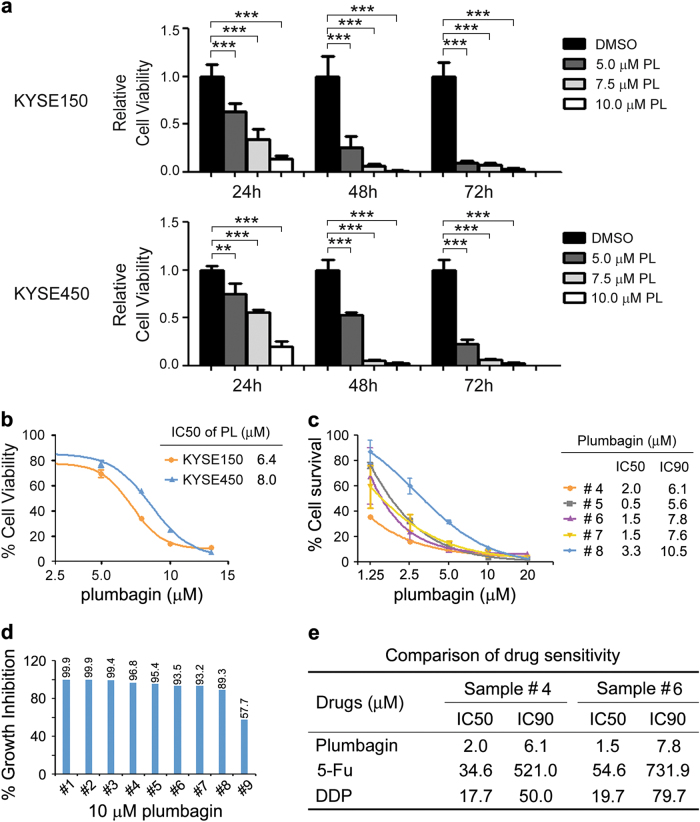
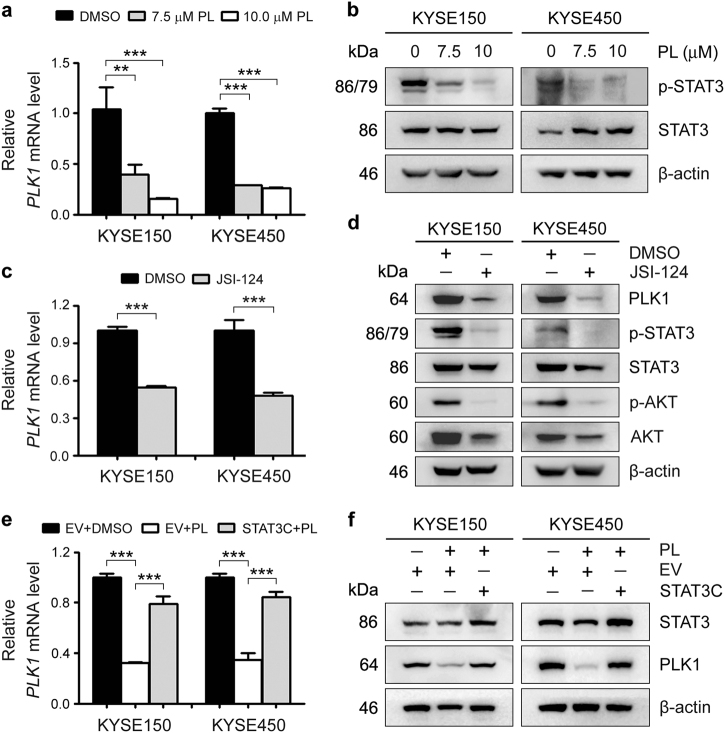
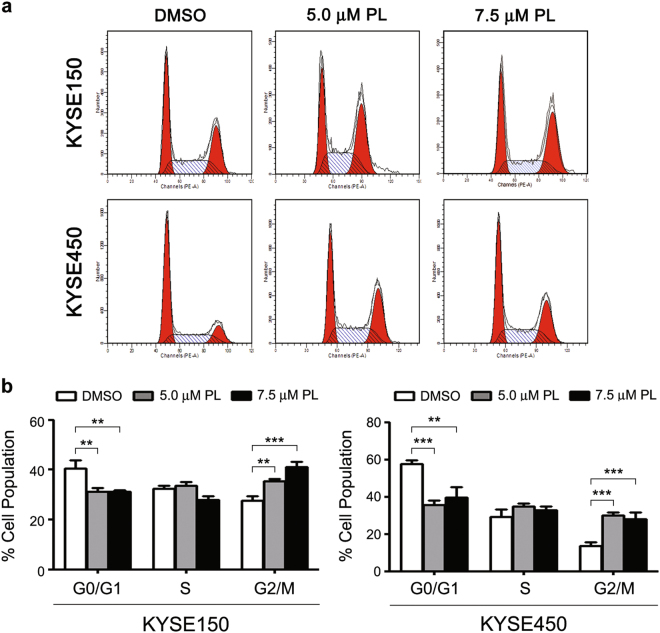
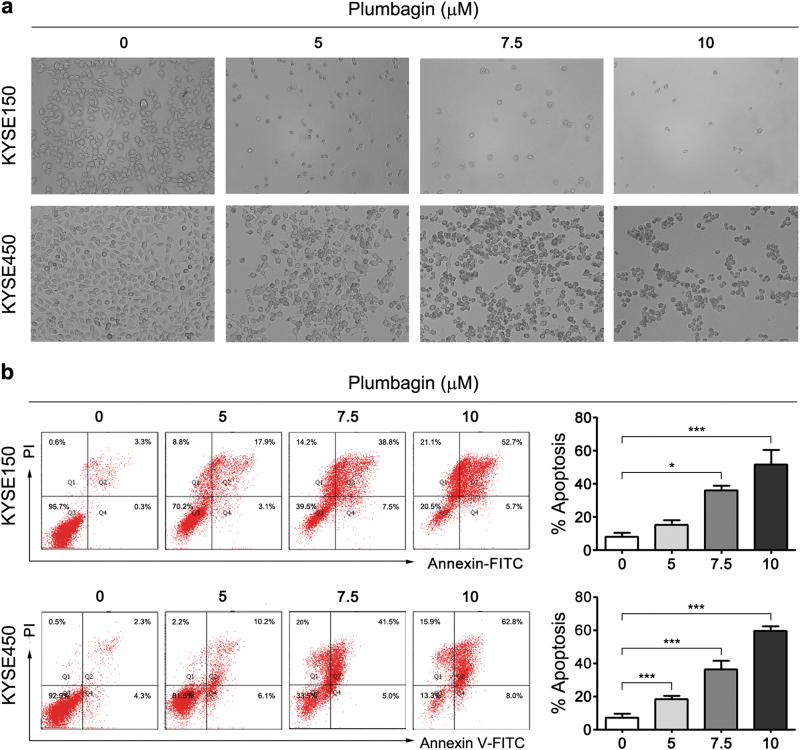
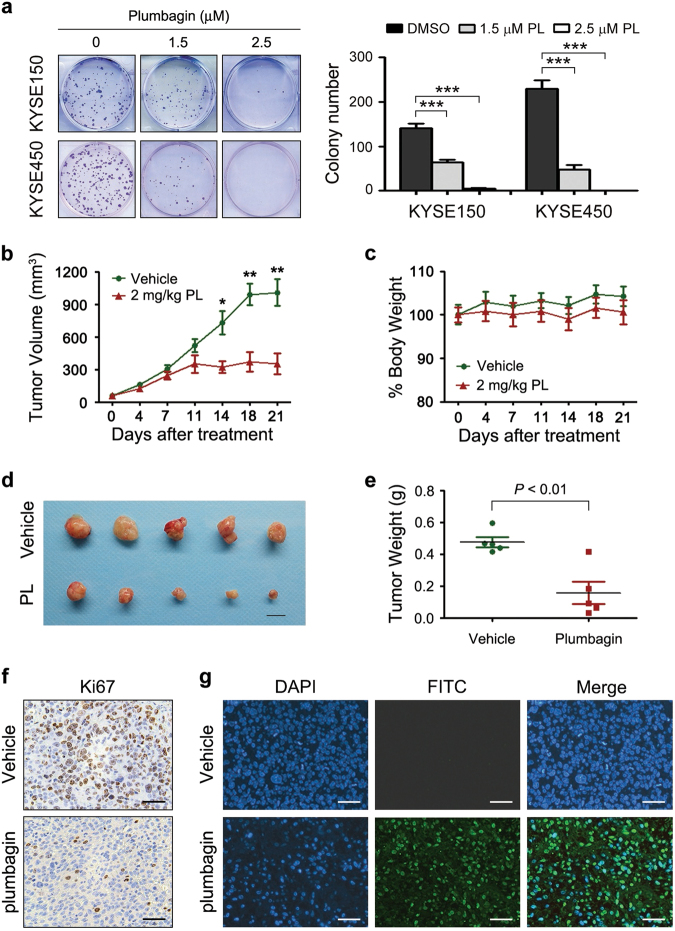
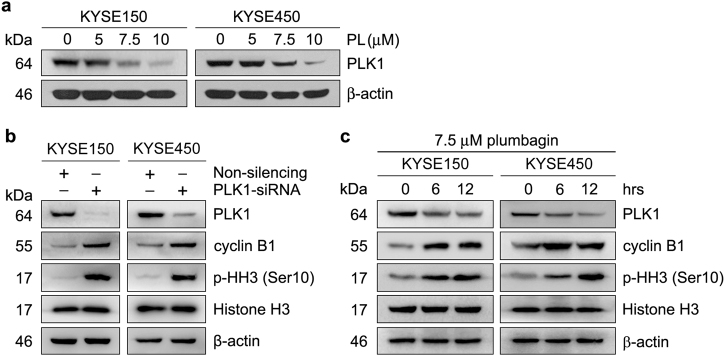
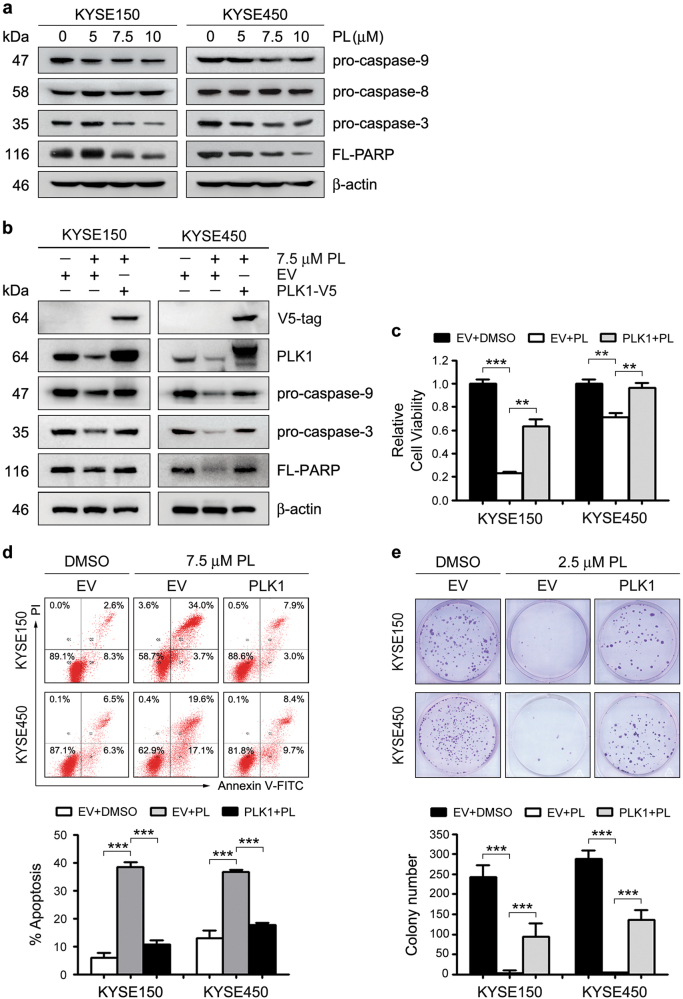
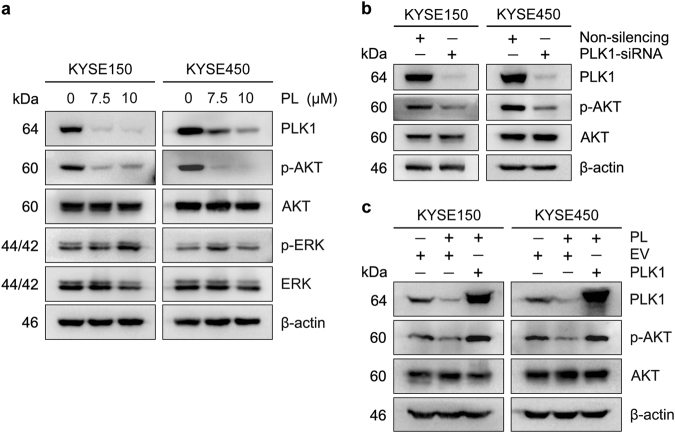
Esophageal squamous cell carcinoma (ESCC) is one of the deadliest cancers, and it requires novel treatment approaches and effective drugs. In the present study, we found that treatment with plumbagin, a natural compound, reduced proliferation and survival of the KYSE150 and KYSE450 ESCC cell lines in a dose-dependent manner in vitro. The drug also effectively inhibited the viability of primary ESCC cells from fresh biopsy specimens. Furthermore, plumbagin-induced mitotic arrest and massive apoptosis in ESCC cells. Notably, the drug significantly suppressed the colony formation capacity of ESCC cells in vitro and the growth of KYSE150 xenograft tumors in vivo. At the molecular level, we found that exposure to plumbagin decreased both polo-like kinase 1 (PLK1) and phosphorylated protein kinase B (p-AKT) expression in both ESCC cell lines. Enforced PLK1 expression in ESCC cells not only markedly rescued cells from plumbagin-induced apoptosis and proliferation inhibition but also restored the impaired AKT activity. Furthermore, signal transducer and activator of transcription 3 (STAT3), a transcription factor of PLK1, was also inactivated in plumbagin-treated ESCC cells; however, the overexpression of a constitutively activated STAT3 mutant, STAT3C, reinstated the plumbagin-elicited blockade of PLK1-AKT signaling in ESCC cells. Taken together, these findings indicate that plumbagin inhibits proliferation and potentiates apoptosis in human ESCC cells in vitro and in vivo. Plumbagin may exert these antitumor effects by abrogating STAT3-PLK1-AKT signaling, which suggests that plumbagin may be a novel, promising anticancer agent for the treatment of ESCC.
食管鳞状细胞癌 (ESCC) 是最致命的癌症之一,需要新的治疗方法和有效的药物。在本研究中,我们发现天然化合物白花丹素处理可在体外剂量依赖性方式降低 KYSE150 和 KYSE450 ESCC 细胞系的增殖和存活。该药物还能有效抑制新鲜活检标本中 ESCC 细胞的活力。此外,白花丹素可诱导 ESCC 细胞有丝分裂停滞和大量细胞凋亡。值得注意的是,该药物可显著抑制 ESCC 细胞在体外的集落形成能力和 KYSE150 异种移植肿瘤在体内的生长。在分子水平上,我们发现暴露于白花丹素可降低两种 ESCC 细胞系中 polo 样激酶 1 (PLK1) 和磷酸化蛋白激酶 B (p-AKT) 的表达。在 ESCC 细胞中强制表达 PLK1 不仅可显著挽救细胞免受白花丹素诱导的凋亡和增殖抑制,还可恢复受损的 AKT 活性。此外,PLK1 的转录因子信号转导和转录激活因子 3 (STAT3) 在白花丹素处理的 ESCC 细胞中也被失活;然而,组成型激活 STAT3 突变体 STAT3C 的过表达可恢复白花丹素对 ESCC 细胞中 PLK1-AKT 信号的阻断。综上所述,这些发现表明白花丹素可在体外和体内抑制人 ESCC 细胞的增殖并增强其凋亡。白花丹素可能通过阻断 STAT3-PLK1-AKT 信号发挥这些抗肿瘤作用,表明白花丹素可能是治疗 ESCC 的一种新型有前途的抗癌药物。