Institute of Traditional Medicine, School of Medicine, National Yang-Ming University, Taipei 112, Taiwan.
Division of Radiation Oncology, Department of Radiology, Far Eastern Memorial Hospital, Taipei 220, Taiwan.
Molecules. 2018 Jan 15;23(1):173. doi: 10.3390/molecules23010173.
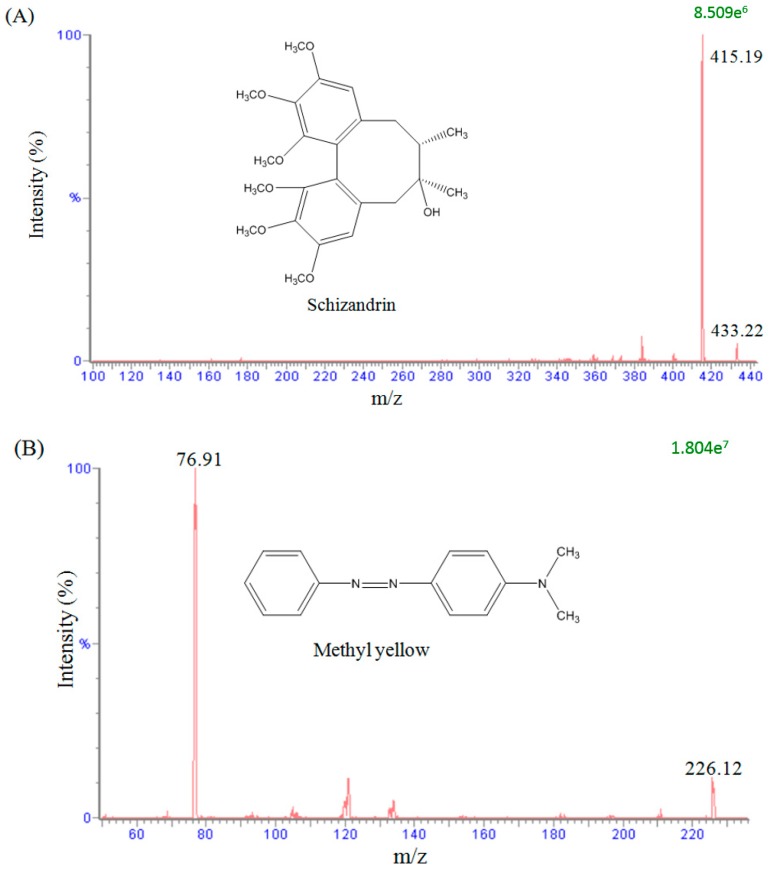
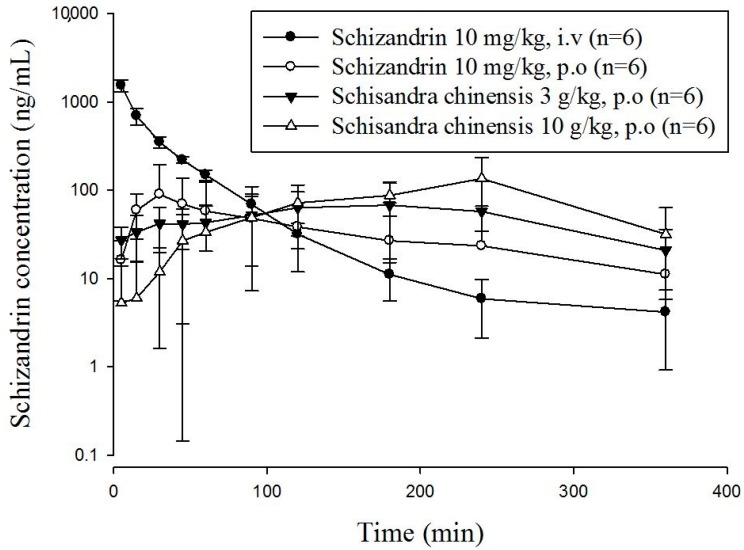
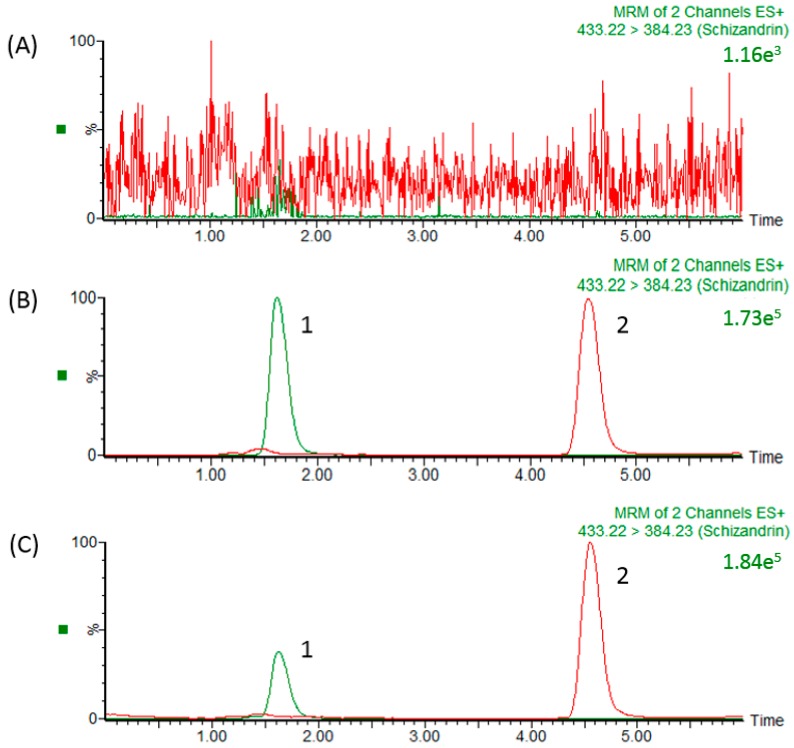
has been used as an important component in various prescriptions in traditional Chinese medicine and, more recently, in Western-based medicine for its anti-hepatotoxic effect. The aim of this study was to develop a selective, rapid, and sensitive ultra-performance liquid chromatography-tandem mass spectrometry method for pharmacokinetic studies of schizandrin in rats. Liquid-liquid extraction was used for plasma sample preparation. A UHPLC reverse-phase C18e column (100 mm × 2.1 mm, 2 μm) coupled with a mobile phase of methanol-0.1% formic acid (85:15, /) was used for sample separation. A triple quadrupole tandem mass spectrometer was used to detect the analytes in the selected reaction monitoring mode. The linear range of schizandrin in rat plasma was 5.0-1000 ng/mL (r² > 0.999), with a lower limit of quantification of 5 ng/mL. The method was validated with regard to accuracy, intra-day and inter-day precision, linearity, stability, recovery, and matrix effects in rat plasma, which were acceptable according to the biological method validation guidelines developed by the FDA. This method was successfully applied to a pharmacokinetic study after oral administration of 3 g/kg and 10 g/kg of products, which yielded a maximum concentration of schizandrin of 0.08 ± 0.07 and 0.15 ± 0.09 μg/mL, respectively. A parallel study design was used to investigate the oral bioavailability of single compound of schizandrin and the herbal extract, the single compound of pure schizandrin (10 mg/kg, i.v.), pure schizandrin (10 mg/kg, p.o.), and the herbal extract of (3 g/kg and 10 g/kg, p.o.) were given individually. The dose of (3 g/kg) equivalent to schizandrin (5.2 mg/kg); the dose of (10 g/kg) equivalent to schizandrin (17.3 mg/kg). The result demonstrated that the oral bioavailability of schizandrin was approximately 15.56 ± 10.47% in rats, however the oral bioavailability of herbal extract was higher than single compound. The method was successfully applied to the pharmacokinetic study of pure schizandrin after oral administration of its pharmaceutical industry products in rats.
五味子已被用作中药中的重要成分,最近在西方医学中也因其抗肝毒性作用而被使用。本研究旨在开发一种选择性、快速和灵敏的超高效液相色谱-串联质谱法,用于研究五味子在大鼠体内的药代动力学。采用液-液萃取法进行血浆样品制备。采用 UHPLC 反相 C18e 柱(100mm×2.1mm,2μm),以甲醇-0.1%甲酸(85:15,/)为流动相进行样品分离。采用三重四极杆串联质谱仪在选择反应监测模式下检测分析物。五味子在大鼠血浆中的线性范围为 5.0-1000ng/mL(r²>0.999),定量下限为 5ng/mL。该方法经准确度、日内和日间精密度、线性、稳定性、回收率和大鼠血浆中的基质效应验证,符合 FDA 生物方法验证指南的要求。该方法成功应用于口服 3g/kg 和 10g/kg 制剂后的药代动力学研究,分别获得五味子的最大浓度为 0.08±0.07μg/mL 和 0.15±0.09μg/mL。采用平行研究设计,考察了五味子单一组分和中药提取物的口服生物利用度,分别给予五味子单体化合物(10mg/kg,iv.)、五味子单体化合物(10mg/kg,po.)和中药提取物(3g/kg 和 10g/kg,po.)。(3g/kg)剂量相当于五味子(5.2mg/kg);(10g/kg)剂量相当于五味子(17.3mg/kg)。结果表明,五味子在大鼠体内的口服生物利用度约为 15.56±10.47%,而中药提取物的口服生物利用度高于单体化合物。该方法成功应用于大鼠口服其医药产品后五味子的药代动力学研究。