Sorbonne Universités, UPMC Univ Paris 06, INSERM, CNRS, Neurosciences Paris Seine - Institut de Biologie Paris Seine (NPS - IBPS), 75005, Paris, France.
Université Sorbonne Paris Cité, UMR-S894 Inserm Université Paris Descartes, Centre de Psychiatrie et Neuroscience, 75014, Paris, France.
Sci Rep. 2018 Jan 17;8(1):938. doi: 10.1038/s41598-018-19154-y.
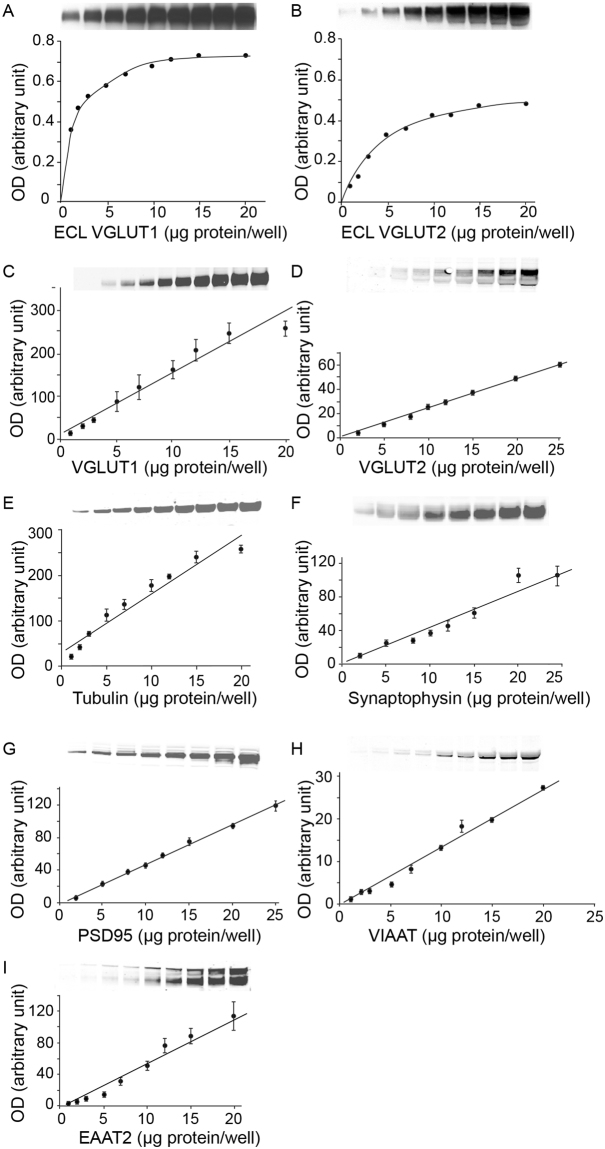
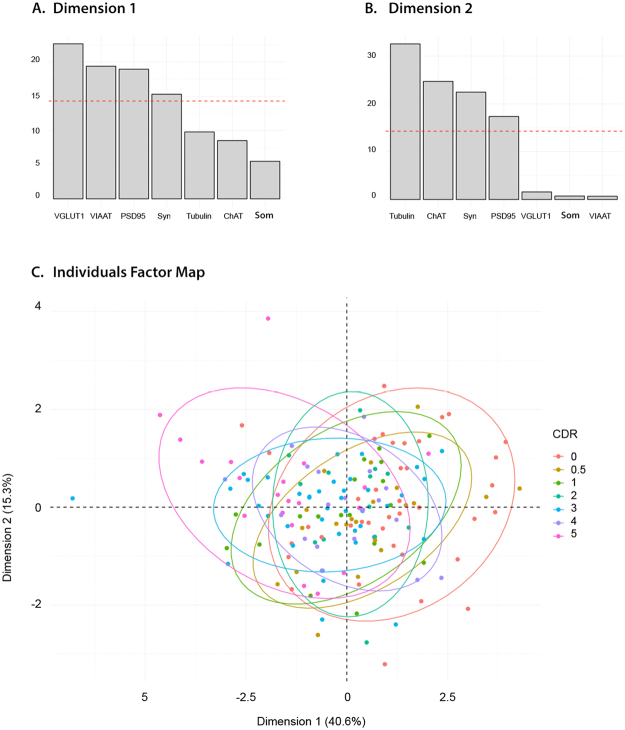
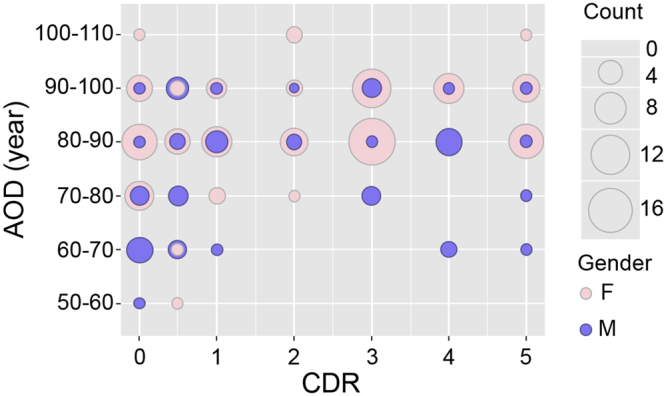
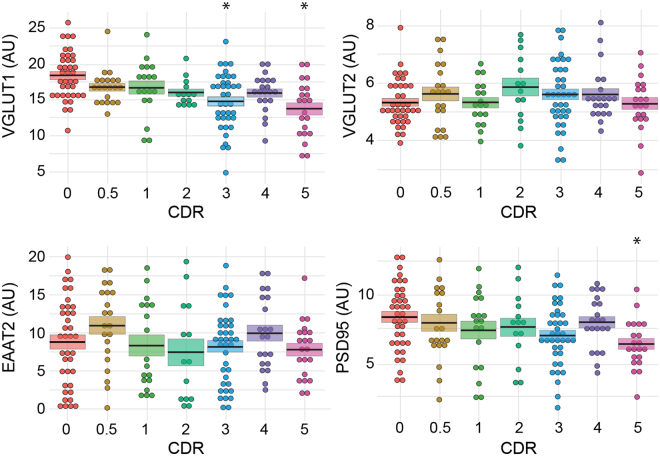
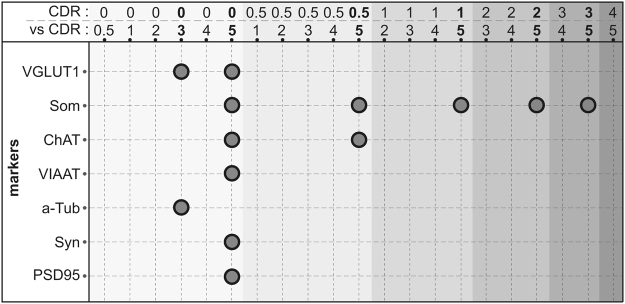
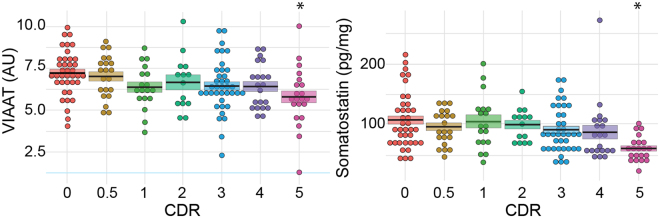
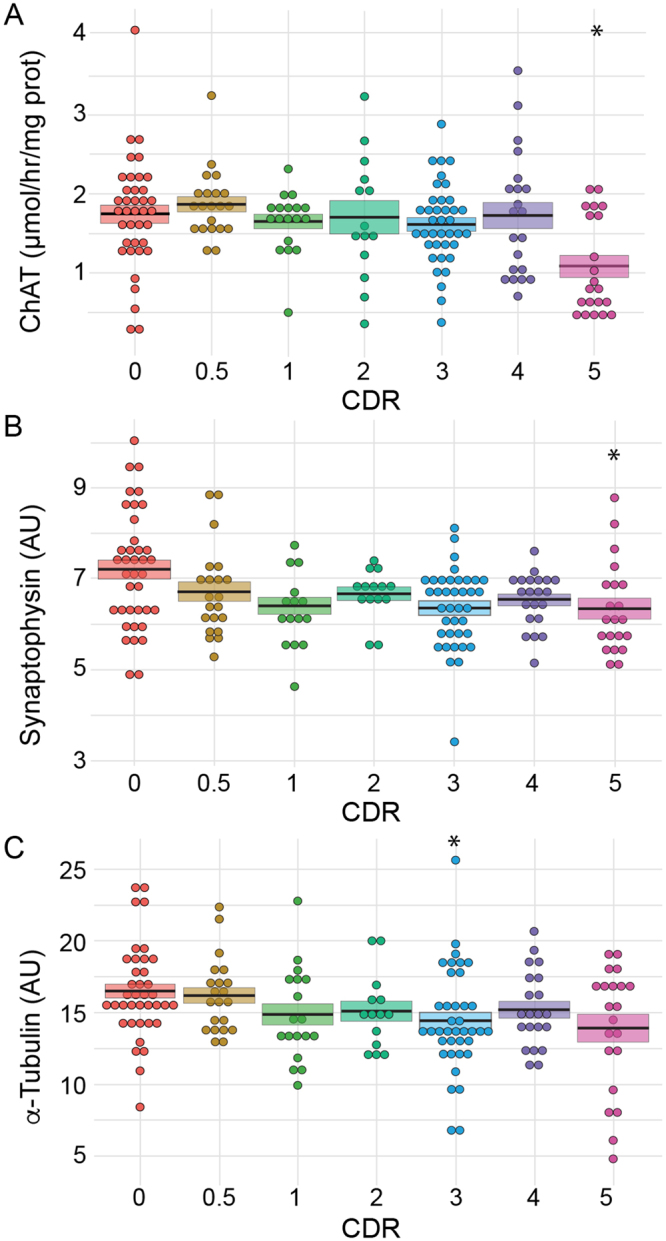
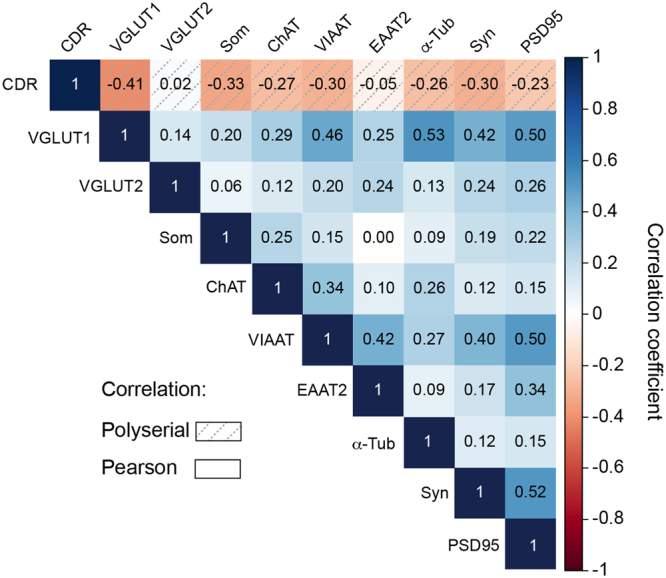
Synaptic loss, plaques and neurofibrillary tangles are viewed as hallmarks of Alzheimer's disease (AD). This study investigated synaptic markers in neocortical Brodmann area 9 (BA9) samples from 171 subjects with and without AD at different levels of cognitive impairment. The expression levels of vesicular glutamate transporters (VGLUT1&2), glutamate uptake site (EAAT2), post-synaptic density protein of 95 kD (PSD95), vesicular GABA/glycine transporter (VIAAT), somatostatin (som), synaptophysin and choline acetyl transferase (ChAT) were evaluated. VGLUT2 and EAAT2 were unaffected by dementia. The VGLUT1, PSD95, VIAAT, som, ChAT and synaptophysin expression levels significantly decreased as dementia progressed. The maximal decrease varied between 12% (synaptophysin) and 42% (som). VGLUT1 was more strongly correlated with dementia than all of the other markers (polyserial correlation = -0.41). Principal component analysis using these markers was unable to differentiate the CDR groups from one another. Therefore, the status of the major synaptic markers in BA9 does not seem to be linked to the cognitive status of AD patients. The findings of this study suggest that the loss of synaptic markers in BA9 is a late event that is only weakly related to AD dementia.
突触丢失、斑块和神经原纤维缠结被视为阿尔茨海默病(AD)的标志。本研究调查了认知障碍程度不同的 171 名 AD 患者和非 AD 患者大脑新皮质布罗德曼 9 区(BA9)样本中的突触标志物。评估了囊泡谷氨酸转运体(VGLUT1&2)、谷氨酸摄取位点(EAAT2)、95kD 突触后密度蛋白(PSD95)、囊泡 GABA/甘氨酸转运体(VIAAT)、生长抑素(som)、突触小体和胆碱乙酰转移酶(ChAT)的表达水平。痴呆症对 VGLUT2 和 EAAT2 没有影响。随着痴呆症的进展,VGLUT1、PSD95、VIAAT、som、ChAT 和突触小体的表达水平显著下降。最大下降幅度在 12%(突触小体)至 42%(som)之间。VGLUT1 与痴呆症的相关性强于所有其他标志物(多元序列相关= -0.41)。使用这些标志物的主成分分析无法将 CDR 组彼此区分开来。因此,BA9 中主要突触标志物的状态似乎与 AD 患者的认知状态无关。本研究的结果表明,BA9 中突触标志物的丢失是一个晚期事件,与 AD 痴呆症的相关性较弱。