Department of Anus and Bowel Surgery, Jingmen No. 2 People's Hospital, Jingmen, Hubei 448000, P.R. China.
Mol Med Rep. 2018 Mar;17(3):4203-4212. doi: 10.3892/mmr.2018.8444. Epub 2018 Jan 17.
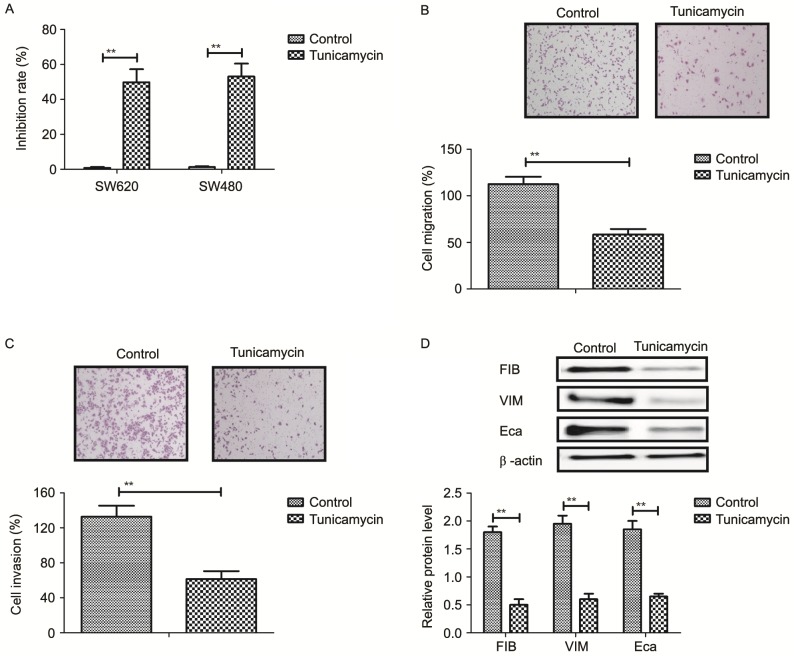
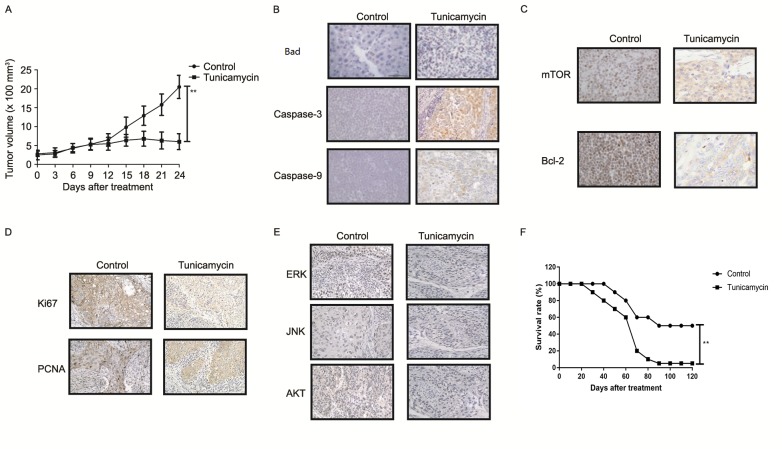
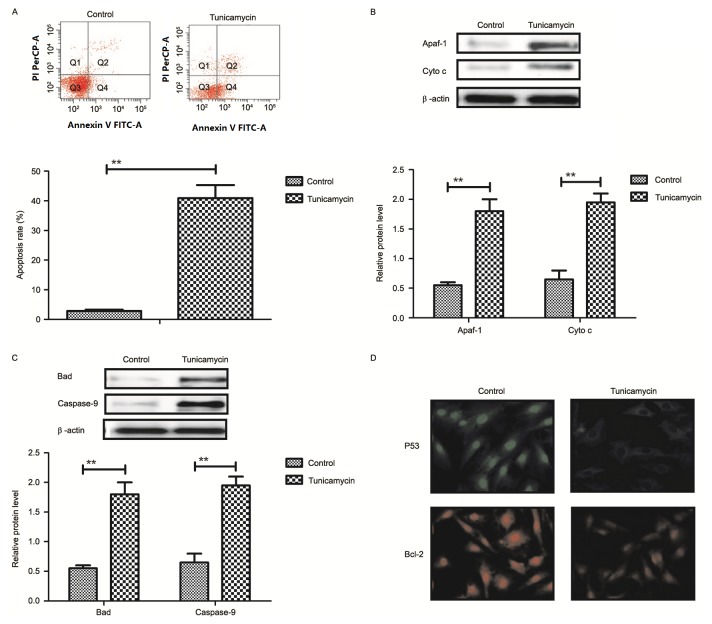
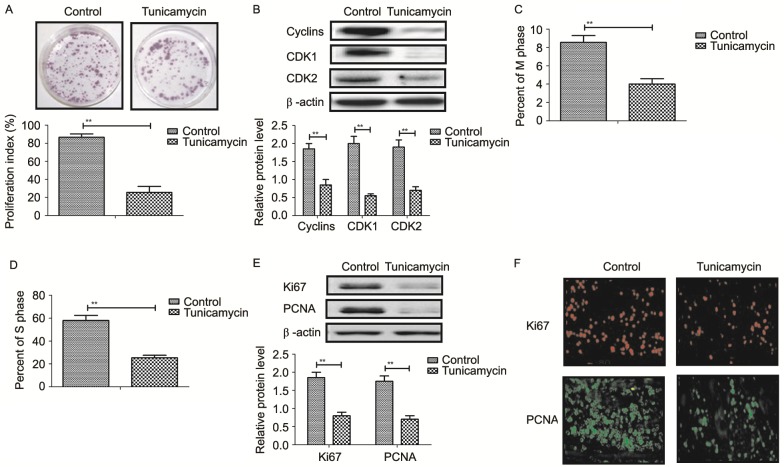
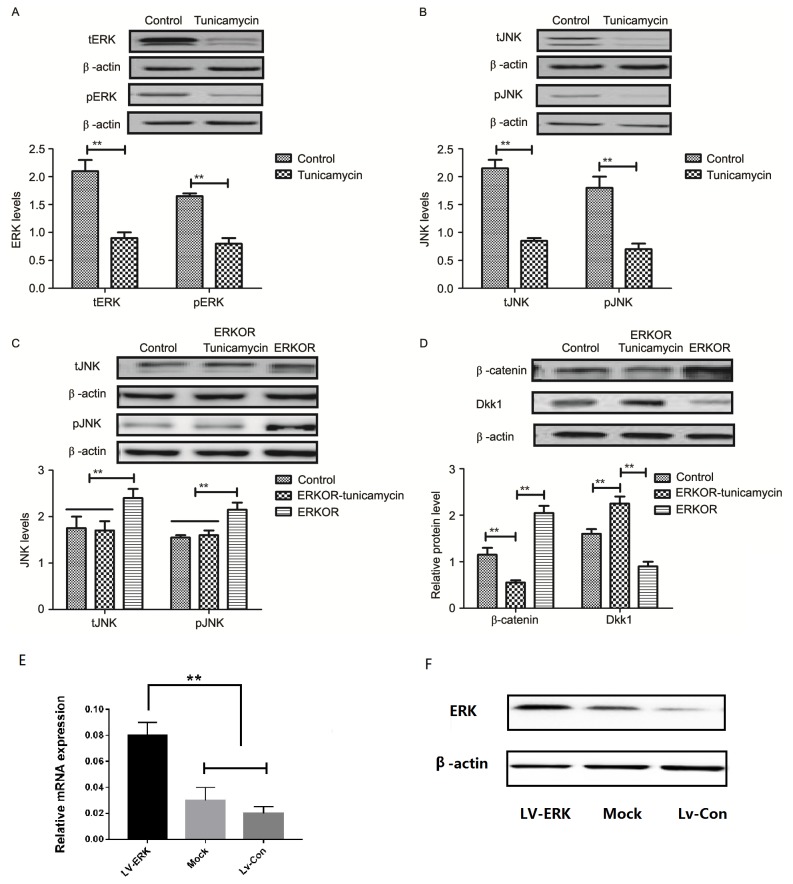
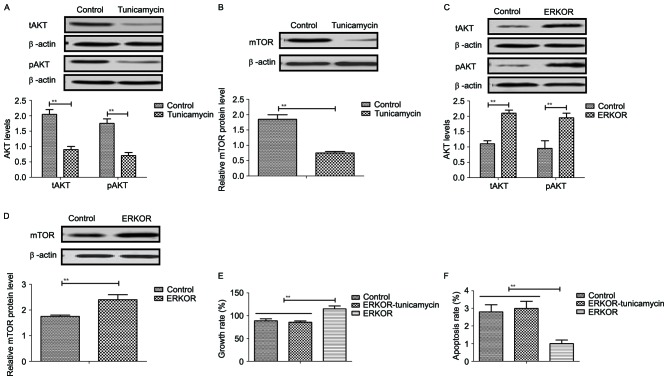
Epidemiology and evidence have demonstrated that colon carcinoma is one of the most common gastrointestinal tumors in the clinic. Reports have suggested that Tunicamycin significantly inhibits aggressiveness of colon carcinoma cells by promotion of apoptosis. In the present study, the inhibitory effect of tunicamycin on colon cancer cells and the potential underlying molecular mechanism was investigated. Western blotting, immunohistochemistry, apoptotic assays and immunofluorescence were used to analyze the therapeutic effects of tunicamycin on apoptosis, growth, aggressiveness and cell cycle of colon tumor cells, by downregulation of fibronectin, vimentin and E‑cadherin expression levels. In vitro experiments demonstrated that tunicamycin significantly inhibited growth, migration and invasion of colon carcinoma cells. In addition, tunicamycin administration promoted apoptosis of colon carcinoma cells via upregulation of apoptotic protease activating factor 1 and cytochrome c expression levels, which are proteins that have a role in mitochondrial apoptosis signaling. Cell cycle assays revealed that tunicamycin suppressed proliferation and arrested S phase entry of colon carcinoma cells. Mechanistic analysis demonstrated that tunicamycin reduced expression and phosphorylation levels of extracellular signal‑regulated kinase (ERK), c‑JUN N‑terminal kinase (JNK) and protein kinase B (AKT), and inhibited mammalian target of rapamycin (mTOR) expression levels in colon carcinoma cells. Endogenous overexpression of ERK inhibited tunicamycin‑mediated downregulation of JNK, AKT and mTOR expression, which further blocked tunicamycin‑mediated inhibition of growth and aggressiveness of colon carcinoma. In vivo assays revealed that tunicamycin treatment significantly inhibited tumor growth and promoted apoptosis, which led to long‑term survival of tumor‑bearing mice compared with the control group. In conclusion, these results suggested that tunicamycin may inhibit growth and aggressiveness of colon cancer via the ERK‑JNK‑mediated AKT/mTOR signaling pathway, and suggested that tunicamycin may be a potential anti‑cancer agent for colon carcinoma therapy.
流行病学和证据表明,结肠癌是临床上最常见的胃肠道肿瘤之一。有报道称,衣霉素通过促进细胞凋亡显著抑制结肠癌细胞的侵袭性。本研究旨在探讨衣霉素对结肠癌细胞的抑制作用及其潜在的分子机制。采用 Western blot 印迹、免疫组化、凋亡检测和免疫荧光分析衣霉素下调纤维连接蛋白、波形蛋白和 E-钙黏蛋白表达水平对结肠肿瘤细胞凋亡、生长、侵袭和细胞周期的治疗作用。体外实验表明,衣霉素显著抑制结肠癌细胞的生长、迁移和侵袭。此外,衣霉素给药通过上调凋亡蛋白酶激活因子 1 和细胞色素 c 表达水平促进结肠癌细胞凋亡,这些蛋白在线粒体凋亡信号中发挥作用。细胞周期检测显示,衣霉素抑制结肠癌细胞的增殖并阻滞 S 期进入。机制分析表明,衣霉素降低了细胞外信号调节激酶(ERK)、c-JUN N-末端激酶(JNK)和蛋白激酶 B(AKT)的表达和磷酸化水平,并抑制了结肠癌细胞中哺乳动物雷帕霉素靶蛋白(mTOR)的表达水平。ERK 的内源性过表达抑制了衣霉素介导的 JNK、AKT 和 mTOR 表达下调,从而进一步阻断了衣霉素对结肠癌细胞生长和侵袭的抑制作用。体内实验表明,衣霉素治疗显著抑制肿瘤生长并促进凋亡,与对照组相比,荷瘤小鼠的长期存活率显著提高。综上所述,这些结果表明,衣霉素可能通过 ERK-JNK 介导的 AKT/mTOR 信号通路抑制结肠癌的生长和侵袭,提示衣霉素可能是结肠癌治疗的一种潜在抗癌药物。