Centro Nacional de Biotecnología, (CNB-CSIC), Darwin 3, Cantoblanco, 28049, Madrid, Spain.
Ciber de Enfermedades Respiratorias, Madrid, Spain.
Sci Rep. 2018 Jan 19;8(1):1230. doi: 10.1038/s41598-018-19370-6.
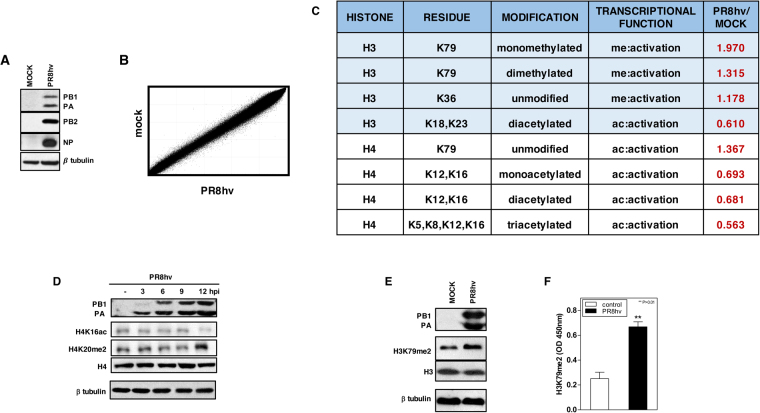
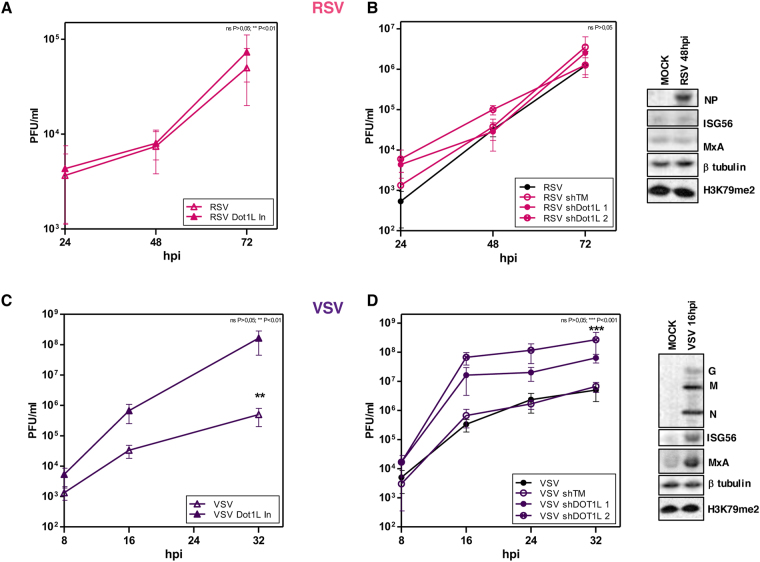
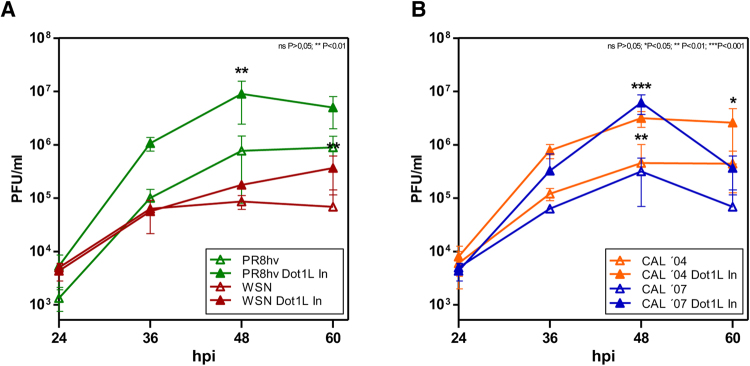
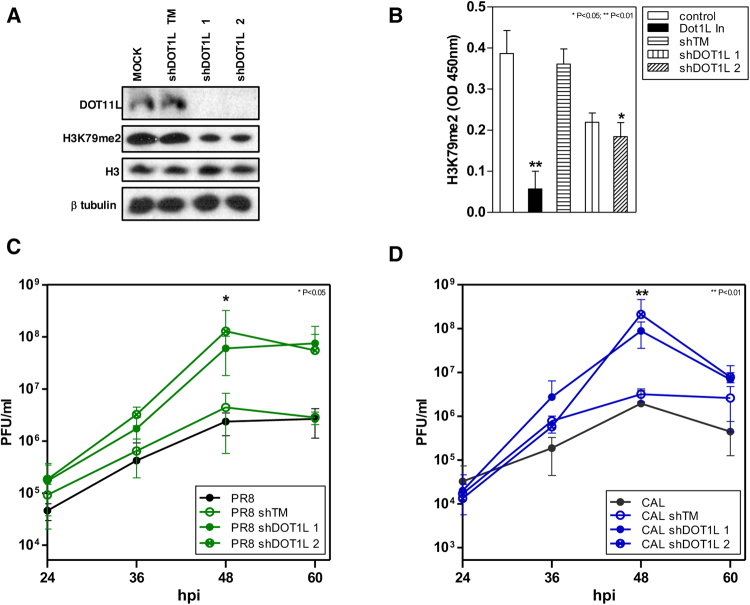
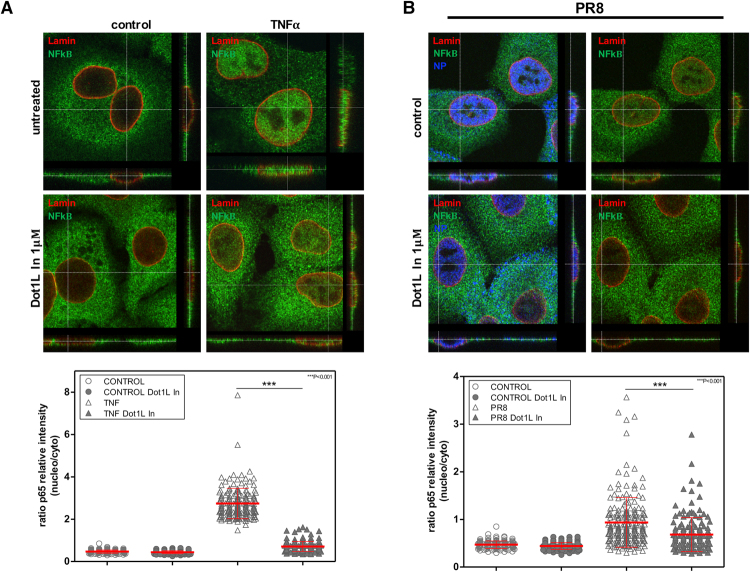
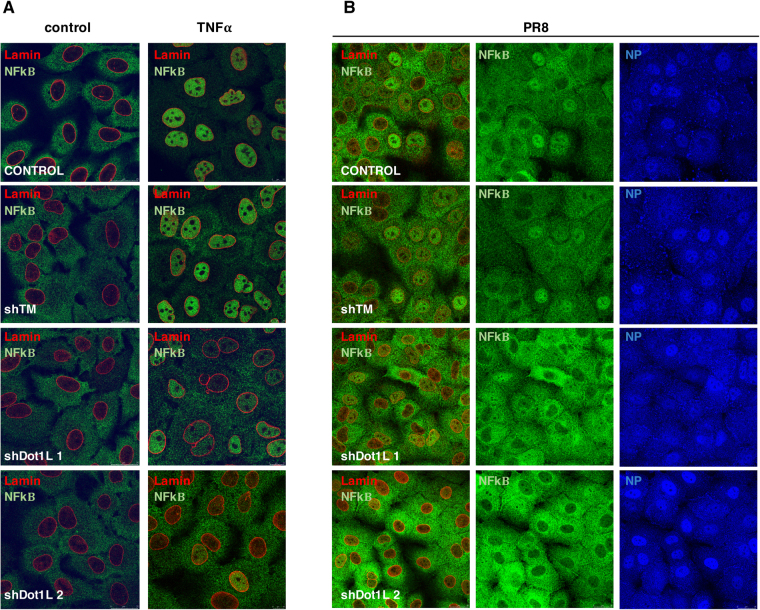
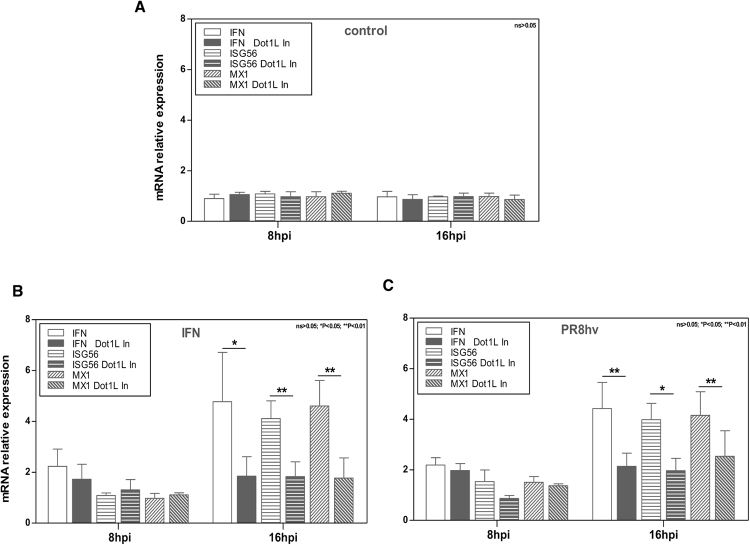
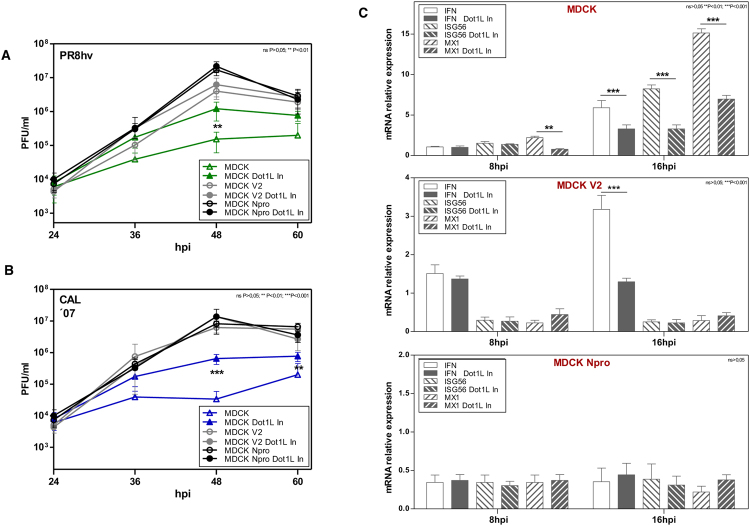
Influenza virus stablishes a network of virus-host functional interactions, which depends on chromatin dynamic and therefore on epigenetic modifications. Using an unbiased search, we analyzed the epigenetic changes at DNA methylation and post-translational histone modification levels induced by the infection. DNA methylation was unaltered, while we found a general decrease on histone acetylation, which correlates with transcriptional inactivation and may cooperate with the impairment of cellular transcription that causes influenza virus infection. A particular increase in H3K79 methylation was observed and the use of an inhibitor of the specific H3K79 methylase, Dot1L enzyme, or its silencing, increased influenza virus replication. The antiviral response was reduced in conditions of Dot1L downregulation, since decreased nuclear translocation of NF-kB complex, and IFN-β, Mx1 and ISG56 expression was detected. The data suggested a control of antiviral signaling by methylation of H3K79 and consequently, influenza virus replication was unaffected in IFN pathway-compromised, Dot1L-inhibited cells. H3K79 methylation also controlled replication of another potent interferon-inducing virus such as vesicular stomatitis virus, but did not modify amplification of respiratory syncytial virus that poorly induces interferon signaling. Epigenetic methylation of H3K79 might have an important role in controlling interferon-induced signaling against viral pathogens.
流感病毒建立了一个病毒-宿主功能相互作用的网络,这依赖于染色质动态,因此依赖于表观遗传修饰。我们使用一种无偏搜索方法,分析了感染诱导的 DNA 甲基化和翻译后组蛋白修饰水平的表观遗传变化。DNA 甲基化没有改变,而我们发现组蛋白乙酰化普遍降低,这与转录失活相关,可能与细胞转录损伤协同作用,导致流感病毒感染。观察到 H3K79 甲基化的特定增加,并且使用特异性 H3K79 甲基转移酶 Dot1L 酶的抑制剂或其沉默,增加了流感病毒的复制。在 Dot1L 下调的情况下,抗病毒反应减少,因为检测到核易位 NF-kB 复合物和 IFN-β、Mx1 和 ISG56 表达减少。数据表明 H3K79 甲基化对抗病毒信号的控制,因此,在 IFN 途径受损、Dot1L 抑制的细胞中,流感病毒复制不受影响。H3K79 甲基化还控制着另一种强效干扰素诱导病毒(如水疱性口炎病毒)的复制,但不改变呼吸合胞病毒的扩增,呼吸合胞病毒诱导干扰素信号较弱。H3K79 的表观遗传甲基化可能在控制干扰素诱导的抗病毒信号中发挥重要作用。