Ogbonna Brian O, Ezenduka Charles C, Soni Jeffrey S, Oparah Azuka C
Department of Clinical Pharmacy and Pharmacy Management, Faculty of Pharmaceutical Sciences, Nnamdi Azikiwe University Awka, A wka, Nigeria.
Department of Clinical Pharmacy and Pharmacy Practice, Faculty of Pharmacy, University of Benin, Benin City, Nigeria.
Integr Pharm Res Pract. 2015 Jun 5;4:49-55. doi: 10.2147/IPRP.S82911. eCollection 2015.
The introduction of pharmaceutical care in Nigeria has been faced with many challenges in addition to limited information regarding the practice.
This study aimed to determine the barriers encountered by community pharmacists in Nigeria in the provision of pharmaceutical care.
A cross-sectional descriptive survey was carried out in Enugu urban, southeast Nigeria. Data were collected using pretested and structured 5-point Likert scale questionnaires that were self-administered to the respondents. Data were analyzed using descriptive statistics.
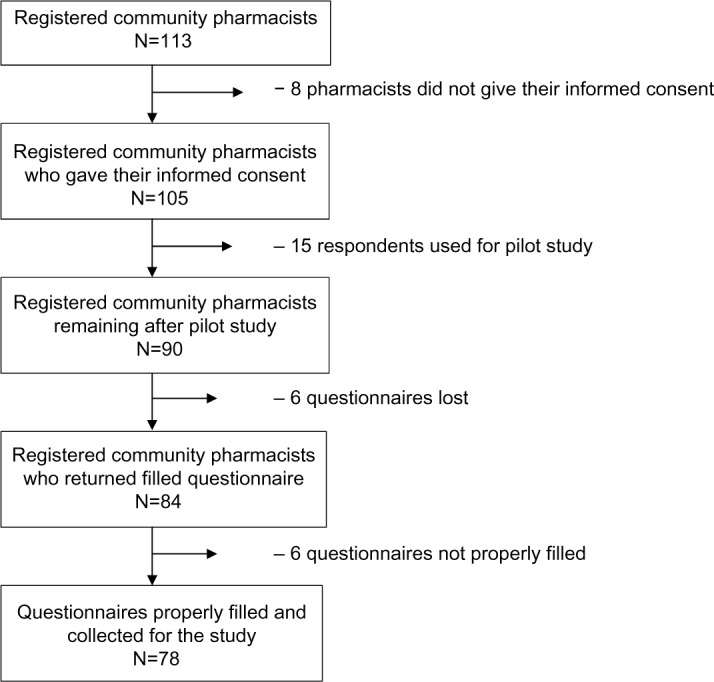
The 78 community pharmacists comprised 62 males and 16 females. Out of the 78 respondents, 69 (88.5%) had the basic Bachelor of Pharmacy degree while three (3.9%) had Fellowship, Master's, and Doctor of Pharmacy degrees respectively. The mean number of years of practice was 8.2 (±0.6). The key limitations to the implementation of pharmaceutical care were: pharmacists' attitude and lack of pharmaceutical care skills, as well as resource and system-related constraints. Others challenges were interprofessional and academic obstacles like lack of collaboration (66.6%) and lack of role models (42.1%). Most of the respondents (81%) were strongly willing to adopt and implement pharmaceutical care, while 19.2% were not strongly willing to practice pharmaceutical care.
Despite limitations to practice, community pharmacists in the area are very inclined to implement pharmaceutical care in the private sector to improve patients' quality of life.
在尼日利亚,药学服务的引入除了面临实践相关信息有限的问题外,还遭遇了诸多挑战。
本研究旨在确定尼日利亚社区药剂师在提供药学服务时所遇到的障碍。
在尼日利亚东南部城市埃努古开展了一项横断面描述性调查。使用预先测试且结构化的5级李克特量表问卷收集数据,由受访者自行填写。采用描述性统计方法对数据进行分析。
78名社区药剂师中,男性62名,女性16名。在78名受访者中,69人(88.5%)拥有药学学士学位,3人(3.9%)分别拥有药学 fellowship、硕士学位和博士学位。平均从业年限为8.2年(±0.6)。药学服务实施的主要限制因素包括:药剂师的态度和缺乏药学服务技能,以及资源和系统相关的限制。其他挑战包括跨专业和学术障碍,如缺乏协作(66.6%)和缺乏榜样(42.1%)。大多数受访者(81%)强烈愿意采用和实施药学服务,而19.2%的人不太愿意从事药学服务。
尽管存在实践限制,但该地区的社区药剂师非常倾向于在私营部门实施药学服务,以提高患者的生活质量。