DiMinno G, Coraggio F, Cerbone A M, Capitanio A M, Manzo C, Spina M, Scarpato P, Dattoli G M, Mattioli P L, Mancini M
J Clin Invest. 1986 Jan;77(1):157-64. doi: 10.1172/JCI112270.
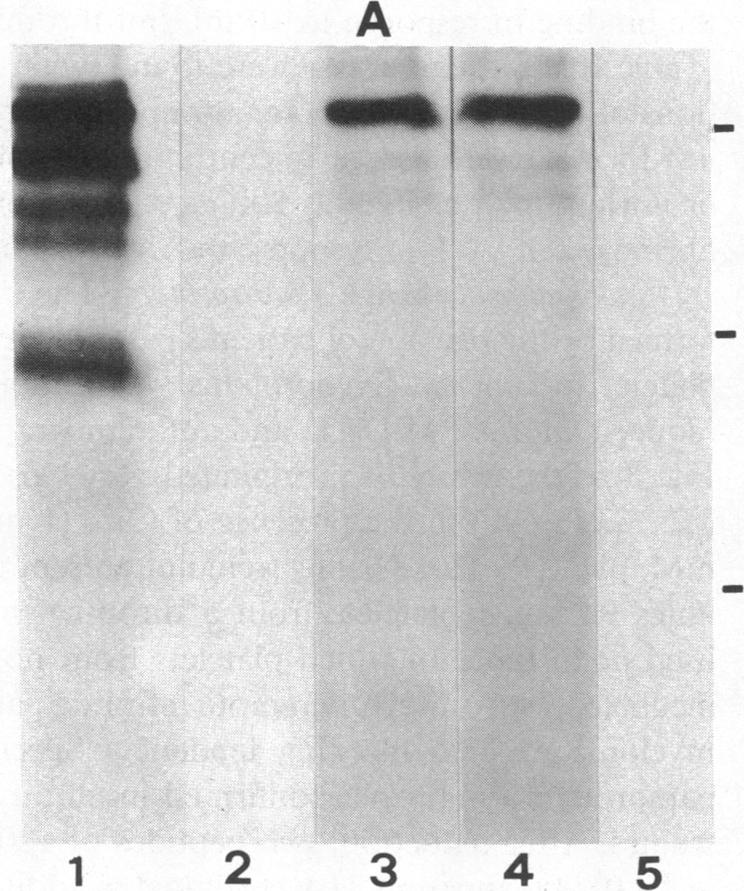
Impaired platelet aggregation, normal shape change, and agglutination and normal ATP secretion and thromboxane synthesis in response to high concentrations of thrombin or arachidonic acid were found in a patient with multiple myeloma and hemorrhagic tendency. The purified IgG1 kappa or its F(ab1)2 fragments induced similar changes when added in vitro to platelet-rich plasma from normal subjects. In addition, the paraprotein inhibited adhesion to glass microbeads, fibrin clot retraction, and binding of radiolabeled fibrinogen or von Willebrand factor to platelets exposed to thrombin or arachidonic acid without affecting intraplatelet levels of cAMP. The radiolabeled para-protein bound to an average of 35,000 sites on normal platelets but it bound to less than 2,000 sites on the platelets from a patient with Glanzmann's thrombasthenia. Immunoprecipitation studies showed that the platelet antigen identified by the paraprotein was the glycoprotein IIIa. Furthermore, binding of radiolabeled prostaglandin E1 (PGE1) to resting platelets as well as binding of von Willebrand factor to platelets stimulated with ristocetin were entirely normal in the presence of patient's inhibitor. These studies indicate that bleeding occurring in dysproteinemia may be the result of a specific interaction of monoclonal paraproteins with platelets. In addition, our data support the concept that the interaction of fibrinogen and/or von Willebrand factor with the platelet glycoprotein IIb-IIIa complex is essential for effective hemostasis.
在一名患有多发性骨髓瘤并有出血倾向的患者中,发现其血小板对高浓度凝血酶或花生四烯酸的聚集功能受损,但形状改变、凝集以及ATP分泌和血栓素合成正常。当将纯化的IgG1 κ或其F(ab1)2片段体外添加到正常受试者的富含血小板血浆中时,会引起类似变化。此外,该副蛋白抑制血小板与玻璃微珠的黏附、纤维蛋白凝块收缩以及放射性标记的纤维蛋白原或血管性血友病因子与暴露于凝血酶或花生四烯酸的血小板的结合,而不影响血小板内cAMP水平。放射性标记的副蛋白在正常血小板上平均结合35,000个位点,但在一名患有Glanzmann血小板无力症患者的血小板上结合位点少于2,000个。免疫沉淀研究表明,该副蛋白识别的血小板抗原是糖蛋白IIIa。此外,在存在患者抑制剂的情况下,放射性标记的前列腺素E1(PGE1)与静息血小板的结合以及血管性血友病因子与用瑞斯托霉素刺激的血小板的结合完全正常。这些研究表明,蛋白异常血症中发生的出血可能是单克隆副蛋白与血小板特异性相互作用的结果。此外,我们的数据支持这样的概念,即纤维蛋白原和/或血管性血友病因子与血小板糖蛋白IIb-IIIa复合物的相互作用对于有效的止血至关重要。