Leighton Patricia L A, Nadolski Nathan J, Morrill Adam, Hamilton Trevor J, Allison W Ted
Centre for Prions and Protein Folding Disease, University of Alberta, Edmonton, AB T6G 2M8, Canada.
Department of Biological Sciences, University of Alberta, Edmonton, AB T6G 2E9, Canada.
Biol Open. 2018 Jan 22;7(1):bio025734. doi: 10.1242/bio.025734.
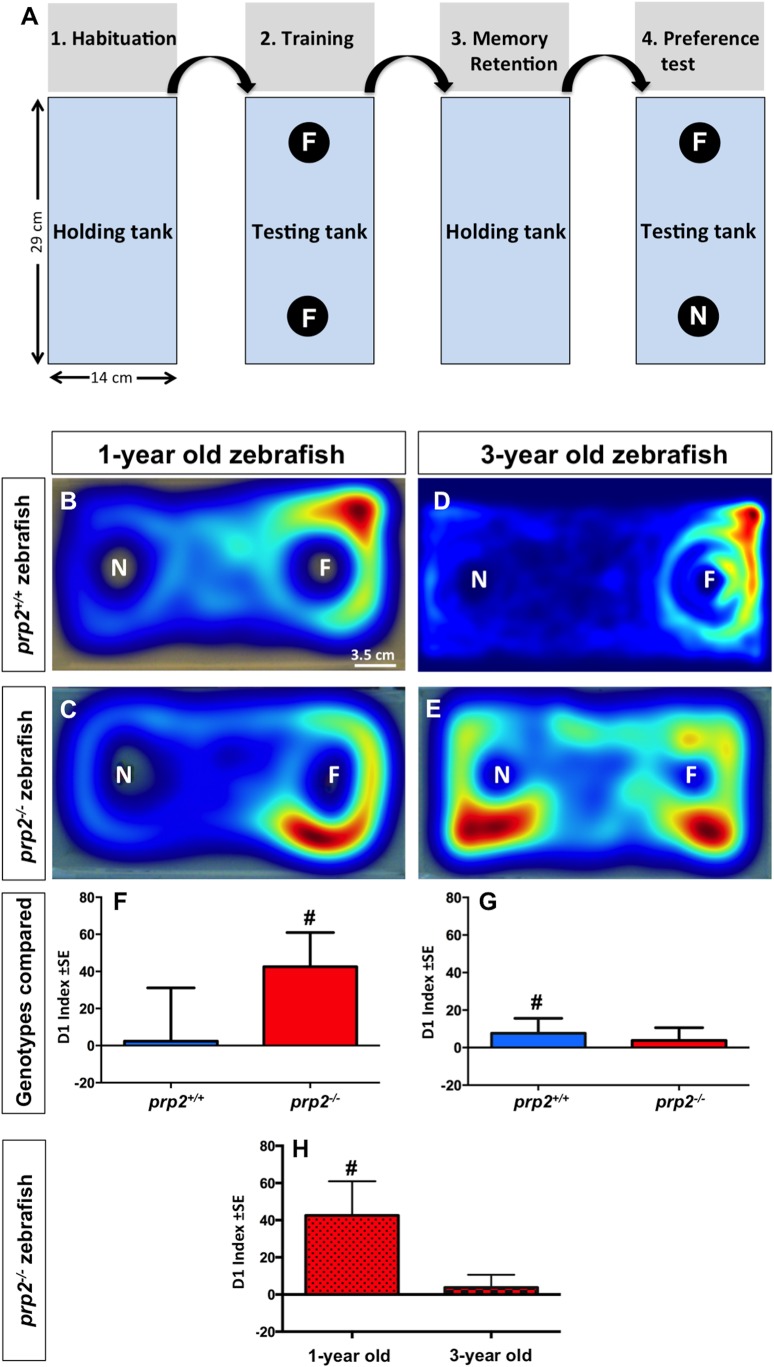
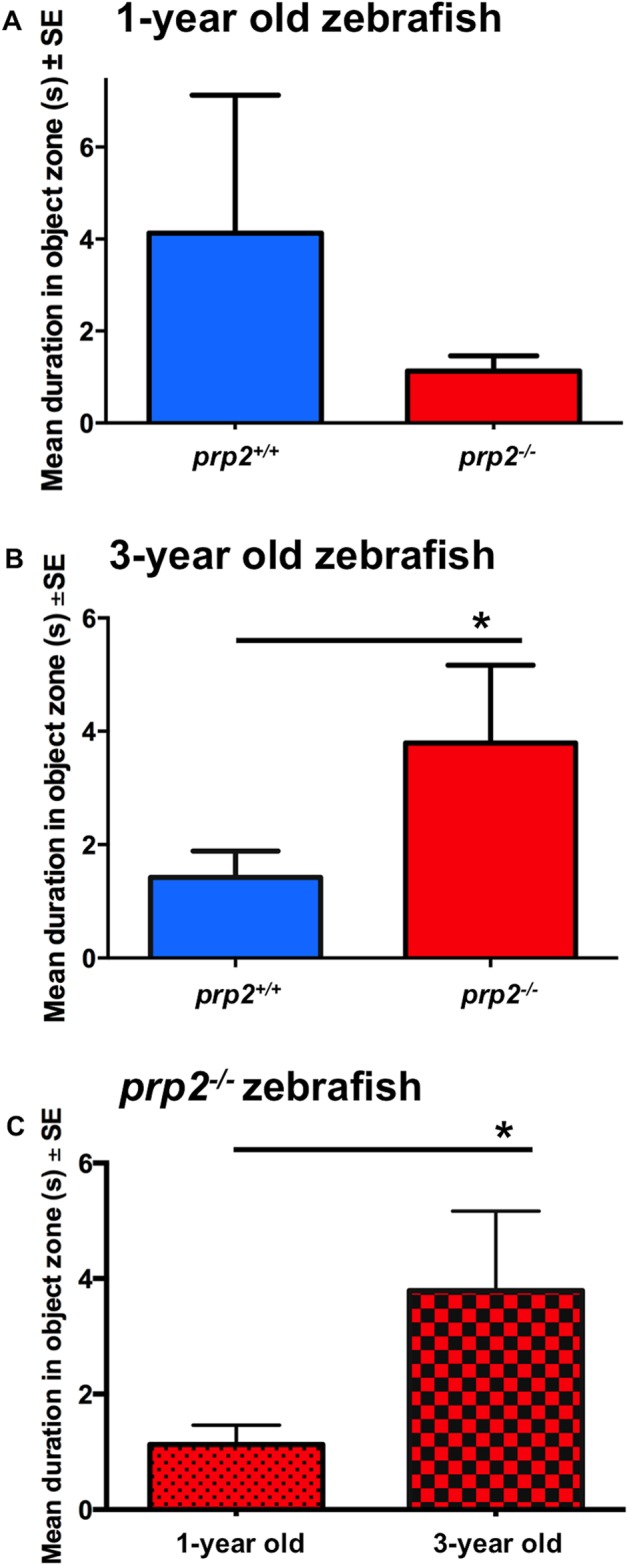
The misfolding of cellular prion protein (PrP) to form PrP Scrapie (PrP) is an exemplar of toxic gain-of-function mechanisms inducing propagated protein misfolding and progressive devastating neurodegeneration. Despite this, PrP function in the brain is also reduced and subverted during prion disease progression; thus understanding the normal function of PrP in healthy brains is key. Disrupting PrP in mice has led to a myriad of controversial functions that sometimes map onto disease symptoms, including a proposed role in memory or learning. Intriguingly, PrP interaction with amyloid beta (Aβ) oligomers at synapses has also linked its function to Alzheimer's disease and dementia in recent years. We set out to test the involvement of PrP in memory using a disparate animal model, the zebrafish. Here we document an age-dependent memory decline in zebrafish, pointing to a conserved and ancient role of PrP in memory. Specifically, we found that aged (3-year-old) fish performed poorly in an object recognition task relative to age-matched fish or 1-year-old fish. Further, using a novel object approach (NOA) test, we found that aged (3-year-old) fish approached the novel object more than either age-matched fish or 1-year-old fish, but did not have decreased anxiety when we tested them in a novel tank diving test. Taken together, the results of the NOA and novel tank diving tests suggest an altered cognitive appraisal of the novel object in the 3-year-old fish. The learning paradigm established here enables a path forward to study PrP interactions of relevance to Alzheimer's disease and prion diseases, and to screen for candidate therapeutics for these diseases. The findings underpin a need to consider the relative contributions of loss- versus gain-of-function of PrP during Alzheimer's and prion diseases, and have implications upon the prospects of several promising therapeutic strategies.
细胞朊蛋白(PrP)错误折叠形成瘙痒病朊蛋白(PrP)是功能获得性毒性机制的一个范例,可导致蛋白错误折叠传播和进行性破坏性神经退行性变。尽管如此,在朊病毒疾病进展过程中,大脑中PrP的功能也会降低并被破坏;因此,了解PrP在健康大脑中的正常功能是关键。在小鼠中破坏PrP会导致无数有争议的功能,这些功能有时与疾病症状相关,包括在记忆或学习中所起的作用。有趣的是,近年来PrP与突触处淀粉样β(Aβ)寡聚体的相互作用也将其功能与阿尔茨海默病和痴呆联系起来。我们着手使用不同的动物模型斑马鱼来测试PrP在记忆中的作用。在此我们记录了斑马鱼中与年龄相关的记忆衰退,表明PrP在记忆中具有保守且古老的作用。具体而言,我们发现老年(3岁)鱼在物体识别任务中的表现相对于年龄匹配的鱼或1岁鱼较差。此外,使用新物体方法(NOA)测试,我们发现老年(3岁)鱼比年龄匹配的鱼或1岁鱼更靠近新物体,但在新水箱潜水测试中测试它们时,其焦虑并未降低。综合来看,NOA和新水箱潜水测试的结果表明3岁鱼对新物体的认知评估发生了改变。这里建立的学习范式为研究与阿尔茨海默病和朊病毒疾病相关的PrP相互作用以及筛选这些疾病的候选治疗方法开辟了一条道路。这些发现强调了在阿尔茨海默病和朊病毒疾病期间需要考虑PrP功能丧失与功能获得的相对贡献,并对几种有前景的治疗策略的前景产生影响。