Sallais Julien, Alahari Sruthi, Tagliaferro Andrea, Bhattacharjee Jayonta, Post Martin, Caniggia Isabella
Lunenfeld-Tanenbaum Research Institute, Mount Sinai Hospital, Toronto, Ontario, Canada.
Department of Obstetrics and Gynaecology, University of Toronto, Ontario, Canada.
Oncotarget. 2017 Dec 7;8(69):114002-114018. doi: 10.18632/oncotarget.23113. eCollection 2017 Dec 26.
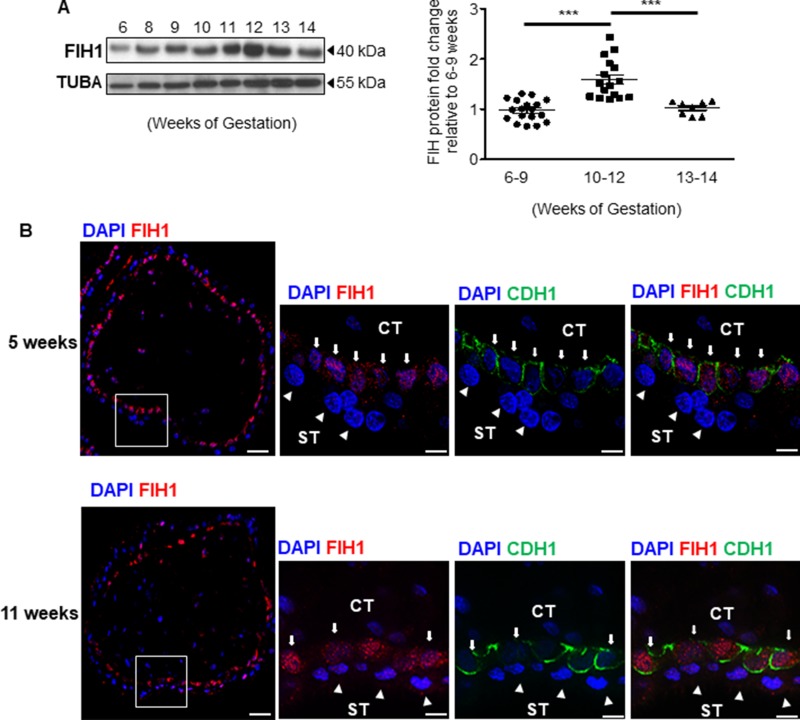
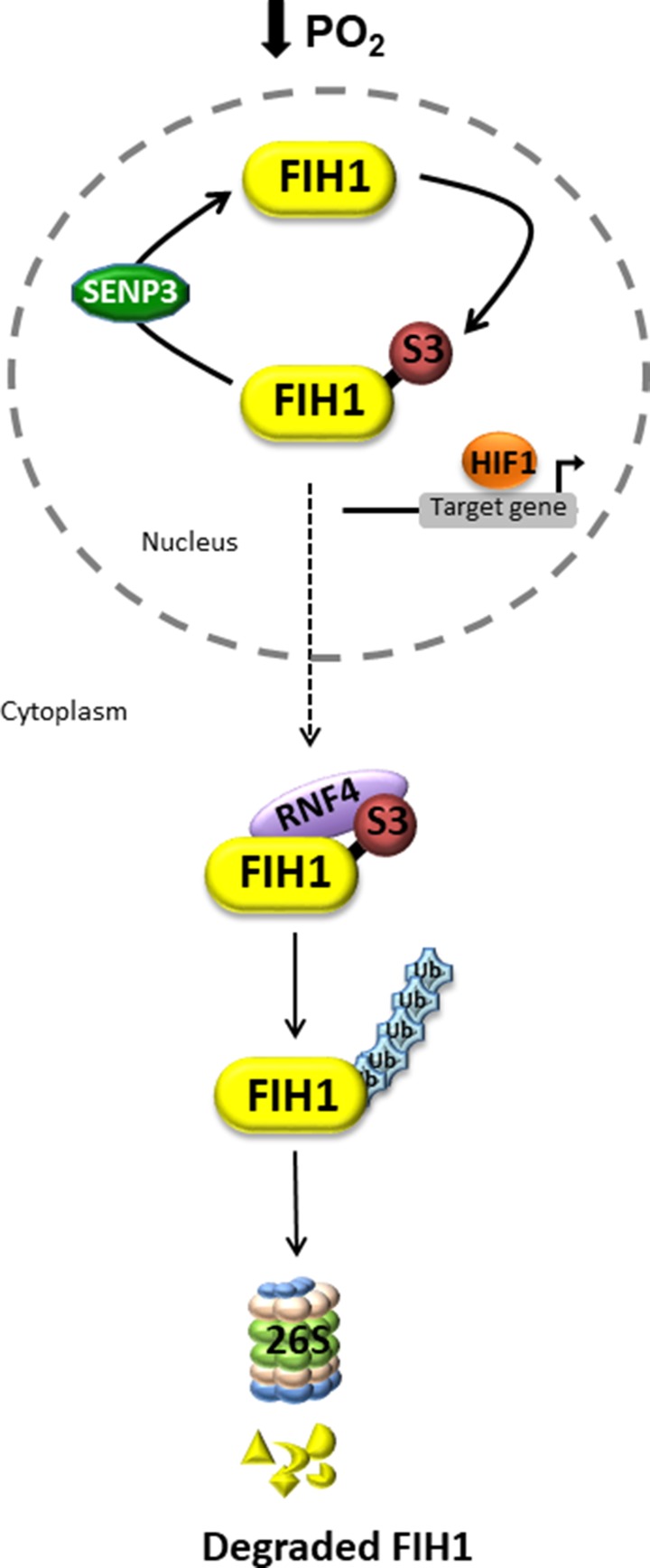
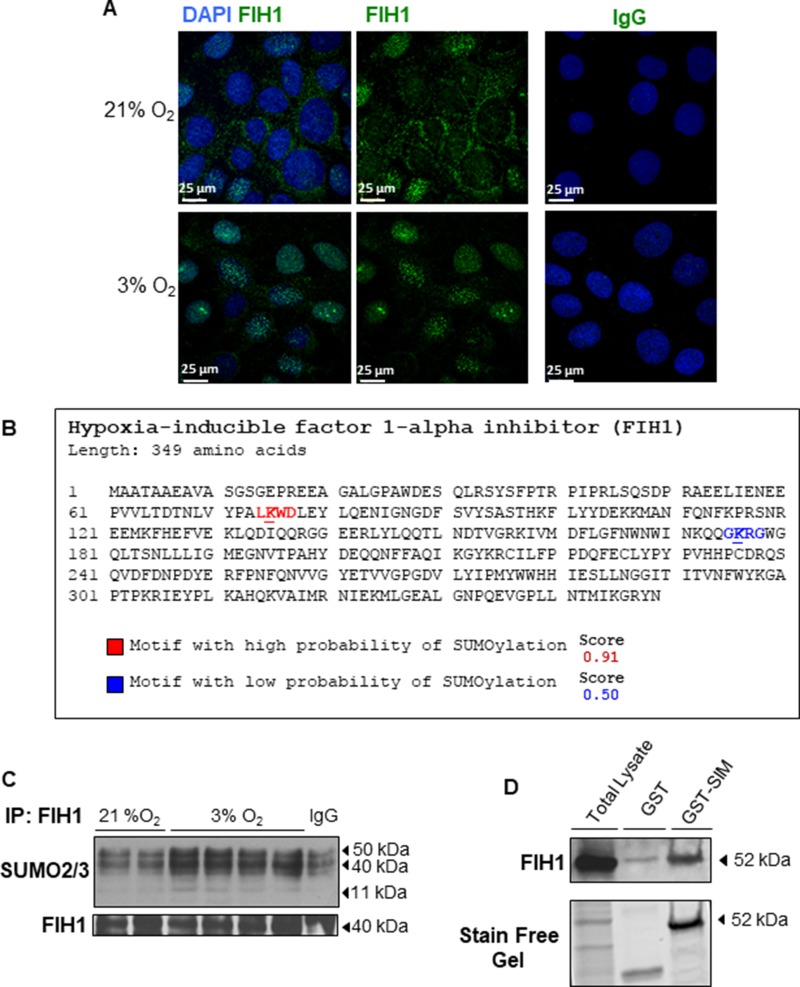
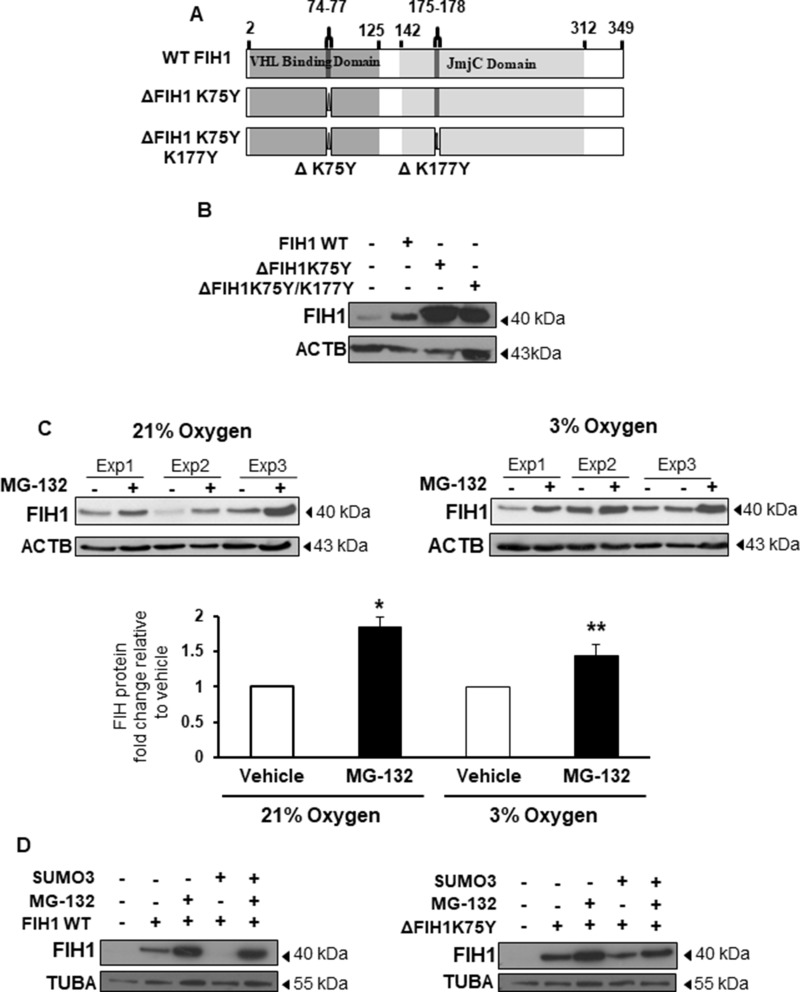
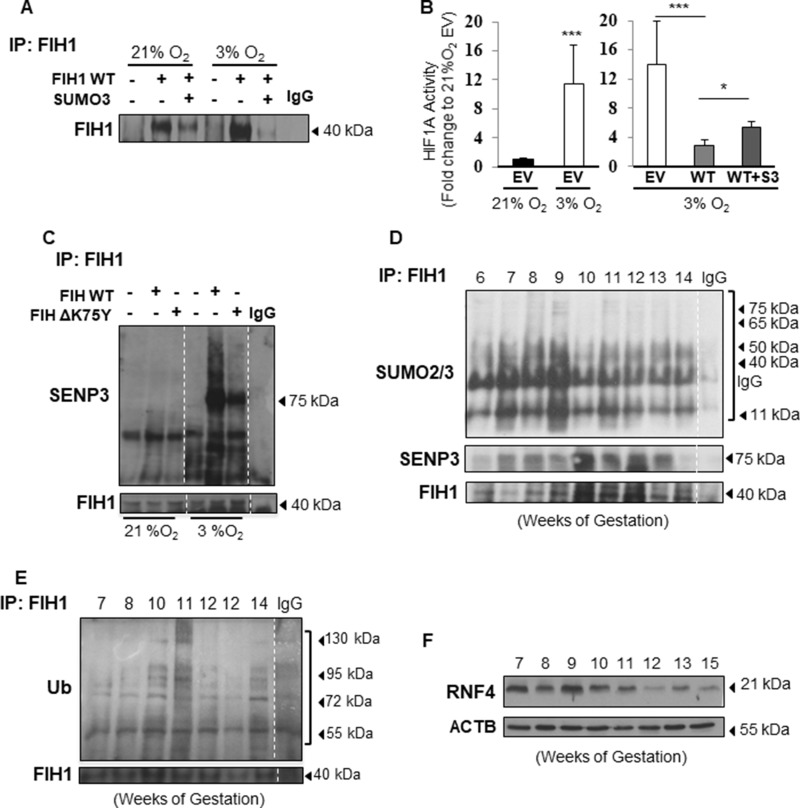
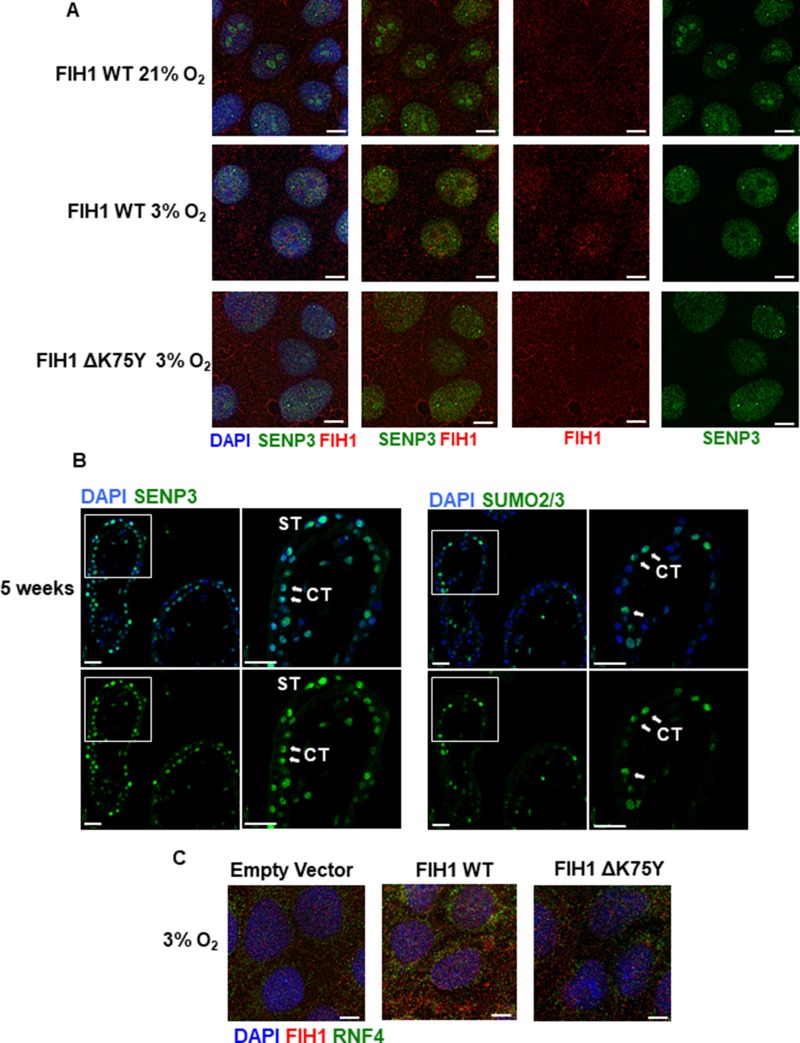
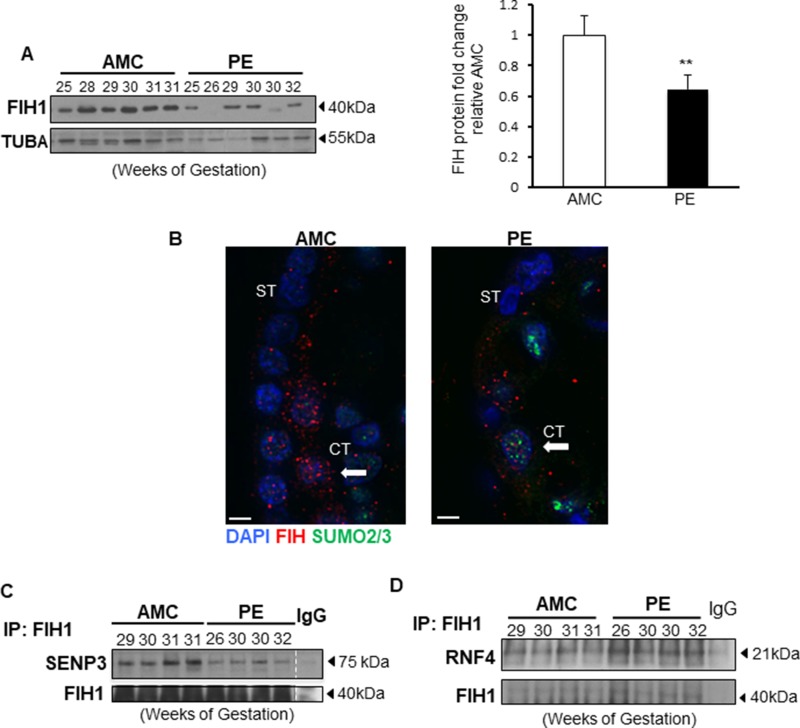
Adaptations to changes in oxygen are critical to ensure proper placental development, and impairments in oxygen sensing mechanisms characterize placental pathologies such as preeclampsia. In this study, we examined the involvement of SUMOylation, a reversible posttranslational modification, in the regulation of the asparaginyl hydroxylase Factor Inhibiting Hypoxia Inducible Factor 1 (FIH1) in the human placenta in development and in disease status. FIH1 protein abundance and spatial distribution in the developing placenta directly correlated with oxygen tension . Immunofluorescence analysis showed that early on FIH1 primarily localized to nuclei of cytotrophoblast cells, while after 10 weeks of gestation it was present in nuclei and cytoplasm of both cytotrophoblast and syncytiotrophoblast cells. Exposure of choriocarcinoma JEG-3 cells to hypoxia induced FIH1 SUMOylation by promoting its association to SUMO2/3. Transfection of JEG-3 cells with FIH1 constructs containing SUMO-mutated sites revealed that SUMOylation of FIH1 by SUMO2/3 targeted it for proteasomal degradation, particularly in hypoxia. SUMOylation of FIH1 directly impacted on HIF1A activity as determined by HIF-responsive luciferase assay. Co-immunoprecipitation analyses revealed enhanced FIH1-SUMO2/3 associations early in development, when FIH1 levels are low, while deSUMOylation of FIH1 by SENP3 increased later in gestation, when FIH1 levels are rising. In preeclampsia, decreased FIH1 protein expression associated with impaired deSUMOylation by SENP3 and increased association with the ubiquitin ligase RNF4. We propose a novel mode of regulation of FIH1 stability by dynamic SUMOylation and deSUMOylation in the human placenta in response to changing oxygen tension, thereby mediating HIF1A transcriptional activity in physiological and pathological conditions.
适应氧气变化对于确保胎盘正常发育至关重要,而氧感应机制的损害是子痫前期等胎盘疾病的特征。在本研究中,我们研究了SUMO化(一种可逆的翻译后修饰)在人胎盘发育和疾病状态下对天冬酰胺基羟化酶缺氧诱导因子1抑制因子(FIH1)调控中的作用。发育中胎盘内FIH1蛋白丰度和空间分布与氧张力直接相关。免疫荧光分析表明,早期FIH1主要定位于细胞滋养层细胞核,而妊娠10周后,它存在于细胞滋养层和合体滋养层细胞的细胞核和细胞质中。将绒毛膜癌JEG-3细胞暴露于缺氧环境中,通过促进FIH1与SUMO2/3的结合诱导其SUMO化。用含有SUMO突变位点的FIH1构建体转染JEG-3细胞表明,SUMO2/3对FIH1的SUMO化将其靶向蛋白酶体降解,尤其是在缺氧条件下。通过缺氧诱导因子反应性荧光素酶测定确定,FIH1的SUMO化直接影响HIF1A活性。免疫共沉淀分析显示,在发育早期FIH1水平较低时,FIH1与SUMO2/3的结合增强,而在妊娠后期FIH1水平上升时,SENP3对FIH1的去SUMO化增加。在子痫前期中,FIH1蛋白表达降低与SENP3去SUMO化受损以及与泛素连接酶RNF4的结合增加有关。我们提出了一种新的调控模式,即人胎盘通过动态SUMO化和去SUMO化来调节FIH1稳定性,以响应不断变化的氧张力,从而在生理和病理条件下介导HIF1A转录活性。