Zeng Shan, Seifert Adrian M, Zhang Jennifer Q, Kim Teresa S, Bowler Timothy G, Cavnar Michael J, Medina Benjamin D, Vitiello Gerardo A, Rossi Ferdinand, Loo Jennifer K, Param Nesteene J, DeMatteo Ronald P
Department of Surgery, Memorial Sloan Kettering Cancer Center, New York, NY, USA.
Department of Medicine, Memorial Sloan Kettering Cancer Center, New York, NY, USA.
Oncotarget. 2017 Dec 11;8(69):114195-114209. doi: 10.18632/oncotarget.23173. eCollection 2017 Dec 26.
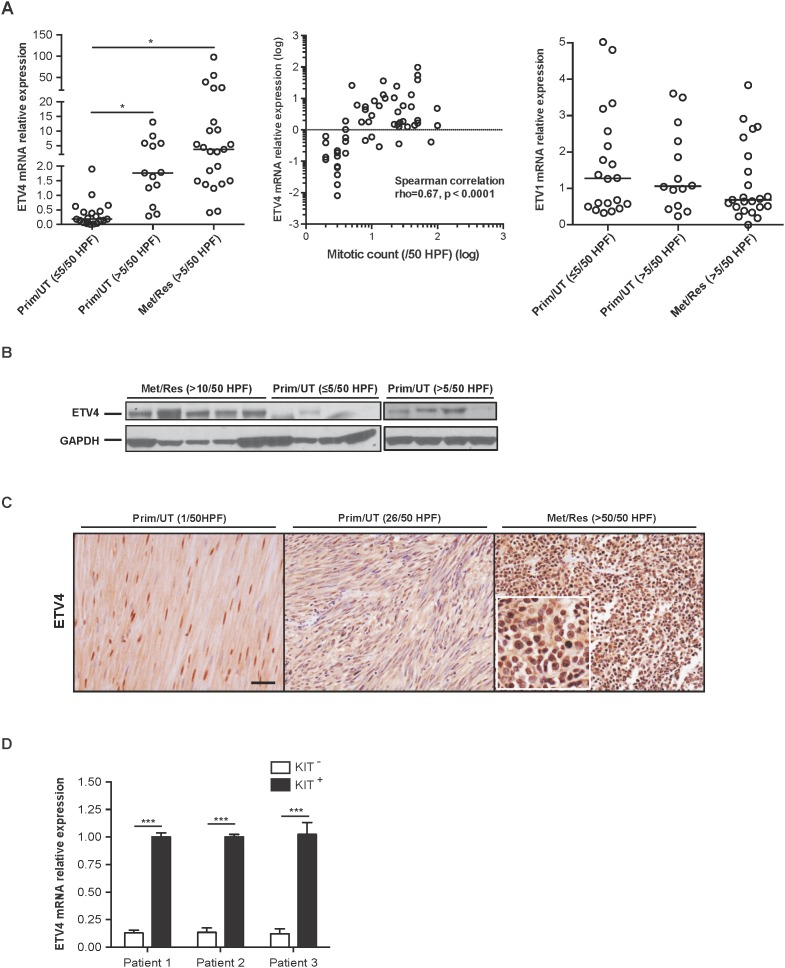
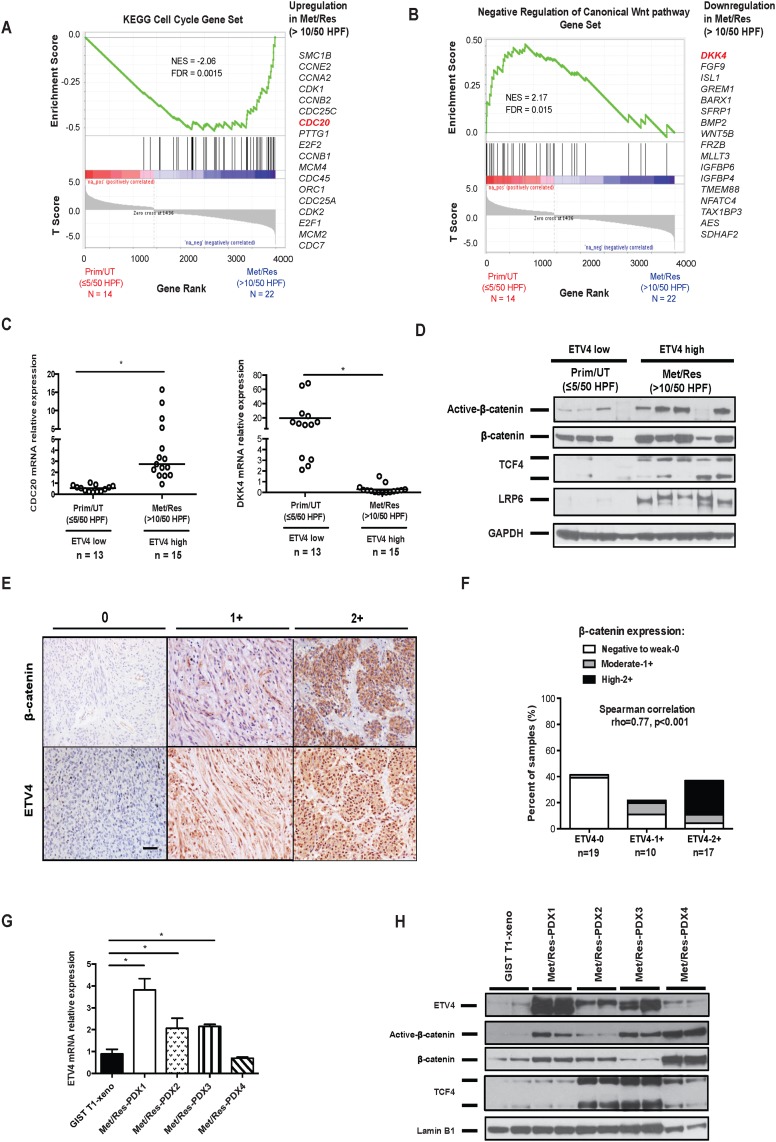
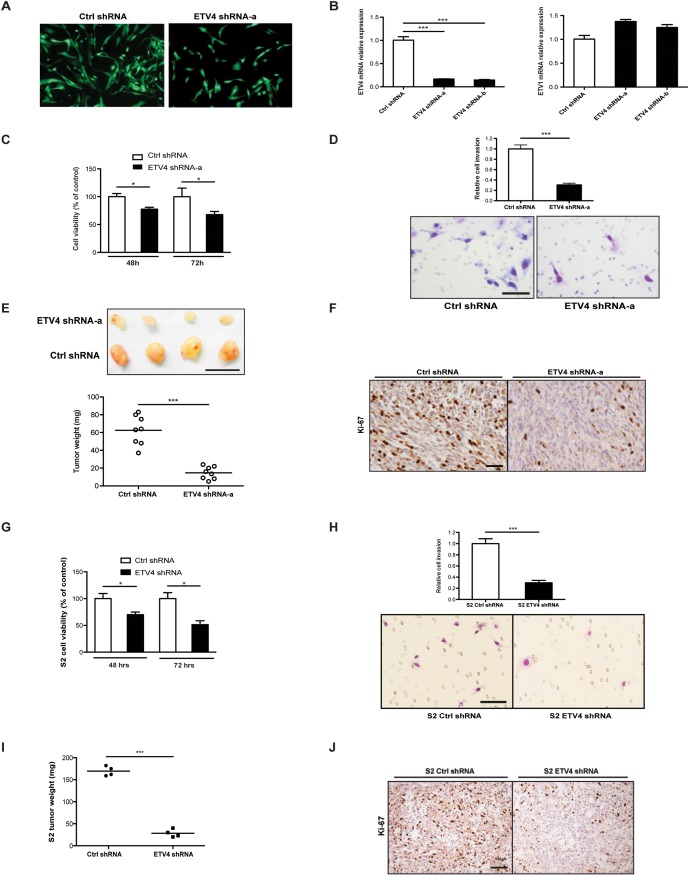
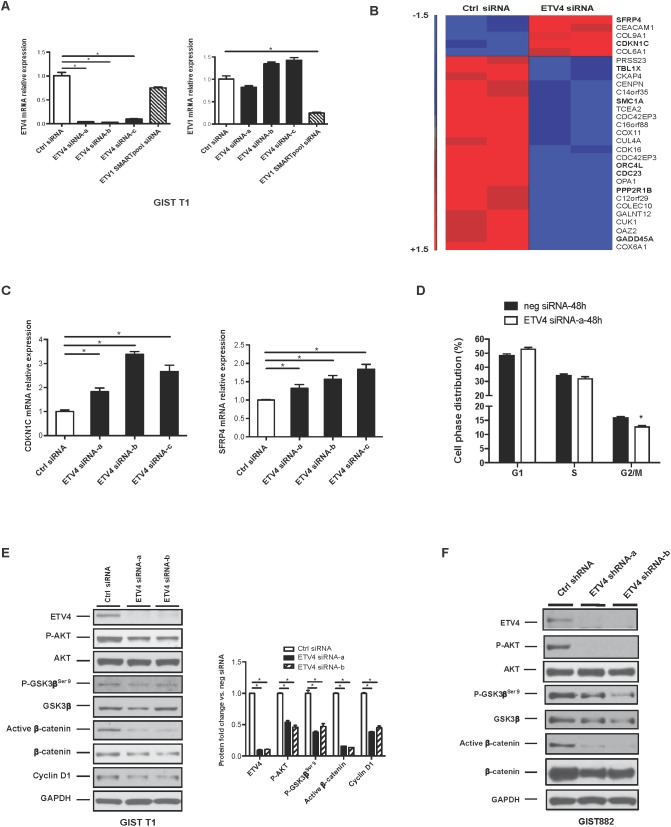
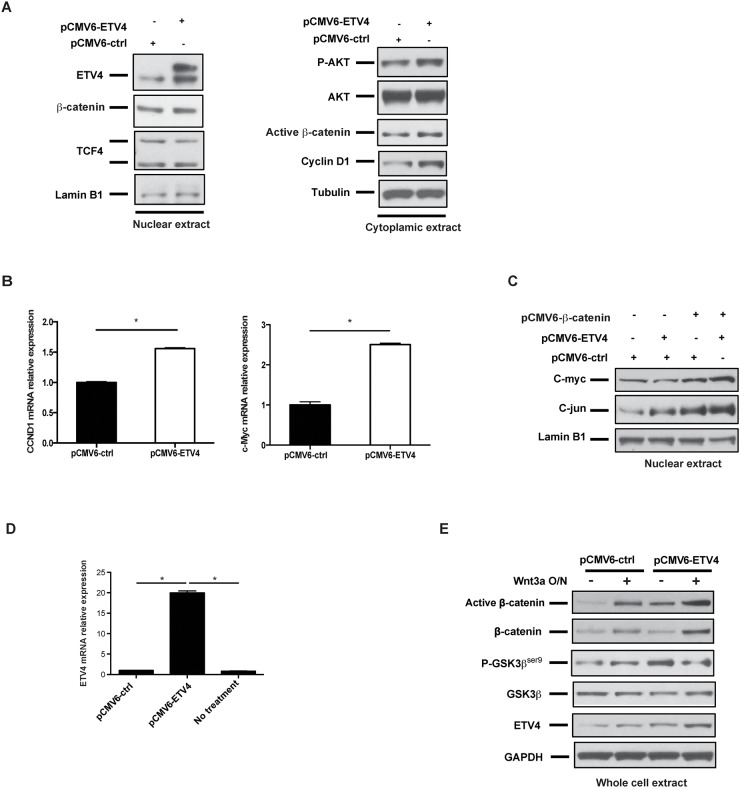
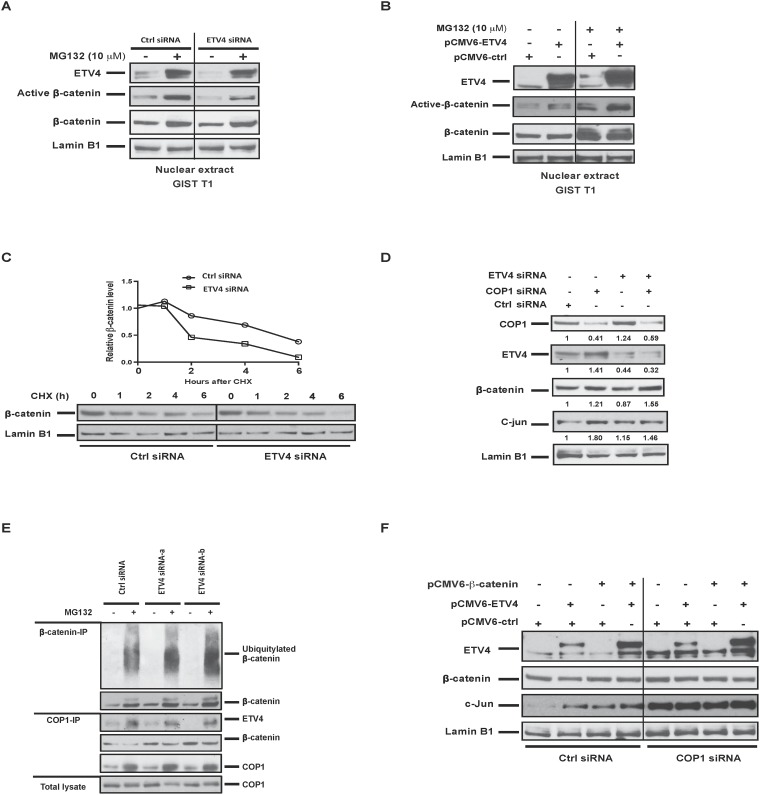
Gastrointestinal stromal tumor (GIST) is the most common sarcoma, often resulting from a or platelet-derived growth factor receptor alpha () mutation. The lineage transcription factor ETV1 is expressed similarly in GISTs regardless of malignant potential. Although the related transcription factor ETV4 has been associated with metastasis and tumor progression in other cancers, its role in GIST is unknown. In this study, we found that ETV4 levels were high in a subset of human GISTs and correlated with high mitotic rate. Through Gene Set Enrichment Analysis in selected human GISTs, we identified a relationship between ETV4 levels and β-catenin signaling, especially in advanced GISTs. GIST specimens with high ETV4 levels overexpressed cell cycle regulating genes and had aberrant activation of the canonical Wnt pathway. In human GIST cell lines, ETV4 RNA interference suppressed cell cycle genes and Wnt/β-catenin signaling. ETV4 knockdown also reduced tumor cell proliferation, invasion, and tumor growth . Conversely, ETV4 overexpression increased cyclin D1 expression and Wnt/β-catenin signaling. Moreover, we determined that ETV4 knockdown destabilized nuclear β-catenin and increased its degradation via COP1, an E3 ligase involved in both ETV4 and β-catenin turnover. Aberrant accumulation of ETV4 and nuclear β-catenin was found in patient derived xenografts created from metastatic GISTs that became resistant to tyrosine kinase inhibitors. Collectively, our findings highlight the significance of ETV4 expression in GIST and identify ETV4 as a biomarker in human GISTs.
胃肠道间质瘤(GIST)是最常见的肉瘤,通常由c-Kit或血小板衍生生长因子受体α(PDGFRA)突变引起。谱系转录因子ETV1在GIST中的表达相似,与恶性潜能无关。尽管相关转录因子ETV4在其他癌症中与转移和肿瘤进展有关,但其在GIST中的作用尚不清楚。在本研究中,我们发现ETV4水平在一部分人类GIST中较高,且与高有丝分裂率相关。通过对选定的人类GIST进行基因集富集分析,我们确定了ETV4水平与β-连环蛋白信号传导之间的关系,尤其是在晚期GIST中。ETV4水平高的GIST标本过表达细胞周期调节基因,并具有经典Wnt途径的异常激活。在人类GIST细胞系中,ETV4 RNA干扰抑制了细胞周期基因和Wnt/β-连环蛋白信号传导。ETV4敲低还降低了肿瘤细胞的增殖、侵袭和肿瘤生长。相反,ETV4过表达增加了细胞周期蛋白D1的表达和Wnt/β-连环蛋白信号传导。此外,我们确定ETV4敲低使核β-连环蛋白不稳定,并通过COP1增加其降解,COP1是一种参与ETV4和β-连环蛋白周转的E3连接酶。在由对酪氨酸激酶抑制剂产生耐药性的转移性GIST创建的患者来源异种移植中发现了ETV4和核β-连环蛋白的异常积累。总的来说,我们的研究结果突出了ETV4表达在GIST中的重要性,并将ETV4确定为人类GIST中的一种生物标志物。