Chon Chang-Soo, Yun Hui-Suk, Kim Han Sung, Ko Cheolwoong
Department of Biomedical Engineering, Yonsei University, 1 Yeonsedae-gil, Heungeop-myeon, Wonju-si, Gangwon-do 26493, Republic of Korea.
Power & Ceramic Division, Korea Institute of Materials Science (KIMS), 797 Changwon-daero, Seongsan-gu, Changwon-si, Gyeongsangnam-do 51508, Republic of Korea.
Appl Bionics Biomech. 2017;2017:7201769. doi: 10.1155/2017/7201769. Epub 2017 Dec 10.
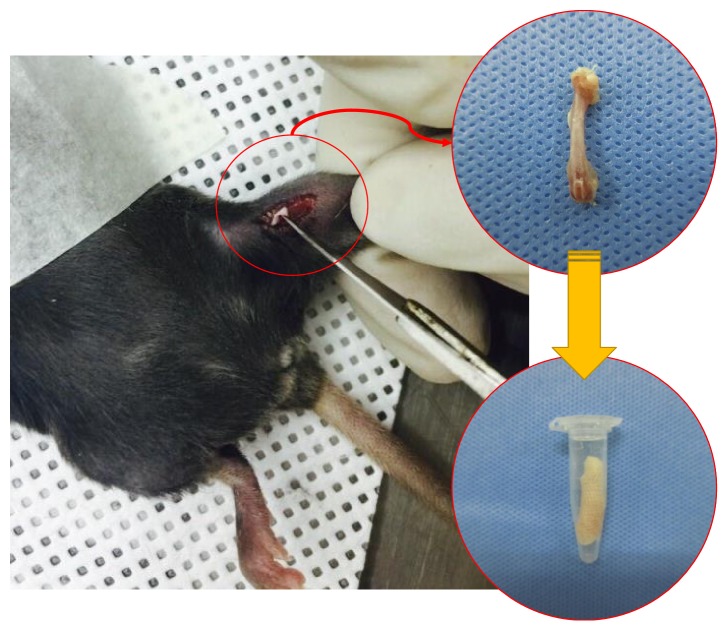
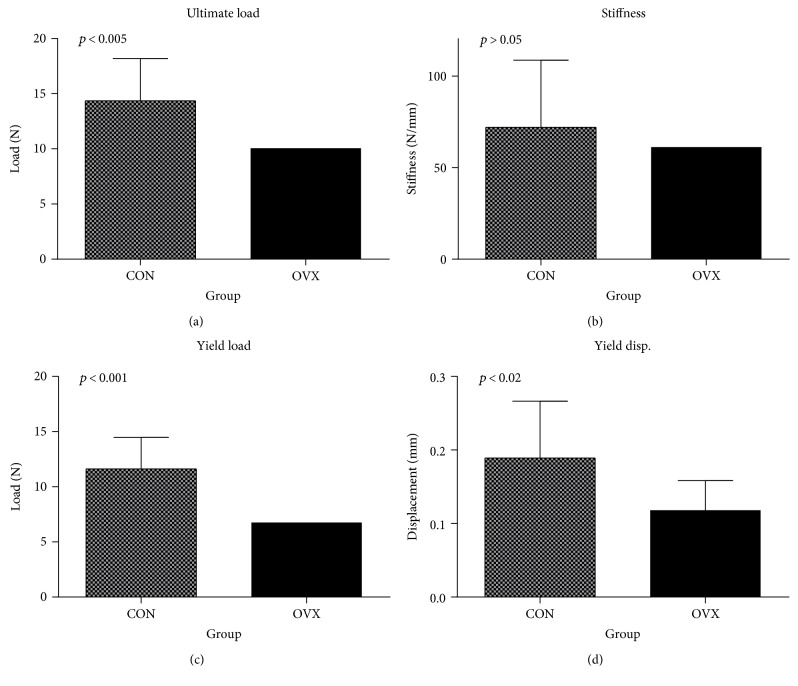
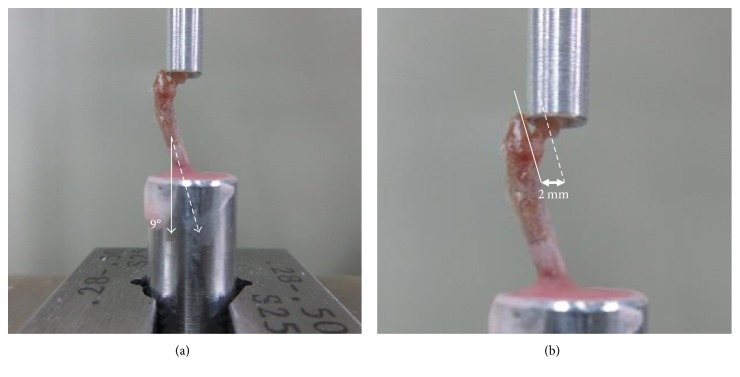
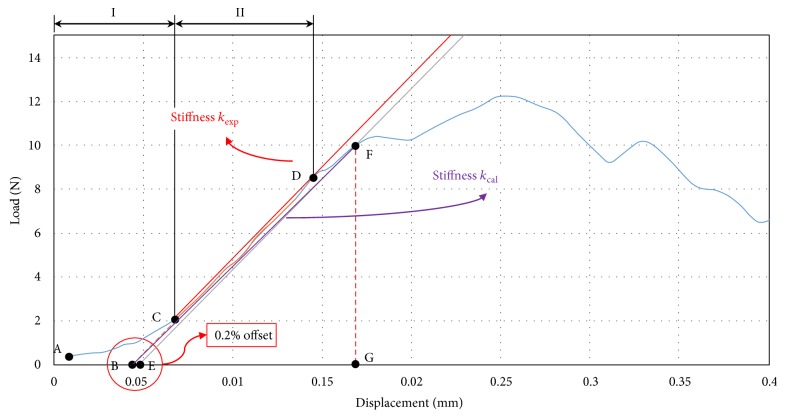
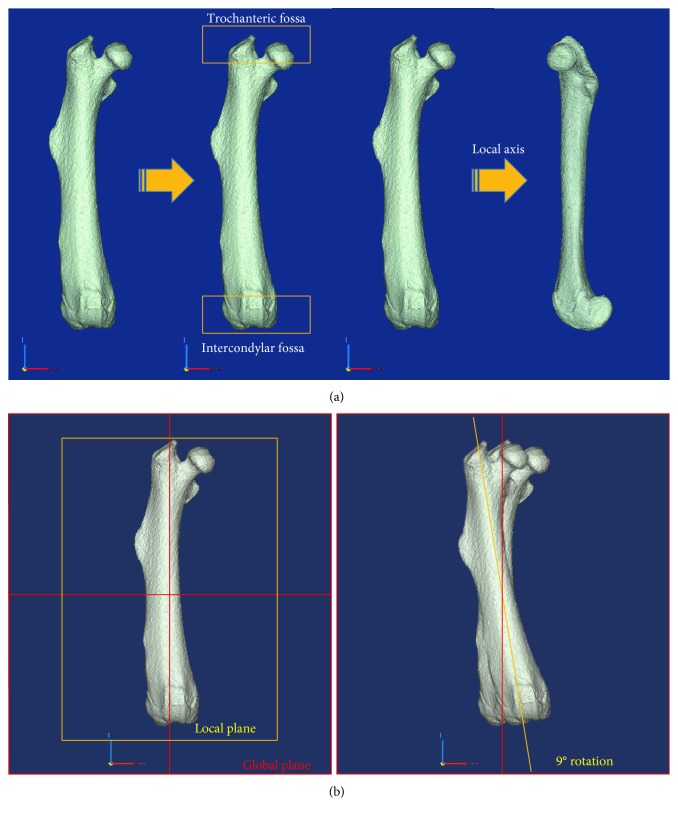
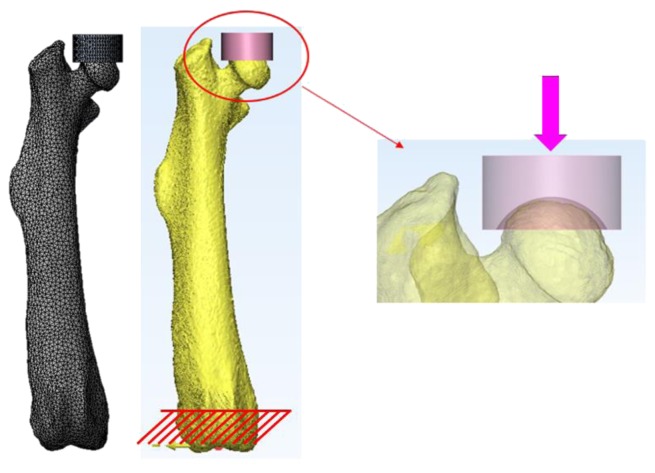
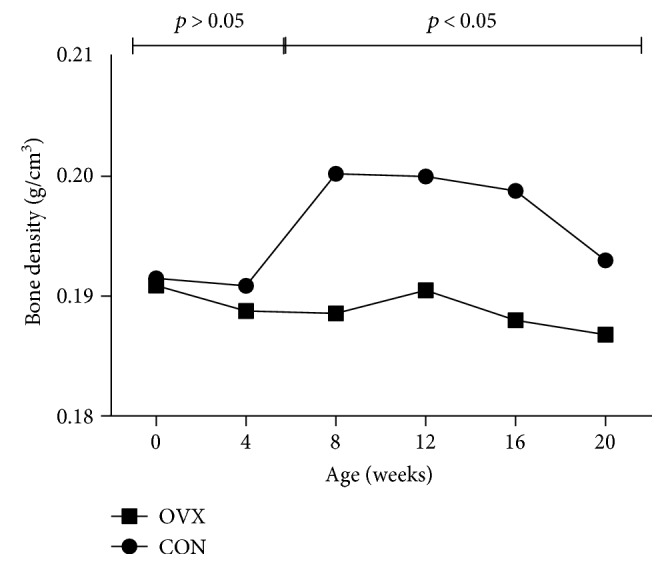
A biomechanical test is a good evaluation method that describes the structural, functional, and pathological differences in the bones, such as osteoporosis and fracture. The tensile test, compression test, and bending test are generally performed to evaluate the elastic modulus of the bone using mice. In particular, the femoral head compression test is mainly used for verifying the osteoporosis change of the femoral neck. This study conducted bone mineral density analysis using in vivo microcomputed tomography (micro-CT) to observe changes in osteoporosis over time. It proposed a method of identifying the elastic modulus of the femur in the normal group (CON group) and the osteoporotic group (OVX group) through finite element analysis based on the femoral head compression test and also conducted a comparative analysis of the results. Through the femoral head compression test, it was verified that the CON group's ultimate and yield loads were significantly higher than those of the OVX group. It was considered that this result was caused by the fact that the bone mineral density change by osteoporosis occurred in the proximal end more often than in the femur diaphysis. However, the elastic modulus derived from the finite element analysis showed no significant difference between the two groups.
生物力学测试是一种很好的评估方法,可描述骨骼中的结构、功能和病理差异,如骨质疏松症和骨折。通常进行拉伸测试、压缩测试和弯曲测试,以使用小鼠评估骨骼的弹性模量。特别是,股骨头压缩测试主要用于验证股骨颈的骨质疏松变化。本研究使用体内微型计算机断层扫描(micro-CT)进行骨密度分析,以观察骨质疏松随时间的变化。它提出了一种基于股骨头压缩测试,通过有限元分析来识别正常组(CON组)和骨质疏松组(OVX组)中股骨弹性模量的方法,并对结果进行了比较分析。通过股骨头压缩测试,证实CON组的极限载荷和屈服载荷显著高于OVX组。认为该结果是由于骨质疏松引起的骨密度变化在近端比股骨干更常见。然而,有限元分析得出的弹性模量在两组之间没有显著差异。