Zylberberg Haley M, Sultan Keith, Rubin Steven
Donald and Barbara Zucker School of Medicine at Hofstra/Northwell, Hempstead, NY 11549, United States.
Division of Gastroenterology, Donald and Barbara Zucker School of Medicine at Hofstra/Northwell, Manhasset, NY 11030, United States.
World J Clin Cases. 2018 Jan 16;6(1):1-5. doi: 10.12998/wjcc.v6.i1.1.
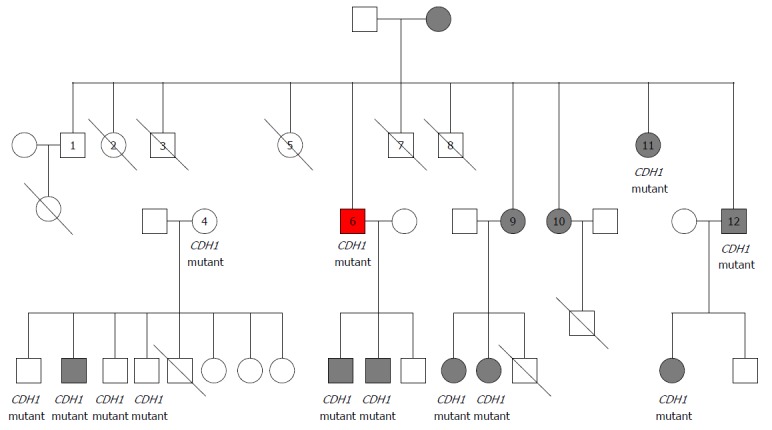
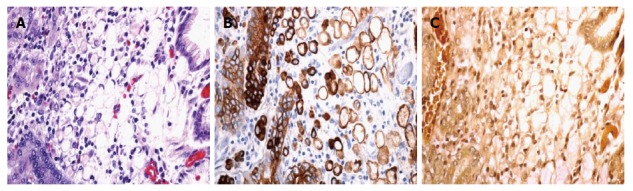
Hereditary diffuse gastric cancer (HDGC) is an inherited form of gastric cancer that carries a poor prognosis. Most HDGCs are caused by an autosomal dominant genetic mutation in the CDH1 gene, which carries a 70%-80% lifetime risk of gastric cancer. Given its submucosal origin, endoscopic surveillance is an unreliable means of early detection, and prophylactic gastrectomy is recommended for CDH1 positive individuals older than age 20 years. We describe the case of a male with recurrent gastric cancer who was diagnosed with HDGC secondary to the CDH1 mutation, and we also describe the patient's pedigree and outcomes of recommended genetic testing.
遗传性弥漫性胃癌(HDGC)是一种遗传性胃癌,预后较差。大多数HDGC是由CDH1基因的常染色体显性基因突变引起的,该基因突变携带者患胃癌的终生风险为70%-80%。鉴于其起源于黏膜下层,内镜监测是早期检测的不可靠手段,对于20岁以上的CDH1阳性个体,建议进行预防性胃切除术。我们描述了一例复发性胃癌男性患者,该患者被诊断为继发于CDH1突变的HDGC,我们还描述了患者的家系以及推荐的基因检测结果。