Hodges Joanna K, Tan Libo, Green Michael H, Ross A Catharine
Department of Nutritional Sciences, The Pennsylvania State University, University Park, PA, 16802 USA.
Curr Dev Nutr. 2017 Dec 1;1(12). doi: 10.3945/cdn.116.000265. Epub 2017 Sep 6.
Vitamin A (VA, retinol) supplementation is widely used to reduce child mortality in low-income countries. However, existing research suggests that supplementation with VA alone may not be optimal for infants.
We compared the effect of VA vs. VA combined with retinoic acid (VARA) on retinol uptake and turnover in organs of neonatal rats raised under VA-marginal conditions.
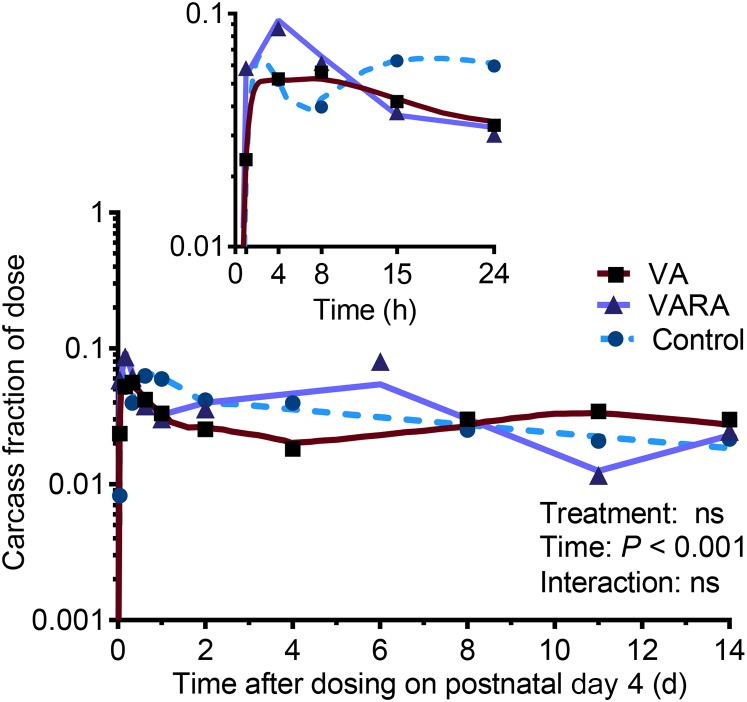
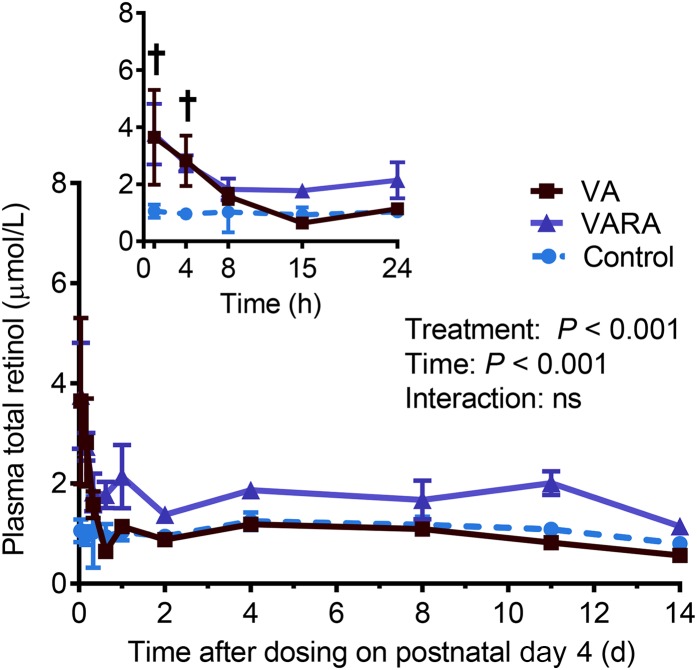
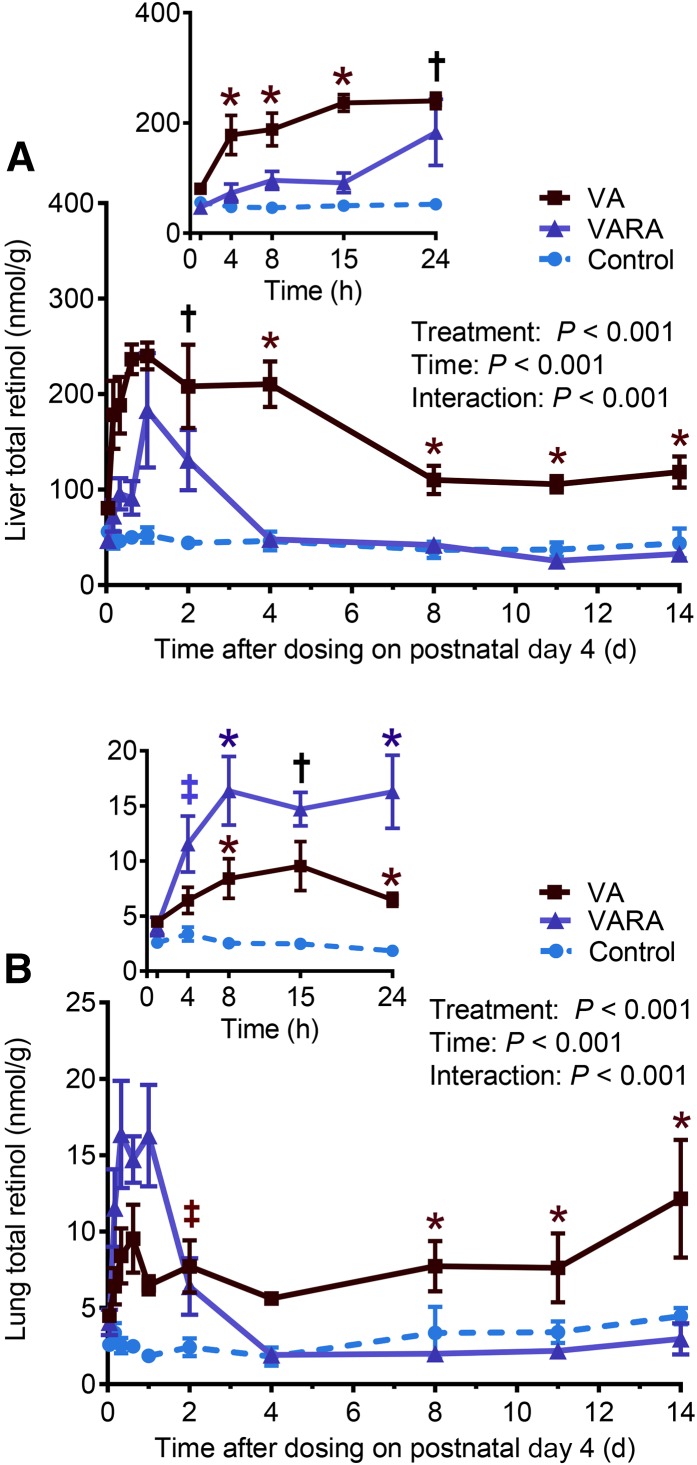
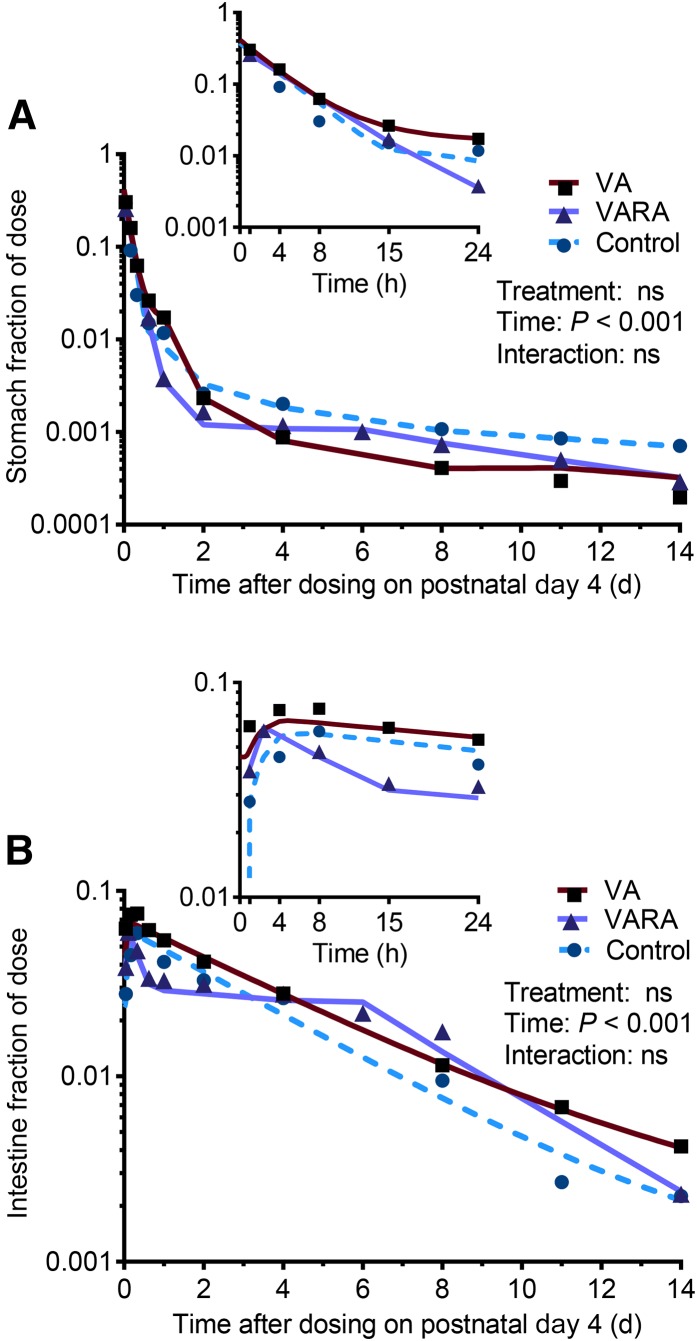
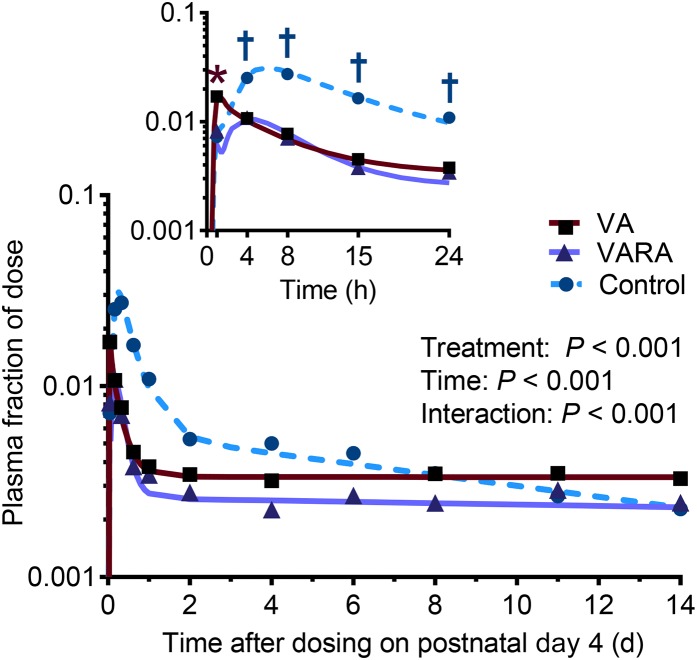
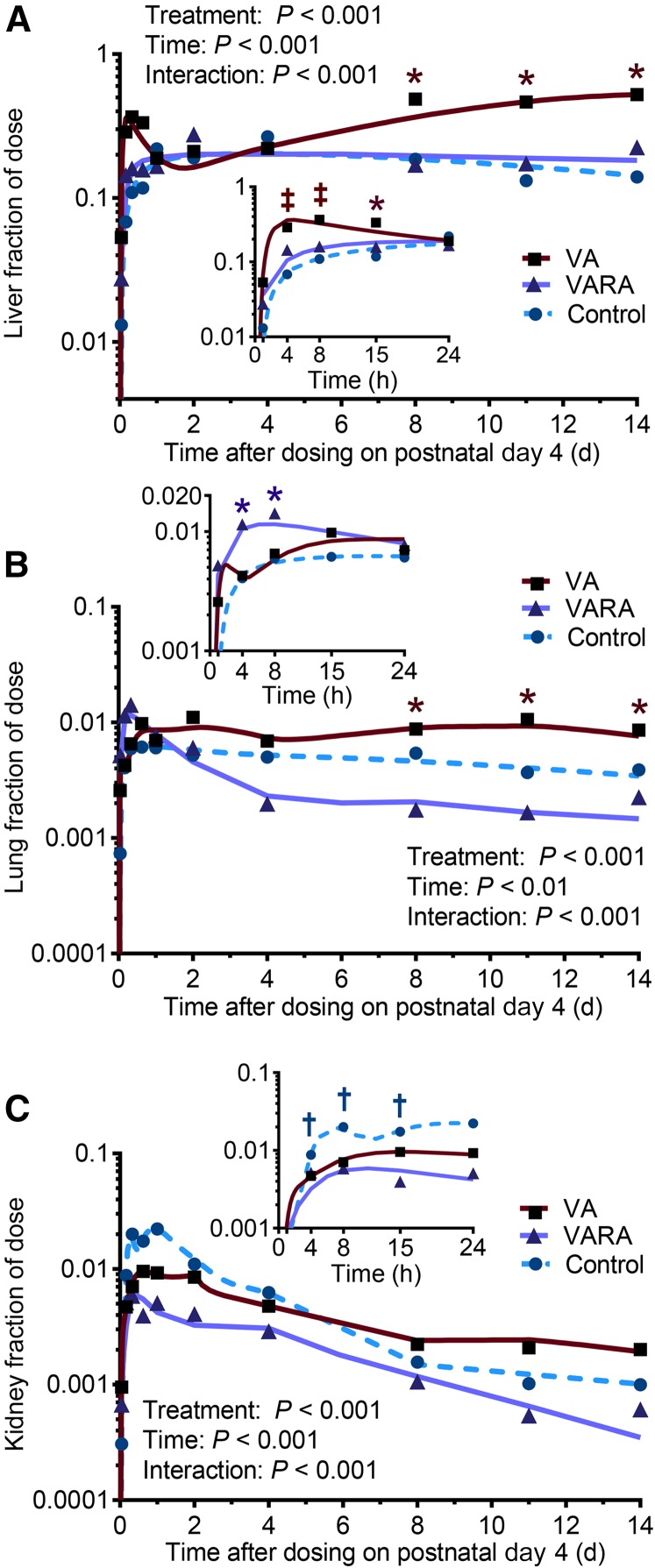
Secondary analysis was conducted on data obtained from two prior kinetic studies of Sprague-Dawley neonatal rats nursed by mothers fed a VA-marginal diet (0.35 mg retinol equivalents/kg diet). On postnatal d 4, pups had been treated with a single dose of VA (6 μg/g; 52; VA study), VA + 10% retinoic acid (6 μg/g; 42; VARA study) or placebo (canola oil; 94; both studies), all containing ~2 μCi of [H]retinol as the tracer for VA. Total retinol concentrations and tracer levels had been measured in plasma and tissues from 1 h to 14 d after dosing. Control group data from both studies were merged prior to analysis. Kinetic parameters were re-estimated and compared statistically.
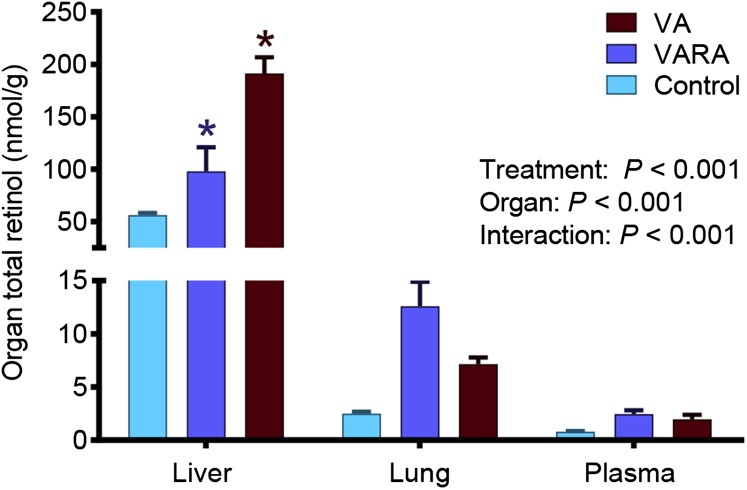
VARA supplementation administered to neonatal rats within a few days after birth resulted in a lower turnover of retinol in the lungs, kidneys, and carcass and less frequent recycling of retinol between plasma and organs (100 vs. 288 times in VARA- vs. VA-treated group). Although the VA supplementation resulted in a higher concentration of retinol in the liver, VARA supplementation led to a higher uptake of postprandial retinyl esters into the lungs, intestines, and carcass.
Given the relatively higher retinol uptake into several extrahepatic organs of neonates dosed orally with VARA, this form of supplementation may serve as a targeted treatment of low VA levels in the extrahepatic organs that continue to develop postnatally.
维生素A(VA,视黄醇)补充剂在低收入国家被广泛用于降低儿童死亡率。然而,现有研究表明,仅补充VA对婴儿可能并非最佳选择。
我们比较了VA与VA联合视黄酸(VARA)对在VA边缘条件下饲养的新生大鼠器官中视黄醇摄取和周转的影响。
对从两项先前的动力学研究中获得的数据进行二次分析,这两项研究对象是由喂食VA边缘饮食(0.35毫克视黄醇当量/千克饮食)的母鼠哺育的Sprague-Dawley新生大鼠。在出生后第4天,幼崽接受了单剂量的VA(6微克/克;52只;VA研究)、VA + 10%视黄酸(6微克/克;42只;VARA研究)或安慰剂(菜籽油;94只;两项研究),所有制剂均含有约2微居里的[H]视黄醇作为VA的示踪剂。给药后1小时至14天,测量了血浆和组织中的总视黄醇浓度和示踪剂水平。两项研究的对照组数据在分析前合并。重新估计动力学参数并进行统计学比较。
在新生大鼠出生后几天内给予VARA补充剂,导致肺、肾和胴体中视黄醇的周转较低,并且视黄醇在血浆和器官之间的循环频率较低(VARA治疗组与VA治疗组分别为100次和288次)。虽然补充VA导致肝脏中视黄醇浓度较高,但补充VARA导致餐后视黄酯在肺、肠和胴体中的摄取较高。
鉴于口服VARA的新生儿几个肝外器官对视黄醇的摄取相对较高,这种补充形式可作为对出生后仍在发育的肝外器官中低VA水平的靶向治疗。