State Key Laboratory of Natural Medicines, Jiangsu Key Laboratory of Carcinogenesis and Intervention, Key Laboratory of Drug Quality Control and Pharmacovigilance, China Pharmaceutical University, Nanjing, China.
Department of Hematology, The First Affiliated Hospital of Nanjing Medical University, Jiangsu Province Hospital, Nanjing, China.
J Cell Mol Med. 2018 Apr;22(4):2117-2130. doi: 10.1111/jcmm.13481. Epub 2018 Jan 29.
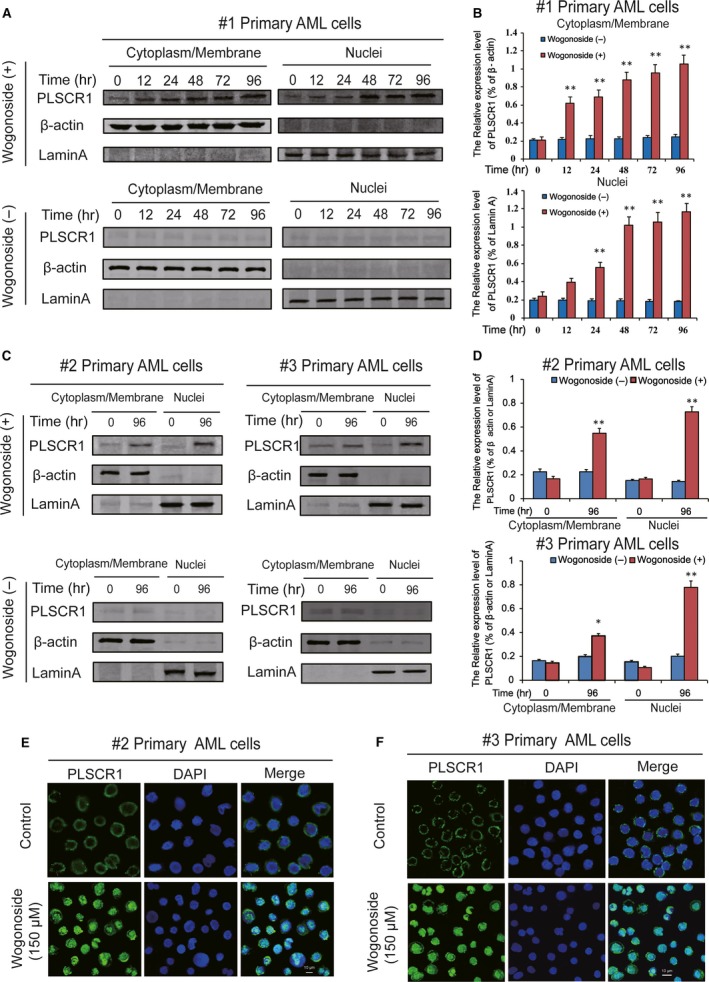
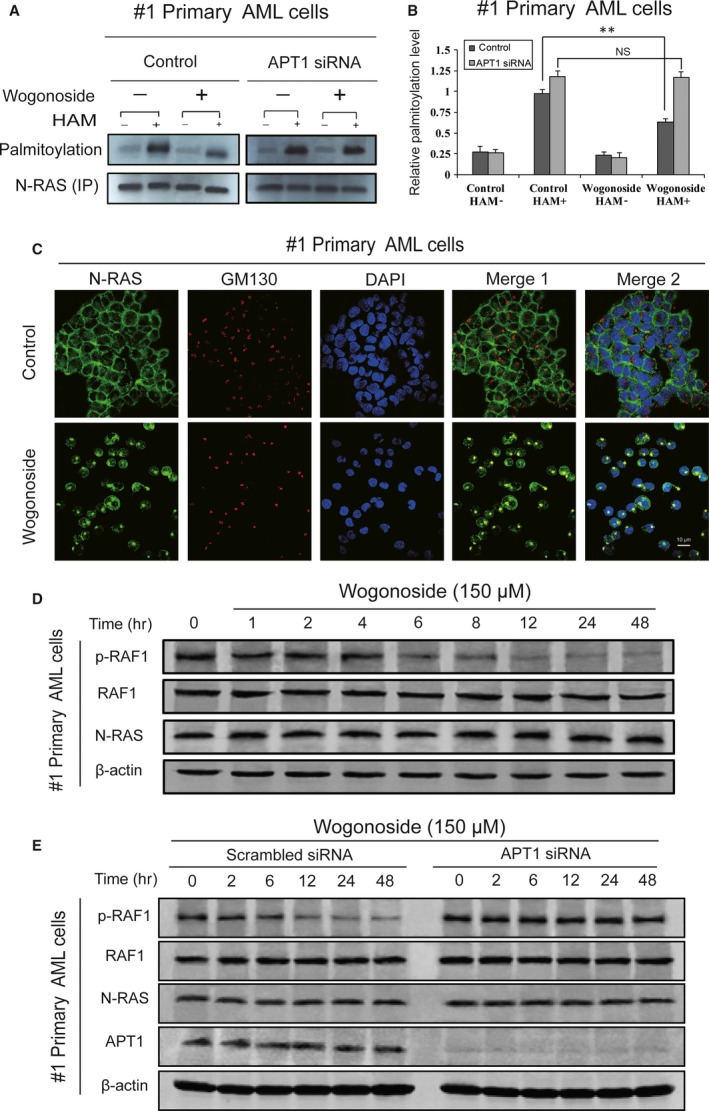
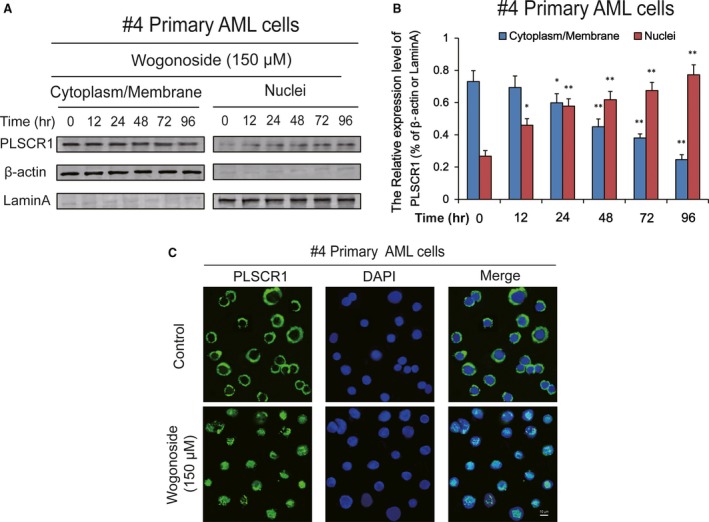
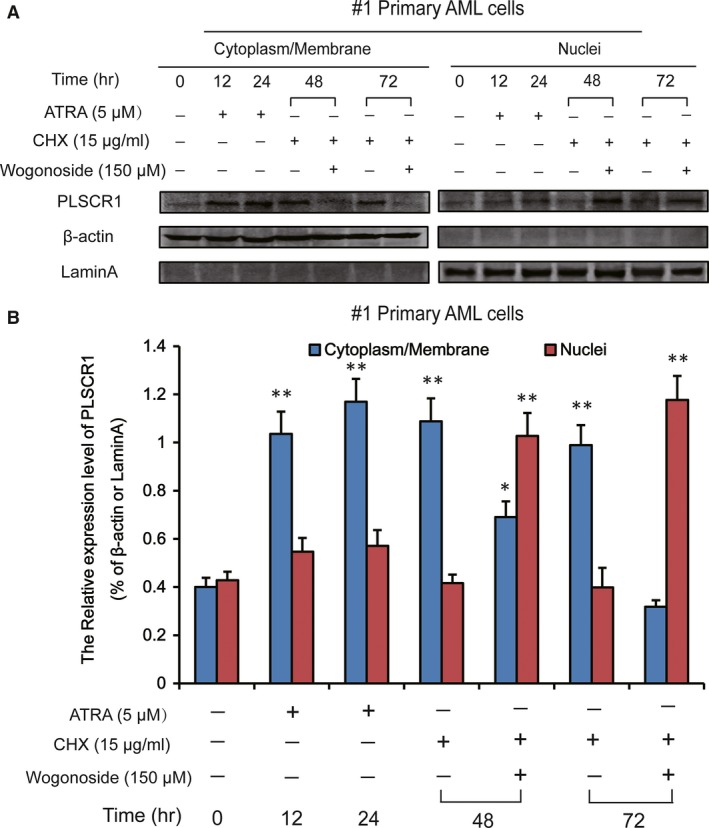
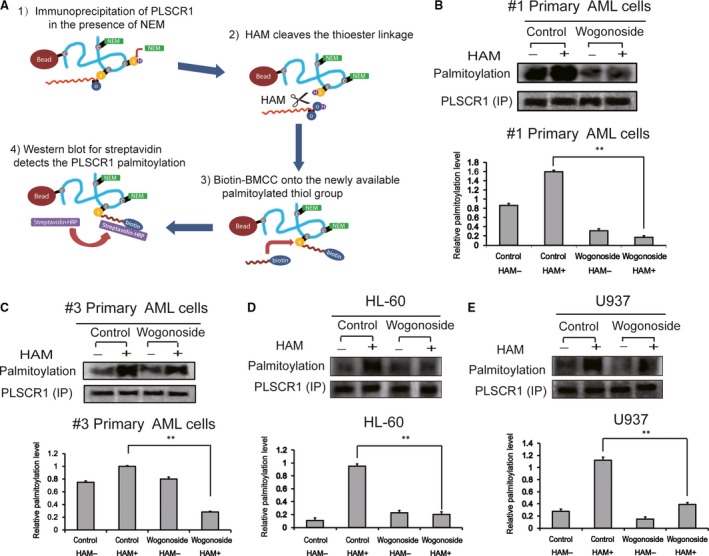
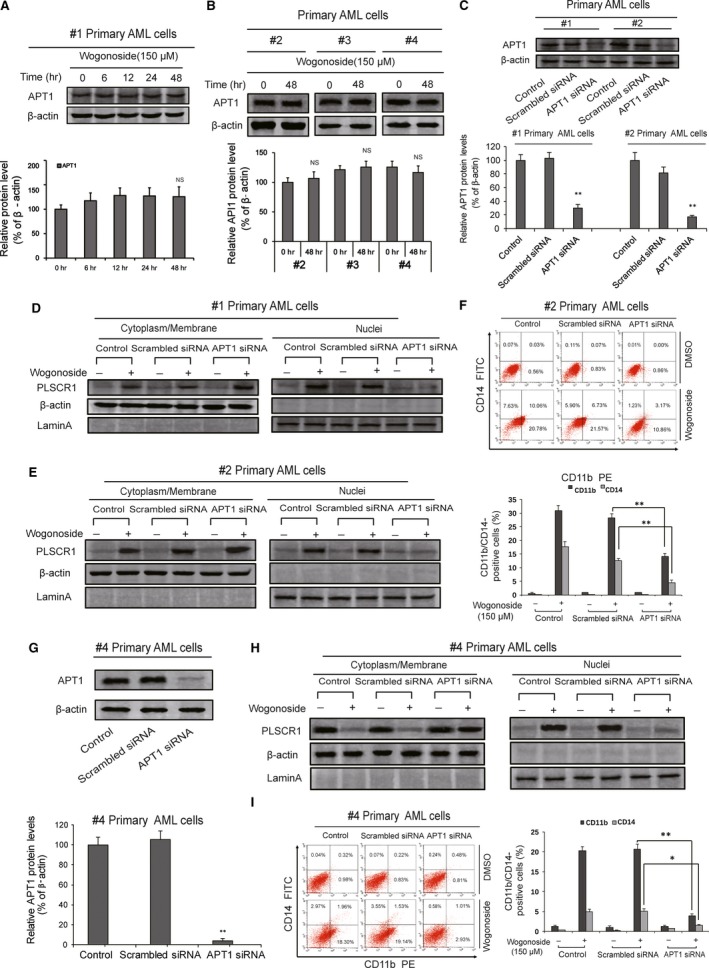
Acute myeloid leukaemia (AML) comprises a range of disparate genetic subtypes, involving complex gene mutations and specific molecular alterations. Post-translational modifications of specific proteins influence their translocation, stability, aggregation and even leading disease progression. Therapies that target to post-translational modification of specific proteins in cancer cells represent a novel treatment strategy. Non-homogenous subcellular distribution of PLSCR1 is involved in the primary AML cell differentiation. However, the nuclear translocation mechanism of PLSCR1 remains poorly understood. Here, we leveraged the observation that nuclear translocation of PLSCR1 could be induced during wogonoside treatment in some primary AML cells, despite their genetic heterogeneity that contributed to the depalmitoylation of PLSCR1 via acyl protein thioesterase 1 (APT-1), an enzyme catalysing protein depalmitoylation. Besides, we found a similar phenomenon on another AML-related protein, N-RAS. Wogonoside inhibited the palmitoylation of small GTPase N-RAS and enhanced its trafficking into Golgi complex, leading to the inactivation of N-RAS/RAF1 pathway in some primary AML cells. Taken together, our findings provide new insight into the mechanism of wogonoside-induced nuclear translocation of PLSCR1 and illuminate the influence of N-RAS depalmitoylation on its Golgi trafficking and RAF1 signalling inactivation in AML.
急性髓系白血病(AML)包含一系列不同的遗传亚型,涉及复杂的基因突变和特定的分子改变。特定蛋白质的翻译后修饰会影响其易位、稳定性、聚集,甚至导致疾病进展。针对癌细胞中特定蛋白质翻译后修饰的治疗方法代表了一种新的治疗策略。PLSCR1 的非均相亚细胞分布参与了原发性 AML 细胞分化。然而,PLSCR1 的核易位机制仍知之甚少。在这里,我们利用了这样一种观察结果,即在一些原发性 AML 细胞中,尽管存在导致 PLSCR1 去棕榈酰化的遗传异质性,但在毛蕊花糖苷处理期间可以诱导 PLSCR1 的核易位,这种去棕榈酰化是通过酰基蛋白硫酯酶 1(APT-1)实现的,该酶催化蛋白质去棕榈酰化。此外,我们在另一种与 AML 相关的蛋白质 N-RAS 上也发现了类似的现象。毛蕊花糖苷抑制小 GTP 酶 N-RAS 的棕榈酰化,并增强其向高尔基体复合物的运输,从而导致一些原发性 AML 细胞中 N-RAS/RAF1 通路失活。总之,我们的研究结果为毛蕊花糖苷诱导 PLSCR1 核易位的机制提供了新的见解,并阐明了 N-RAS 去棕榈酰化对其在 AML 中高尔基体运输和 RAF1 信号失活的影响。