Amsterdam Rheumatology & immunology Center (ARC), Clinical Immunology & Rheumatology, Academic Medical Center, University of Amsterdam, Amsterdam, The Netherlands.
Department of Experimental Immunology, Academic Medical Center, University of Amsterdam, Amsterdam, The Netherlands.
Sci Rep. 2018 Jan 29;8(1):1736. doi: 10.1038/s41598-018-19951-5.
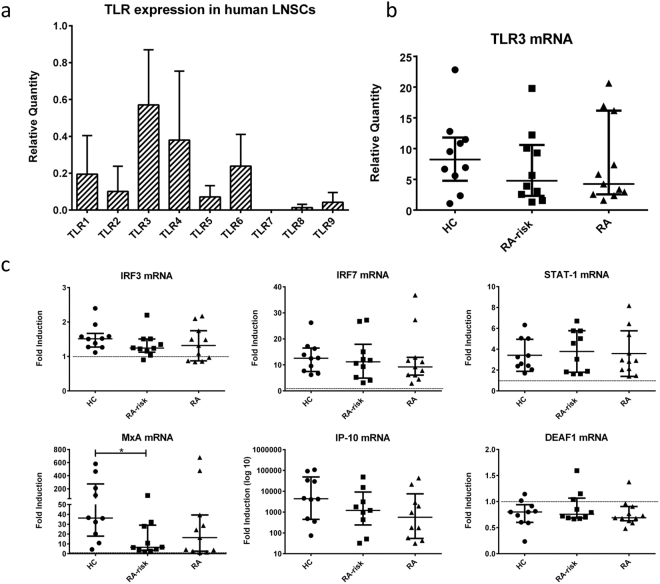
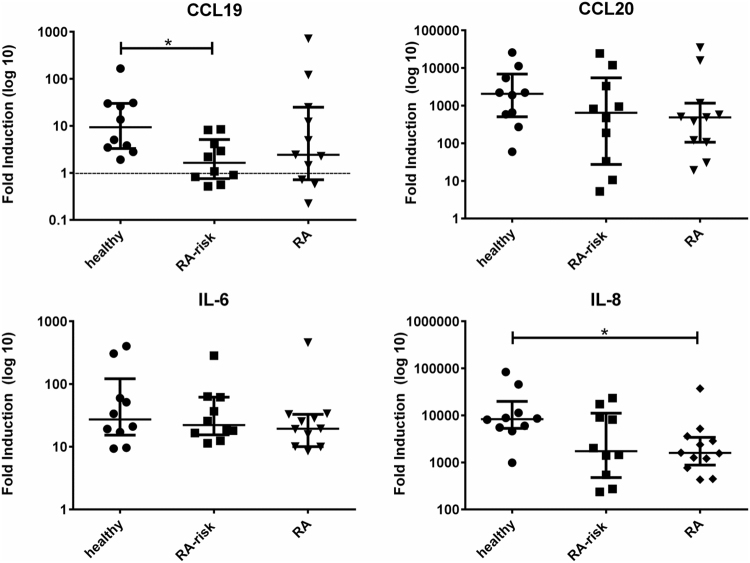
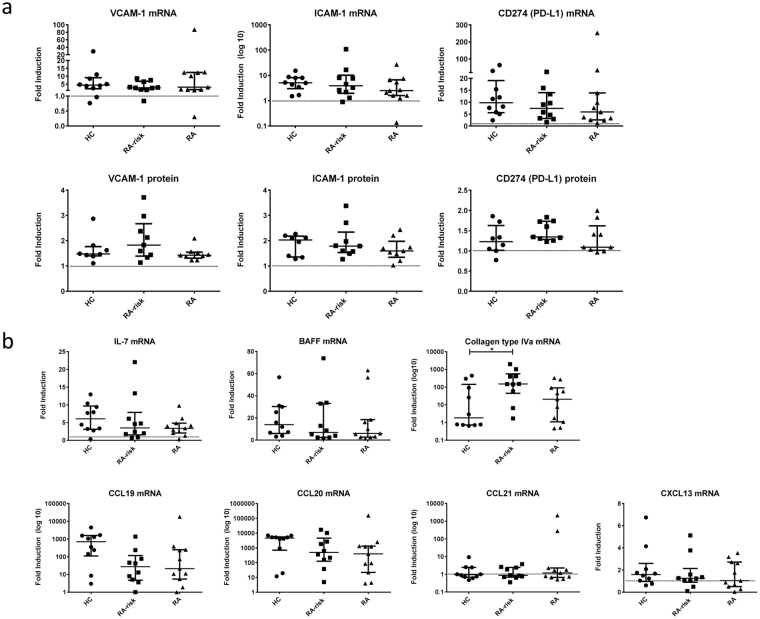
Infections are implicated in autoimmunity. Autoantibodies are produced in lymphoid tissue where lymph node stromal cells (LNSCs) regulate lymphocyte function. Infections can alter the interaction between LNSCs and lymphocytes resulting in defective immune responses. In rheumatoid arthritis (RA) autoantibody production precedes clinical disease allowing identification of at risk individuals. We investigated the ability of human LNSCs derived from RA, RA-risk and healthy individuals to sense and respond to pathogens. Human LNSCs cultured directly from freshly collected lymph node biopsies expressed TLR1-9 with exception of TLR7. In all donors TLR3 triggering induced expression of ISGs, IL-6 and adhesion molecules like VCAM-1 and ICAM-1. Strikingly, T cell guiding chemokines CCL19 and IL-8 as well as the antiviral gene MxA were less induced upon TLR3 triggering in autoimmune LNSCs. This observed decrease, found already in LNSCs of RA-risk individuals, may lead to incorrect positioning of lymphocytes and aberrant immune responses during viral infections.
感染与自身免疫有关。自身抗体是在淋巴组织中产生的,而淋巴结基质细胞(LNSC)调节淋巴细胞的功能。感染可以改变 LNSC 和淋巴细胞之间的相互作用,导致免疫反应缺陷。在类风湿关节炎(RA)中,自身抗体的产生先于临床疾病,从而可以识别出处于危险中的个体。我们研究了源自 RA、RA 风险和健康个体的人 LNSC 感知和对病原体做出反应的能力。直接从新鲜采集的淋巴结活检中培养的人 LNSC 表达 TLR1-9,除了 TLR7。在所有供体中,TLR3 触发诱导了 ISGs、IL-6 和粘附分子(如 VCAM-1 和 ICAM-1)的表达。引人注目的是,在自身免疫性 LNSC 中,TLR3 触发诱导的 T 细胞导向趋化因子 CCL19 和 IL-8 以及抗病毒基因 MxA 的表达减少。这种在 RA 风险个体的 LNSC 中已经发现的观察到的减少,可能导致病毒感染期间淋巴细胞的不正确定位和异常免疫反应。