Western Regional Research Center, U.S. Department of Agriculture, Agricultural Research Service, 800 Buchanan Street, Albany, CA 94710, USA.
Center for HUS Control, Prevention and Management, Fondazione IRCCS Ca'Granda Ospedale Maggiore Policlinico, Via Commenda 9, 20122 Milano, Italy.
Toxins (Basel). 2018 Jan 31;10(2):59. doi: 10.3390/toxins10020059.
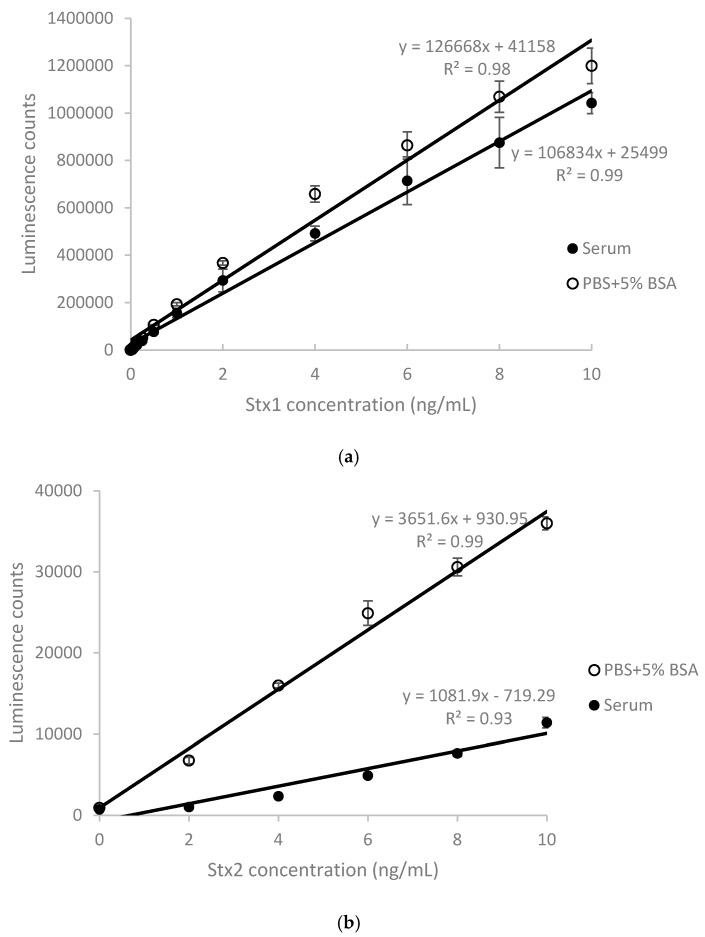
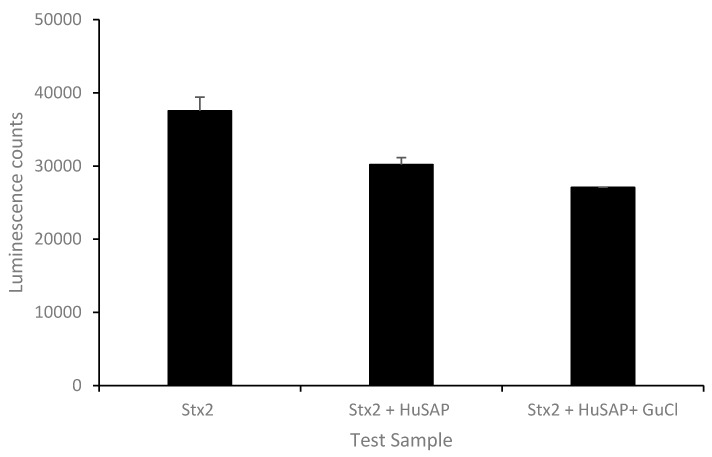
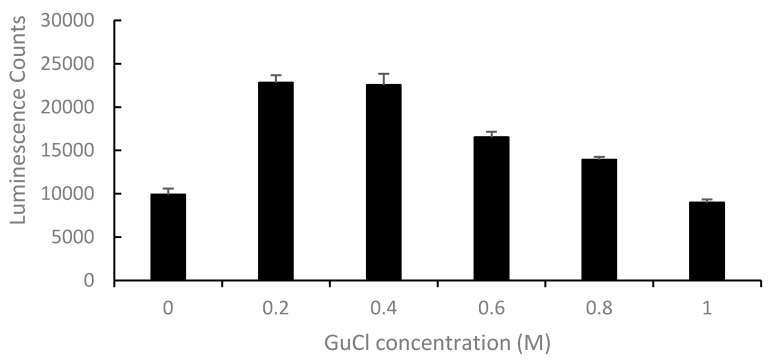
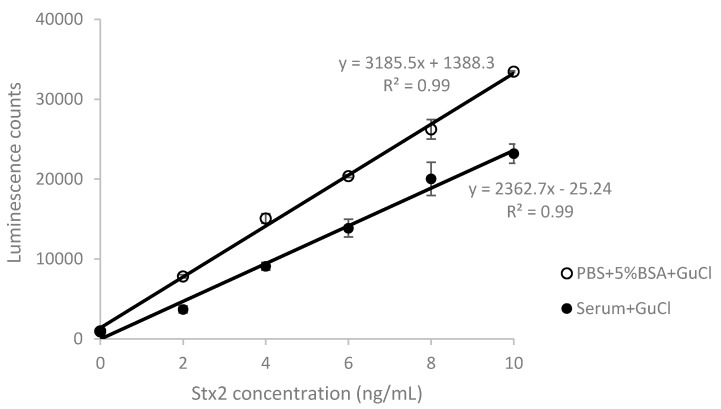
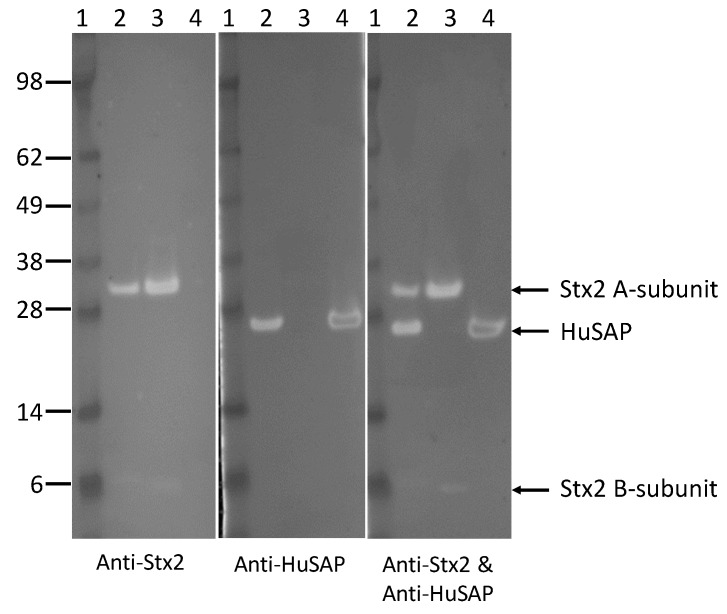
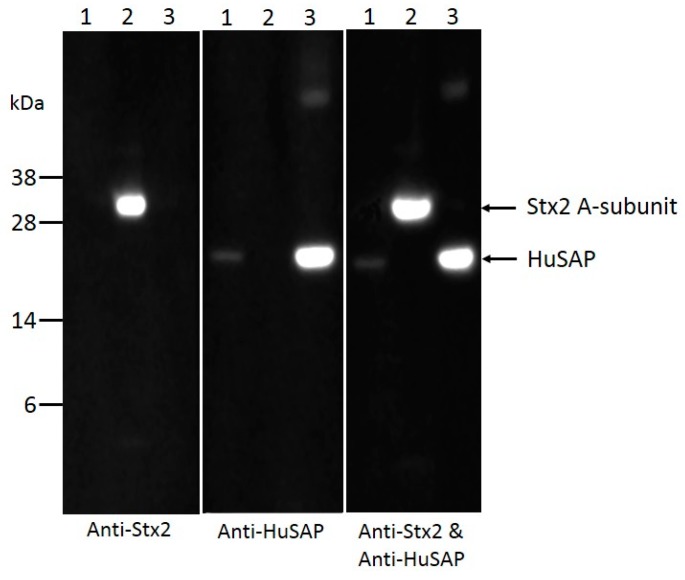
Shiga toxins (Stx) released by Stx-producing (STEC) are virulence factors that are most closely 3associated with hemolytic uremic syndrome (HUS), a life-threatening complication of intestinal infections by STEC. Stx have to enter into the circulatory system before they are delivered to target organs and cause damage. The presence of Stx in sera could be a risk indicator for HUS development. However, the detection of Stx, particularly Stx2, has been difficult due to the presence of Stx2-binding components in human serum. Here, we report new ELISA-based methods for the detection of Stx1 and Stx2 in human serum and the effect of guanidinium chloride on enhancing the sensitivity for the detection of Stx2. The recovery rate for Stx2 was 62% when Stx2-spiked serum samples were treated with guanidinium chloride at a concentration of 200 mM, in contrast to 17% without guanidinium chloride treatment. The effectiveness of guanidinium chloride treatment for the detection of Stx2 in human serum was validated using sera from STEC-infected patients. Coimmunoprecipitation results indicated a specific physical interaction between Stx2 and the human serum amyloid P component (HuSAP) in human serum samples. Our in vitro study demonstrated that the inhibition from HuSAP alone for the detection of Stx2 was only 20%, much less than 69.6% from human serum at Stx2 level 10 ng/mL, suggesting that there may be other factors that bind Stx2 in human serum. This study indicates that treatment of serum samples with guanidinium chloride may be useful for the early and sensitive detection of Stx2 in sera of STEC-infected patients, so preventive measures can be adopted in a timely manner.
志贺毒素(Stx)由产志贺毒素大肠杆菌(STEC)释放,是与溶血性尿毒综合征(HUS)最密切相关的毒力因子,HUS 是由 STEC 引起的肠道感染的一种危及生命的并发症。Stx 必须进入循环系统,然后才能输送到靶器官并造成损伤。Stx 存在于血清中可能是 HUS 发展的风险指标。然而,由于人血清中存在 Stx2 结合成分,Stx 的检测,特别是 Stx2 的检测一直很困难。在这里,我们报告了用于检测人血清中 Stx1 和 Stx2 的新 ELISA 方法,以及盐酸胍增强检测 Stx2 敏感性的效果。用浓度为 200mM 的盐酸胍处理 Stx2 加标血清样本时,Stx2 的回收率为 62%,而未经盐酸胍处理时为 17%。用盐酸胍处理 STEC 感染患者的血清验证了盐酸胍处理检测人血清中 Stx2 的有效性。共免疫沉淀结果表明,在人血清样本中,Stx2 与人类血清淀粉样蛋白 P 成分(HuSAP)之间存在特异性物理相互作用。我们的体外研究表明,HuSAP 单独对 Stx2 检测的抑制作用仅为 20%,远低于 Stx2 水平为 10ng/mL 时人血清的 69.6%,这表明人血清中可能还有其他与 Stx2 结合的因素。这项研究表明,用盐酸胍处理血清样本可能有助于早期和灵敏地检测 STEC 感染患者血清中的 Stx2,以便及时采取预防措施。