Department of Plastic Surgery, The First Affiliated Hospital of Zhengzhou University, Zhengzhou, China.
Mol Cells. 2018 Feb 28;41(2):119-126. doi: 10.14348/molcells.2018.2235. Epub 2018 Jan 29.
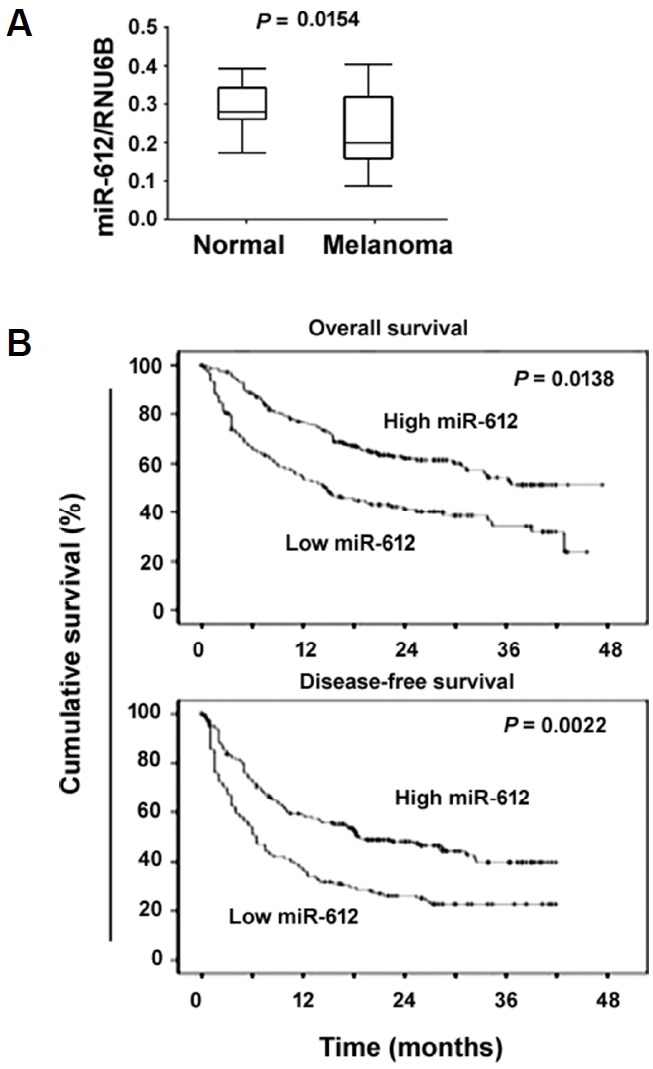
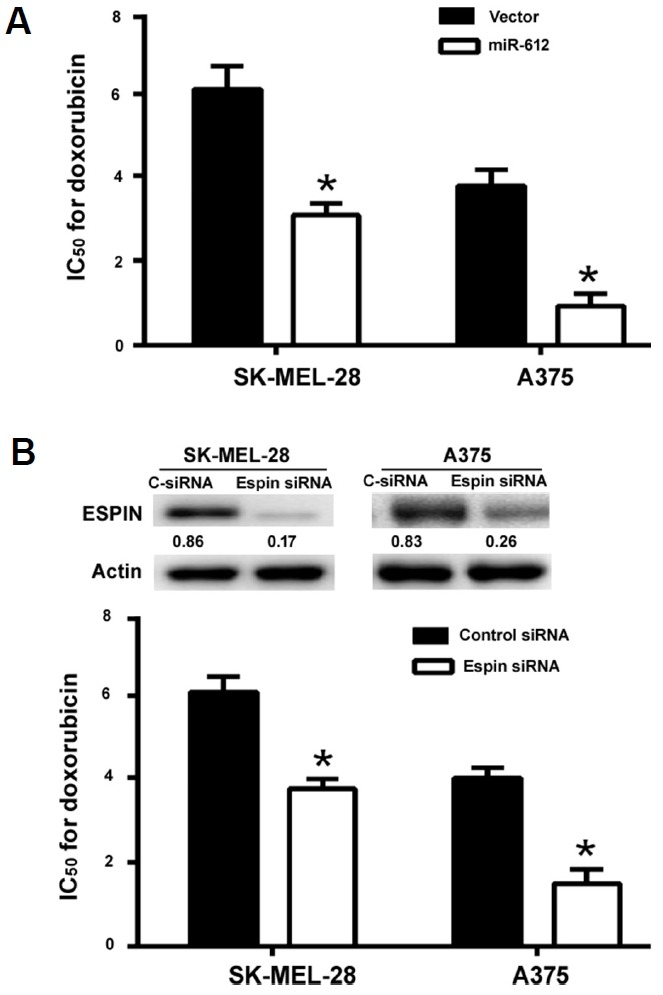
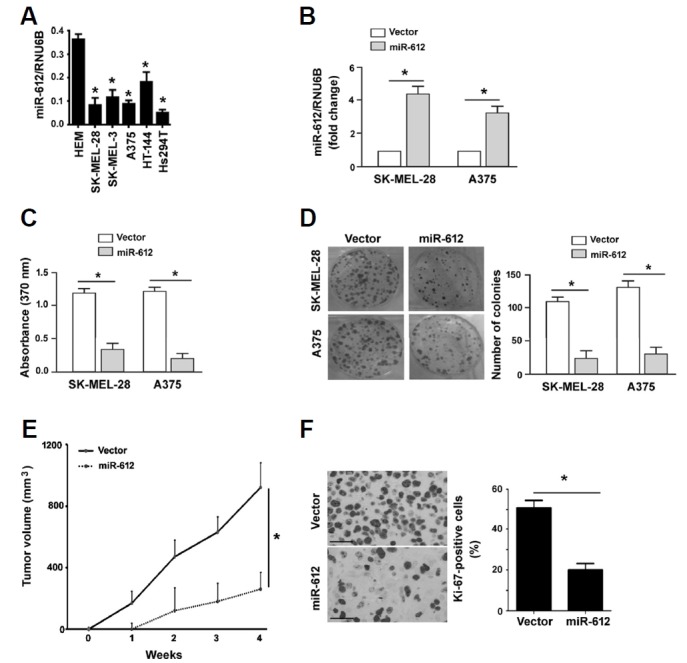
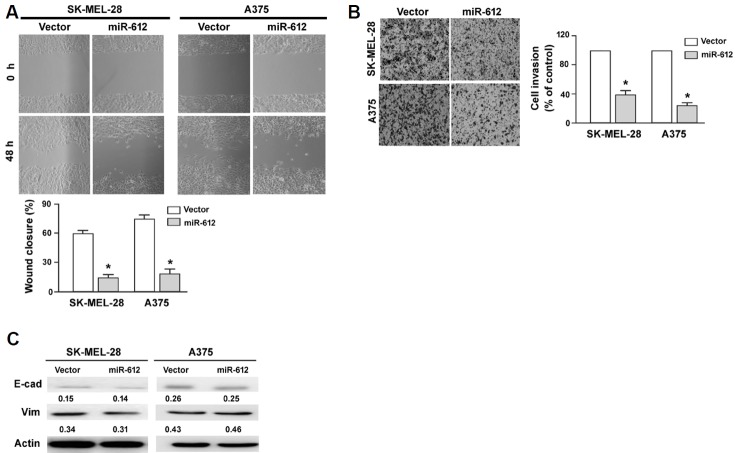
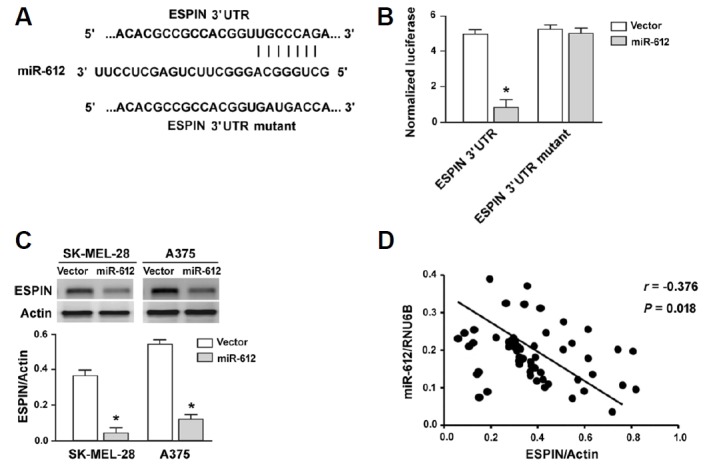
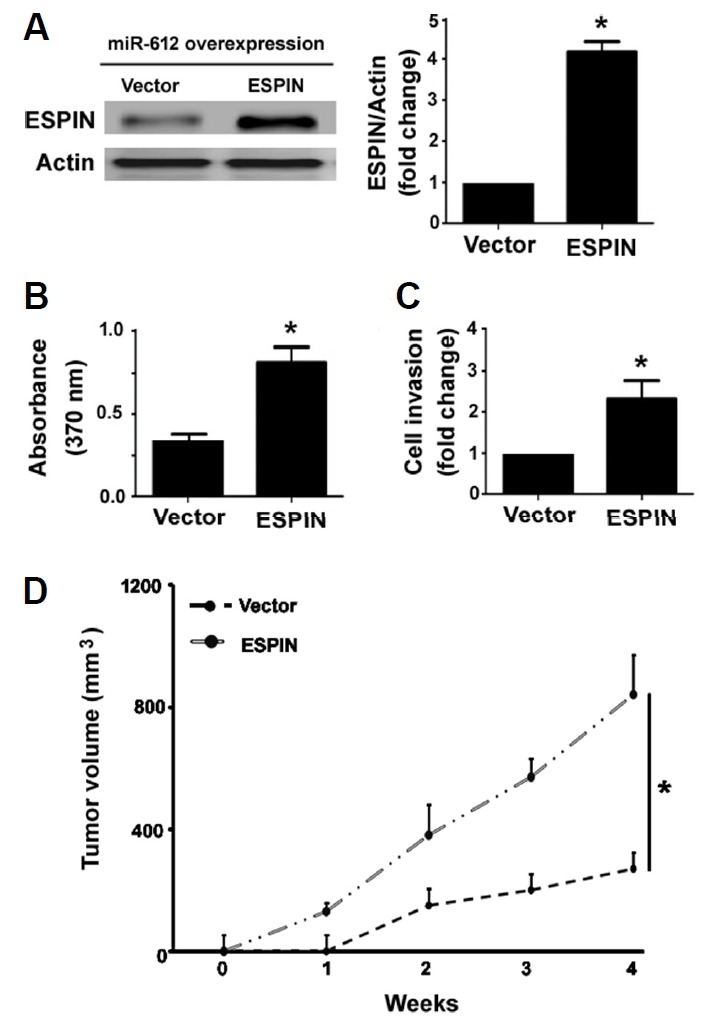
microRNA (miR)-612 shows anticancer activity in several types of cancers, yet its function in melanoma is still unclear. This study was undertaken to investigate the expression of miR-612 and its biological relevance in melanoma cell growth, invasion, and tumorigenesis. The expression and prognostic significance of miR-612 in melanoma were examined. The effects of miR-612 overexpression on cell proliferation, colony formation, tumorigenesis, and invasion were determined. Rescue experiments were conducted to identify the functional target gene(s) of miR-612. miR-612 was significantly downregulated in melanoma tissues compared to adjacent normal tissues. Low miR-612 expression was significantly associated with melanoma thickness, lymph node metastasis, and shorter overall, and disease-free survival of patients. Overexpression of miR-612 significantly decreased cell proliferation, colony formation, and invasion of SK-MEL-28 and A375 melanoma cells. tumorigenic studies confirmed that miR-612 overexpression retarded the growth of A375 xenograft tumors, which was coupled with a decline in the percentage of Ki-67-positive proliferating cells. Mechanistically, miR-612 targeted Espin in melanoma cells. Overexpression of Espin counteracted the suppressive effects of miR-612 on melanoma cell proliferation, invasion, and tumorigenesis. A significant inverse correlation ( = -0.376, = 0.018) was observed between miR-612 and Espin protein expression in melanoma tissues. In addition, overexpression of miR-612 and knockdown of Espin significantly increased the sensitivity of melanoma cells to doxorubicin. Collectively, miR-612 suppresses the aggressive phenotype of melanoma cells through downregulation of Espin. Delivery of miR-612 may represent a novel therapeutic strategy against melanoma.
miRNA(miR)-612 在几种类型的癌症中具有抗癌活性,但在黑色素瘤中的功能尚不清楚。本研究旨在探讨 miR-612 在黑色素瘤细胞生长、侵袭和肿瘤发生中的表达及其生物学相关性。检查了 miR-612 在黑色素瘤中的表达及其预后意义。确定了 miR-612 过表达对细胞增殖、集落形成、肿瘤发生和侵袭的影响。进行了挽救实验以鉴定 miR-612 的功能靶基因。miR-612 在黑色素瘤组织中明显下调,与相邻正常组织相比。低 miR-612 表达与黑色素瘤厚度、淋巴结转移以及患者的总生存期和无病生存期较短显著相关。miR-612 的过表达显著降低了 SK-MEL-28 和 A375 黑色素瘤细胞的增殖、集落形成和侵袭。肿瘤发生研究证实,miR-612 过表达可减缓 A375 异种移植瘤的生长,同时 Ki-67 阳性增殖细胞的百分比下降。机制上,miR-612 在黑色素瘤细胞中靶向 Espin。Espin 的过表达抵消了 miR-612 对黑色素瘤细胞增殖、侵袭和肿瘤发生的抑制作用。在黑色素瘤组织中观察到 miR-612 和 Espin 蛋白表达之间存在显著的负相关(= -0.376,= 0.018)。此外,miR-612 的过表达和 Espin 的敲低显著增加了黑色素瘤细胞对阿霉素的敏感性。总之,miR-612 通过下调 Espin 抑制黑色素瘤细胞的侵袭表型。miR-612 的递送可能代表一种针对黑色素瘤的新型治疗策略。