Department of Vascular Surgery, Drum Tower Clinical Medical College of Nanjing Medical University, Nanjing, Jiangsu, China (mainland).
Department of Vascular Surgery, The Third Affiliated Hospital of Soochow University, Changzhou, Jiangsu, China (mainland).
Med Sci Monit. 2018 Feb 1;24:652-660. doi: 10.12659/msm.906153.
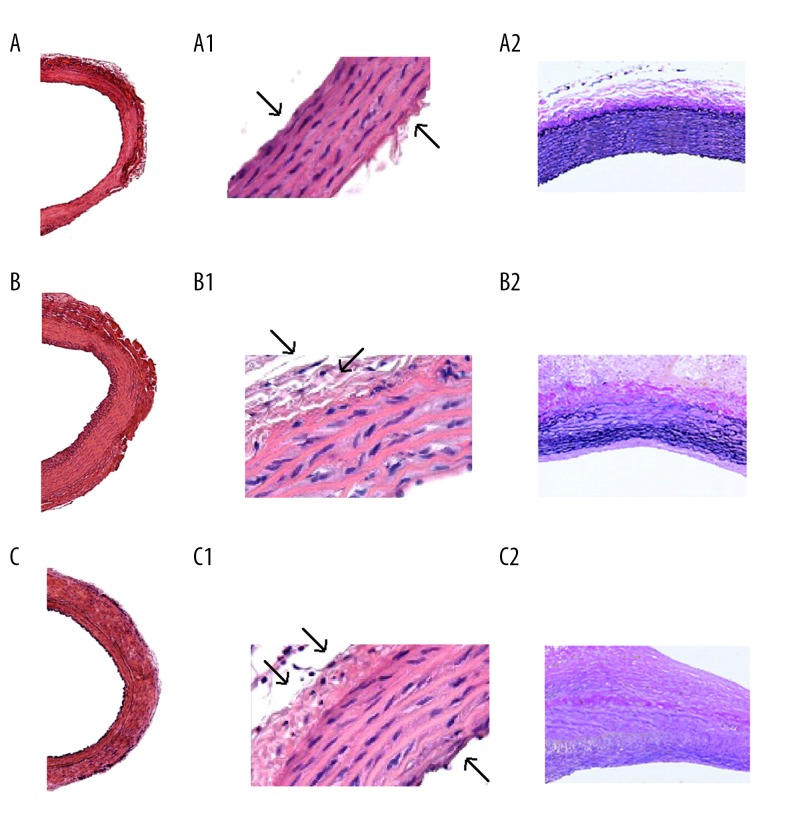
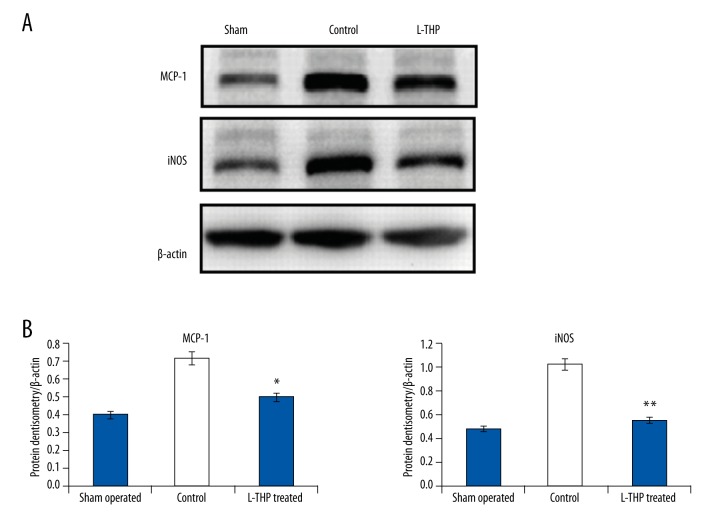
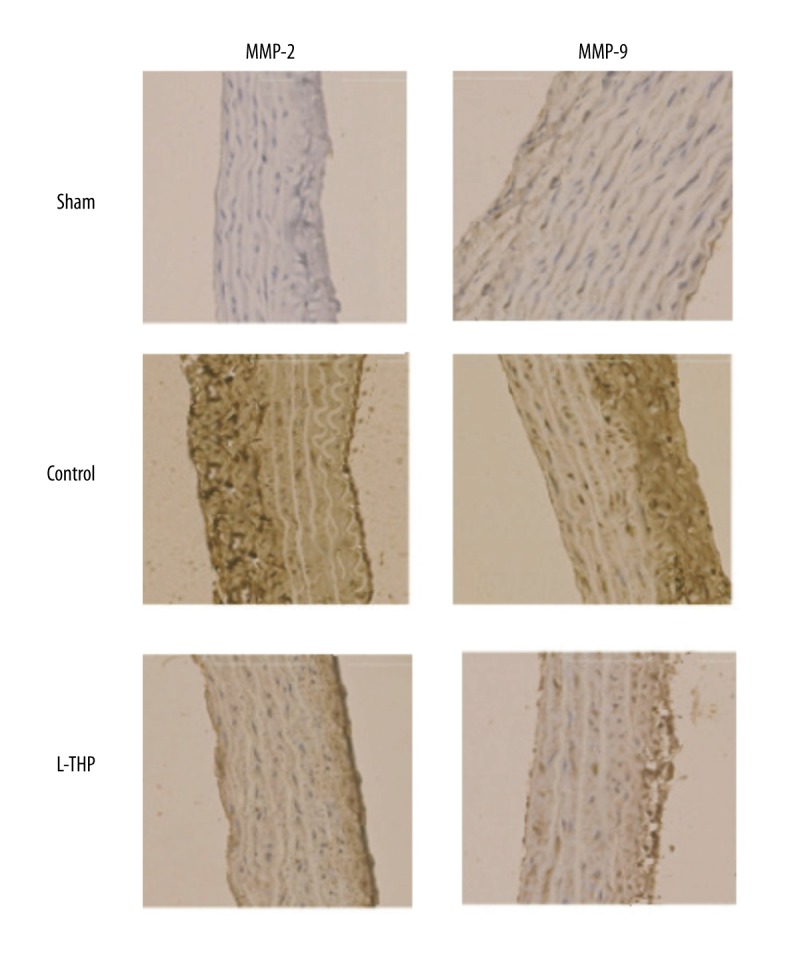
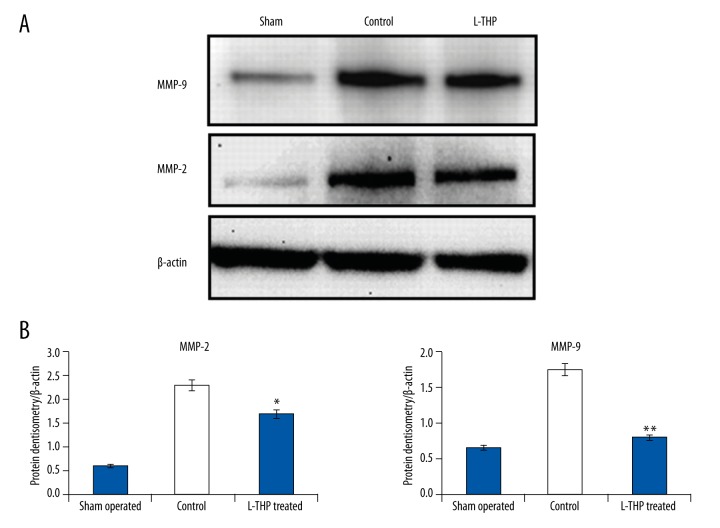
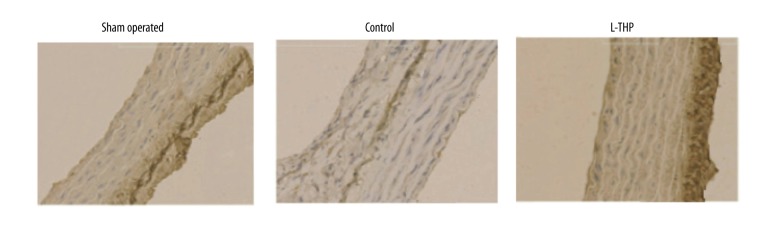
BACKGROUND Levo-tetrahydropalmatine (L-THP) is a tetrahydro protoberberine isoquinoline alkaloid obtained from the genera Stephania and Corydalis. In the present research, we evaluated the effects of L-THP on the progression of aortic aneurysms (AAs) in experimental rats induced with perfusion of elastase. MATERIAL AND METHODS Thirty-six Sprague-Dawley rats were divided into sham-operated, control, and L-THP treated groups (n=12 in each group). The rats in the control group and the L-THP group received intra-aortic perfusion of elastase to induce AAs; the sham-operated group received perfusion of saline. The rats in the L-THP group received a dose of 15 mg/kg/day, the control and the sham group received saline treatment. The animals were evaluated for aortic diameters (ADs) and systolic blood pressure (SBP) just before and after the elastase perfusion, and 24 days after perfusion. The extracts of the aortas were evaluated by western blotting and immunohistochemistry. RESULTS In the control group, a significant increase in aortic size was observed (p<0.05) compared to the sham group after 24 days post-perfusion, whereas the L-THP group showed a decrease in diameter compared to the control group (p<0.05). The SBP increased significantly in the control group compared to the sham group. The L-THP group showed reduction in SBP, exhibited decreased expression of metalloproteinase and monocyte chemotactic protein-1, and the tissue samples also exhibited significant decreased levels of iNOS compared to the control group. L-THP treatment prevented loss of vascular smooth muscle cells (VSMCs) of the aortic walls. CONCLUSIONS L-THP inhibited progression of AAs in rats by curbing inflammation, oxidative stress, and conserving VSMCs, suggesting a new therapeutic approach for managing AAs.
左甲四氢巴马汀(L-THP)是一种从Stephania 和 Corydalis 属植物中提取的四氢原小檗碱异喹啉生物碱。在本研究中,我们评估了 L-THP 对弹性蛋白酶灌注诱导的实验性大鼠主动脉瘤(AA)进展的影响。
36 只 Sprague-Dawley 大鼠分为假手术组、对照组和 L-THP 治疗组(每组 12 只)。对照组和 L-THP 组大鼠接受主动脉内弹性酶灌注以诱导 AA;假手术组接受生理盐水灌注。L-THP 组给予 15mg/kg/天,对照组和假手术组给予生理盐水治疗。在弹性酶灌注前后及灌注后 24 天,评估大鼠的主动脉直径(AD)和收缩压(SBP)。用 Western blot 和免疫组化评估主动脉提取物。
对照组大鼠在灌注后 24 天,与假手术组相比,主动脉明显增大(p<0.05),而 L-THP 组与对照组相比,直径减小(p<0.05)。与假手术组相比,对照组大鼠 SBP 显著升高。与对照组相比,L-THP 组 SBP 降低,基质金属蛋白酶和单核细胞趋化蛋白-1 表达减少,组织样本中诱导型一氧化氮合酶(iNOS)水平也明显低于对照组。L-THP 治疗可防止主动脉壁血管平滑肌细胞(VSMCs)丢失。
L-THP 通过抑制炎症、氧化应激和保护 VSMCs 抑制大鼠 AA 的进展,为治疗 AA 提供了一种新的治疗方法。