Department of Molecular Infection Biology, Helmholtz Centre for Infection Research, Braunschweig, Germany.
Group Microbial Immune Regulation, Helmholtz Centre for Infection Research, Braunschweig, Germany.
PLoS Pathog. 2018 Feb 1;14(2):e1006858. doi: 10.1371/journal.ppat.1006858. eCollection 2018 Feb.
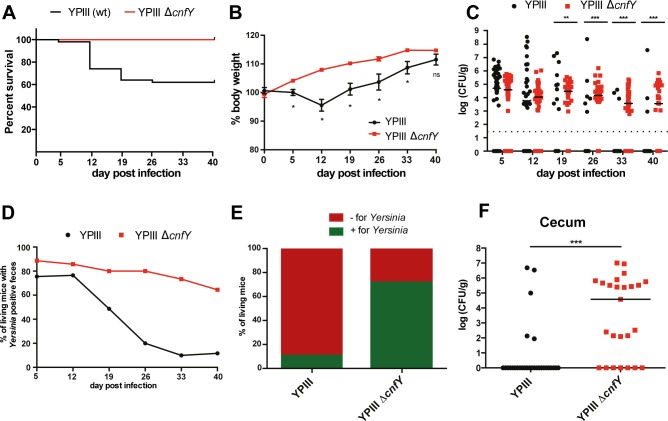
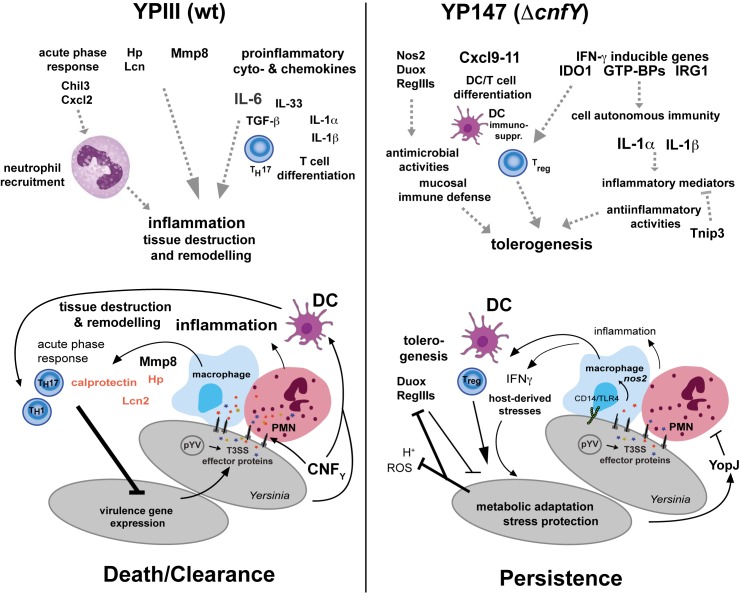
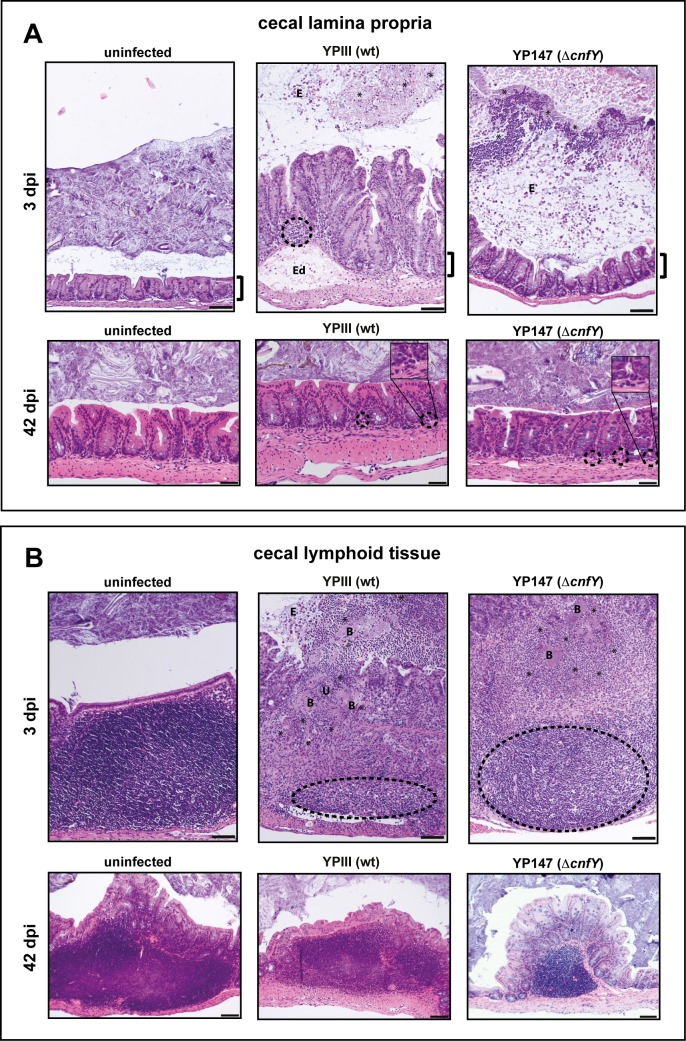
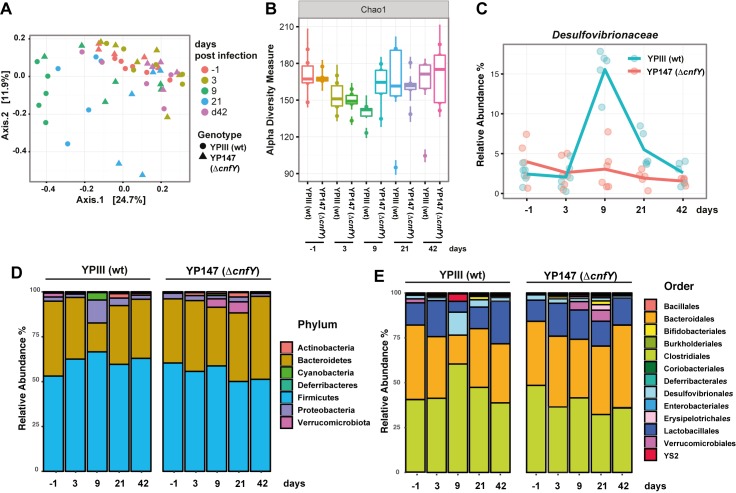
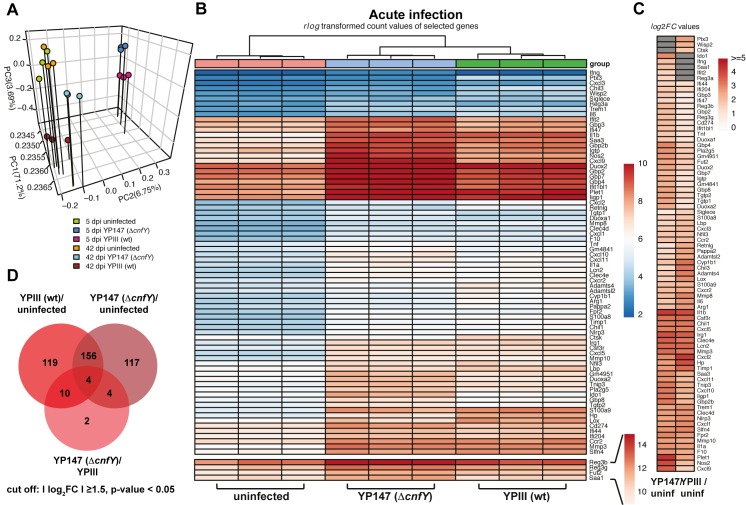
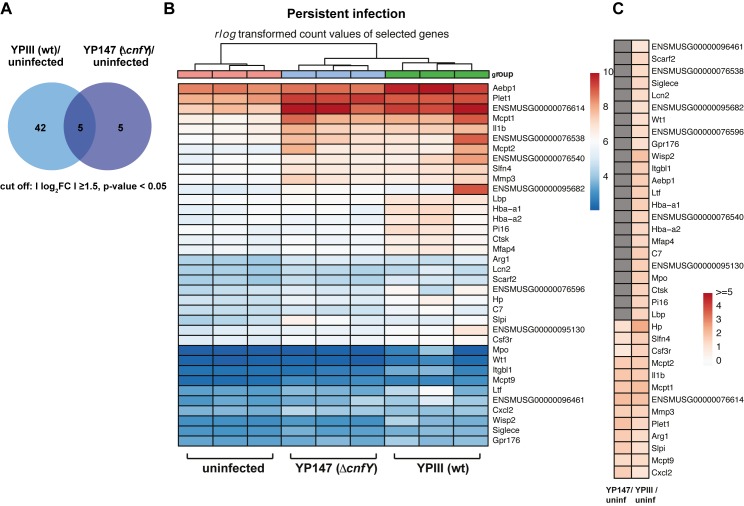
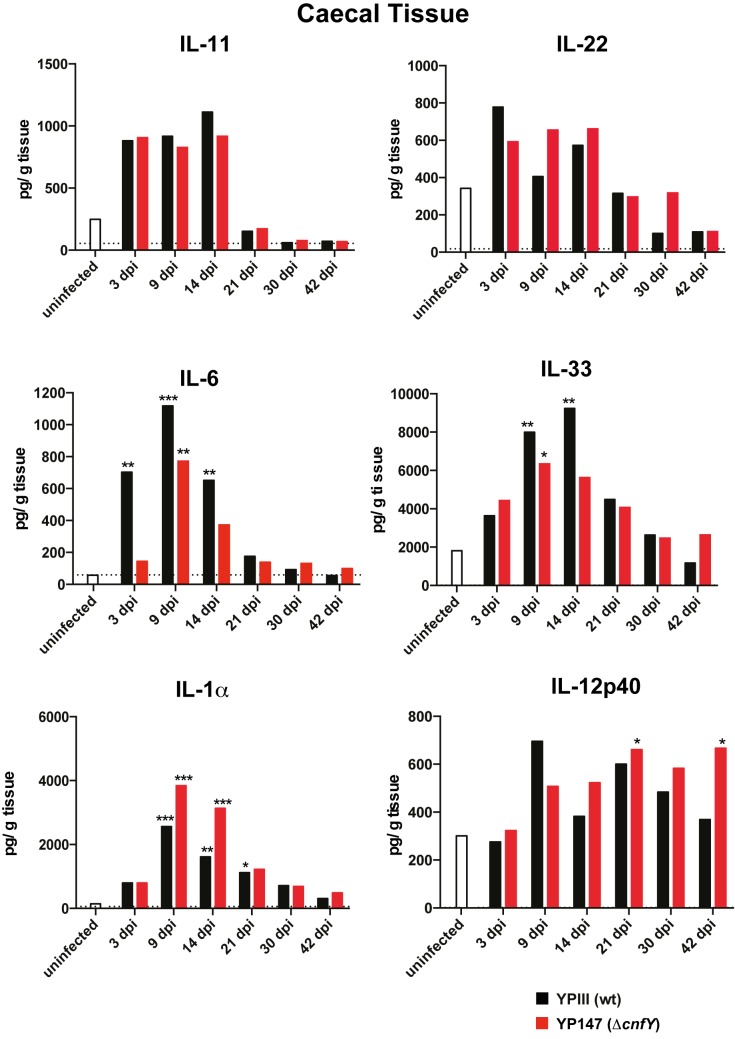
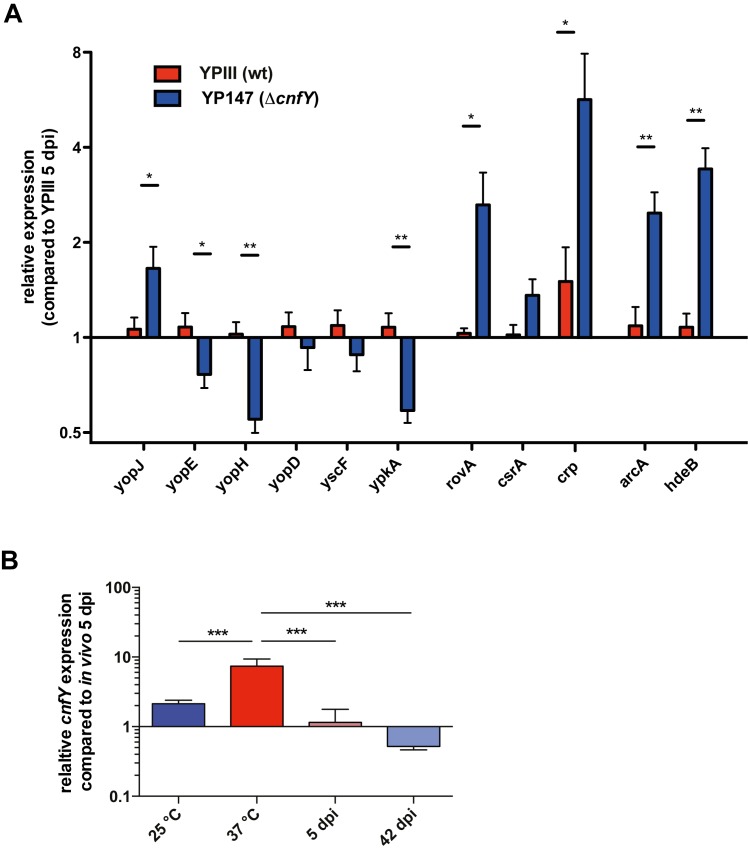
Gastrointestinal infections caused by enteric yersiniae can become persistent and complicated by relapsing enteritis and severe autoimmune disorders. To establish a persistent infection, the bacteria have to cope with hostile surroundings when they transmigrate through the intestinal epithelium and colonize underlying gut-associated lymphatic tissues. How the bacteria gain a foothold in the face of host immune responses is poorly understood. Here, we show that the CNFY toxin, which enhances translocation of the antiphagocytic Yop effectors, induces inflammatory responses. This results in extensive tissue destruction, alteration of the intestinal microbiota and bacterial clearance. Suppression of CNFY function, however, increases interferon-γ-mediated responses, comprising non-inflammatory antimicrobial activities and tolerogenesis. This process is accompanied by a preterm reprogramming of the pathogen's transcriptional response towards persistence, which gives the bacteria a fitness edge against host responses and facilitates establishment of a commensal-type life style.
肠耶尔森菌引起的胃肠道感染可能持续存在,并伴有反复发作的肠炎和严重的自身免疫性疾病。为了建立持续性感染,细菌在穿过肠上皮并定殖于肠道相关淋巴组织时,必须应对恶劣的环境。细菌如何在面对宿主免疫反应时站稳脚跟,这一点我们还不太了解。在这里,我们发现,增强抗吞噬 Yop 效应器易位的 CNFY 毒素可诱导炎症反应。这会导致广泛的组织破坏、肠道微生物群的改变和细菌清除。然而,抑制 CNFY 功能会增加干扰素-γ介导的反应,包括非炎症性的抗菌活性和耐受形成。这一过程伴随着病原体转录反应向持久性的早产重新编程,这使细菌在对抗宿主反应方面具有优势,并有助于建立共生型生活方式。