The College of Stomatology, Guangxi Medical University, Nanning, Guangxi 530021, P.R. China.
The Medical and Scientific Research Center, Guangxi Medical University, Nanning, Guangxi 530021, P.R. China.
Int J Mol Med. 2018 Apr;41(4):2150-2158. doi: 10.3892/ijmm.2018.3431. Epub 2018 Jan 26.
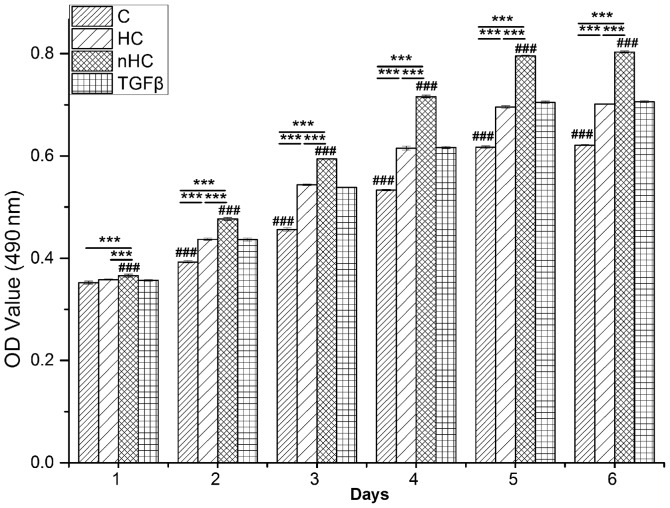
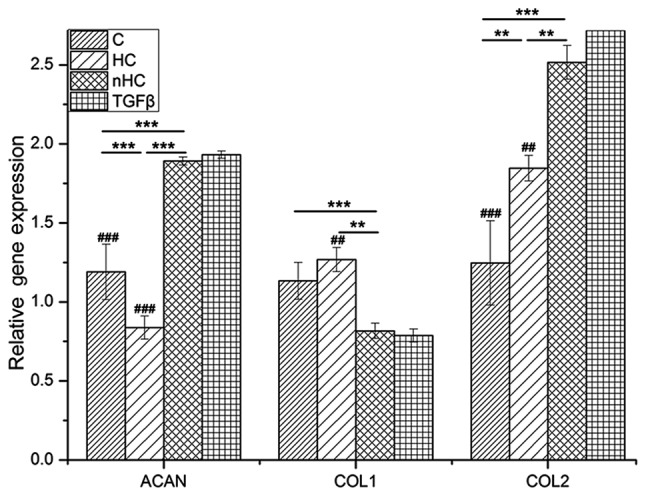
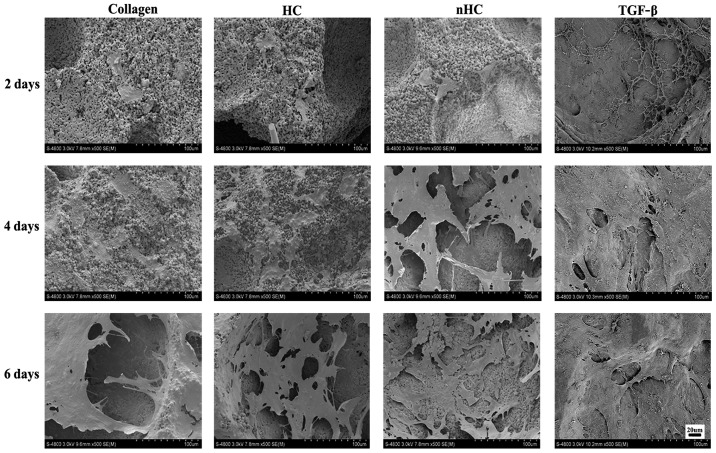
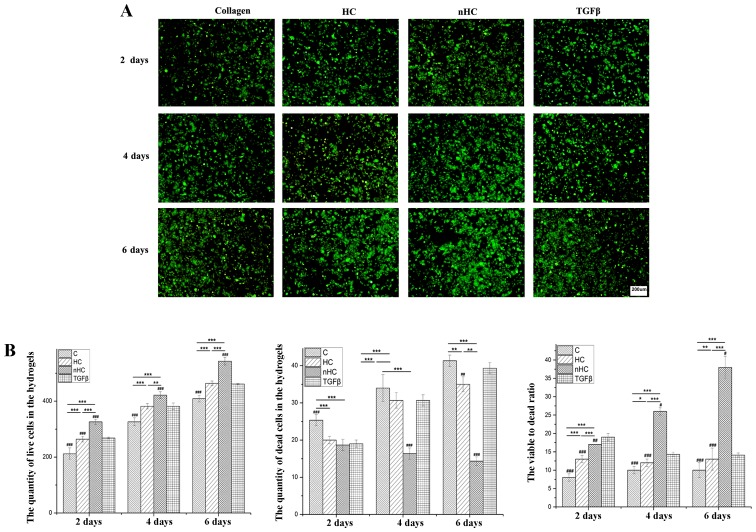
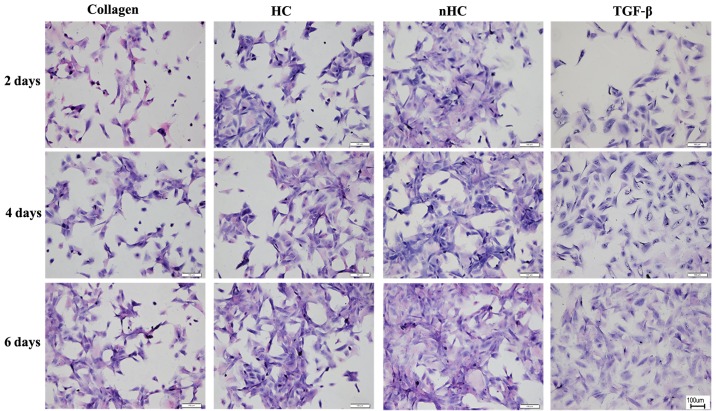
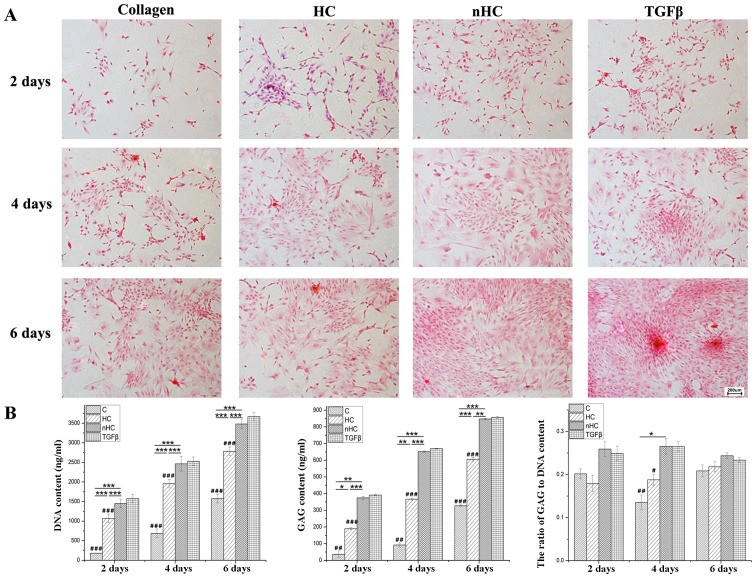
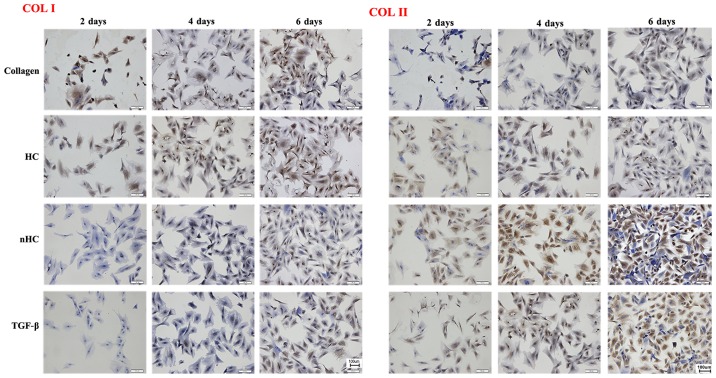
Autologous chondrocyte implantation (ACI) has emerged as a novel approach to cartilage repair through the use of harvested chondrocytes. However, the expansion of the chondrocytes from the donor tissue in vitro is restricted by the limited cell numbers and the dedifferentiation of the chondrocytes. The present study investigated the effect of collagen-based films, including collagen, hydroxyapatite (HA)/collagen (HC) and in situ synthesis of nano‑HC (nHC), on monolayer cultures of chondrocytes. As a substrate for the chondrocytes monolayer culture in vitro, nHC was able to restrain the dedifferentiation of chondrocytes and facilitate cell expansion, which was detected by methyl thiazolyl tetrazolium assay, scanning electron microscopy, calcein‑acetoxymethyl/propidium iodide staining, hematoxylin and eosin staining, Safranin O staining, immunohistochemical staining and reverse transcription‑quantitative polymerase chain reaction. Furthermore, the nHC films significantly facilitated cell growth and enhanced the expression of cartilage‑specific extracellular matrix (ECM) components, including aggrecan and type II collagen. In addition, nHC films markedly downregulated the expression of collagen type I, an indicator of dedifferentiation. The results indicated that nHC, a collagen‑based substrate optimized by nanoparticles, was able to better support cell growth and preserve cell phenotype compared with collagen alone or HC. The nHC film, which favors cell growth and prevents the dedifferentiation of chondrocytes, may therefore serve as a useful cartilage‑like ECM for chondrocytes. In conclusion, nHC film is a promising substrate for the culture of chondrocytes in cell-based therapy.
自体软骨细胞移植(ACI)作为一种通过采集软骨细胞来修复软骨的新方法已经出现。然而,从供体组织中体外扩增软骨细胞受到细胞数量有限和软骨细胞去分化的限制。本研究探讨了胶原基膜,包括胶原、羟基磷灰石/胶原(HC)和原位合成的纳米-HC(nHC),对软骨细胞单层培养的影响。作为体外软骨细胞单层培养的基底,nHC 能够抑制软骨细胞的去分化并促进细胞扩增,这通过甲基噻唑基四唑比色法、扫描电子显微镜、钙黄绿素-乙酰氧甲基/碘化丙啶染色、苏木精和伊红染色、番红 O 染色、免疫组织化学染色和逆转录-定量聚合酶链反应检测到。此外,nHC 膜显著促进细胞生长并增强软骨特异性细胞外基质(ECM)成分的表达,包括聚集蛋白聚糖和 II 型胶原。此外,nHC 膜显著下调了胶原 I 的表达,胶原 I 是去分化的标志物。结果表明,nHC 是一种优化的纳米粒子胶原基基质,与单独的胶原或 HC 相比,它能够更好地支持细胞生长并保持细胞表型。nHC 膜有利于细胞生长并防止软骨细胞去分化,因此可作为软骨细胞的有用软骨样 ECM。总之,nHC 膜是细胞治疗中软骨细胞培养的有前途的基质。