Leicester Institute of Structural & Chemical Biology and Department of Molecular & Cell Biology, University of Leicester, UK.
Department of Pure and Applied Chemistry, University of Strathclyde, UK.
Nucleic Acids Res. 2018 Mar 16;46(5):2145-2158. doi: 10.1093/nar/gky056.
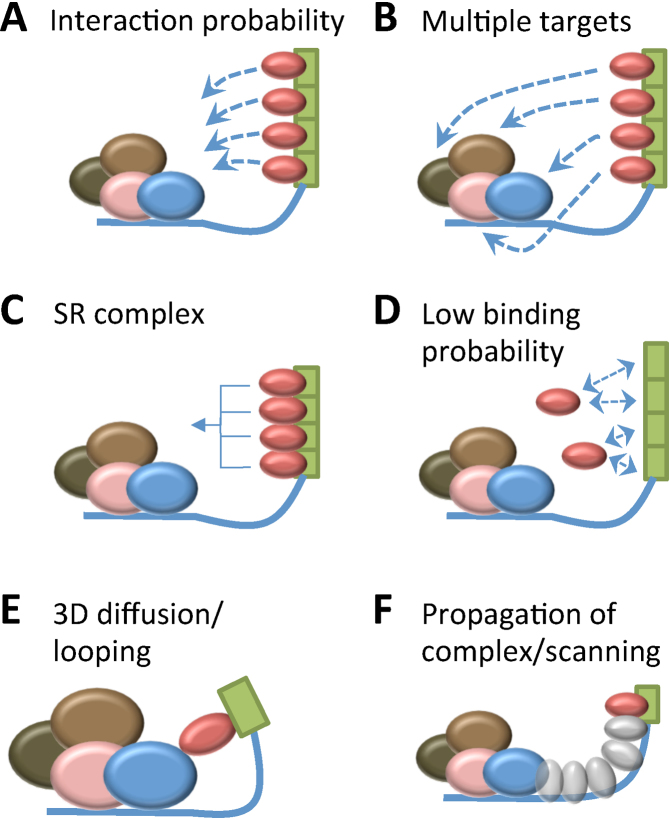
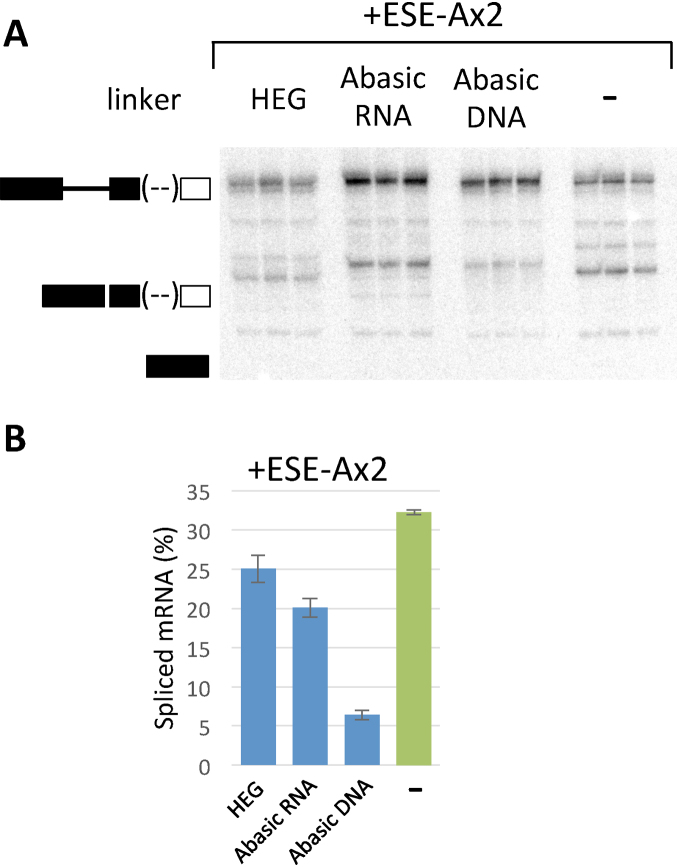
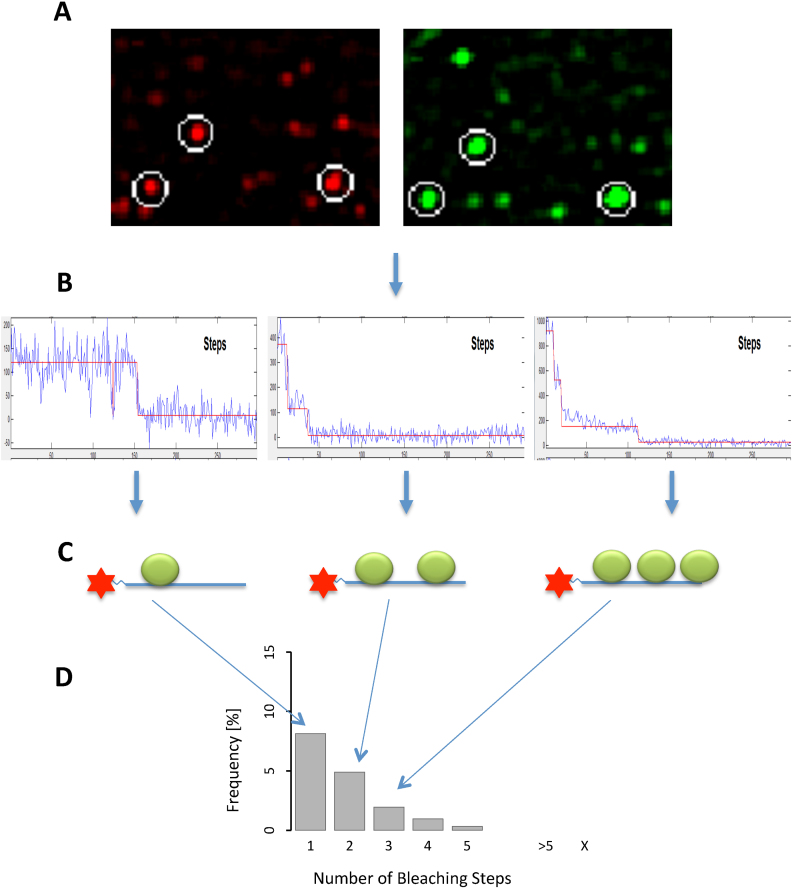
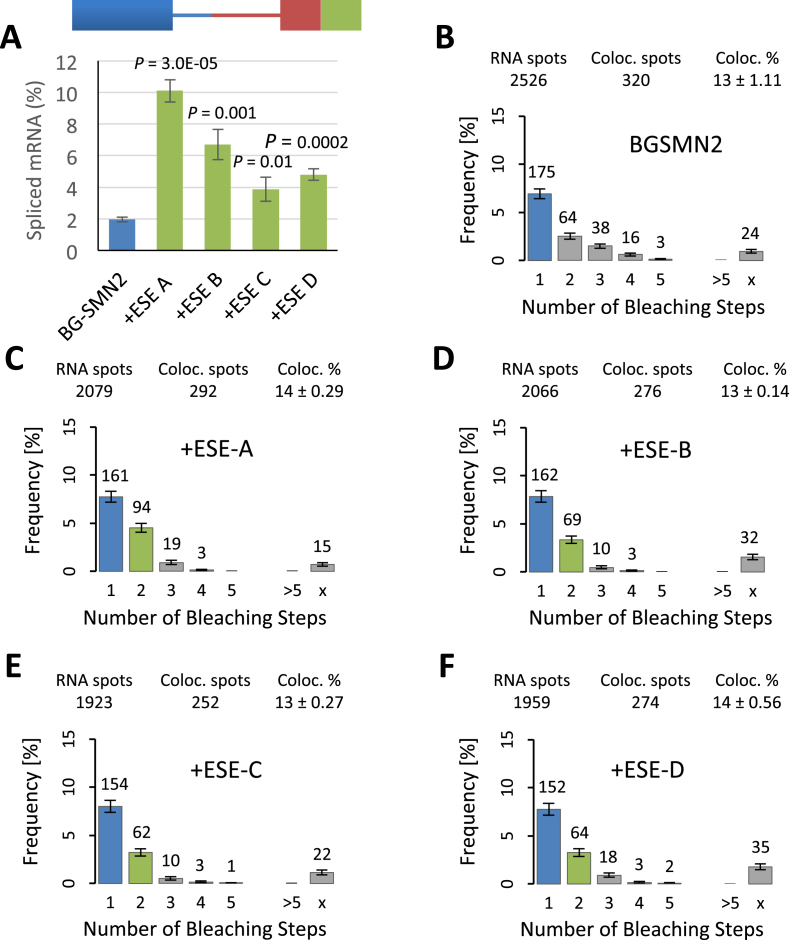
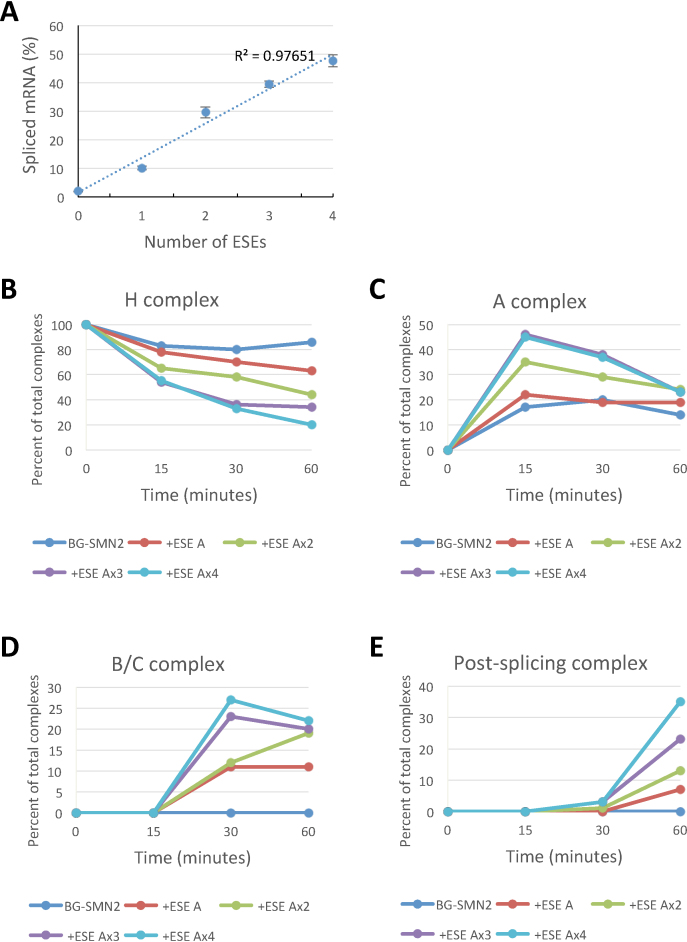
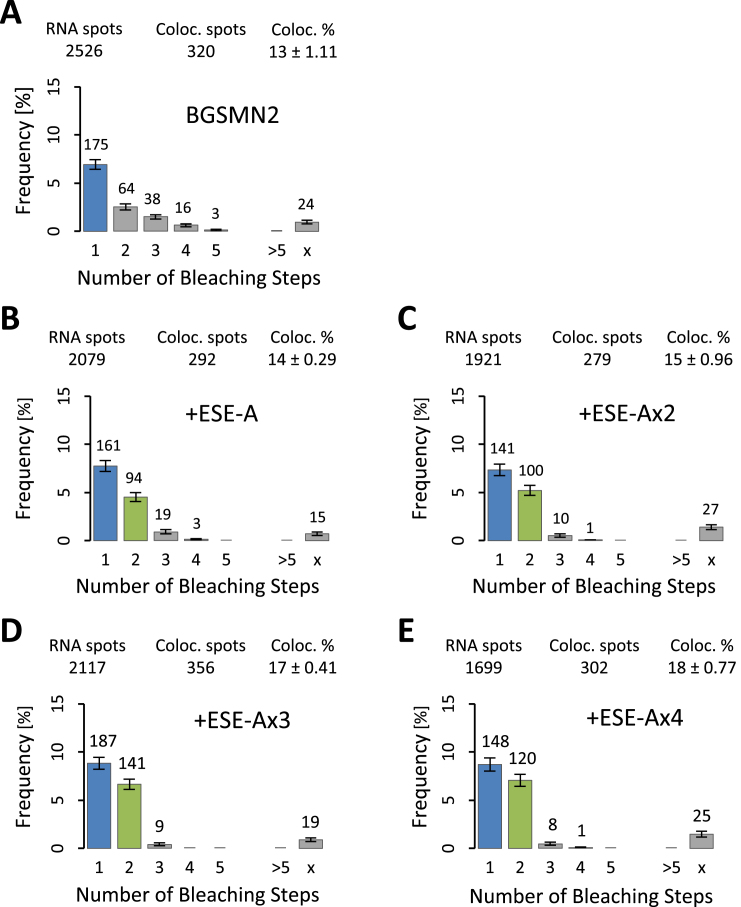
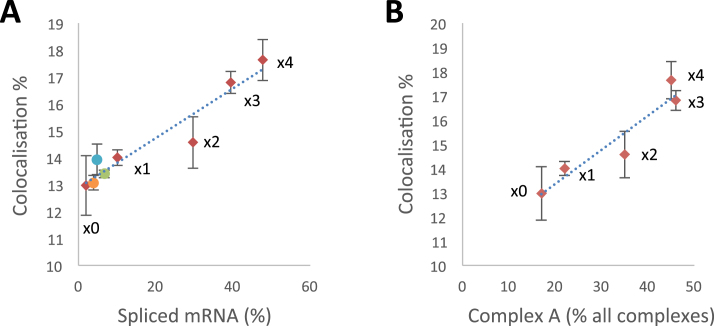
Exonic splicing enhancer (ESE) sequences are bound by serine & arginine-rich (SR) proteins, which in turn enhance the recruitment of splicing factors. It was inferred from measurements of splicing around twenty years ago that Drosophila doublesex ESEs are bound stably by SR proteins, and that the bound proteins interact directly but with low probability with their targets. However, it has not been possible with conventional methods to demonstrate whether mammalian ESEs behave likewise. Using single molecule multi-colour colocalization methods to study SRSF1-dependent ESEs, we have found that that the proportion of RNA molecules bound by SRSF1 increases with the number of ESE repeats, but only a single molecule of SRSF1 is bound. We conclude that initial interactions between SRSF1 and an ESE are weak and transient, and that these limit the activity of a mammalian ESE. We tested whether the activation step involves the propagation of proteins along the RNA or direct interactions with 3' splice site components by inserting hexaethylene glycol or abasic RNA between the ESE and the target 3' splice site. These insertions did not block activation, and we conclude that the activation step involves direct interactions. These results support a model in which regulatory proteins bind transiently and in dynamic competition, with the result that each ESE in an exon contributes independently to the probability that an activator protein is bound and in close proximity to a splice site.
外显子剪接增强子 (ESE) 序列由丝氨酸和精氨酸丰富 (SR) 蛋白结合,而 SR 蛋白反过来又增强了剪接因子的募集。大约二十年前,通过对剪接的测量推断出,果蝇 doublesex ESE 被 SR 蛋白稳定结合,并且结合的蛋白直接相互作用,但概率较低。然而,传统方法一直无法证明哺乳动物 ESE 是否具有相同的行为。使用单分子多色共定位方法研究 SRSF1 依赖性 ESE,我们发现 SRSF1 结合的 RNA 分子的比例随着 ESE 重复数的增加而增加,但仅结合了一个 SRSF1 分子。我们得出的结论是,SRSF1 与 ESE 之间的初始相互作用较弱且短暂,这限制了哺乳动物 ESE 的活性。我们通过在 ESE 和靶 3'剪接位点之间插入六亚乙基二醇或无碱基 RNA 来测试激活步骤是否涉及蛋白质沿 RNA 的传播或与 3'剪接位点成分的直接相互作用。这些插入物并没有阻止激活,我们得出结论,激活步骤涉及直接相互作用。这些结果支持这样一种模型,即调节蛋白瞬时结合并处于动态竞争中,结果是外显子中的每个 ESE 都独立地有助于激活蛋白结合的概率,并且靠近剪接位点。