Department of Cellular and Integrative Physiology, University Medical Center Hamburg-Eppendorf, Hamburg, Germany.
DZHK (German Center for Cardiovascular Research), Partner site Hamburg/Kiel/Lübeck, Hamburg, Germany.
Sci Rep. 2018 Feb 2;8(1):2312. doi: 10.1038/s41598-018-20792-5.
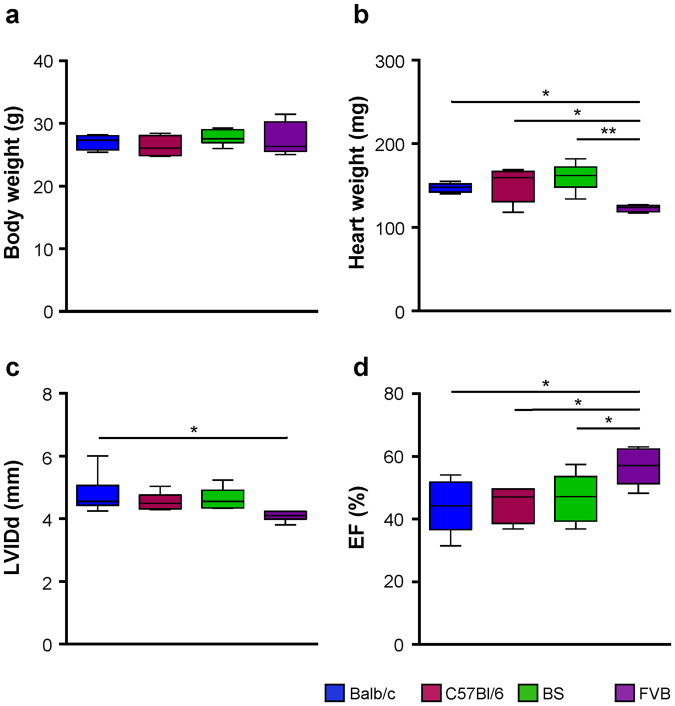
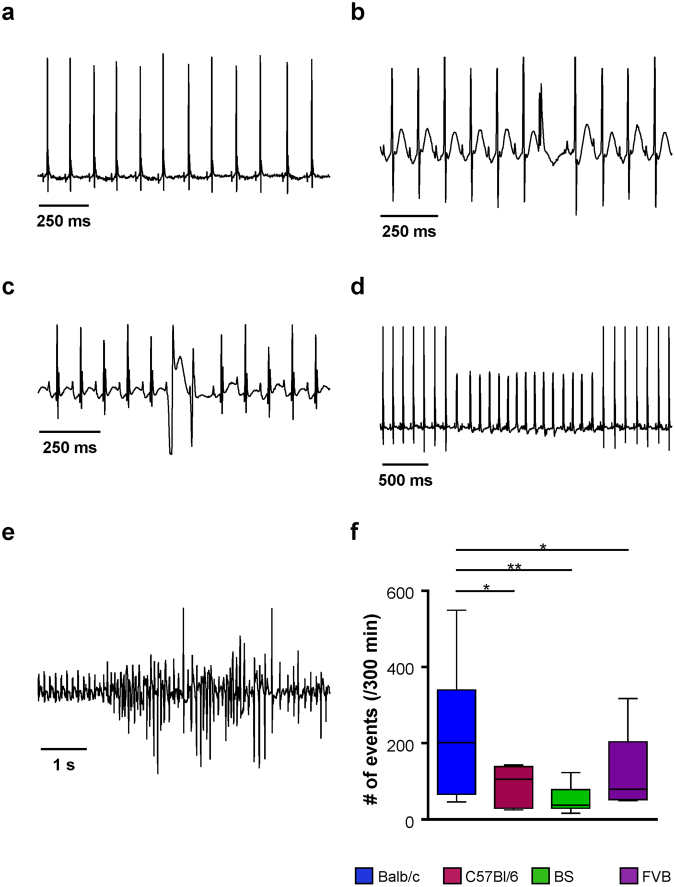
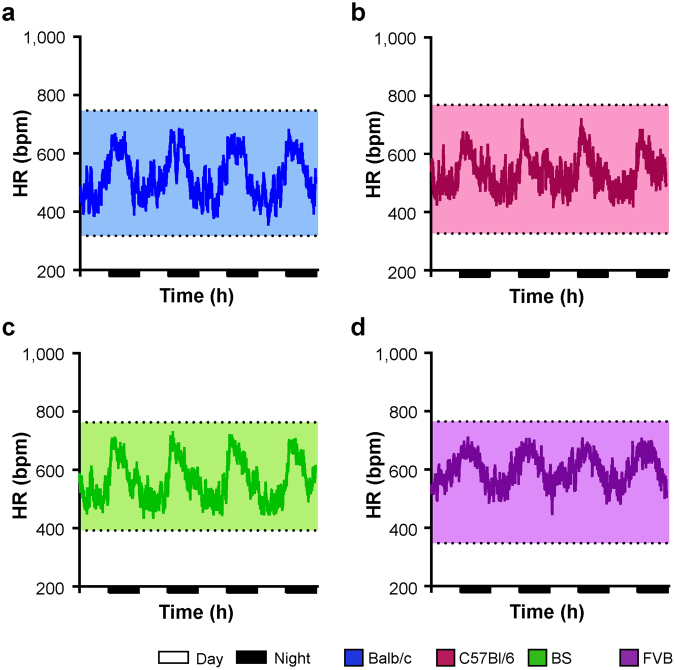
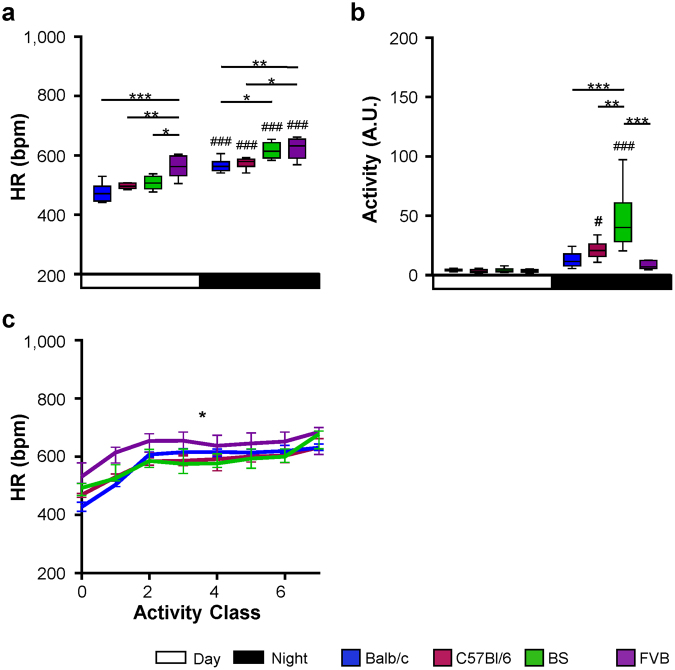
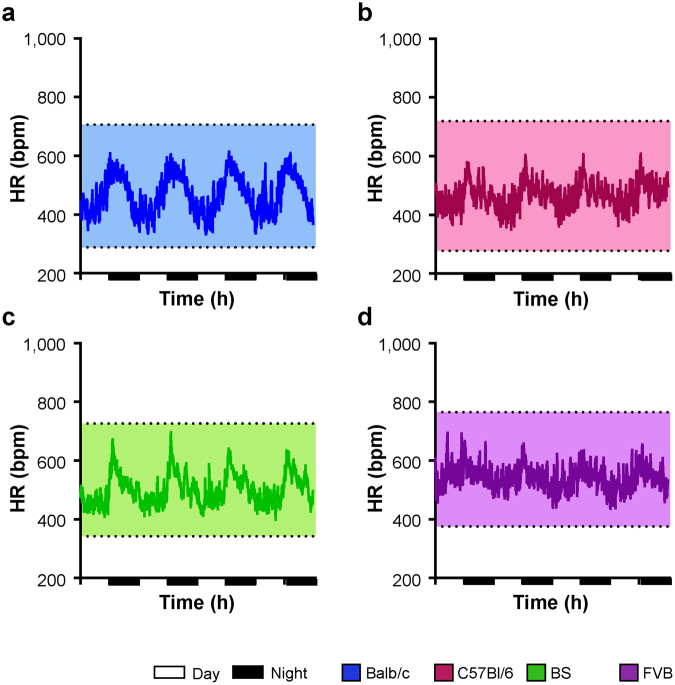
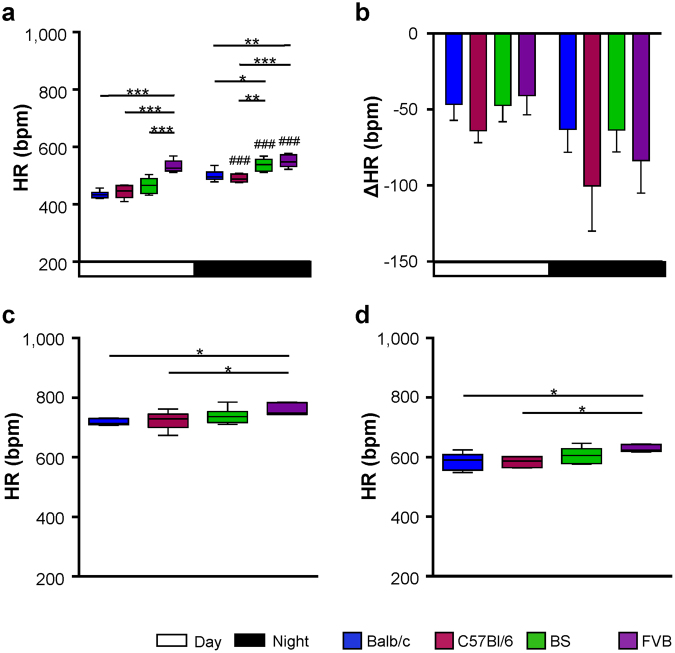
In cardiovascular research, several mouse strains with differing genetic backgrounds are used to investigate mechanisms leading to and sustaining ventricular arrhythmias. The genetic background has been shown to affect the studied phenotype in other research fields. Surprisingly little is known about potential strain-specific susceptibilities towards ventricular arrhythmias in vivo. Here, we hypothesized that inter-strain differences reported in the responsiveness of the β-adrenergic pathway, which is relevant for the development of arrhythmias, translate into a strain-specific vulnerability. To test this hypothesis, we characterized responses to β-adrenergic blockade (metoprolol) and β-adrenergic stimulation (isoproterenol) in 4 mouse strains commonly employed in cardiovascular research (Balb/c, BS, C57Bl/6 and FVB) using telemetric ECG recordings. We report pronounced differences in the electrical vulnerability following isoproterenol: Balb/c mice developed the highest number and the most complex arrhythmias while BS mice were protected. Balb/c mice, therefore, seem to be the background of choice for experiments requiring the occurrence of arrhythmias while BS mice may give insight into electrical stability. Arrhythmias did not correlate with the basal β-adrenergic tone, with the response to β-adrenergic stimulation or with the absolute heart rates during β-adrenergic stimulation. Thus, genetic factors dominate the susceptibility to ventricular arrhythmias in this model of β-adrenergic stimulation.
在心血管研究中,使用具有不同遗传背景的几种小鼠品系来研究导致和维持室性心律失常的机制。遗传背景已被证明会影响其他研究领域的研究表型。令人惊讶的是,对于体内潜在的品系特异性对室性心律失常的易感性知之甚少。在这里,我们假设在β-肾上腺素能途径反应性方面报道的品系间差异,该途径与心律失常的发生有关,会转化为品系特异性易感性。为了验证这一假设,我们使用遥测心电图记录,对心血管研究中常用的 4 种小鼠品系(Balb/c、BS、C57Bl/6 和 FVB)对β-肾上腺素能阻断(美托洛尔)和β-肾上腺素能刺激(异丙肾上腺素)的反应进行了特征描述。我们报告了异丙肾上腺素后电易感性的显著差异:Balb/c 小鼠发生的心律失常数量最多且最复杂,而 BS 小鼠则受到保护。因此,Balb/c 小鼠似乎是需要发生心律失常的实验的首选背景,而 BS 小鼠可能会深入了解电稳定性。心律失常与基础β-肾上腺素能张力、β-肾上腺素能刺激的反应或β-肾上腺素能刺激期间的绝对心率无关。因此,在这种β-肾上腺素能刺激模型中,遗传因素主导了对室性心律失常的易感性。