do Imperio Guinever Eustaquio, Bloise Enrrico, Javam Mohsen, Lye Phetcharawan, Constantinof Andrea, Dunk Caroline, Dos Reis Fernando Marcos, Lye Stephen James, Gibb William, Ortiga-Carvalho Tania M, Matthews Stephen Giles
Departments of Physiology, Toronto, Ontario, Canada.
Laboratory of Translational Endocrinology, Biophysics Institute Carlos Chagas Filho, Federal University of Rio de Janeiro, Rio de Janeiro, Brazil.
Cell Physiol Biochem. 2018;45(2):591-604. doi: 10.1159/000487100. Epub 2018 Jan 29.
BACKGROUND/AIMS: The ATP-binding cassette (ABC) transporters mediate drug biodisposition and immunological responses in the placental barrier. In vitro infective challenges alter expression of specific placental ABC transporters. We hypothesized that chorioamnionitis induces a distinct pattern of ABC transporter expression.
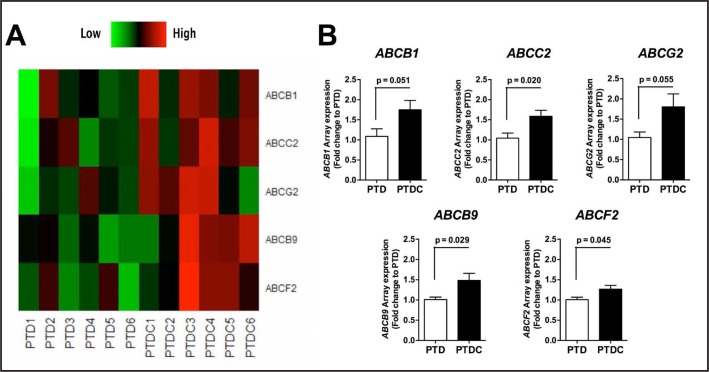
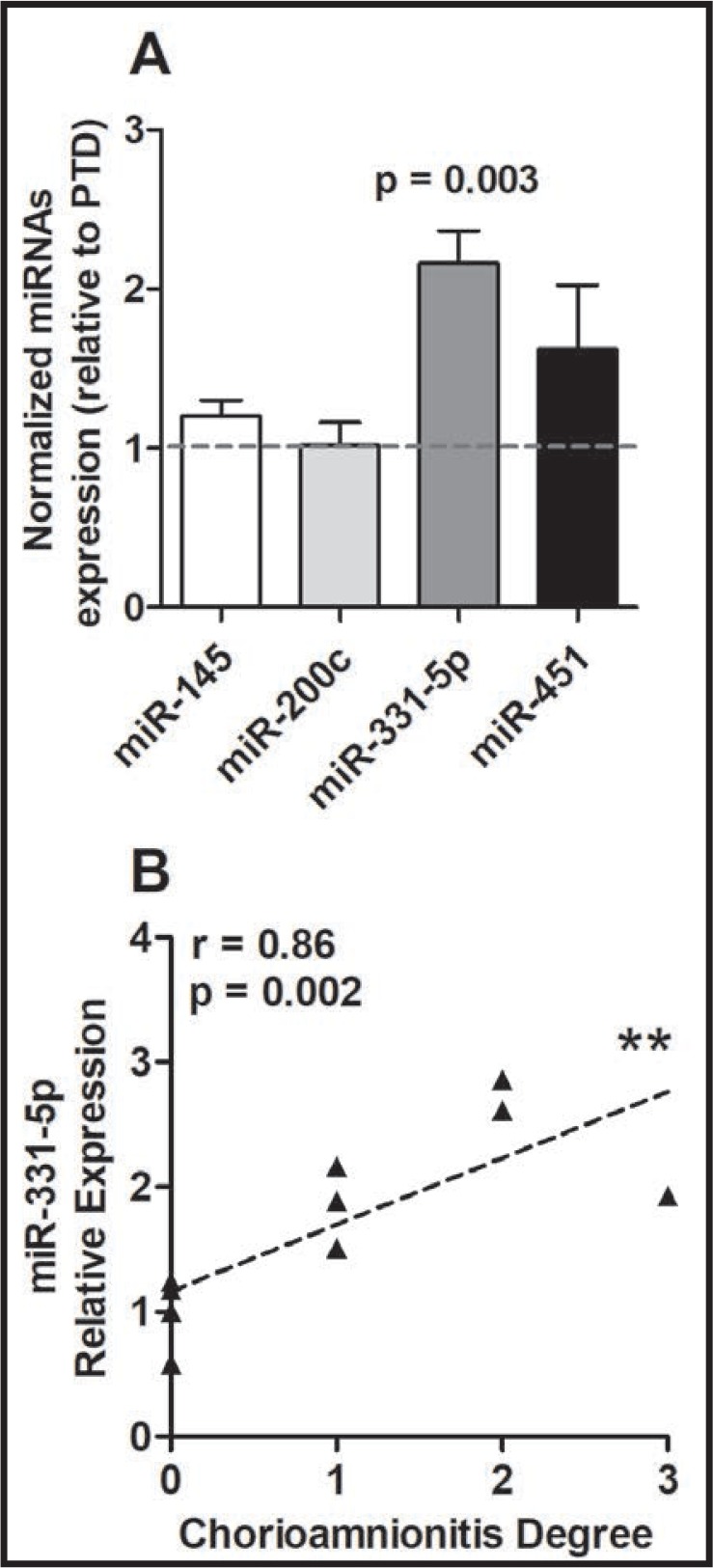
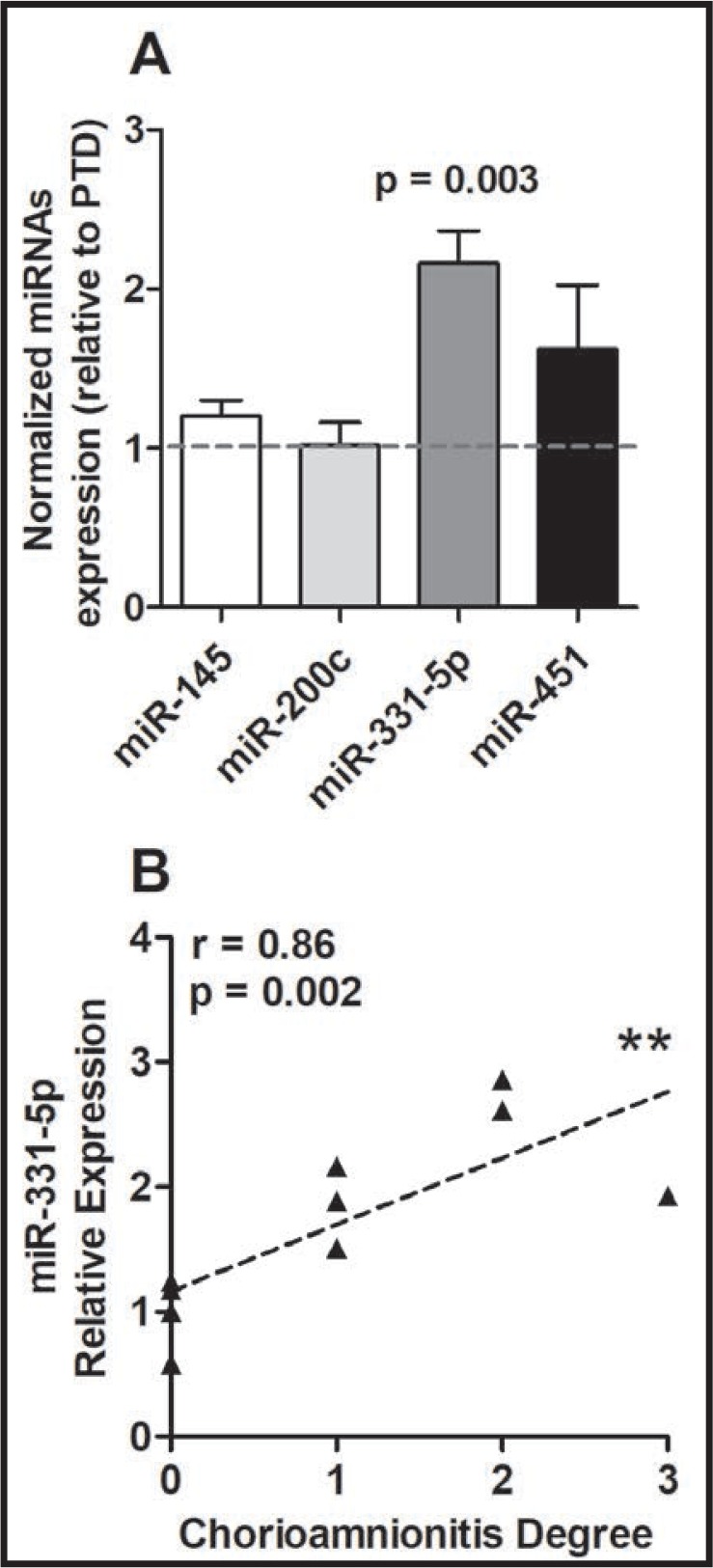
Gene expression of 50 ABC transporters was assessed using TaqMan® Human ABC Transporter Array, in preterm human placentas without (PTD; n=6) or with histological chorioamnionitis (PTDC; n=6). Validation was performed using qPCR, immunohistochemistry and Western blot. MicroRNAs known to regulate P-glycoprotein (P-gp) were examined by qPCR.
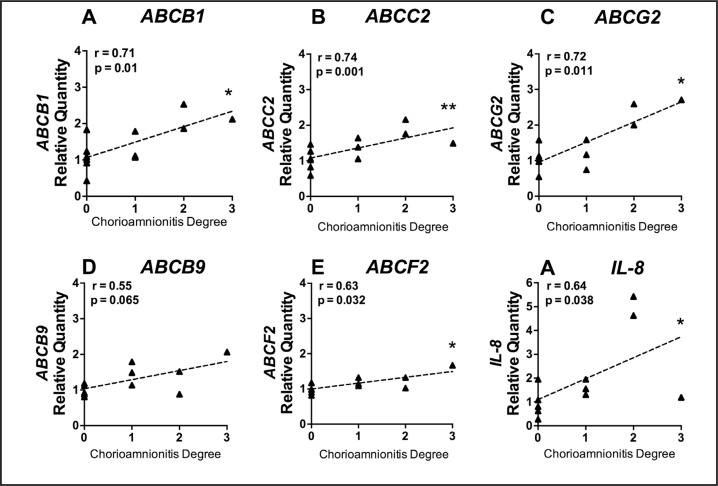
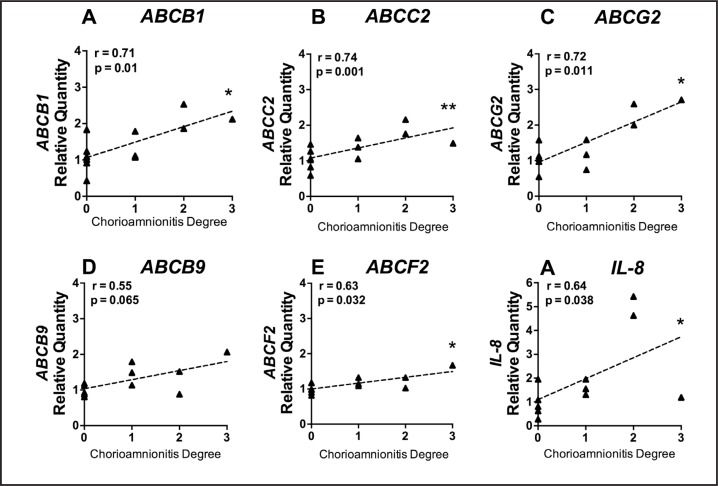
Up-regulation of ABCB9, ABCC2 and ABCF2 mRNA was detected in chorioamnionitis (p<0.05), whereas placental ABCB1 (P-gp; p=0.051) and ABCG2 (breast cancer resistance protein-BCRP) mRNA levels (p=0.055) approached near significant up-regulation. In most cases, the magnitude of the effect significantly correlated to the severity of inflammation. Upon validation, increased placental ABCB1 and ABCG2 mRNA levels (p<0.05) were observed. At the level of immunohistochemistry, while BCRP was increased (p<0.05), P-gp staining intensity was significantly decreased (p<0.05) in PTDC. miR-331-5p, involved in P-gp suppression, was upregulated in PTDC (p<0.01) and correlated to the grade of chorioamnionitis (p<0.01).
Alterations in the expression of ABC transporters will likely lead to modified transport of clinically relevant compounds at the inflamed placenta. A better understanding of the potential role of these transporters in the events surrounding PTD may also enable new strategies to be developed for prevention and treatment of PTD.
背景/目的:ATP结合盒(ABC)转运蛋白介导胎盘屏障中的药物生物处置和免疫反应。体外感染性刺激会改变特定胎盘ABC转运蛋白的表达。我们假设绒毛膜羊膜炎会诱导ABC转运蛋白表达的独特模式。
使用TaqMan®人类ABC转运蛋白阵列评估50种ABC转运蛋白的基因表达,样本为无组织学绒毛膜羊膜炎的早产人胎盘(PTD;n = 6)和有组织学绒毛膜羊膜炎的早产人胎盘(PTDC;n = 6)。使用定量聚合酶链反应(qPCR)、免疫组织化学和蛋白质印迹法进行验证。通过qPCR检测已知调节P-糖蛋白(P-gp)的微小RNA。
在绒毛膜羊膜炎中检测到ABCB9、ABCC2和ABCF2 mRNA上调(p < 0.05),而胎盘ABCB1(P-gp;p = 0.051)和ABCG2(乳腺癌耐药蛋白-BCRP)mRNA水平(p = 0.055)接近显著上调。在大多数情况下,效应大小与炎症严重程度显著相关。经验证,观察到胎盘ABCB1和ABCG2 mRNA水平升高(p < 0.05)。在免疫组织化学水平上,虽然PTDC中BCRP增加(p < 0.05),但P-gp染色强度显著降低(p < 0.05)。参与P-gp抑制的miR-331-5p在PTDC中上调(p < 0.01),并与绒毛膜羊膜炎分级相关(p < 0.01)。
ABC转运蛋白表达的改变可能会导致炎症胎盘对临床相关化合物的转运发生改变。更好地了解这些转运蛋白在早产相关事件中的潜在作用,也可能有助于制定预防和治疗早产的新策略。