Department of Paediatrics and Adolescent Medicine, Li Ka Shing Faculty of Medicine, The University of Hong Kong, Hong Kong, China.
Clinical Genetic Service, Department of Health, Hong Kong, China.
Sci Rep. 2018 Feb 5;8(1):2421. doi: 10.1038/s41598-018-20894-0.
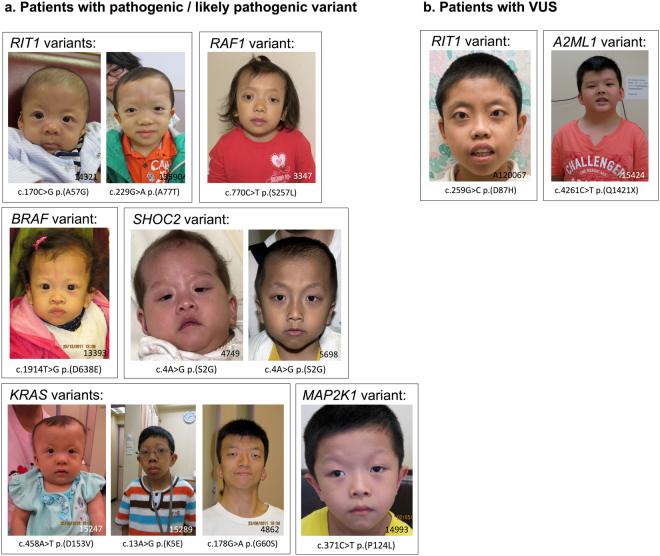
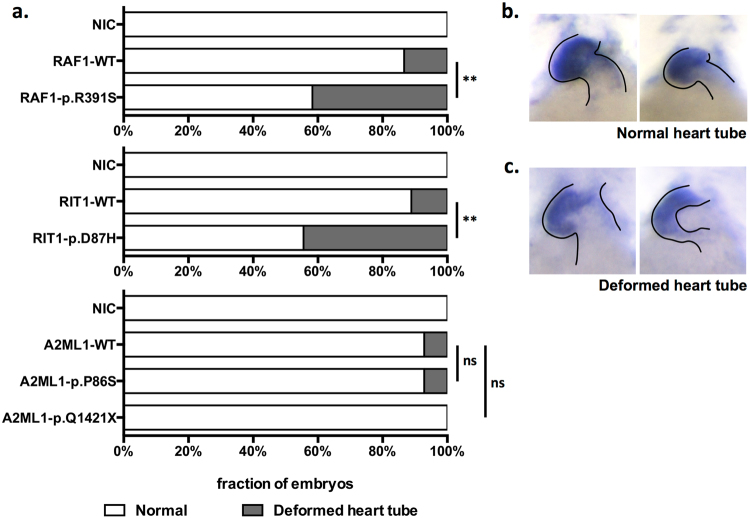
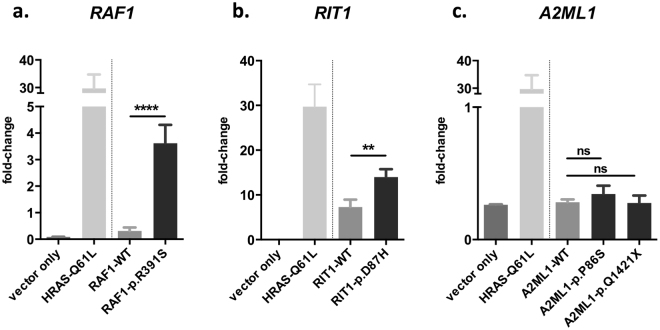
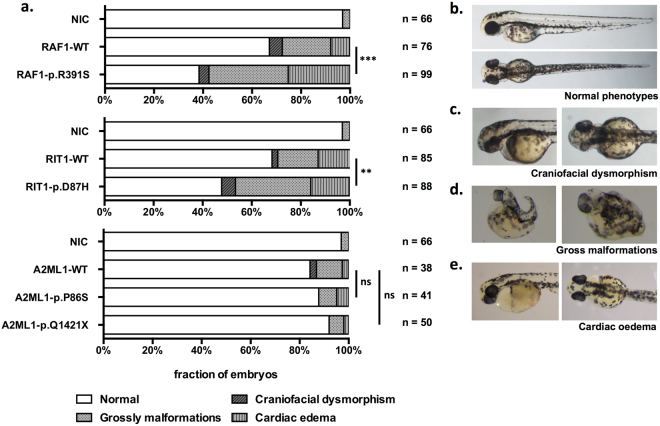
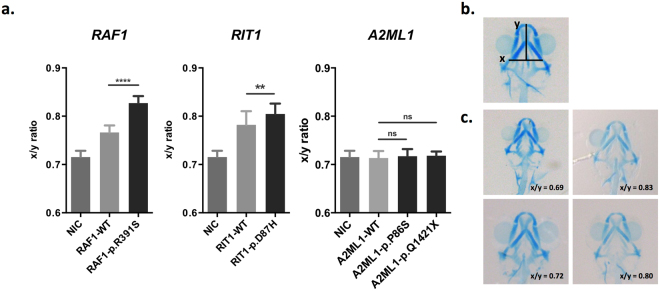
RASopathies are a group of heterogeneous conditions caused by germline mutations in RAS/MAPK signalling pathway genes. With next-generation sequencing (NGS), sequencing capacity is no longer a limitation to molecular diagnosis. Instead, the rising number of variants of unknown significance (VUSs) poses challenges to clinical interpretation and genetic counselling. We investigated the potential of an integrated pipeline combining NGS and the functional assessment of variants for the diagnosis of RASopathies. We included 63 Chinese patients with RASopathies that had previously tested negative for PTPN11 and HRAS mutations. In these patients, we performed a genetic analysis of genes associated with RASopathies using a multigene NGS panel and Sanger sequencing. For the VUSs, we evaluated evidence from genetic, bioinformatic and functional data. Twenty disease-causing mutations were identified in the 63 patients, providing a primary diagnostic yield of 31.7%. Four VUSs were identified in five patients. The functional assessment supported the pathogenicity of the RAF1 and RIT1 VUSs, while the significance of two VUSs in A2ML1 remained unclear. In summary, functional analysis improved the diagnostic yield from 31.7% to 36.5%. Although technically demanding and time-consuming, a functional genetic diagnostic analysis can ease the clinical translation of these findings to aid bedside interpretation.
RAS 病是一组由 RAS/MAPK 信号通路基因种系突变引起的异质性疾病。随着下一代测序(NGS)的发展,测序能力不再是分子诊断的限制因素。相反,越来越多的意义不明的变异(VUS)给临床解释和遗传咨询带来了挑战。我们研究了将 NGS 与变异的功能评估相结合的综合管道在 RAS 病诊断中的潜力。我们纳入了 63 例先前 PTPN11 和 HRAS 突变检测阴性的中国 RAS 病患者。在这些患者中,我们使用多基因 NGS 面板和 Sanger 测序对与 RAS 病相关的基因进行了遗传分析。对于 VUSs,我们评估了遗传、生物信息学和功能数据的证据。在 63 例患者中鉴定出 20 个致病突变,初级诊断率为 31.7%。在 5 例患者中发现了 4 个 VUS。功能评估支持 RAF1 和 RIT1 VUS 的致病性,而 A2ML1 中两个 VUS 的意义仍不清楚。总之,功能分析将诊断率从 31.7%提高到 36.5%。尽管技术要求高且耗时,但功能遗传诊断分析可以促进这些发现的临床转化,以帮助床边解释。