Buddanavar Arunkumar T, Nandibewoor Sharanappa T
P.G. Department of studies in Chemistry, Karnatak University, Dharwad 580003, India.
J Pharm Anal. 2017 Jun;7(3):148-155. doi: 10.1016/j.jpha.2016.10.001. Epub 2016 Oct 25.
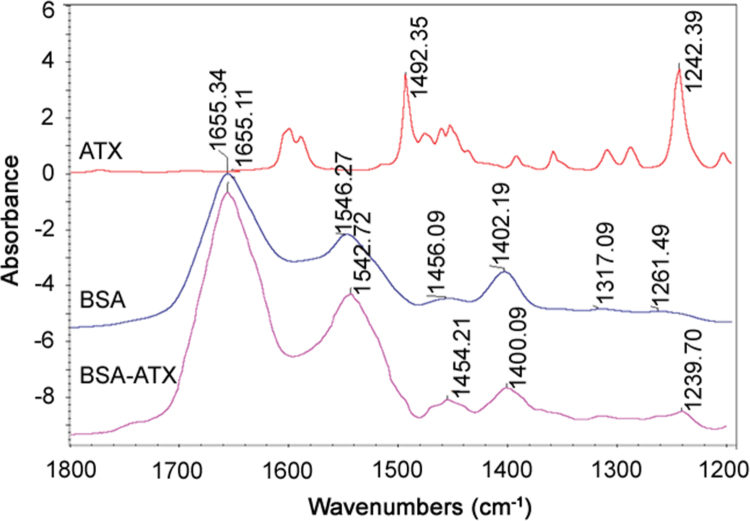
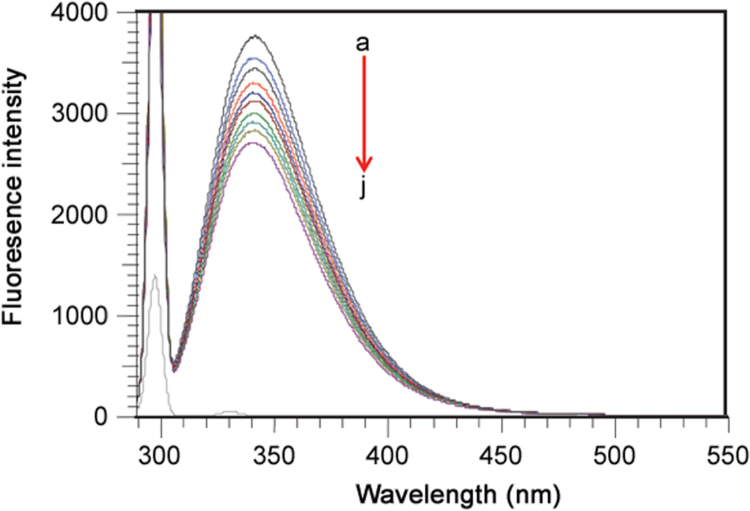
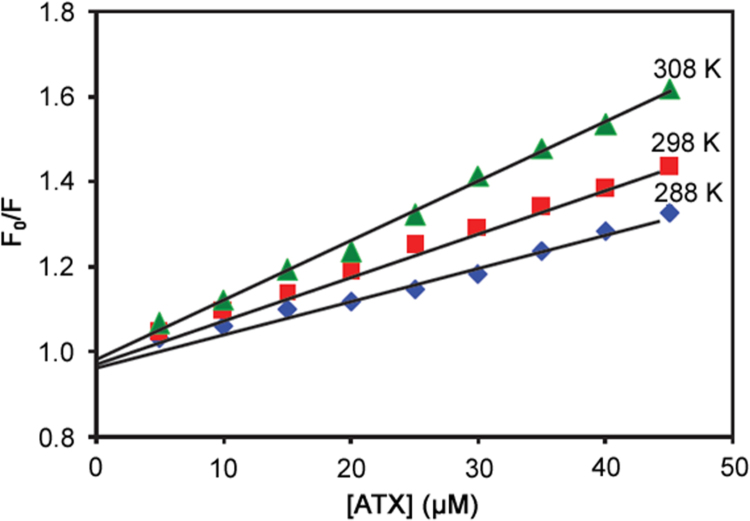
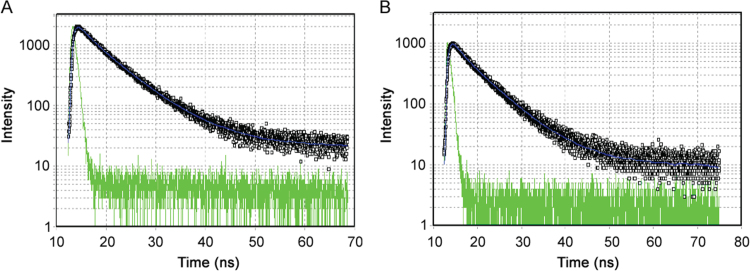
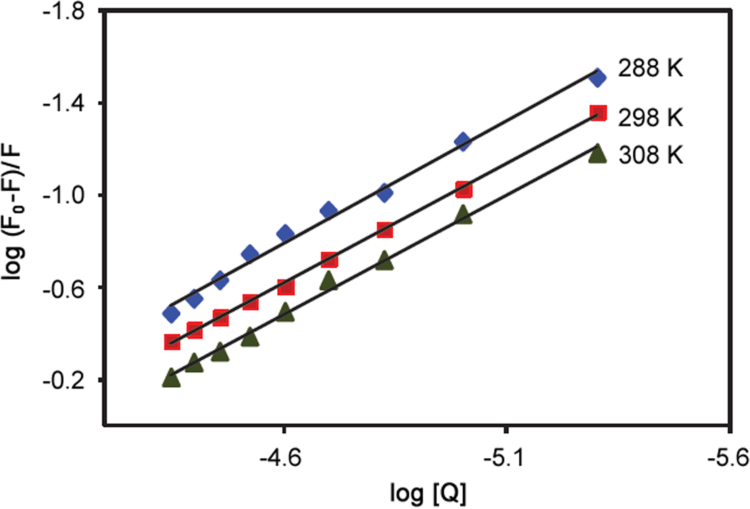
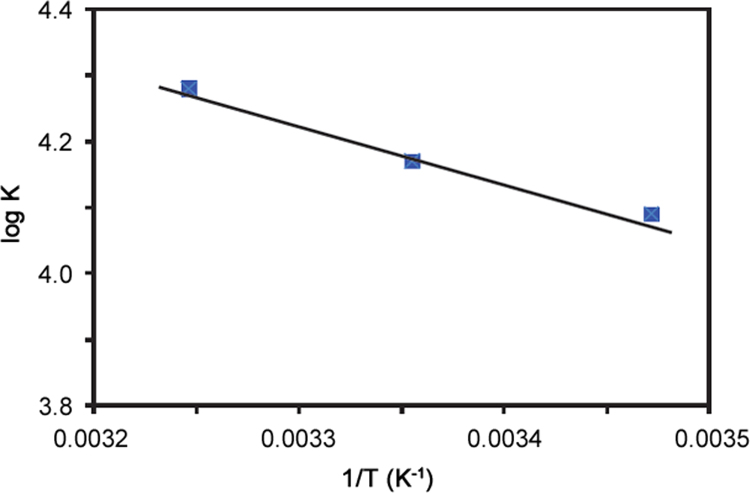
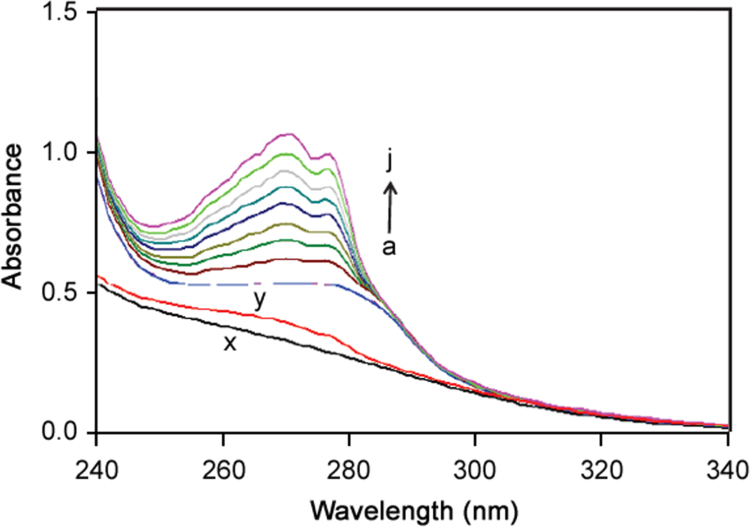
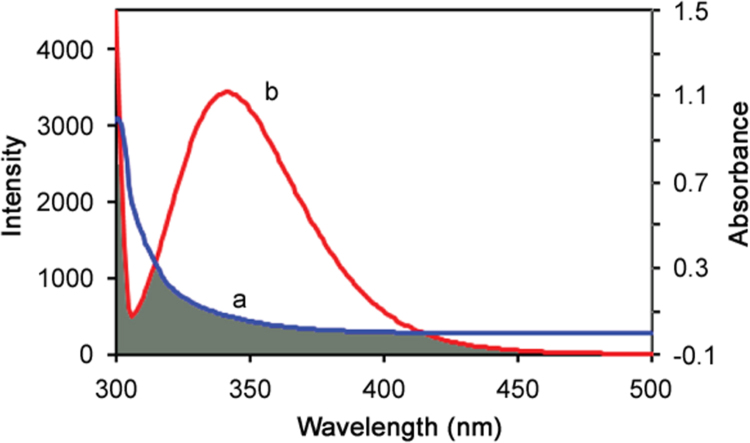
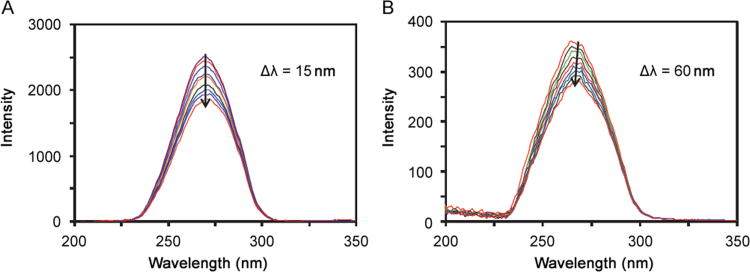
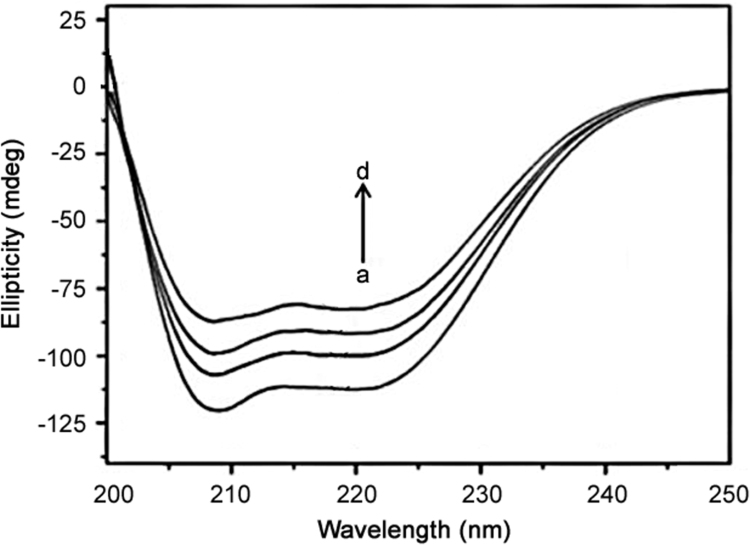
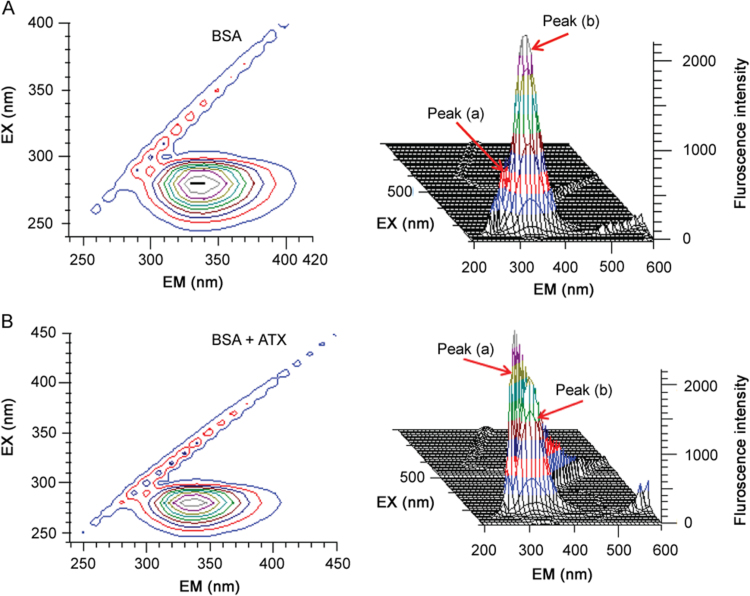
The quenching interaction of atomoxetine (ATX) with bovine serum albumin (BSA) was studied in vitro under optimal physiological condition (pH=7.4) by multi-spectroscopic techniques. The mechanism of ATX-BSA system was a dynamic quenching process and was confirmed by the fluorescence spectra and lifetime measurements. The number of binding sites, binding constants and other binding characteristics were computed. Thermodynamic parameters ∆H° and ∆S° indicated that intermolecular hydrophobic forces predominantly stabilized the drug-protein system. The average binding distance between BSA and ATX was studied by Försters theory. UV-absorption, Fourier transform infrared spectroscopy (FT-IR), circular dichroism (CD), synchronous spectra and three-dimensional (3D) fluorescence spectral results revealed the changes in micro-environment of secondary structure of protein upon the interaction with ATX. Displacement of site probes and the effects of some common metal ions on the binding of ATX with BSA interaction were also studied.
在最佳生理条件(pH = 7.4)下,采用多种光谱技术在体外研究了托莫西汀(ATX)与牛血清白蛋白(BSA)的猝灭相互作用。ATX - BSA体系的作用机制为动态猝灭过程,通过荧光光谱和寿命测量得以证实。计算了结合位点数量、结合常数及其他结合特性。热力学参数∆H°和∆S°表明,分子间疏水作用力主要使药物 - 蛋白质体系稳定。利用Försters理论研究了BSA与ATX之间的平均结合距离。紫外吸收、傅里叶变换红外光谱(FT - IR)、圆二色光谱(CD)、同步光谱和三维(3D)荧光光谱结果揭示了蛋白质二级结构微环境在与ATX相互作用时的变化。还研究了位点探针的置换以及一些常见金属离子对ATX与BSA相互作用结合的影响。