1 Department of Medicine, Division of Cardiology, University of Washington, Seattle, WA, USA.
2 Department of Surgery, Division of Vascular Surgery, University of Washington, Seattle, WA, USA.
Vasc Med. 2018 Apr;23(2):172-180. doi: 10.1177/1358863X17751656. Epub 2018 Feb 7.
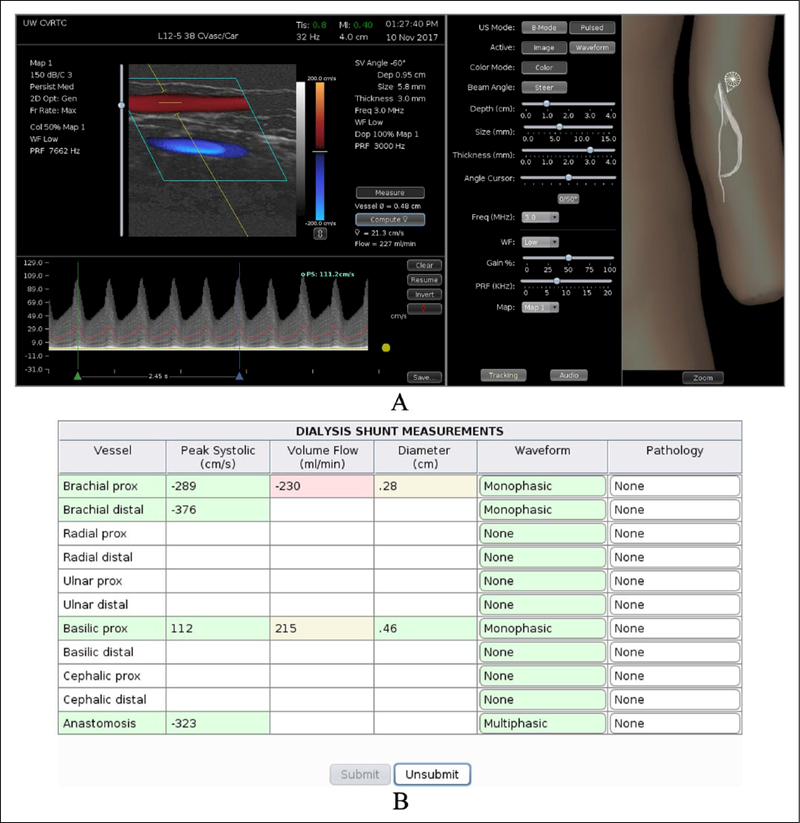
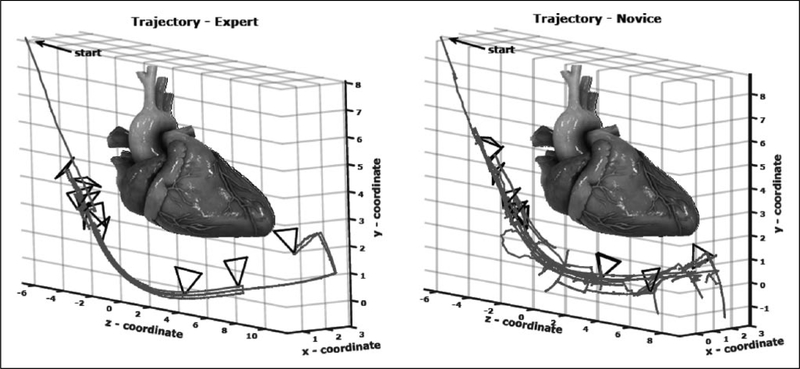
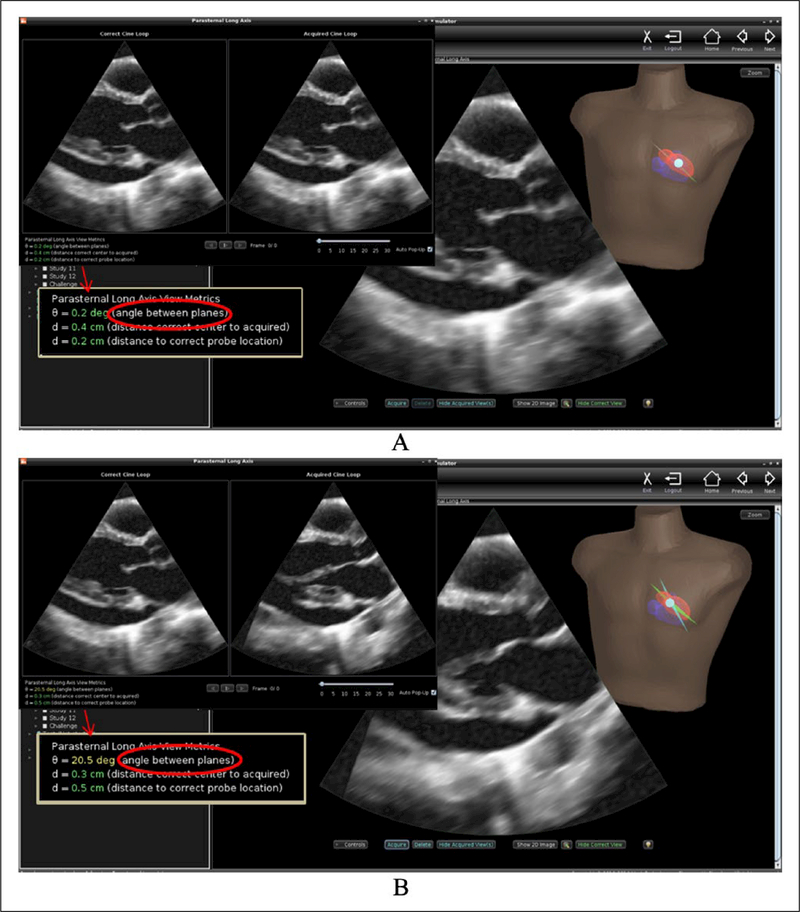
Healthcare providers who use peripheral vascular and cardiac ultrasound require specialized training to develop the technical and interpretive skills necessary to perform accurate diagnostic tests. Assessment of competence is a critical component of training that documents a learner's progress and is a requirement for competency-based medical education (CBME) as well as specialty certification or credentialing. The use of simulation for CBME in diagnostic ultrasound is particularly appealing since it incorporates both the psychomotor and cognitive domains while eliminating dependency on the availability of live patients with a range of pathology. However, successful application of simulation in this setting requires realistic, full-featured simulators and appropriate standardized metrics for competency testing. The principal diagnostic parameter in peripheral vascular ultrasound is measurement of peak systolic velocity (PSV) on Doppler spectral waveforms, and simulation of Doppler flow detection presents unique challenges. The computer-based duplex ultrasound simulator developed at the University of Washington uses computational fluid dynamics modeling and presents real-time color-flow Doppler images and Doppler spectral waveforms along with the corresponding B-mode images. This simulator provides a realistic scanning experience that includes measuring PSV in various arterial segments and applying actual diagnostic criteria. Simulators for echocardiography have been available since the 1990s and are currently more advanced than those for peripheral vascular ultrasound. Echocardiography simulators are now offered for both transesophageal echo and transthoracic echo. These computer-based simulators have 3D graphic displays that provide feedback to the learner and metrics for assessment of technical skill that are based on transducer tracking data. Such metrics provide a motion-based or kinematic analysis of skill in performing cardiac ultrasound. The use of simulation in peripheral vascular and cardiac ultrasound can provide a standardized and readily available method for training and competency assessment.
使用外周血管和心脏超声的医疗保健提供者需要专门的培训,以发展出进行准确诊断测试所需的技术和解释技能。能力评估是培训的关键组成部分,它记录了学习者的进步,是基于能力的医学教育 (CBME) 以及专业认证或证书的要求。模拟在诊断超声中的 CBME 的使用特别有吸引力,因为它结合了心理运动和认知领域,同时消除了对具有各种病理学的活体患者可用性的依赖。然而,要在这种情况下成功应用模拟,需要具有逼真、全功能的模拟器以及用于能力测试的适当标准化指标。外周血管超声的主要诊断参数是在多普勒频谱波形上测量收缩期峰值速度 (PSV),而模拟多普勒流量检测则带来了独特的挑战。华盛顿大学开发的基于计算机的双工超声模拟器使用计算流体动力学建模,并呈现实时彩色血流多普勒图像和多普勒频谱波形,以及相应的 B 模式图像。该模拟器提供了逼真的扫描体验,包括在各种动脉段测量 PSV 并应用实际诊断标准。自 20 世纪 90 年代以来,已经有用于超声心动图的模拟器,并且目前比用于外周血管超声的模拟器更先进。现在提供了用于经食管超声心动图和经胸超声心动图的基于计算机的模拟器。这些基于计算机的模拟器具有 3D 图形显示,可向学习者提供反馈,并提供基于换能器跟踪数据的评估技术技能的指标。这些指标提供了执行心脏超声的技能的基于运动或运动学的分析。在周围血管和心脏超声中使用模拟可以提供标准化且易于获得的培训和能力评估方法。