Department of Surgery, University Medical Center Utrecht, Utrecht, The Netherlands.
Utrecht Traumacenter, Utrecht, The Netherlands.
Eur J Trauma Emerg Surg. 2019 Aug;45(4):597-622. doi: 10.1007/s00068-018-0918-7. Epub 2018 Feb 6.
Many studies report on outcomes of analgesic therapy for (suspected) traumatic rib fractures. However, the literature is inconclusive and diverse regarding the management of pain and its effect on pain relief and associated complications. This systematic review and meta-analysis summarizes and compares reduction of pain for the different treatment modalities and as secondary outcome mortality during hospitalization, length of mechanical ventilation, length of hospital stay, length of intensive care unit stay (ICU) and complications such as respiratory, cardiovascular, and/or analgesia-related complications, for four different types of analgesic therapy: epidural analgesia, intravenous analgesia, paravertebral blocks and intercostal blocks.
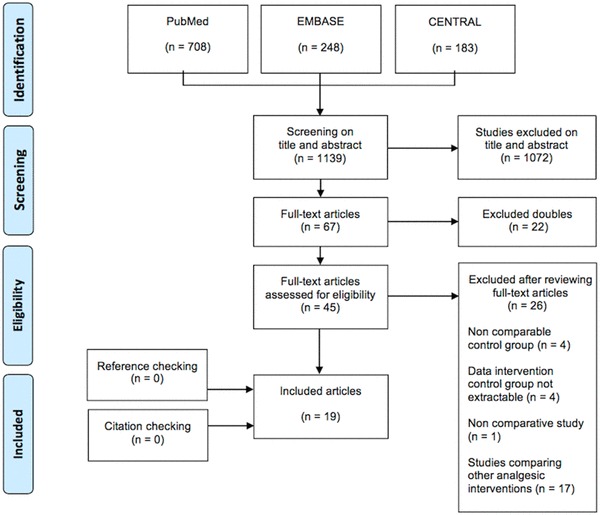
PubMed, EMBASE and CENTRAL databases were searched to identify comparative studies investigating epidural, intravenous, paravertebral and intercostal interventions for traumatic rib fractures, without restriction for study type. The search strategy included keywords and MeSH or Emtree terms relating blunt chest trauma (including rib fractures), analgesic interventions, pain management and complications.
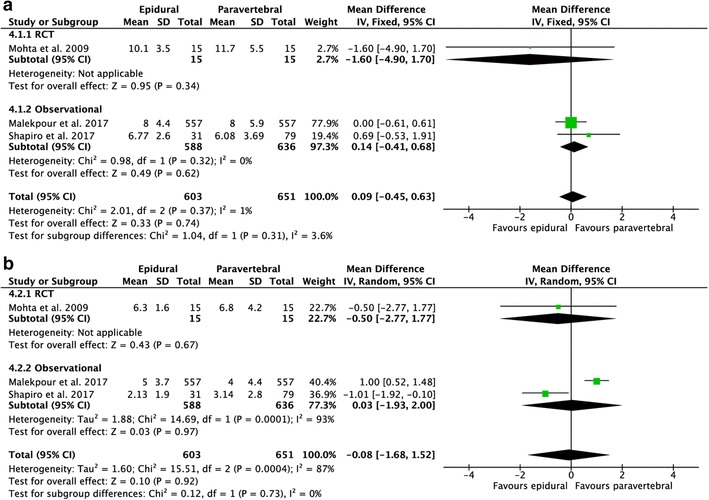
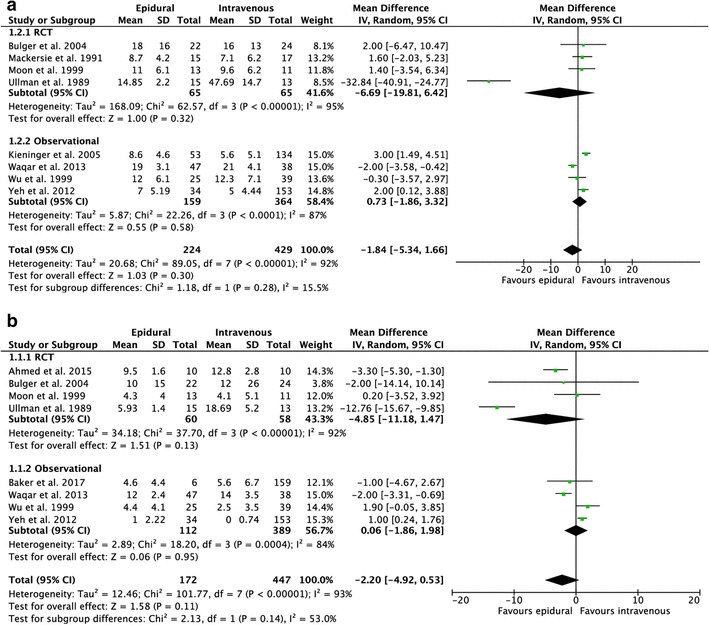
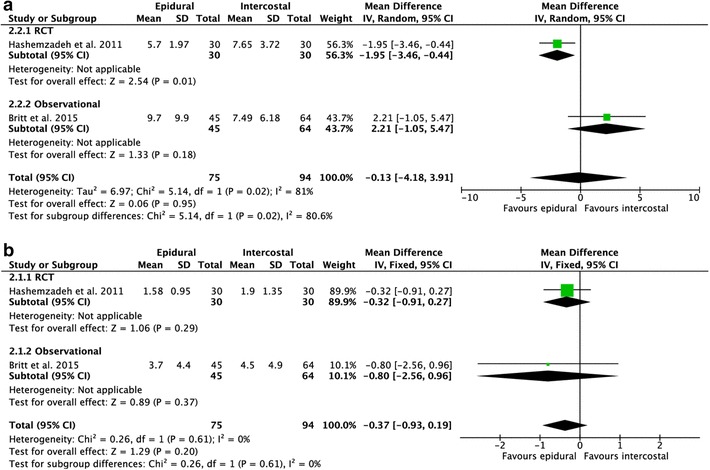
A total of 19 papers met our inclusion criteria and were finally included in this systematic review. Significant differences were found in favor of epidural analgesia for the reduction of pain. No significant differences were observed between epidural analgesia, intravenous analgesia, paravertebral blocks and intercostal blocks, for the secondary outcomes.
Results of this study show that epidural analgesia provides better pain relief than the other modalities. No differences were observed for secondary endpoints like length of ICU stay, length of mechanical ventilation or pulmonary complications. However, the quality of the available evidence is low, and therefore, preclude strong recommendations.
许多研究报告了(疑似)外伤性肋骨骨折的镇痛治疗结果。然而,关于疼痛管理及其对疼痛缓解和相关并发症的影响,文献存在不一致和多样性。本系统评价和荟萃分析总结并比较了不同治疗方式的疼痛缓解情况,并将次要结局住院期间死亡率、机械通气时间、住院时间、重症监护病房(ICU)入住时间以及呼吸、心血管和/或镇痛相关并发症等作为次要结局进行比较,用于四种不同类型的镇痛治疗:硬膜外镇痛、静脉内镇痛、椎旁阻滞和肋间阻滞。
检索 PubMed、EMBASE 和 CENTRAL 数据库,以确定调查硬膜外、静脉内、椎旁和肋间干预外伤性肋骨骨折的比较研究,对研究类型没有限制。搜索策略包括与钝性胸部创伤(包括肋骨骨折)、镇痛干预、疼痛管理和并发症相关的关键词和 MeSH 或 Emtree 术语。
共有 19 篇论文符合纳入标准,最终被纳入本系统评价。硬膜外镇痛在减轻疼痛方面有显著优势。硬膜外镇痛、静脉内镇痛、椎旁阻滞和肋间阻滞在次要结局方面没有显著差异。
本研究结果表明,硬膜外镇痛比其他方式能更好地缓解疼痛。对于 ICU 入住时间、机械通气时间或肺部并发症等次要终点,没有观察到差异。然而,可用证据的质量较低,因此无法提出强烈的建议。